Pan de Muerto Recipe
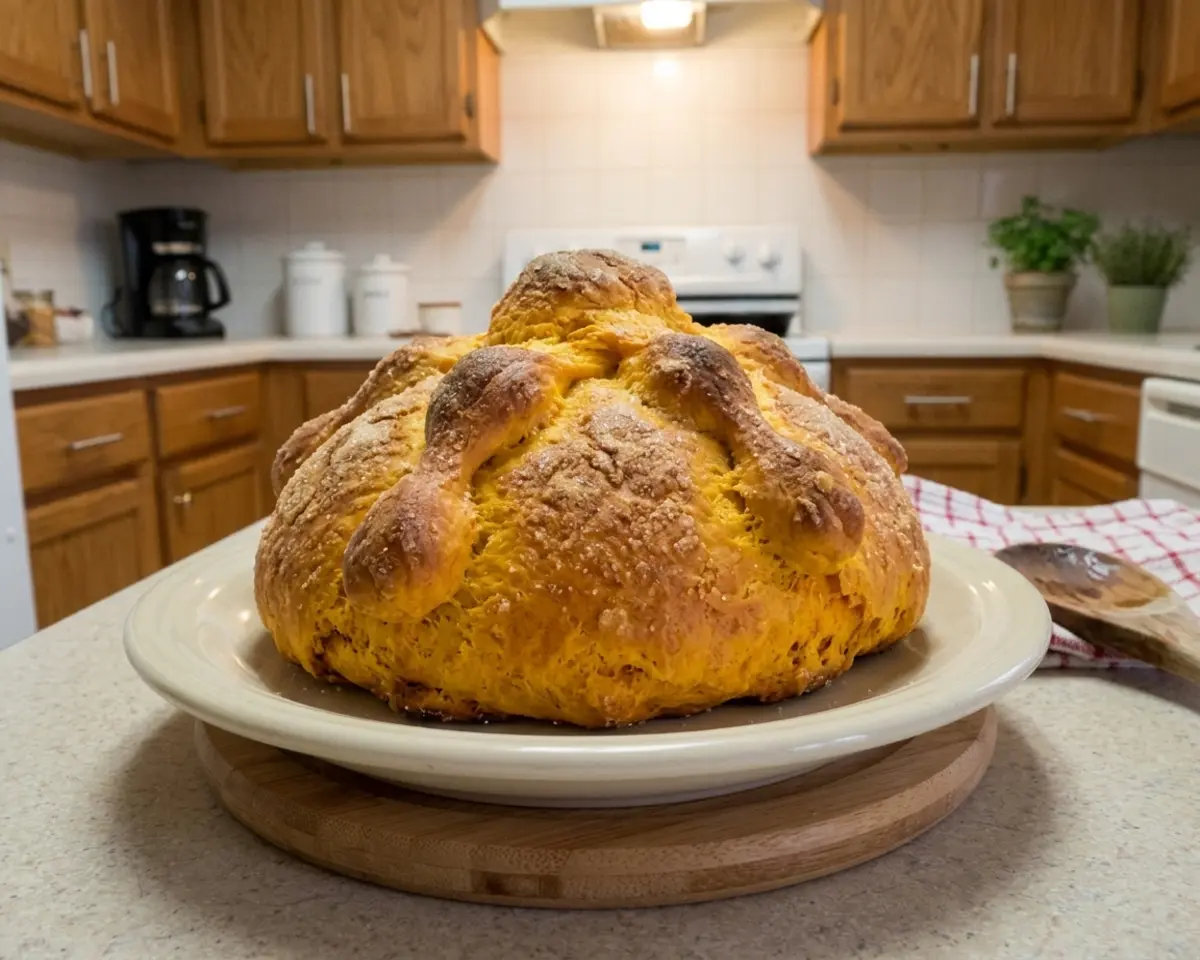
Pan de muerto recipe delivers a tender, orange-scented sweet bread crowned with delicate bone-shaped dough decorations, traditionally baked for Día de los Muertos celebrations. This version uses orange blossom water and anise seeds for authentic flavor, and the dough is forgiving enough for first-time bread bakers.
If you’ve ever wandered through a Mexican panadería in late October, you know that golden, sugar-dusted loaf with the little crossed bones on top. It’s pan de muerto — Day of the Dead bread — and it’s way easier to make at home than it looks.
Table of Contents
Little Snapshot: What This Recipe Delivers
This authentic pan de muerto recipe yields four beautifully decorated loaves with a soft, brioche-like crumb flavored with orange zest, orange blossom water, and anise seeds. Total hands-on time is about 30 minutes, plus two one-hour rises and a quick 15-20 minute bake.
Why You’ll Love This Recipe 🌸
- This pan de muerto recipe looks like it came from a fancy bakery but takes less active time than folding laundry.
- The orange blossom water and anise give it that authentic panadería flavor without hunting down specialty ingredients at six different stores.
- You get four loaves from one batch, so you can share (or hoard — no judgment here).
- According to Smithsonian Magazine in their exploration of Día de los Muertos traditions, pan de muerto is meant to be shared with loved ones — and this recipe proves exactly why.
Quick Facts ⚡
Here’s the quick scoop on this pan de muerto recipe.
- CourseDessert / Sweet Bread
- Prep Time30 minutes
- Rise Time2 hours
- Cook Time15-20 minutes
- Total Time2 hours 50 minutes
- Servings4 loaves
- DifficultyMedium
Nutritional Peek
Here’s what you’re looking at per serving (based on one loaf):
| Nutrient | Amount per serving |
|---|---|
| Calories | ~580 kcal |
| Protein | 13 g |
| Carbohydrates | 88 g |
| Fat | 18 g |
| Fiber | 3 g |
| Sugar | 22 g |
Ingredients for Traditional Pan de Muerto
For the yeast mixture — warm milk, a pinch of sugar, and flour — you’ll want everything at room temperature so the yeast wakes up happy. For the dough base — bread flour, melted butter, and eggs — measure carefully because bread flour’s protein content is what gives you that beautiful structure.
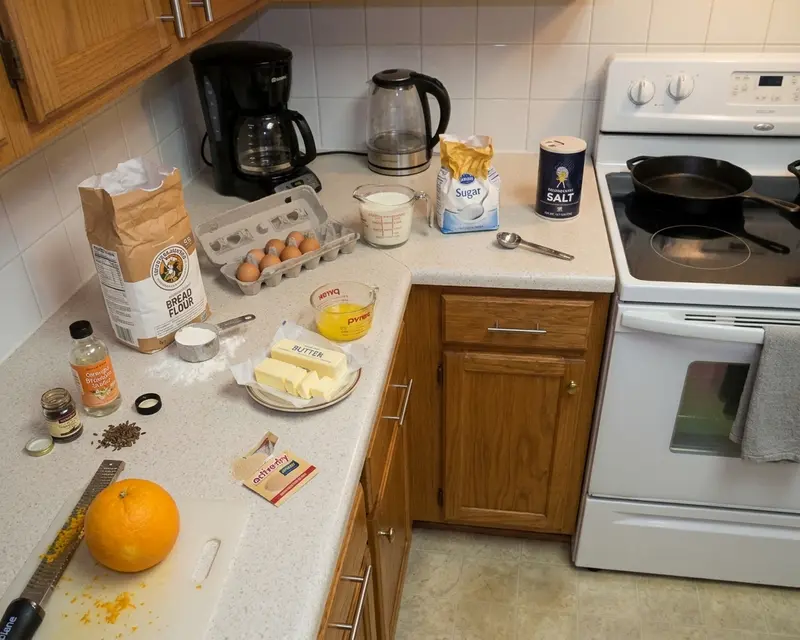
| Amount | Ingredient |
|---|---|
| 1 cup | warm milk (about 110°F — think bathwater warm) |
| ½ cup + 1 tbsp | sugar, divided |
| 4 ¼ cup + 1 tbsp | bread flour, divided |
| 10 ½ tbsp | unsalted butter, melted (real butter, not margarine) |
| 3 | eggs, room temperature |
| ½ oz | active dry yeast (one standard packet) |
| 1 | orange, zest only |
| 1 tbsp | orange blossom water |
| ¼ tsp | anise seeds |
| ½ tsp | vanilla bean paste (or extract in a pinch) |
| Pinch | salt |
You’ll also need melted butter and extra sugar for the final coating — don’t skip this step, it’s what makes the crust sparkle.
Tools You’ll Actually Use
Here’s what you’ll want on hand before you start:
- Large mixing bowl
- Small bowl (for activating yeast)
- Whisk or wooden spoon
- Bench scraper or sharp knife (for dividing dough)
- Two baking sheets
- Parchment paper
- Pastry brush (for egg wash and butter)
- Plastic wrap or clean kitchen towel
- Zester or microplane
Step-by-Step Instructions for Authentic Pan de Muerto
Making this Day of the Dead bread is easier than you think — the dough does most of the work while it rises. Just follow along and you’ll have bakery-worthy loaves in a few hours.
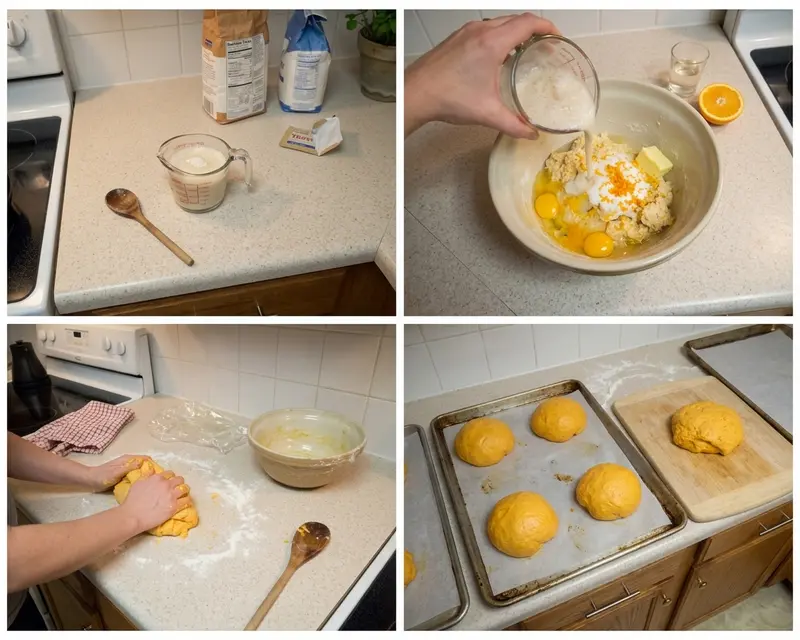
- Wake up the yeast: In a small bowl, combine the warm milk (about 110°F — it should feel like a warm bath on your wrist), 1 tablespoon of sugar, and 1 tablespoon of the bread flour. Sprinkle the active dry yeast on top, give it a gentle stir, and let it sit for 5 minutes until it gets foamy and puffy. If nothing happens, your milk was too hot or your yeast is expired — start over with fresh yeast and cooler milk.
- Build the dough base: In your large mixing bowl, whisk together the remaining 4 ¼ cups bread flour and ½ cup sugar. Pour in the foamy yeast mixture and stir with a wooden spoon until it starts to come together. Add the three eggs one at a time, mixing after each addition until all the flour is incorporated and you have a shaggy dough.
- Add the aromatics: Stir in the vanilla bean paste, anise seeds, orange blossom water, and orange zest — your kitchen will smell amazing at this point. Pour in the melted butter and add the pinch of salt, then switch to mixing with your hands. Knead right in the bowl or turn it out onto a clean counter and knead for 5-7 minutes until the dough is smooth, elastic, and slightly tacky but not sticky.
- First rise: Grease a large bowl with a bit of butter or oil, plop your dough in, and turn it once so the top is lightly coated. Cover tightly with plastic wrap and set it in a warm, draft-free spot for 1 hour. The dough should double in size — if your kitchen is cold, try setting the bowl near (not on) a warm oven or in a turned-off oven with just the light on.
- Shape the loaves: Once the dough has doubled, punch it down gently to deflate it (so satisfying). Divide the dough into five equal portions — a kitchen scale helps here, but eyeballing works too. Set one portion aside. Shape the other four portions into smooth, round balls by tucking the edges underneath and rolling them between your palms. Place two balls on each parchment-lined baking sheet, leaving plenty of space between them.
- Make the bone decorations: Take the reserved portion of dough and knead in the remaining 1 tablespoon of flour — this makes the “bones” a bit firmer so they hold their shape. Divide this piece into five portions. Take one of those portions and cut it into four small pieces, then roll each into a tiny ball. Take the remaining four portions and cut each in half. Roll each half into a rope about 4-5 inches long, then gently pinch the ends to create little knobs that look like bones.
- Decorate and second rise: Place two bone-shaped ropes on top of each round loaf in an X pattern, pressing gently so they stick. Top the center of each X with one of the little round balls. Cover the loaves loosely with a clean kitchen towel and let them rise for another hour until puffy and almost doubled again.
- Bake: Preheat your oven to 350°F. Beat one egg with a splash of water and brush the tops of the loaves gently with the egg wash — this gives them that beautiful golden shine. Bake for 15-20 minutes, rotating the pans halfway through, until the loaves are golden brown and sound hollow when you tap the bottom. They should register about 190°F on an instant-read thermometer if you want to be precise.
- Sugar coating: As soon as the loaves come out of the oven, brush them generously with melted butter while they’re still hot. Pour some sugar into a shallow dish and roll each loaf in it (or sprinkle heavily) so the butter helps the sugar stick. Let them cool on a wire rack for at least 15 minutes before tearing in.
Pro Tips & Gentle Guidance for Mexican Sweet Bread
A few little tricks will take your pan de muerto from good to “wait, you made this yourself?” good. These are the things I’ve learned from way too many batches.
Use bread flour instead of all-purpose if you can find it — the higher protein content gives you that perfect chewy-but-tender texture. All-purpose will work in a pinch, but your crumb won’t be quite as airy.
Don’t skip the orange blossom water. You can find it at Middle Eastern markets, fancy grocery stores, or online, and one bottle lasts forever. It’s what gives authentic pan de muerto that delicate floral note you can’t get from orange zest alone.
Room temperature ingredients matter more in bread baking than almost anywhere else. Cold eggs and butter will slow down your yeast and make the dough harder to work with, so plan ahead and leave everything on the counter for an hour before you start.
If you’re new to shaping bread dough, King Arthur Baking’s detailed guide to shaping round loaves has excellent photos and videos that really help you see what “smooth and taut” actually looks like.
The bone decorations are forgiving — they don’t have to be perfect. In fact, slightly wonky bones look more rustic and homemade in the best way. Just make sure they’re firmly pressed onto the loaf so they don’t slide off during the second rise.
Quick Fixes for Pan de Muerto Recipe
Dough isn’t rising: Your yeast might be dead, or your kitchen is too cold. Check the expiration date on your yeast packet, and make sure your milk was warm (not hot) when you activated it. Move the bowl to a warmer spot — near a sunny window, on top of the fridge, or in a turned-off oven with just the light on.
Dough is too sticky to knead: Bread dough should be slightly tacky but not gluey. If it’s sticking to everything, sprinkle in one tablespoon of flour at a time and knead it in until the texture feels right. Humidity affects dough a lot, so this happens more often than you’d think.
Loaves are browning too fast: Tent them loosely with aluminum foil for the last 5-10 minutes of baking. The egg wash and sugar coating can make the crust darken quickly, but the foil will protect the top while the inside finishes cooking.
Bones fell off during baking: They weren’t pressed on firmly enough, or the dough was overproofed and too soft. Next time, really press those decorations into the dough, and don’t let the second rise go past the one-hour mark.
Variations & Adaptations
This traditional pan de muerto is delicious as-is, but there’s room to play around depending on what you have on hand or what flavors you love.
For a citrus-forward version, double the orange zest and add a teaspoon of lemon zest too. You can also replace the orange blossom water with an extra tablespoon of fresh orange juice.
If you can’t find orange blossom water, use rose water (just half a tablespoon, it’s stronger) or skip it entirely and add an extra teaspoon of vanilla extract. The bread will still be delicious, just less perfume-y.
For a chocolate version, knead in ½ cup of mini chocolate chips after the first rise, or drizzle melted chocolate over the finished loaves instead of the butter-sugar coating.
To make this dairy-free, swap the milk for oat or almond milk and use vegan butter. The texture will be slightly less rich, but it’ll still work beautifully.
If you want to lean into the anise flavor, increase the anise seeds to ½ teaspoon and add a splash of anise extract along with the vanilla.
Serving, Storage & Reheating Orange Blossom Bread
Pan de muerto is traditionally served with hot chocolate or café de olla (Mexican spiced coffee), and honestly, that’s still the best way to enjoy it. Tear off a piece, dunk it in your mug, and pretend you’re sitting in a Mexican plaza on a cool November morning.
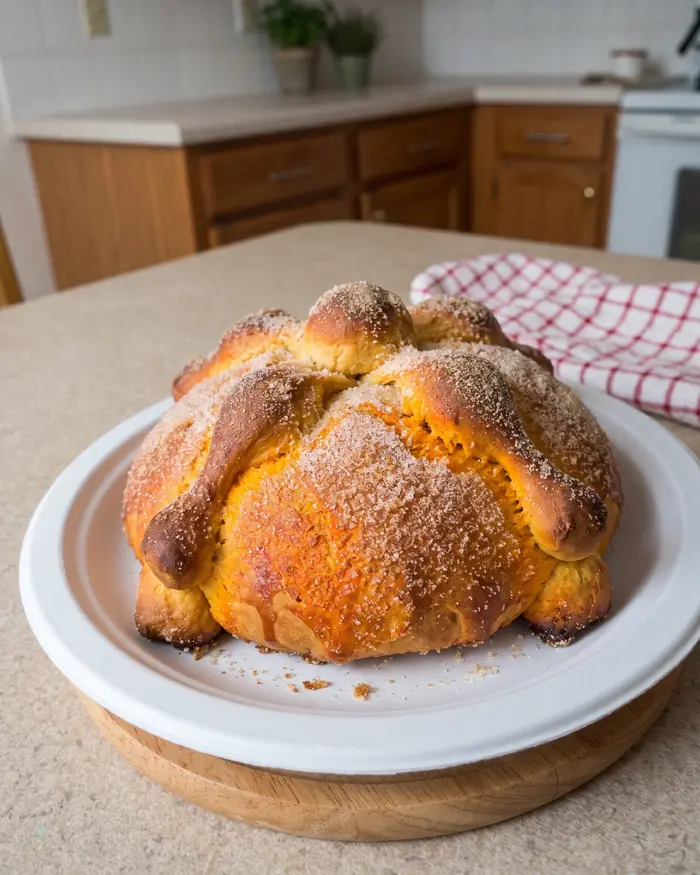
Store your loaves in an airtight container or zip-top bag at room temperature for up to three days. The sugar coating will get a little softer as the bread sits, but the flavor actually improves after a day.
To reheat, wrap a loaf in foil and warm it in a 300°F oven for about 10 minutes. You can also microwave individual slices for 10-15 seconds, but the crust won’t stay as crisp.
If you want to freeze these, wrap each loaf tightly in plastic wrap and then in foil, and freeze for up to two months. Thaw overnight on the counter, then refresh in a warm oven for a few minutes before serving.
No-Waste Kitchen Magic
Day-old pan de muerto makes incredible French toast — just dip thick slices in an egg-cinnamon mixture and fry them in butter until golden. The orange and anise flavors come through beautifully.
You can also cube stale loaves and bake them into a bread pudding with cream, eggs, and a touch more orange zest. Top with a simple glaze or caramel sauce and you’ve got dessert for days.
Leftover orange zest? Stir it into softened butter with a little honey for an amazing compound butter that’s perfect on toast or homemade cinnamon rolls.
If you’re making a big batch, freeze half the shaped loaves (before the second rise) on a baking sheet, then transfer them to a freezer bag. When you’re ready to bake, let them thaw and rise at room temperature for about two hours, then bake as directed.
Frequently Asked Questions
Here are the questions I get asked most about this anise seed bread — I’ve got you covered.
What is pan de muerto?
Pan de muerto is a traditional Mexican sweet bread baked during the Day of the Dead celebrations. It features a round shape with bone-shaped decorations on top, symbolizing the deceased. The bread has a soft, slightly sweet texture and is often flavored with orange blossom water or anise.
What ingredients do I need to make pan de muerto?
The basic ingredients include all-purpose flour, sugar, butter, eggs, yeast, salt, orange zest, orange blossom water or anise seeds, and milk. For the topping, you will need melted butter and a mixture of sugar with optional cinnamon. Some recipes also include a small amount of vanilla extract.
How do I shape the bone decorations on pan de muerto?
After the dough has risen, set aside a small portion before shaping the main loaf. Roll the reserved dough into long ropes and create bone shapes by making small balls at the ends. Arrange these in a cross pattern on top of the round loaf, with a small ball in the center representing a skull or teardrop.
How long does pan de muerto stay fresh?
Pan de muerto stays fresh for about 2 to 3 days when stored in an airtight container at room temperature. The bread may become slightly dry after the first day. You can refresh it by warming it briefly in the oven. For longer storage, you can freeze it for up to 2 months.
Can I make pan de muerto without orange blossom water?
Yes, you can substitute orange blossom water with other flavorings. Common alternatives include anise seeds, vanilla extract, or simply extra orange zest. Some bakers use a combination of orange and lemon zest for a citrus flavor. The bread will still be delicious even if you omit the orange blossom water entirely.
Final Thoughts
So there you go — a pan de muerto recipe that feels fancy but is secretly approachable, even if you’ve never shaped bread before. The orange blossom water and anise give it that unmistakable panadería flavor, and the bone decorations are way more forgiving than they look.
Whether you’re baking this for Día de los Muertos, a cozy fall weekend, or just because you want your kitchen to smell like a Mexican bakery, I think you’re going to love how this one turns out. It’s soft, lightly sweet, and makes your whole house feel a little more magical.
I’d love to see your spin on this pan de muerto recipe! Drop a comment below or tag me with your photos — I’d love to see how you made it your own. This Mexican sweet bread is so versatile; I bet you’ve got amazing variations already in mind!
If you’re on a bread-baking kick, you might also love this Japanese milk bread or these homemade cinnamon rolls. And if you want more inspiration, check out my full collection of homemade bread baking recipes — there’s something cozy for every season.
I’m Linda Sandra — a Charleston home cook and comfort-food daydreamer. Around here, cooking’s not about perfection — it’s about cozy vibes, creative twists, and food that feels like love.
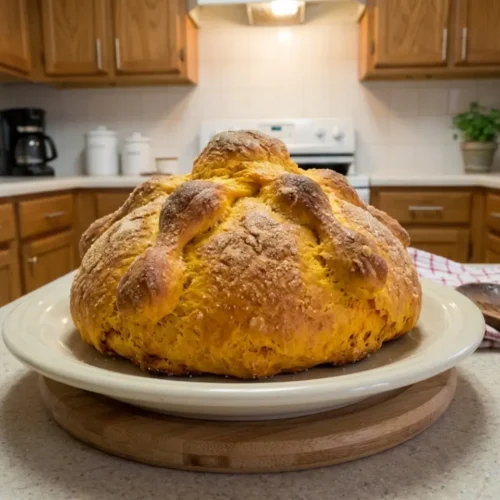
Pan de Muerto
Ingredients
- 1 cup warm milk
- ½ cup + 1 tbsp sugar
- 4 ¼ cup bread flour + 1 tbsp for the bones
- 10 ½ tbsp melted unsalted butter
- 3 eggs
- ½ oz active dry yeast
- 1 orange zest
- 1 tbsp orange blossom water
- ¼ tsp anise seeds
- ½ tsp vanilla bean paste
- Pinch of salt
Instructions
- Add yeast to the warm milk with 1 tbsp flour and 1 tbsp sugar. Mix and activate for 5 minutes.
- Mix your flour and sugar. Add the yeasty milk and mix well. Add eggs, mix until all the flour is incorporated. Add vanilla, anise, orange blossom water and orange zest. Mix. Add butter and salt.
- Mix with your hands and knead for 5-7 minutes. Let it rise in a warm place in a greased bowl covered in plastic wrap for 1 hour.
- Once it doubles in size, punch it and divide the dough in 5. Set 1/5 aside. Form the other 4 parts into a ball and place them on a cookie sheet lined with parchment paper. You’ll need 2 sheet trays.
- Mix in the tbsp of flour to the remaining dough, once again cut that into 5 parts. Cut 1 of those parts in 4 and form little rounds. Cut the other 4 in 2, and form your bones.
- Place 2 bones per bread in an x pattern and top with the round one. Let them rise again for 1 hour.
- Brush with egg wash, bake at 350°F for 15-20 minutes.
- Brush with melted butter and coat in sugar.