Japanese Milk Bread
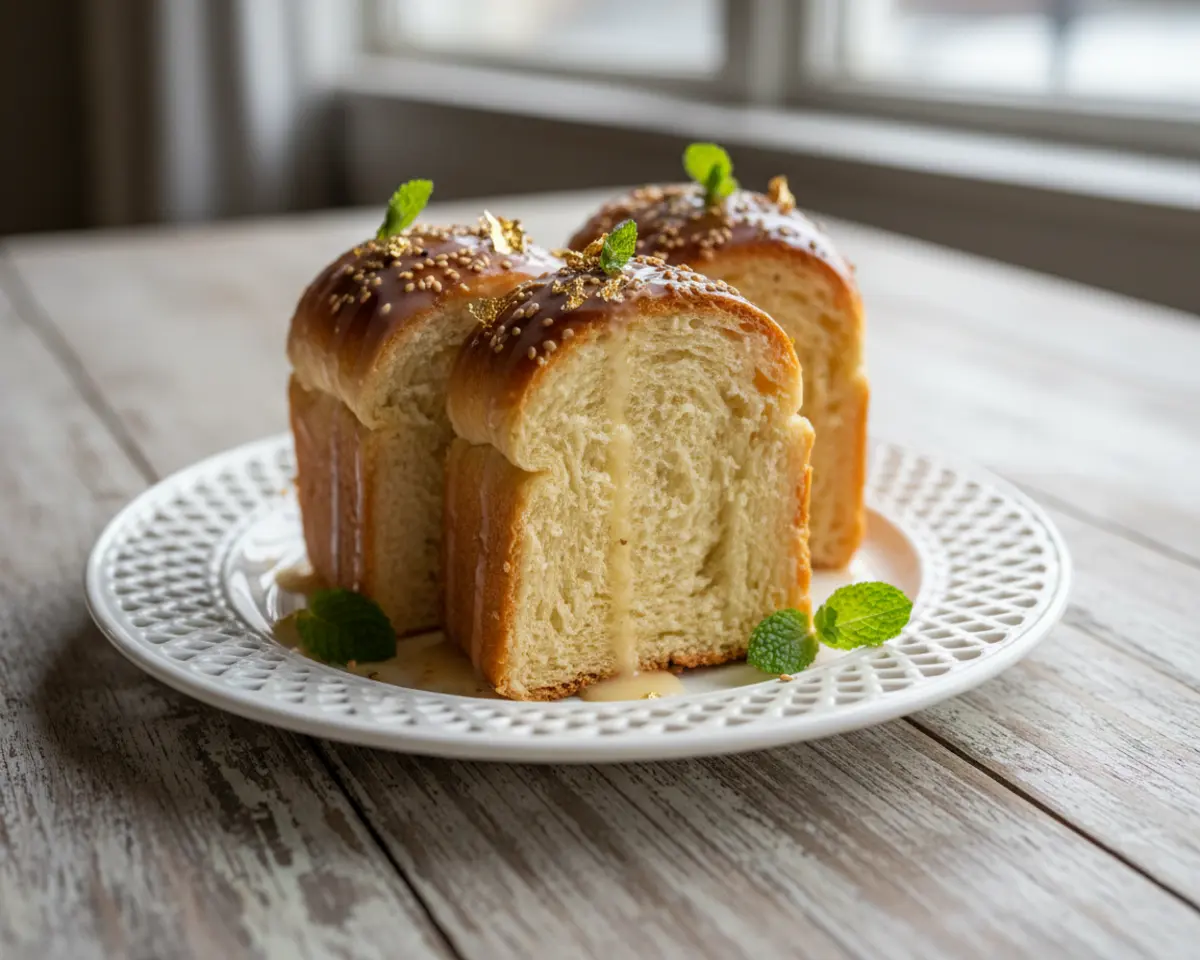
Japanese Milk Bread is the softest, fluffiest loaf you’ve ever met—like biting into a cloud that somehow tastes better. I first made this years ago when I was homesick for a little bakery outside Charleston that sold pillowy milk bread, and let me tell you, this recipe nailed it.
With that dreamy tangzhong starter and a little patience, you’ll get bakery-level magic right in your own kitchen.
This isn’t your average sandwich bread. It’s richer, softer, and keeps beautifully for days without turning dry. Whether you’re making toast, sandwiches, or just tearing off warm pieces with butter, this Hokkaido Milk Bread is pure comfort in every bite.
Table of Contents
Quick Overview
Craving more easy-to-bake delights after mastering this fluffy milk bread? Explore our full collection of speedy breads and delightful loaves – perfect for any occasion!
Little Snapshot: What This Recipe Delivers
Japanese Milk Bread uses a tangzhong water roux method to create an incredibly soft, pillowy loaf with a tender crumb that stays fresh for days. This Asian Milk Bread recipe delivers bakery-quality results at home with simple ingredients and gentle kneading.
Why You’ll Love This Recipe 🌸
- This Soft Milk Bread Recipe takes less active hands-on time than binge-watching one episode of your favorite show.
- The tangzhong method means your bread stays fresh and tender way longer than standard loaves—perfect for busy moms meal prepping.
- It’s versatile enough for sandwich lunches, fancy French toast, or just warm slices with honey butter.
- According to King Arthur Baking, the tangzhong method increases moisture retention and extends bread freshness by days — and this recipe proves exactly why.
Quick Facts ⚡
Here’s the quick scoop on this Japanese Milk Bread.
- CourseBread / Side
- Prep Time30 minutes
- Cook Time35 minutes
- Total Time3 hours 30 minutes (including rise time)
- Servings12 slices
- DifficultyMedium
Nutritional Peek
| Nutrient | Amount per Serving |
|---|---|
| Calories | 210 kcal |
| Protein | 6g |
| Carbohydrates | 36g |
| Fat | 5g |
| Fiber | 1g |
| Sugar | 9g |
What You’ll Need
Before you dive into your Tangzhong Bread adventure, gather these trusty tools. They’ll make the whole process smoother and a lot more fun.
- Stand mixer with dough hook attachment (or strong arms and patience)
- Small saucepan for tangzhong
- Whisk and silicone spatula
- Measuring cups and spoons
- Instant-read thermometer (helpful but not essential)
- Large mixing bowls
- 9×5-inch loaf pan (buttered)
- Plastic wrap or clean kitchen towels
- Wire cooling rack
- Pastry brush for egg wash
Ingredients
Hokkaido Milk Bread starts with quality bread flour, whole milk, and that magical tangzhong starter that makes everything pillowy. You’ll divide your ingredients into three simple groups: the water roux, the dough itself, and a glossy egg wash for that gorgeous golden finish.
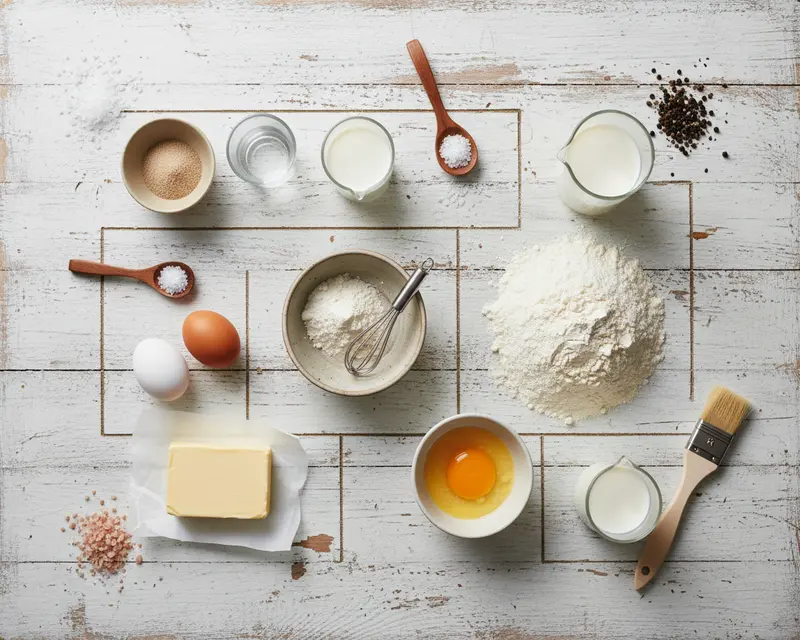
| Group | Ingredient | Amount | Notes |
|---|---|---|---|
| Tangzhong (Water Roux) | Bread flour | 2 tablespoons (15g) | The secret starter for ultra-soft crumb |
| Tangzhong (Water Roux) | Water | 4 tablespoons (60ml) | Room temp is fine |
| Tangzhong (Water Roux) | Milk | 4 tablespoons (60ml) | Whole milk preferred for richness |
| Dough | Active dry yeast | 2 1/4 teaspoons (7g) | One standard packet |
| Dough | Warm milk | 1/2 cup (120ml) | 105-115°F for yeast activation |
| Dough | Granulated sugar | 1/2 cup (100g) | Feeds the yeast and adds gentle sweetness |
| Dough | Bread flour | 3 1/2 cups (420g) | High protein for structure |
| Dough | Salt | 1 teaspoon (5g) | Balances sweetness and strengthens gluten |
| Dough | Large egg | 1, lightly beaten | Room temp blends easier |
| Dough | Unsalted butter, softened | 1/4 cup (55g) | Adds richness and tender texture |
| Egg Wash | Large egg | 1 | For that bakery-style shine |
| Egg Wash | Milk | 1 tablespoon | Thins the egg for even brushing |
Step-by-Step Instructions
Let’s make this happen. Japanese Milk Bread might sound fancy, but it’s really just a series of gentle steps that add up to pure magic.
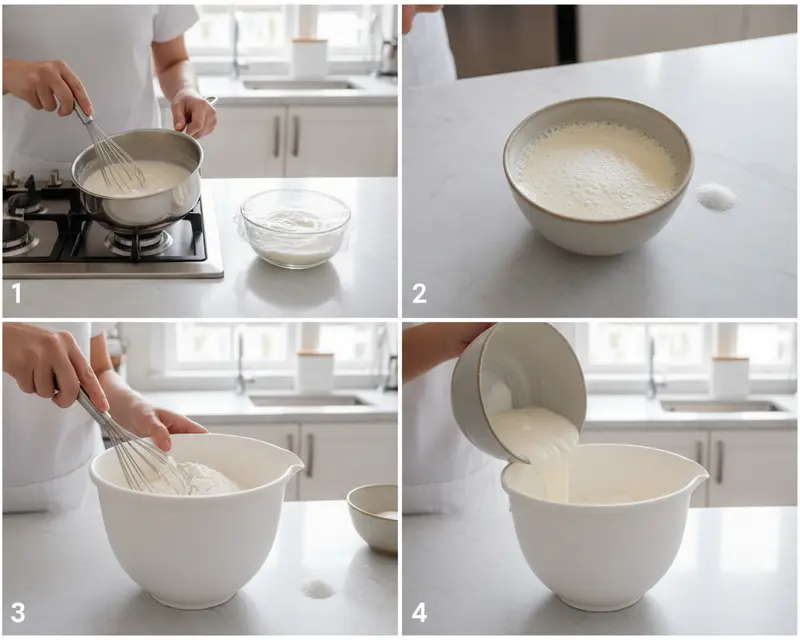
Step 1: Make the Tangzhong (Water Roux)
In a small saucepan, whisk together 2 tablespoons bread flour, 4 tablespoons water, and 4 tablespoons milk until completely smooth with no lumps. Cook over medium-low heat, stirring constantly with a whisk or silicone spatula, until the mixture thickens into a glossy paste that coats the back of your spoon and reaches about 149°F.
When you drag your spoon through the mixture, it should leave a clear trail that holds its shape. Remove the pan from heat immediately, scrape the tangzhong into a small bowl, and press plastic wrap directly onto the surface to prevent a skin from forming. Let it cool to room temperature before using—this usually takes about 20 minutes.
Step 2: Activate the Yeast
In a small bowl, combine 1/2 cup warm milk (105-115°F feels like a warm bath on your wrist) with a pinch of the granulated sugar. Sprinkle 2 1/4 teaspoons active dry yeast evenly over the milk surface. Let it sit undisturbed for 5-10 minutes until it becomes foamy and bubbly on top—this means your yeast is alive and ready to work its magic.
Step 3: Combine Dry Ingredients
In the bowl of your stand mixer, whisk together 3 1/2 cups bread flour, the remaining granulated sugar (minus that pinch you used), and 1 teaspoon salt. Whisking distributes the ingredients evenly and aerates the flour a bit, which helps create a lighter crumb.
Step 4: Combine Wet Ingredients (Except Butter)
Add your cooled tangzhong, the foamy activated yeast mixture, and 1 lightly beaten egg to the flour mixture in the stand mixer bowl. Attach the dough hook securely. These wet ingredients bring moisture, richness, and structure to your Soft Milk Bread Recipe.
Step 5: Knead the Dough (Initial)
Mix on low speed for 5-7 minutes until a shaggy, slightly sticky dough forms and pulls away from the sides of the bowl. You’ll see most of the flour incorporated, though the dough won’t look perfectly smooth yet—that’s totally normal. Scrape down the sides of the bowl once or twice if needed.
Step 6: Add Butter and Knead (Final)
With the mixer still running on low, add the 1/4 cup softened butter one tablespoon at a time, waiting until each piece is mostly absorbed before adding the next. Once all the butter is in, increase the mixer speed to medium and knead for 10-15 minutes. The dough should become smooth, glossy, elastic, and slightly tacky but not sticky.
Test for readiness with the windowpane test: pinch off a small piece of dough and gently stretch it between your fingers. If you can stretch it thin enough to see light through it without tearing, you’re ready. If it tears easily, knead for another 2-3 minutes and test again.
Step 7: First Rise
Lightly grease a large bowl with butter or neutral oil. Transfer your smooth dough ball to the bowl, turning it once so the top is lightly greased. Cover the bowl tightly with plastic wrap or a damp towel and place it in a warm, draft-free spot.
Let it rise for 1 to 1.5 hours, or until doubled in size. A good test is to gently poke the dough with a floured finger—if the indentation slowly springs back halfway, it’s ready. If it springs back immediately, give it more time.
Step 8: Shape the Dough
Gently punch down the risen dough to release trapped air bubbles. Turn it out onto a lightly floured surface. For a classic loaf, divide the dough into 3 equal pieces using a bench scraper or knife. For dinner rolls, divide into 9 equal pieces instead.
For each piece, flatten it gently into a rectangle about 4×6 inches. Fold the top third down toward the center, then fold the bottom third up to overlap, like folding a letter. Turn the dough 90 degrees, then roll it up tightly from the short end into a neat cylinder. Pinch the seam closed and tuck the ends under slightly.
Step 9: Second Rise
Place the 3 shaped dough cylinders seam-side down into a buttered 9×5-inch loaf pan, arranging them snugly side by side. If making rolls, place the 9 pieces on a parchment-lined baking sheet with a little space between each. Cover loosely with plastic wrap or a clean kitchen towel.
Let the dough rise in a warm spot for another 45-60 minutes, or until almost doubled in size and the dough springs back very slowly when gently poked. The dough should look puffy and dome just above the rim of the loaf pan.
Step 10: Preheat Oven and Prepare Egg Wash
About 15 minutes before the second rise is complete, preheat your oven to 350°F. In a small bowl, whisk together 1 egg and 1 tablespoon milk until smooth and well combined. This egg wash will give your Asian Milk Bread that gorgeous golden, glossy crust.
Step 11: Bake
Gently brush the top of the risen dough with the egg wash using a pastry brush, being careful not to deflate the dough. Bake for 30-35 minutes for a loaf (or 20-25 minutes for rolls), until the top is deeply golden brown and the internal temperature reads 190-200°F on an instant-read thermometer.
If the top starts browning too quickly halfway through baking, loosely tent it with aluminum foil. The bread should sound hollow when you tap the top gently.
Step 12: Cool
Remove the bread from the oven and immediately turn it out of the loaf pan onto a wire cooling rack. Let it cool completely—at least 1 hour—before slicing. I know it’s hard to wait, but slicing warm bread can make it gummy inside. Once cooled, slice with a serrated knife and enjoy the fluffiest bread of your life.
Pro Tips & Gentle Guidance
Tangzhong Bread baking is all about temperature, timing, and a little patience. Here are my tried-and-true tips to help you nail this recipe every single time, even if it’s your first go.
Use Bread Flour for Best Structure
Bread flour has a higher protein content than all-purpose, which creates stronger gluten development and gives your loaf that perfect chewy-yet-tender texture. If you only have all-purpose flour, you can use it, but the crumb might be slightly less structured and a touch denser.
Check Your Yeast Freshness
If your yeast doesn’t foam up after 10 minutes in warm milk, it’s likely expired or the milk was too hot and killed it. Always check the expiration date and use a thermometer to hit that sweet spot of 105-115°F. Fresh yeast makes all the difference.
Don’t Rush the Rise Times
Yeast works on its own schedule, and cooler kitchens mean slower rises. If your dough isn’t doubling in the suggested time, just give it more time in a warm spot. You can place the covered bowl in an oven with just the light on, or near (not on) a warm stovetop.
Master the Windowpane Test
This simple test tells you when gluten is fully developed. Stretch a small piece of dough gently—if it forms a thin, translucent membrane without tearing, you’re golden. If it rips immediately, knead for a few more minutes. According to Serious Eats, proper gluten development is the foundation of great bread structure and texture.
Softened Butter Is Key
Cold butter won’t incorporate smoothly and can create uneven pockets in your dough. Let your butter sit at room temperature for at least 30 minutes before you start, or cut it into small cubes and let it warm up faster.
Brush Egg Wash Gently
A heavy hand can deflate your beautiful risen dough. Use a soft pastry brush and apply the egg wash with light, sweeping motions. You’re just adding shine and color, not pressing the air out.
Variations & Adaptations
Cinnamon Swirl Milk Bread
After the first rise, roll out each dough portion into a rectangle, brush with melted butter, and sprinkle generously with cinnamon sugar. Roll up tightly and proceed with shaping and the second rise. You’ll get gorgeous swirls in every slice—perfect for breakfast or dessert toast.
Dinner Roll Variation
Divide your dough into 9 or 12 equal pieces instead of 3. Shape each into a smooth ball by tucking the edges underneath and rolling on the counter. Place them close together in a greased 9×13-inch baking dish so they bake into pull-apart rolls. Brush with garlic butter right out of the oven for extra flavor.
Whole Wheat Hokkaido Milk Bread
Swap up to half of the bread flour (about 1 3/4 cups) with whole wheat flour for a heartier loaf with more fiber and nutty flavor. You might need to add an extra tablespoon or two of milk since whole wheat absorbs more liquid. The texture will be slightly denser but still incredibly soft.
Dairy-Free Adaptation
Replace the milk in both the tangzhong and dough with unsweetened oat milk or almond milk, and use vegan butter or coconut oil instead of dairy butter. The bread will still be soft and delicious, though the flavor will be slightly less rich.
Savory Herb Loaf
Reduce the sugar to 2 tablespoons and add 2 tablespoons of fresh chopped herbs (rosemary, thyme, or chives) to the dough during the final kneading. Brush the top with garlic butter before baking. This version is perfect alongside soups, stews, or roasted chicken.
Quick Fixes for Japanese Milk Bread
Problem: Dough Is Too Sticky to Handle
Dust your work surface and hands lightly with flour, but don’t add too much extra flour or your bread will turn out dense. Japanese Milk Bread dough should be slightly tacky but not wet. If it’s truly soupy, you may need to knead in an extra tablespoon or two of flour.
Problem: Bread Didn’t Rise Much
Your yeast might have been old or your kitchen too cold. Next time, proof your yeast first to make sure it’s active, and find a warmer spot for rising—inside an oven with just the light on works great. Dough needs warmth and time to rise properly.
Problem: Crust Is Too Dark but Inside Is Undercooked
Your oven temperature might be running hot. Tent the loaf loosely with foil halfway through baking to slow browning on top while the inside finishes cooking. An oven thermometer can help you check if your oven runs true to the set temperature.
Problem: Bread Is Dense Instead of Fluffy
This usually happens from under-kneading or not letting the dough rise long enough. Make sure you knead until the dough passes the windowpane test and let it rise until truly doubled in size. Patience pays off with that signature soft crumb.
Problem: Loaf Has Large Air Pockets
You might have skipped degassing the dough thoroughly after the first rise. Gently press out all the big air bubbles before shaping, and roll your dough cylinders tightly. This creates an even, fine crumb throughout.
Storage & Reheating
Soft Milk Bread Recipe results deserve proper care so you can enjoy every last fluffy slice. Here’s how to keep your loaf fresh, store it smartly, and bring back that just-baked warmth whenever you’re ready.
Serving Fresh
Serve your Japanese Milk Bread at room temperature, sliced thick or thin depending on your plans. It’s incredible toasted with salted butter and honey, perfect for sandwiches with turkey and avocado, or divine as thick-cut French toast. Try it alongside hearty homemade bread baking recipes for a cozy weekend brunch spread.
Storage Tips
Once completely cooled, store your loaf in an airtight container or resealable plastic bag at room temperature for up to 4 days. The tangzhong method keeps it soft and fresh longer than most breads. For longer storage, slice the loaf first, then freeze individual slices in a freezer bag for up to 3 months—perfect for grabbing single slices for toast.
Reheating Instructions
Toast slices directly from room temperature or frozen in a toaster or toaster oven until golden and warm. For a whole loaf, wrap it loosely in foil and warm in a 300°F oven for about 10 minutes. You can also microwave individual slices for 10-15 seconds to soften them, though toasting gives better texture.
| Storage Method | Duration | Best For |
|---|---|---|
| Room Temperature (airtight container) | Up to 4 days | Daily snacking and sandwiches |
| Refrigerator (airtight bag) | Up to 7 days | Extending freshness in hot climates |
| Freezer (sliced, in freezer bag) | Up to 3 months | Long-term storage and quick toast |
| Freezer (whole loaf, wrapped tightly) | Up to 3 months | Special occasions or gifting later |
No-Waste Kitchen Magic
Turn Stale Bread into Croutons
If your loaf starts to go stale, cube it, toss with olive oil, garlic powder, and salt, then bake at 375°F until golden and crispy. These make incredible croutons for salads or soups. You can also grind stale bread into fresh breadcrumbs and freeze them for future recipes.
Make Bread Pudding or French Toast Casserole
Day-old or slightly stale Japanese Milk Bread is perfect for bread pudding or baked French toast casserole. The denser texture soaks up custard beautifully without falling apart. It’s a delicious way to use up every last slice.
Use Leftover Tangzhong for Other Bakes
If you have extra tangzhong, store it in the fridge in an airtight container for up to 3 days and use it in dinner rolls, burger buns, or even shokupan recipes. It’s a magical addition to any yeasted dough that you want to stay soft longer.
Repurpose the Egg White
If you only used the yolk for your egg wash, save the leftover egg white in a small container in the fridge. Use it in scrambled eggs, add it to smoothies for extra protein, or whip it into a meringue for a simple dessert topping.
Compost Your Scraps
Any dough scraps, flour dust, or bits of crust can go straight into your compost bin. Bread scraps break down quickly and add valuable carbon to your compost mix, helping your garden thrive.
Frequently Asked Questions
Here are answers to the most common questions about making this dreamy Japanese Milk Bread at home.
What is Japanese Milk Bread?
Japanese Milk Bread, also known as Shokupan or Hokkaido Milk Bread, is a soft, fluffy white bread made using a technique called tangzhong. This method involves cooking a portion of the flour and liquid into a roux, which helps the bread retain moisture and creates its signature pillowy texture. The bread has a slightly sweet taste and an incredibly soft crumb that stays fresh for days.
What is the tangzhong method used in Japanese Milk Bread?
Tangzhong is a water roux method where a small portion of flour and liquid (water or milk) is cooked together to form a paste or gel. This mixture is then cooled and added to the bread dough. The process gelatinizes the starches, allowing the dough to hold more moisture, resulting in bread that is softer, fluffier, and stays fresh longer than traditional bread.
Why is Japanese Milk Bread so soft and fluffy?
The exceptional softness comes from several factors: the tangzhong method which increases moisture retention, the addition of milk and butter which enriches the dough, and the high hydration level. The bread also contains eggs in some recipes, and the careful kneading develops gluten structure that traps air bubbles, creating the light and airy texture. Additionally, the bread is baked at a relatively low temperature to maintain its soft crust.
How long does Japanese Milk Bread stay fresh?
Japanese Milk Bread typically stays fresh and soft for 4 to 5 days when stored properly at room temperature in an airtight container or sealed plastic bag. The tangzhong method helps the bread retain moisture much longer than regular bread. For extended storage, it can be frozen for up to 3 months. Avoid refrigerating the bread as this can cause it to dry out and become stale faster.
What can I use Japanese Milk Bread for?
Japanese Milk Bread is incredibly versatile. It makes excellent toast with butter or jam, perfect sandwiches due to its soft texture, and is ideal for French toast because it absorbs egg mixture well. It can be used for bread pudding, dinner rolls when shaped smaller, or simply enjoyed plain. The bread is also popular for making thick-cut toast served at Japanese cafes and for creating fluffy sandwich loaves for katsu sandos or fruit sandwiches.
Final Dish
There’s something magical about pulling a golden, glossy loaf of Japanese Milk Bread out of your own oven. The smell, the softness, the way it stays fluffy for days—it’s the kind of bread that makes you feel like a baking genius, even if it’s your first time.
Whether you’re slicing it for sandwiches, toasting it with butter, or just tearing off warm pieces straight from the pan, this Hokkaido Milk Bread is pure comfort in every bite.
I’d love to see your beautiful loaves! Snap a photo, tag me, and share your favorite way to enjoy this bread. And if you have questions or your own tips, drop them in the comments below. Check out more cozy recipes like this in our Japanese and Asian comfort food collection or explore more bagels, rolls, and pizzas to keep your baking adventures going.
I’m Linda Sandra — a Charleston home chef and comfort-food daydreamer. Around here, cooking’s not about perfection — it’s about cozy vibes, creative twists, and food that feels like love.
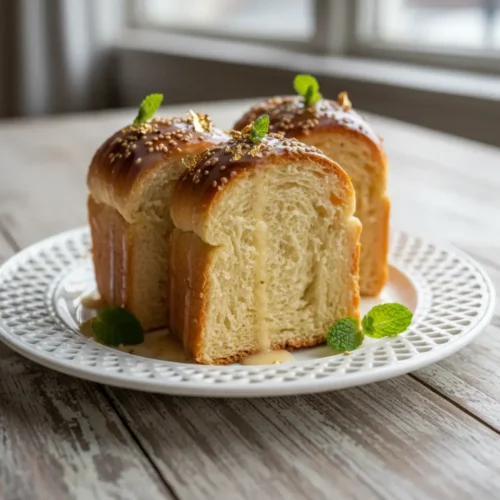
Japanese Milk Bread
Ingredients
For the Tangzhong (Water Roux)
- 2 tablespoons 15g bread flour
- 4 tablespoons 60ml water
- 4 tablespoons 60ml milk
For the Dough
- 2 ¼ teaspoons 7g active dry yeast
- ½ cup 120ml warm milk (105-115°F / 40-46°C)
- ½ cup 100g granulated sugar
- 3 ½ cups 420g bread flour
- 1 teaspoon 5g salt
- 1 large egg lightly beaten
- ¼ cup 55g unsalted butter, softened
For the Egg Wash
- 1 large egg
- 1 tablespoon milk
Instructions
- Make the Tangzhong (Water Roux): In a small saucepan, whisk together the bread flour, water, and milk until smooth. Cook over medium-low heat, stirring constantly, until the mixture thickens to a paste-like consistency (about 149°F / 65°C). It should leave a trail when you drag a spoon through it. Remove from heat, transfer to a small bowl, cover with plastic wrap directly on the surface to prevent a skin from forming, and let it cool to room temperature.
- Activate the Yeast: In a small bowl, combine the warm milk and a pinch of the granulated sugar. Sprinkle the active dry yeast over the milk and let it sit for 5-10 minutes, or until foamy.
- Combine Dry Ingredients: In the bowl of a stand mixer, whisk together the bread flour, remaining granulated sugar, and salt.
- Combine Wet Ingredients (except butter): Add the cooled tangzhong, activated yeast mixture, and lightly beaten egg to the dry ingredients. Attach the dough hook to the stand mixer.
- Knead the Dough (Initial): Mix on low speed for 5-7 minutes until a shaggy dough forms and most of the flour is incorporated.
- Add Butter and Knead (Final): With the mixer still on low, add the softened butter, one tablespoon at a time, allowing each addition to be mostly incorporated before adding the next. Once all the butter is added, increase the speed to medium and knead for another 10-15 minutes, or until the dough is smooth, elastic, and passes the windowpane test (you can stretch a small piece of dough thin enough to see light through it without tearing).
- First Rise: Lightly grease a large bowl. Transfer the dough to the bowl, turning it once to coat. Cover the bowl with plastic wrap and let it rise in a warm place for 1-1.5 hours, or until doubled in size.
- Shape the Dough: Gently punch down the risen dough to release the air. Transfer it to a lightly floured surface. Divide the dough into 3 (for a loaf pan) or 9 (for dinner rolls) equal pieces. For each piece, flatten it into a rectangle, then fold the top third down to the center and the bottom third up to overlap. Turn the dough 90 degrees and roll it up tightly into a cylinder. Pinch the seam closed.
- Second Rise: Place the shaped dough pieces into a buttered loaf pan (for a loaf) or on a baking sheet lined with parchment paper (for rolls), leaving some space between them. Cover loosely with plastic wrap or a clean kitchen towel and let it rise in a warm place for another 45-60 minutes, or until almost doubled in size.
- Preheat Oven and Prepare Egg Wash: Towards the end of the second rise, preheat your oven to 350°F (175°C). In a small bowl, whisk together the egg and milk for the egg wash.
- Bake: Gently brush the top of the risen dough with the egg wash. Bake for 30-35 minutes for a loaf (or 20-25 minutes for rolls), or until golden brown on top and the internal temperature reaches 190-200°F (88-93°C). If the top starts browning too quickly, you can loosely tent it with foil.
- Cool: Once baked, remove the bread from the oven and immediately turn it out onto a wire rack to cool completely before slicing and serving.