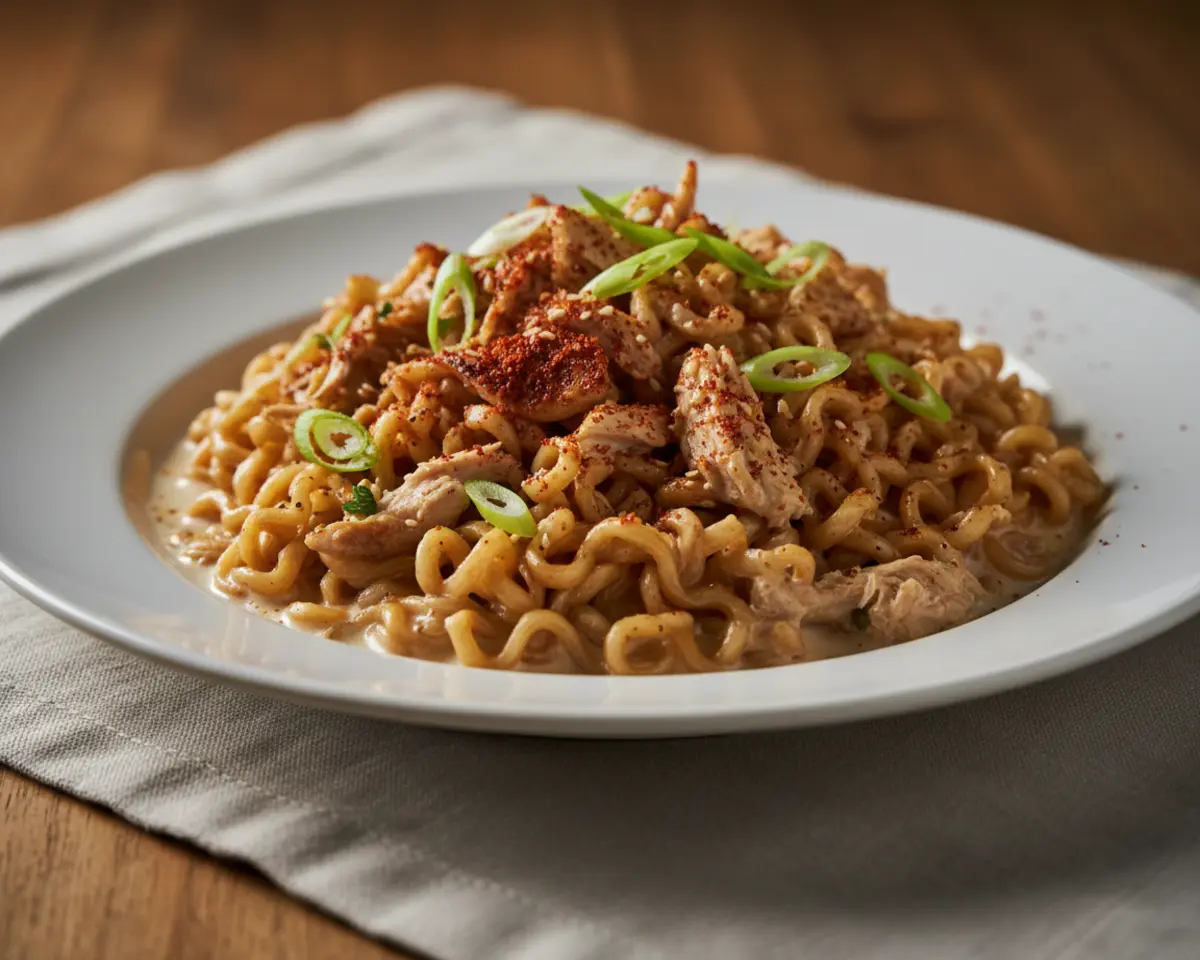
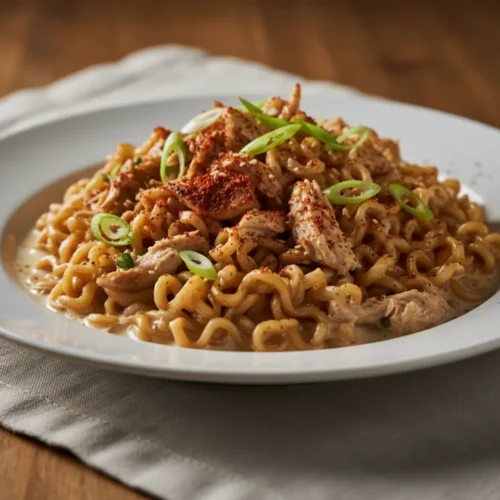
Buldak Carbonara with Milk
Buldak carbonara with milk is the cozy, creamy twist on Korean fire noodles that turns up the comfort while keeping that signature kick. It’s rich, spicy, and surprisingly simple — perfect for those nights when you want big flavor without big effort. I first tried this version on a chilly Charleston evening, and it’s been my go-to ever since.
This spicy Korean pasta comes together in under 10 minutes and transforms instant noodles into something that feels indulgent and restaurant-worthy. The milk mellows the heat just enough while adding silky body, and that optional egg yolk? Pure magic. It’s become my secret weapon for satisfying cravings fast.
Table of Contents
Quick Overview
Little Snapshot: What This Recipe Delivers
Buldak carbonara with milk is a quick, creamy Korean noodle dish that balances fiery spice with rich dairy goodness in under 10 minutes. Perfect for weeknight dinners or late-night cravings, this one-pot wonder delivers restaurant-quality flavor with minimal cleanup.
Why You’ll Love This Recipe 🌸
- This creamy buldak noodles recipe takes less time than scrolling through your phone — seriously, 10 minutes max.
- The milk tames the fire just enough so you can actually taste the flavor, not just survive the heat.
- One pot, minimal dishes, maximum comfort — exactly what busy weeknights need.
- According to Serious Eats, adding dairy to spicy noodles creates a balanced, creamier mouthfeel — and this recipe proves exactly why.
Quick Facts ⚡
Here’s the quick scoop on this buldak carbonara with milk.
- CourseMain Dish
- Prep Time2 minutes
- Cook Time8 minutes
- Total Time10 minutes
- Servings1 serving
- DifficultyEasy
Nutritional Peek
| Nutrient | Amount per serving |
|---|---|
| Calories | 520 |
| Protein | 16g |
| Carbohydrates | 68g |
| Fat | 20g |
| Fiber | 3g |
| Sugar | 6g |
What You’ll Need
You don’t need fancy gear for this spicy Korean pasta — just a few everyday kitchen basics. Here’s what’ll make your fire noodles carbonara come together smoothly.
- Small to medium pot or saucepan
- Colander or strainer
- Wooden spoon or silicone spatula
- Measuring cup
- Small bowl (for separating egg yolk, if using)
- Serving bowl
Ingredients
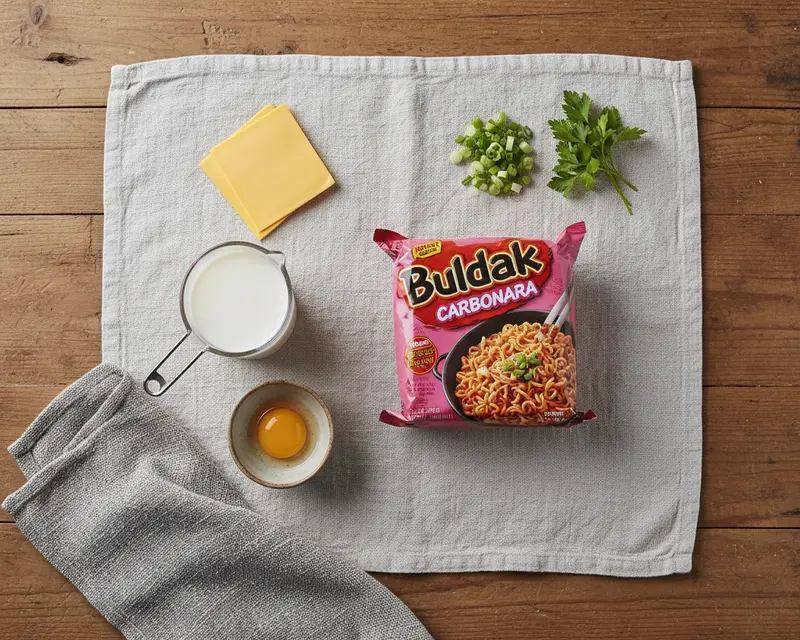
Fire noodles carbonara starts with just a handful of ingredients that work together to create that creamy, spicy magic. The star is obviously the Buldak noodles, but the milk and cheese transform them into something totally next-level. Everything else is about adding richness and a touch of fresh brightness at the end.
| Group | Ingredient | Amount | Notes |
|---|---|---|---|
| Base | Buldak Carbonara instant noodles | 1 pack | The foundation of our creamy masterpiece |
| Creamy Elements | Whole milk | 1/2 cup | Whole milk gives the best richness, but 2% works too |
| Creamy Elements | Egg yolk | 1 | Optional but so worth it for silky texture |
| Creamy Elements | Processed cheese slices | 1-2 slices | American or cheddar — the melty kind is key |
| Garnish | Green onions or parsley | To taste | Chopped, for a fresh pop of color and flavor |
Step-by-Step Instructions
Let’s make this happen. Buldak carbonara with milk is all about timing and gentle heat — rush it and you’ll scramble that egg, but take it slow and you’ll have the creamiest, dreamiest noodles ever.
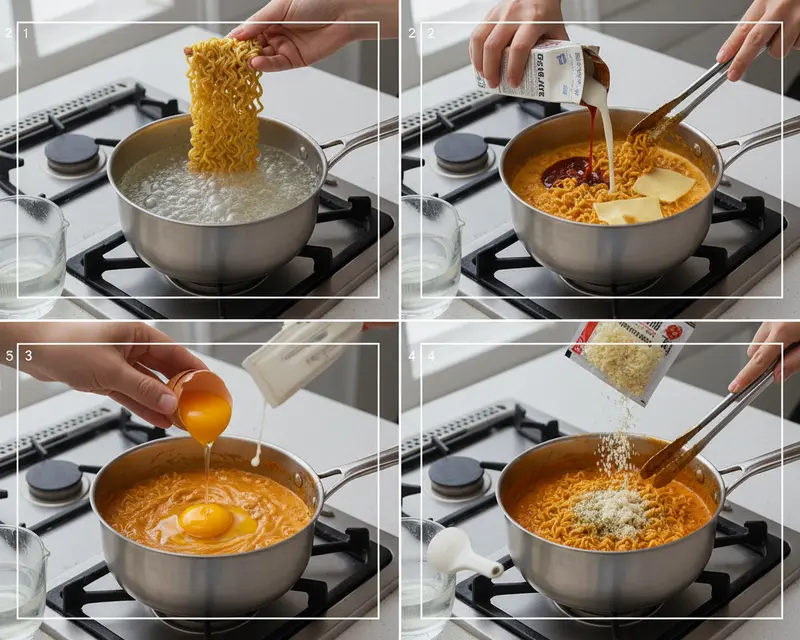
Step 1: Boil the Noodles
Bring about 2 cups of water to a rolling boil in your small pot. Drop in the noodle block and let it cook for 2-3 minutes, stirring occasionally to separate the strands. You want them just shy of fully cooked — they’ll finish in the sauce.
Step 2: Reserve and Drain
Before you dump everything out, scoop about 1/2 cup of that starchy noodle water into a measuring cup or mug and set it aside. Drain the noodles well in your colander. That reserved water is your secret weapon for adjusting sauce thickness later.
Step 3: Build the Creamy Sauce
Return the drained noodles to the pot and set it over low heat. Add the Buldak liquid sauce packet, milk, and cheese slices. Stir everything together gently, letting the cheese melt slowly into a glossy, creamy sauce that clings to every noodle.
Step 4: Add the Egg Yolk (Optional but Heavenly)
If you’re using an egg yolk, separate it into a small bowl first. Remove the pot from heat for a moment, then stir the yolk in quickly and constantly to prevent scrambling. The residual heat will cook it just enough to add silky richness without turning it into breakfast.
Step 5: Season and Adjust
Sprinkle in the powdered seasoning packet and stir until everything is fully combined and glossy. If the sauce looks too thick or clingy, add a tablespoon or two of that reserved noodle water and stir until you reach your perfect consistency.
Step 6: Serve and Garnish
Transfer your delicious Korean noodles to a serving bowl immediately. Sprinkle chopped green onions or parsley on top for a fresh, colorful finish. Grab your chopsticks and dig in while it’s piping hot.
Pro Tips & Gentle Guidance
Korean milk noodles are super forgiving, but a few little tweaks can take them from great to absolutely crave-worthy. Here’s what I’ve learned from making this on repeat in my Charleston kitchen.
Use Cold Milk, Not Room Temperature
Cold milk from the fridge helps you control the heat better and prevents the sauce from breaking. Pour it straight from the carton and let the gentle heat of the noodles warm it gradually. This keeps everything smooth and silky.
Keep the Heat Low When Adding Dairy
High heat and dairy don’t play nice — your sauce can separate or curdle if you crank it up. Low and slow is the way to go, especially once that cheese and milk are in the pot. Patience pays off here.
Stir Constantly After Adding the Egg Yolk
That yolk needs constant motion to emulsify into the sauce rather than scramble into little bits. Off the heat, stir vigorously for about 20 seconds and you’ll get that luscious, velvety texture every time.
Adjust Spice Level with Extra Milk or Cheese
If the heat is too much, don’t suffer through it — just add a splash more milk or another slice of cheese. Both will mellow the fire while keeping the creamy, indulgent vibe. According to Bon Appétit, dairy fats bind to capsaicin and literally carry the burn away from your taste buds.
Don’t Skip the Noodle Water
That starchy water is pure liquid gold for loosening up a sauce that’s gotten too thick. A tablespoon at a time will bring back the glossy, clingy texture without diluting flavor. It’s the same trick fancy pasta noodle dishes use.
Variations & Adaptations
Once you’ve mastered the basic buldak carbonara with milk, the fun really begins. Here are some of my favorite ways to switch things up depending on what’s in the fridge or what kind of mood I’m in.
Extra Protein Boost
Toss in a fried egg on top, some cooked chicken breast slices, or even crispy bacon bits. The noodles are rich enough to handle heartier additions, and the extra protein makes it feel like a complete meal. I love a soft-cooked egg with a runny yolk that breaks into the sauce.
Veggie-Loaded Version
Stir in some baby spinach, sliced mushrooms, or shredded cabbage during the last minute of cooking. They’ll wilt right into the creamy sauce and add texture, color, and a bit of freshness. It’s an easy way to sneak in some greens without changing the vibe.
Lighter Dairy Swap
Swap the whole milk for oat milk or unsweetened almond milk if you want something a bit lighter or dairy-free. The sauce won’t be quite as rich, but it’ll still be creamy and delicious. Just skip the cheese or use a plant-based version.
Cheese Lover’s Dream
Add an extra slice or two of cheese, or try mixing in some cream cheese or mozzarella for a different melty texture. The more cheese, the creamier and milder the heat becomes. It’s basically Korean mac and cheese at that point.
Spice It Up Even More
If you’re a heat seeker, add a drizzle of gochugaru (Korean chili flakes), a spoonful of gochujang, or a few drops of hot sauce. The milk base can handle more fire if you’re into that sort of thing. Just taste as you go.
Quick Fixes for Buldak Carbonara with Milk
Even the easiest recipes can throw a curveball now and then. Here’s how to troubleshoot the most common hiccups so your spicy Korean pasta turns out perfect every time.
Problem: Sauce Is Too Thick or Gloopy
If your sauce looks more like paste than silky cream, you just need to loosen it up. Add a tablespoon of the reserved noodle water at a time, stirring well after each addition until it reaches that glossy, clingy consistency. The starch in the water helps it emulsify beautifully.
Problem: Egg Yolk Scrambled Instead of Mixing In
This happens when the pot is too hot or you didn’t stir fast enough. Next time, take the pot completely off the heat before adding the yolk, and stir constantly and vigorously for about 20 seconds. If it’s already scrambled, just fish out the bits or embrace the texture — it’ll still taste great.
Problem: Sauce Looks Separated or Curdled
High heat is usually the culprit here, especially if you added the milk over a flame that was too intense. Turn the heat to low and whisk in a splash more milk or a bit of noodle water to bring it back together. Gentle heat is your friend with dairy.
Problem: It’s Way Too Spicy to Handle
Don’t power through the pain — just add more milk, another slice of cheese, or even a dollop of sour cream or cream cheese. All of these will tone down the heat while keeping the creamy vibe intact. You can also serve it with a side of plain rice to balance things out.
Problem: Noodles Are Mushy
If you overcooked them in the boiling water, there’s not much to do after the fact. Next time, pull them off the heat when they’re still slightly firm — they’ll finish cooking in the sauce. Set a timer for 2 minutes to keep yourself honest.
Storage & Reheating
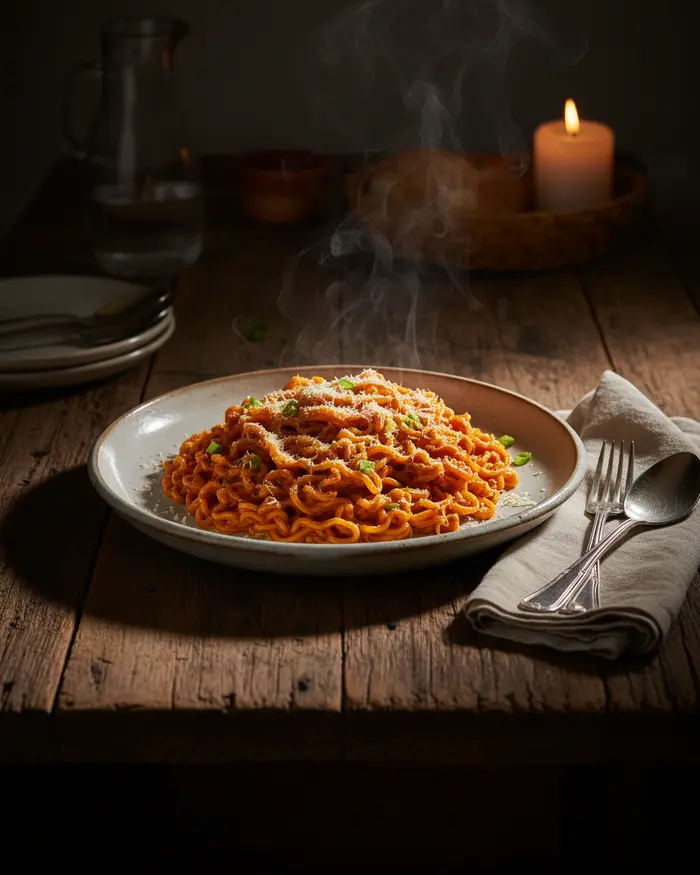
Fire noodles carbonara is best enjoyed fresh and hot, but life happens and sometimes you need to save it for later. Here’s how to store and bring back that creamy magic without sacrificing texture or flavor.
Serving Fresh
Serve your creamy buldak noodles immediately in a warm bowl, garnished with fresh green onions or parsley. The sauce is at its silkiest right off the stove, and the noodles have that perfect tender-chewy bite. Pair it with a light cucumber salad or kimchi to balance the richness.
Storing Leftovers
Transfer any leftovers to an airtight container and refrigerate for up to 2 days. The noodles will soak up some of the sauce as they sit, so they might look a little dry when you open the container. That’s totally normal and easy to fix when reheating.
Reheating Tips
Reheat gently in a small pot over low heat, adding a splash of milk or water to loosen up the sauce and bring back that creamy texture. Stir frequently to prevent sticking. You can also microwave it in 30-second bursts, stirring between each round and adding a bit of liquid as needed.
| Storage Method | Duration | Best Practice |
|---|---|---|
| Refrigerator | Up to 2 days | Store in airtight container, add liquid when reheating |
| Freezer | Not recommended | Dairy-based sauces don’t freeze well and can separate |
| Countertop | Not safe | Dairy and egg should be refrigerated within 2 hours |
No-Waste Kitchen Magic
Even a simple dish like this can generate little bits of waste, but with a few creative moves, you can use every last bit. Here’s how to stretch your ingredients and honor the food you’re cooking.
Save That Noodle Water
Don’t dump all the noodle water down the drain. Beyond what you reserve for the sauce, you can use it as a base for a quick soup or to cook vegetables. The starch adds body and a subtle savory note to whatever you’re making.
Use Leftover Egg Whites
If you separated an egg for the yolk, save the white in a small container in the fridge. Use it within a couple of days for scrambled eggs, an omelet, or even a quick egg white face mask if you’re feeling fancy. Waste not, want not.
Repurpose Green Onion Scraps
Save the root ends of your green onions and place them in a jar with a bit of water on a sunny windowsill. They’ll regrow in about a week, giving you endless free green onions for garnishing. It’s the easiest kitchen garden you’ll ever have.
Cheese Wrapper Trick
If you used processed cheese slices, run the inside of the wrapper along your noodles to grab every last bit of cheesy goodness. It sounds silly, but it adds a tiny extra hit of creaminess and ensures nothing goes to waste.
Frequently Asked Questions
Got questions about making the creamiest, dreamiest buldak carbonara with milk? Here are the answers to what folks ask me most often.
What is buldak carbonara with milk?
Buldak carbonara with milk is a Korean spicy noodle dish that combines the signature hot chicken flavor of buldak ramen with a creamy carbonara sauce made smoother and milder by adding milk. The milk helps balance the intense spiciness while creating a rich, creamy texture.
How much milk should I add to buldak carbonara?
Typically, you should add about 3 to 4 tablespoons of milk to buldak carbonara noodles. You can adjust the amount based on your preference for creaminess and spice level. More milk will make it creamier and less spicy, while less milk maintains more of the original heat.
Does adding milk reduce the spiciness of buldak carbonara?
Yes, adding milk to buldak carbonara does reduce the spiciness. Milk contains casein, a protein that helps neutralize capsaicin, the compound responsible for the burning sensation from spicy foods. This makes the dish more tolerable for those who find the original version too spicy.
When should I add milk to buldak carbonara?
Add milk to buldak carbonara after draining the noodles and mixing in the carbonara sauce packet. Pour the milk over the noodles and sauce mixture, then stir well to combine everything evenly. This ensures the milk integrates properly with the sauce for a smooth, creamy consistency.
Can I use alternatives to regular milk for buldak carbonara?
Yes, you can use alternatives such as almond milk, oat milk, soy milk, or coconut milk for buldak carbonara. However, dairy milk works best for reducing spiciness and creating creaminess due to its casein content. Non-dairy alternatives will still add creaminess but may be slightly less effective at neutralizing the heat.
Final Dish
Buldak carbonara with milk is one of those magical recipes that feels indulgent but comes together faster than you can decide what to watch on Netflix. It’s creamy, spicy, comforting, and endlessly customizable — exactly the kind of classic pasta dish that becomes a regular in your dinner rotation.
Whether you’re cooking for one or doubling the batch for a cozy night in, this spicy Korean pasta delivers every single time.
I’d love to see how yours turns out! Snap a pic, tag me, or drop a comment below with your favorite twist. And if you’re into creamy, comforting noodles, definitely check out this creamy miso udon or try your hand at easy ricotta cavatelli for your next noodle adventure.
I’m Linda Sandra — a Charleston home chef and comfort-food daydreamer. Around here, cooking’s not about perfection — it’s about cozy vibes, creative twists, and food that feels like love.
Buldak Carbonara with Milk
Ingredients
- 1 pack Buldak Carbonara instant noodles
- ½ cup milk whole milk recommended for creaminess
- 1 egg yolk optional, for extra richness
- 1-2 slices processed cheese like American cheese or cheddar, optional
- Green onions or parsley chopped (for garnish, optional)
Instructions
- Boil about 2 cups of water in a small pot. Add the noodle block and cook for 2-3 minutes, or until the noodles are almost cooked through. Keep about 1/2 cup of the noodle water aside before draining the rest.
- Return the noodles to the pot. Add the Buldak liquid sauce packet, milk, and cheese slices (if using). Stir well over low heat until the cheese is melted and the sauce thickens slightly.
- If using, separate an egg yolk and stir it into the noodles quickly to prevent scrambling, creating a richer, creamier sauce.
- Add the powdered seasoning packet and stir until fully combined. If the sauce is too thick, add a tablespoon or two of the reserved noodle water until you reach your desired consistency.
- Serve immediately, garnished with chopped green onions or parsley if desired.