Potsticker Noodle Bowls
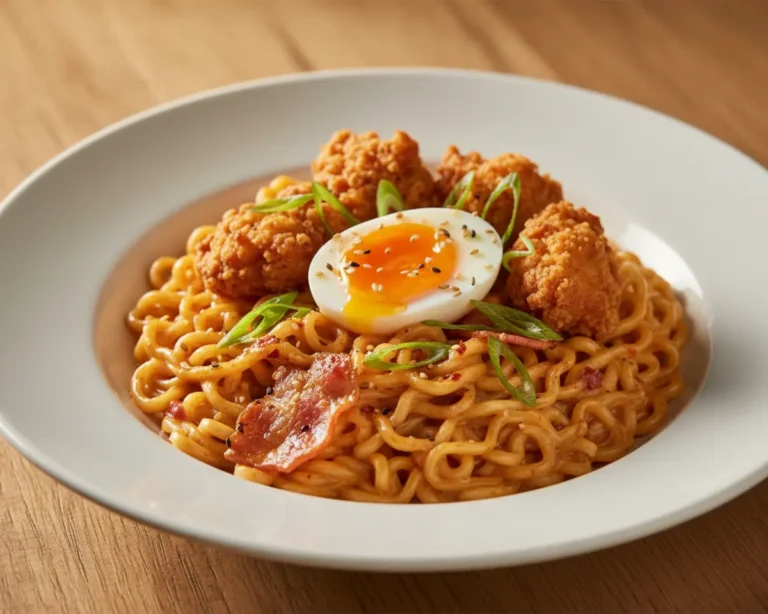
These Potsticker Noodle Bowls are your new weeknight obsession — savory ground pork, rice noodles, coleslaw mix, and a garlicky tamari-ginger sauce all tossed together in one wok in under 30 minutes. Total comfort food, zero fuss.
Potsticker Noodle Bowls are officially the weeknight dinner I didn’t know I needed — and now I can’t stop making them. I’m Linda Sandra, a home cook from Charleston who believes a great meal shouldn’t require a culinary degree or a pile of dishes, and this bowl is proof.
Think everything you love about a crispy potsticker — savory pork, ginger, garlic, a punchy soy-sesame sauce — but deconstructed into a cozy, slurpable noodle bowl. It’s got that takeout energy without the takeout price tag.
Table of Contents
Little Snapshot: What This Recipe Delivers
These Potsticker Noodle Bowls are a one-pan, 30-minute dinner made with seasoned ground pork, chewy stir-fry rice noodles, coleslaw mix, and a savory tamari-ginger-sesame sauce. This gluten-free-friendly recipe serves 5 and comes together entirely in a wok or large skillet — no fancy skills required, just high heat and hungry people.
Why You’ll Love This Recipe 🌸
- This Potsticker Noodle Bowl comes together in one wok with minimal cleanup — because nobody has time to wash 12 pans on a Tuesday.
- It’s naturally gluten-free when you use tamari, so everyone at the table can dig in without worry.
- The flavors are bold, savory, and a little saucy — like your favorite takeout spot, but you made it at home in your pajamas.
- According to The Kitchn’s guide to stir-frying noodles, noodle stir-fries are one of the quickest weeknight comfort foods you can make — and this Pot Sticker Noodle Bowl proves exactly why.
Quick Facts ⚡
Here’s the quick scoop on this Potsticker Noodle Bowl.
- CourseMain Dish
- Prep Time10 minutes
- Cook Time20 minutes
- Total Time30 minutes
- Servings5 servings
- DifficultyEasy
Potsticker Noodle Bowls Nutritional Peek
Per serving (approximate):
| Nutrient | Amount Per Serving |
|---|---|
| Calories | ~430 kcal |
| Protein | 24g |
| Carbohydrates | 42g |
| Fat | 16g |
| Fiber | 3g |
| Sugar | 4g |
Values are estimates and may vary based on specific brands used.
Potsticker Noodle Bowls Ingredients
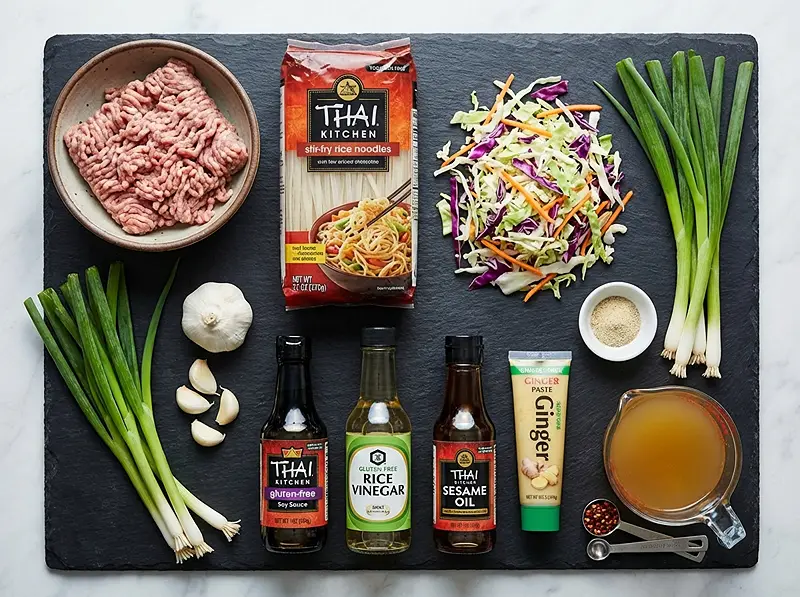
For this Pot Sticker Noodle Bowl recipe, you’ll work with three simple groups: the seasoned pork (ground pork, tamari, and white pepper), the savory sauce (tamari, chicken broth, rice vinegar, ginger paste, sesame oil, and optional chili flakes), and the noodle base (stir-fry rice noodles, coleslaw mix, green onions, and garlic).
Having everything prepped and ready before you heat the wok makes the whole thing come together like a dream.
| Amount | Ingredient |
|---|---|
| 1 lb | Ground pork |
| Pinch | White pepper (or black pepper) |
| ½ cup + 1 Tbsp | Low sodium gluten-free tamari, divided (or soy sauce if not GF) |
| ¼ cup | Low sodium chicken broth or water |
| 1 Tbsp | Rice vinegar |
| 1 Tbsp | Ginger paste (Gourmet Garden recommended) |
| 2 tsp | Sesame oil |
| Pinch | Red chili pepper flakes (optional) |
| 8 oz | Stir fry rice noodles (Thai Kitchen brand recommended) |
| 14 oz bag | Coleslaw mix |
| 1 bunch | Green onions (green parts in 2″ pieces, white/light green parts sliced) |
| 4 cloves | Garlic, pressed or minced |
Tools You’ll Actually Use
- Large wok or 12″ skillet
- Large pot (for boiling noodles)
- 2 mixing bowls (one medium, one small)
- Fork or small whisk (for the sauce)
- Colander or strainer
- Tongs or wooden spoon/spatula
- Garlic press (optional but great)
Step-by-Step Instructions
Let’s make these Potsticker Noodle Bowls — here’s exactly what to do, start to finish.
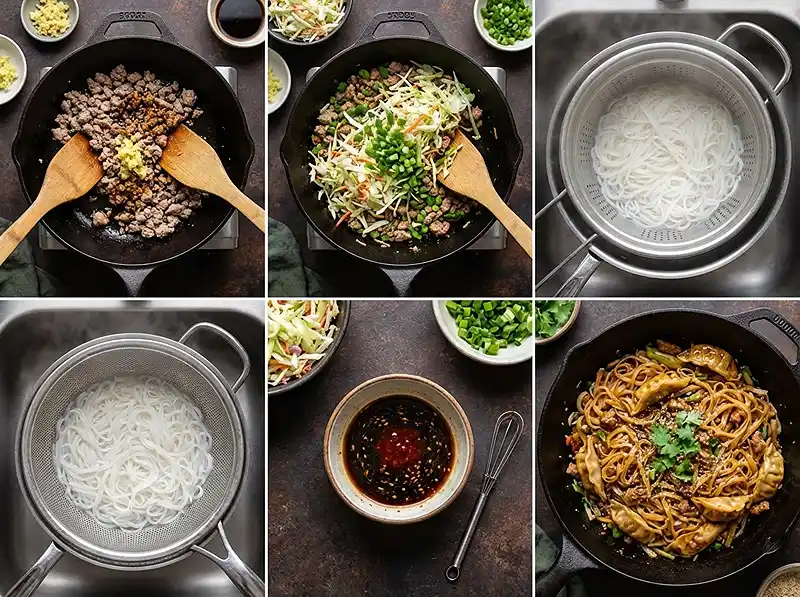
Step 1: Season the pork. Add 1 lb ground pork to a medium mixing bowl along with a pinch of white or black pepper and 1 tablespoon of gluten-free tamari. Mix together with your hands until everything is evenly combined, then set aside while you prep the rest.
Step 2: Make the sauce. In a small mixing bowl, whisk together the remaining ½ cup gluten-free tamari, ¼ cup low sodium chicken broth (or water), 1 tablespoon rice vinegar, 1 tablespoon ginger paste, 2 teaspoons sesame oil, and a pinch of red chili flakes if you like a little heat. Set this aside — you’ll add it to the wok at the end.
Step 3: Cook the rice noodles. Boil 8 oz of stir-fry rice noodles according to package directions — Thai Kitchen brand calls for 4–6 minutes. I like to pull them just at the al dente stage (they’ll finish softening in the wok). Drain and rinse under cold running water to stop the cooking, then set aside.
Step 4: Brown the pork and stir-fry the veggies. While the noodles are boiling, heat a large wok or 12″ skillet over high heat until it’s very hot. Add the seasoned pork mixture and break it up as it cooks, browning it all the way through.
Add the 14 oz bag of coleslaw mix and the green onions (both the 2″ green pieces and the sliced white parts) and stir-fry until the coleslaw softens and wilts, about 3–4 minutes. Add the 4 cloves of minced or pressed garlic and stir-fry for 1 more minute — your kitchen will smell absolutely amazing right about now.
Step 5: Add noodles and sauce, finish cooking. Add the drained and rinsed rice noodles and the prepared tamari-ginger sauce into the wok. Stir-fry everything together for 4–5 minutes until the noodles are tender and coated in the sauce.
If the sauce starts evaporating too quickly before the noodles soften, turn the heat down slightly and add up to an extra ¼ cup of chicken broth. You can also remove the wok from heat, cover with a lid, and let the steam finish softening the noodles.
Step 6: Let it rest before serving. This is the step people always skip — don’t! Let the bowl cool for at least 10 minutes before scooping into bowls. The flavors deepen and mellow beautifully once it’s not piping hot, and you’ll get a much more balanced, delicious bite.
One recipe down, and so many more to explore! Head over to our complete Grain & Buddha Bowls lineup for more delicious ideas that’ll keep your kitchen buzzing. Bookmark this one — you’ll thank yourself later.
Pro Tips & Gentle Guidance
Getting your Potsticker Bowl just right is mostly about a few small things: your heat, your prep, and a little patience. Once you get the hang of it, this comes together almost on autopilot.
Prep everything before you turn on the heat. Seriously — once that wok gets hot, things move fast. Have your pork mixed, sauce whisked, noodles ready, and veggies prepped before you even turn on the burner. No scrambling around the kitchen mid-stir-fry!
High heat is your friend. Don’t be shy with the heat on the wok. High heat gets that beautiful sear on the pork and keeps the coleslaw from getting soggy. A lower heat will steam everything instead of fry it — and we want those slightly caramelized, savory edges.
Don’t skip the cold water rinse on the noodles. Rinsing the cooked rice noodles under cold water stops them from cooking further and prevents them from sticking together in a big clump. It makes them so much easier to toss into the wok.
Cook the noodles al dente on purpose. You want them slightly underdone when they go into the wok — they’ll finish cooking in the sauce during the stir-fry step. If you boil them all the way through first, they’ll turn mushy.
The 10-minute rest is not optional. I know, I know — it smells incredible and you want to eat immediately. But letting this rest for 10 minutes before serving makes a massive flavor difference. The sauce absorbs evenly and the noodles settle into the most perfect texture.
If you’re newer to wok cooking, The Woks of Life’s step-by-step lo mein guide has really excellent insight into how to build flavor in a hot wok — their tips on sauce timing and noodle texture are genuinely game-changing.
Quick Fixes for Potsticker Noodle Bowls
Problem: Noodles are too mushy. You likely over-boiled them before they went into the wok. Next time, pull them right at al dente (or even a minute early) since they’ll continue softening when stir-fried with the sauce. Rinsing immediately in cold water also helps stop the cooking fast.
Problem: The sauce evaporated before the noodles softened. This happens when the heat is too high during the final stir-fry step. Turn it down slightly and add up to ¼ cup extra chicken broth. Or remove the wok from heat, pop a lid on, and let the steam do the work for a few minutes.
Problem: The pork tastes bland. Make sure you’re using the full tablespoon of tamari in the pork marinade before cooking, and don’t rush the browning step — that caramelization is where the flavor lives. If it still feels flat, a tiny drizzle of sesame oil right before serving lifts everything.
Problem: The coleslaw is watery or soggy. This usually means the heat wasn’t high enough. Crank it up! High heat wilts the coleslaw quickly without releasing too much water. A crowded pan can also cause steaming instead of stir-frying, so use the largest wok or skillet you have.
Problem: Noodles are sticking together. Rinse them well in cold water after boiling and toss them gently to separate before adding to the wok. If they’ve already clumped, a splash of warm water or broth while stir-frying will loosen them right up.
Variations & Adaptations
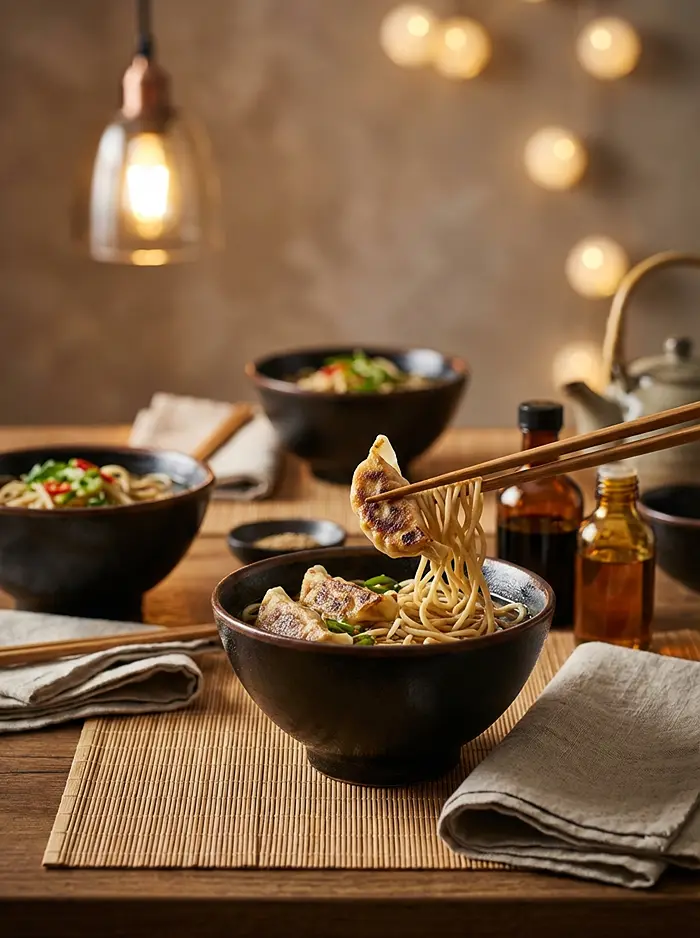
These Pot Sticker Noodles are wonderfully flexible — here are some fun ways to switch it up:
Make it vegetarian: Swap the ground pork for crumbled firm tofu or finely chopped shiitake mushrooms. Use vegetable broth instead of chicken broth. The tamari-ginger sauce still does all the heavy lifting on flavor.
Make it spicy: Double the red chili flakes in the sauce, or stir in a tablespoon of chili garlic sauce or sriracha. A drizzle of chili oil at serving is also chef’s kiss.
Swap the protein: Ground turkey or chicken works beautifully here. Even thinly sliced beef or shrimp would be delicious — just adjust the cook time so your protein doesn’t overcook before the veggies go in.
Add more veggies: Toss in sliced mushrooms, shredded carrots, snap peas, or baby bok choy alongside the coleslaw. The wok can handle it!
Use different noodles: Any rice noodle or even lo mein noodles will work in this recipe. Just adjust cook time based on package directions before adding to the wok.
Looking for more cozy comfort food? Try these high-protein cottage cheese bagels when you need a satisfying savory snack, or these homemade strawberry muffins when the sweet tooth hits.
Serving, Storage & Reheating
Serving: Potsticker Bowls are best served in wide, deep bowls so all that saucy goodness stays put. Top with extra sliced green onions, a sprinkle of sesame seeds, or a drizzle of chili oil if you’re feeling fancy. Don’t forget to let it rest those 10 minutes first — trust the process!
Storage: If you somehow manage not to eat all five servings in one sitting (truly impressive), store leftovers in an airtight container in the refrigerator for up to 4 days. The noodles will absorb more sauce overnight, which honestly makes them even more flavorful.
Reheating: Reheat in a skillet over medium heat with a splash of chicken broth or water to loosen the noodles back up. The microwave works too — cover with a damp paper towel and heat in 60-second intervals. Either way, they’re just as good the next day.
No-Waste Kitchen Magic
Use up the coleslaw mix beyond the bowl: If you have leftover coleslaw mix from a larger bag, toss it into a quick slaw with rice vinegar, a pinch of sugar, and sesame oil. It’s a great side for tacos, sandwiches, or just snacking.
Leftover pork filling goes everywhere: The seasoned, cooked pork is delicious stuffed into lettuce wraps, tucked into a rice bowl, or even used as a filling for homemade dumplings if you’re feeling ambitious.
Noodles for breakfast: Leftover Pot Sticker Noodles with a fried egg on top? That’s a 10/10 breakfast situation. Don’t knock it until you try it.
Ginger paste that doesn’t go to waste: The Gourmet Garden ginger paste keeps well in the fridge and is great in smoothies, marinades, salad dressings, and soups. It’s one of those fridge staples that earns its spot.
Potsticker Noodle Bowls FAQs
Can I make Potsticker Noodle Bowls ahead of time?
Yes! You can prep the sauce and season the pork up to 24 hours in advance — just store them separately in the fridge. The noodles are best cooked fresh, but even the full assembled dish reheats really well the next day with a splash of broth.
Can I freeze Potsticker Noodle Bowls?
You can, though the texture of the noodles will soften slightly after freezing and thawing. Freeze in an airtight container for up to 2 months, thaw overnight in the fridge, and reheat in a skillet with a little broth to bring it back to life.
What’s the best way to store leftover Pot Sticker Noodles?
Store them in an airtight container in the refrigerator for up to 4 days. They actually taste even better on day two once the sauce has really soaked into the noodles. Add a tiny splash of water or broth when reheating to loosen things up.
How do I know when my Potsticker Noodle Bowl is done cooking?
The dish is done when the rice noodles are tender (not chewy or firm in the center) and most of the sauce has been absorbed into the noodles and pork. The coleslaw should be fully wilted and soft. Give it a taste — if the noodles still have a bite to them, keep going another minute or two.
Will this recipe work without a wok?
Absolutely! A large 12″ skillet works great — just make sure it’s fully preheated before adding ingredients and use the highest heat your stovetop allows. The bigger the pan, the better, since a crowded pan will steam instead of fry.
Let’s Wrap It Up!
So there you go — Potsticker Noodle Bowls that taste like they took forever but come together in 30 minutes with one pan and ingredients you probably already have. This is the kind of meal that makes Tuesday feel like a treat.
I’d love to see your spin on these Potsticker Noodle Bowls! Drop a comment below with how yours turned out — did you add extra heat? Try a different protein? Make it veggie? This Pot Sticker Bowl recipe is so wonderfully versatile, I just know you’ve already got a twist in mind.
And if you’re into easy, cozy, no-fuss recipes like this one, check out my almond flour cottage cheese bagels for a simple high-protein snack that checks all the same boxes.
Tag me, share it, save it — and most importantly, enjoy every single bite.
I’m Linda Sandra — a Charleston home chef and comfort-food daydreamer. Around here, cooking’s not about perfection — it’s about cozy vibes, creative twists, and food that feels like love.
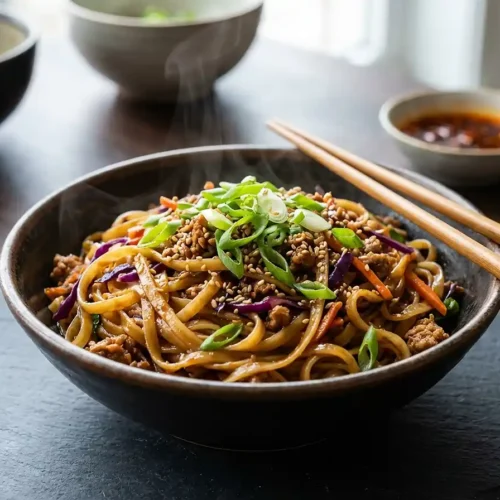
Potsticker Noodle Bowls
Equipment
- Large wok or 12-inch skillet
- Large pot
- Medium mixing bowl
- Small mixing bowl
- Fork or small whisk
- Colander or strainer
- Tongs or wooden spatula
- Garlic press (optional)
Ingredients
Pork Mixture
- 1 lb ground pork
- 1 pinch white pepper or black pepper
- 1 tbsp low sodium gluten-free tamari or soy sauce if not gluten-free
Sauce
- ½ cup low sodium gluten-free tamari or soy sauce if not gluten-free
- ¼ cup low sodium chicken broth or water
- 1 tbsp rice vinegar
- 1 tbsp ginger paste Gourmet Garden brand recommended
- 2 tsp sesame oil
- 1 pinch red chili pepper flakes optional
Noodle Base
- 8 oz stir fry rice noodles Thai Kitchen brand recommended
- 14 oz coleslaw mix one standard bag
- 1 bunch green onions green parts chopped into 2-inch pieces, white and light green parts sliced
- 4 cloves garlic pressed or minced
Instructions
- Add 1 lb ground pork to a medium mixing bowl along with a pinch of white or black pepper and 1 tablespoon of gluten-free tamari. Mix together with your hands until everything is evenly combined, then set aside while you prep the rest.
- In a small mixing bowl, whisk together the remaining ½ cup gluten-free tamari, ¼ cup low sodium chicken broth (or water), 1 tablespoon rice vinegar, 1 tablespoon ginger paste, 2 teaspoons sesame oil, and a pinch of red chili flakes if using. Set aside — you’ll add this to the wok at the end.
- Boil 8 oz of stir-fry rice noodles according to package directions — Thai Kitchen brand calls for 4–6 minutes. Pull them just at the al dente stage, as they’ll finish cooking in the wok. Drain and rinse immediately under cold running water to stop cooking and prevent sticking, then set aside.
- Heat a large wok or 12-inch skillet over high heat until very hot. Add the seasoned pork mixture and cook, breaking it up as it browns. Add the 14 oz bag of coleslaw mix and the green onions (both the 2-inch green pieces and the sliced white parts) and stir-fry until the coleslaw wilts and becomes tender, about 3–4 minutes. Add the 4 cloves of minced or pressed garlic and stir-fry for 1 more minute.
- Add the drained and rinsed rice noodles and the prepared tamari-ginger sauce into the wok. Stir-fry everything together for 4–5 minutes until the noodles are tender and coated in the sauce. If the sauce starts evaporating before the noodles are fully soft, turn the heat down slightly and add up to ¼ cup extra chicken broth, or remove the wok from heat, cover with a lid, and let the steam finish softening the noodles.
- Let the dish cool for at least 10 minutes before scooping into bowls. The flavors deepen and the sauce absorbs more evenly once it’s not piping hot — you’ll taste so much more balance and depth in every bite.