Sourdough Lemon Blueberry Focaccia Bread
This Sourdough Lemon Blueberry Focaccia Bread combines tangy sourdough starter with fresh blueberries and bright lemon zest for a stunning breakfast bread that’s easier than it looks.
Hey there, I’m Claire Whitmore — a pastry whisperer in Asheville, NC, where butter totally counts as self-care.
This Sourdough Lemon Blueberry Focaccia Bread recipe is one of those beautiful accidents that happened when I had too much active sourdough starter, a pint of blueberries about to turn, and a serious craving for something that wasn’t just another plain loaf.
This recipe delivers a tender, airy focaccia with pockets of juicy blueberries, bright citrus notes from fresh lemon juice and zest, and that signature sourdough tang we all love.
The buttery top gets those gorgeous dimples, while a sweet lemon glaze adds the perfect finishing touch. It takes about 30 minutes of actual hands-on work, then time and your sourdough starter do the heavy lifting through bulk fermentation and an overnight cold rise.
Table of Contents
Little Snapshot: What This Recipe Delivers
This Sourdough Lemon Blueberry Focaccia Bread uses an active sourdough starter, bread flour, fresh blueberries, and lemon to create a tender, dimpled flatbread with a golden crust and airy crumb.
It requires about 30 minutes of active prep with stretch-and-fold techniques, followed by overnight cold fermentation for maximum flavor development, then bakes in 30-40 minutes at 400°F.
Why You’ll Love This Recipe 🌸
- This Sourdough Lemon Blueberry Focaccia Bread looks like you spent all day in the kitchen, but it’s actually one of those magical recipes where time does most of the work for you.
- It’s the perfect way to use up that active sourdough starter sitting on your counter, turning it into something that feels fancy enough for brunch guests but cozy enough for Tuesday morning toast.
- The combo of tart lemon, sweet blueberries, and that signature sourdough tang creates a flavor profile that’s way more interesting than your average bread (and honestly, way prettier too).
- According to King Arthur Baking’s comprehensive sourdough starter guide, working with an active starter creates superior texture and rise — and this recipe proves exactly why.
Quick Facts ⚡
Here’s the quick scoop on this Sourdough Lemon Blueberry Focaccia Bread.
- CourseBread/Breakfast/Brunch
- Prep Time30 minutes (plus 12-15 hours fermentation)
- Cook Time30-40 minutes
- Total Time15-18 hours (mostly hands-off)
- Servings12 servings
- DifficultyMedium
Nutritional Peek
Here’s what you’re working with per serving (because we’re all about informed indulgence around here):
| Nutrient | Amount per Serving |
|---|---|
| Calories | 245 kcal |
| Protein | 6g |
| Carbohydrates | 42g |
| Fat | 6g |
| Fiber | 2g |
| Sugar | 13g |
Ingredients
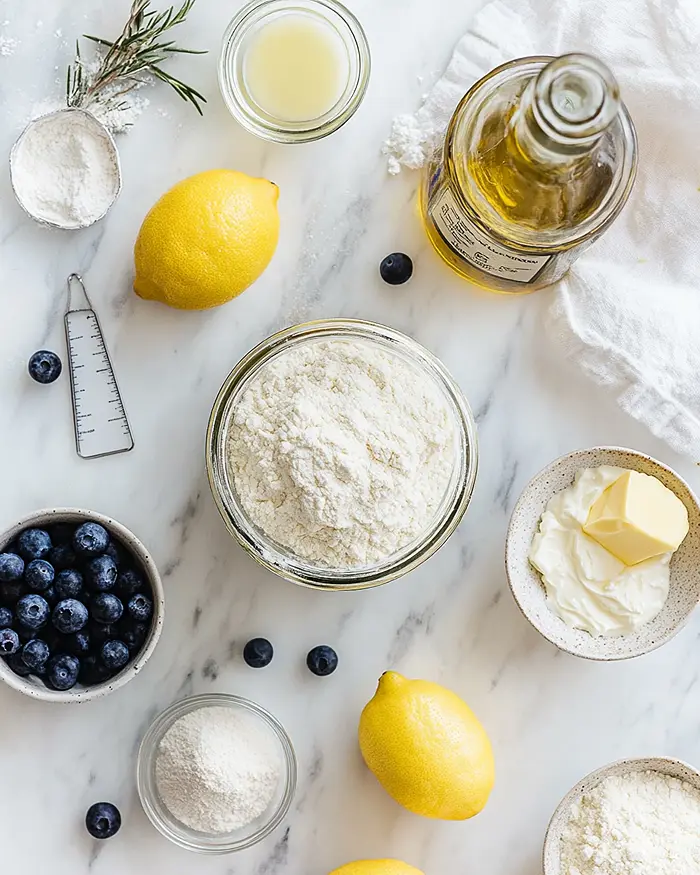
Let’s talk about what goes into this Sourdough Discard Focaccia Bread (though we’re actually using active starter here, not discard!). For the wet ingredients — your active sourdough starter, warm water, fresh lemon juice, and melted butter — you’ll want everything at room temperature except the butter for the topping.
The dry mix includes bread flour for that chewy texture, granulated sugar to balance the tang, and just enough salt to make all the flavors pop.
| Amount | Ingredient |
|---|---|
| Dough Ingredients | |
| 100 g (⅓ cup) | Active sourdough starter (at peak) |
| 400 g (1⅔ cups) | Warm water |
| 50 g (¼ cup) | Granulated sugar |
| 10 g (2 tsp) | Salt |
| 500 g (4 cups) | Bread flour (yes, bread flour matters here!) |
| 3 tbsp | Fresh lemon juice (about 1 large lemon) |
| 3 tsp | Lemon zest (from that same lemon) |
| 30 g (2 tbsp) | Olive oil (this goes in the pan, not the dough) |
| Topping | |
| 1 cup | Fresh blueberries (frozen will make it soggy) |
| 62 g (¼ cup) | Unsalted butter, melted |
| Lemon Glaze | |
| 2-3 tbsp | Fresh lemon juice |
| 130 g (1 cup) | Powdered sugar |
Tools You’ll Actually Use
- Large mixing bowl
- Danish dough whisk or sturdy wooden spoon
- Bowl scraper
- 9×13 inch baking pan
- Parchment paper
- Kitchen towel or plastic wrap
- Wire cooling rack
- Small bowls for glaze
- Instant-read thermometer (optional but helpful)
Step-by-Step Instructions
Making this Sourdough Lemon Blueberry Focaccia Bread is easier than you think, I promise. Most of the work is just being patient while the dough does its thing.
Feed Your Starter (4-6 Hours Before Mixing)
About 4-6 hours before you’re ready to mix, feed your sourdough starter using a 1:1:1 ratio — that’s equal parts flour, water, and existing starter. Let it sit at room temperature until it’s bubbly, doubled in size, and at its peak.
The exact timing depends on your kitchen temperature and how happy your starter is, but you’ll know it’s ready when it’s super puffy and passes the float test.
Mix the Dough
Grab a large bowl and add 100 g (½ cup) of that gorgeous active sourdough starter, 500 g (4 cups) bread flour, 400 g (1⅔ cups) warm water, 10 g (2 tsp) salt, 3 tbsp fresh lemon juice, 3 tsp lemon zest, and 50 g (¼ cup) sugar.
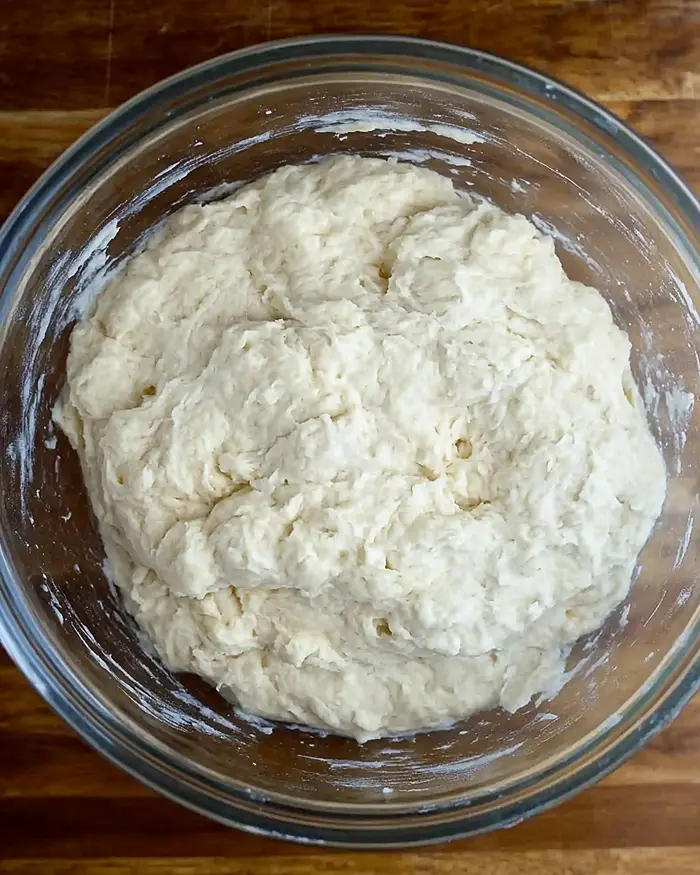
Use a Danish dough whisk to combine everything until you don’t see any dry flour bits — it’ll look shaggy and sticky, and that’s totally normal. Cover the bowl with a kitchen towel and let it rest for 30 minutes so the flour can fully hydrate.
First Set of Stretch and Folds
After that 30-minute rest, it’s time for your first stretch and fold session. Wet your hands slightly (this prevents sticking), then grab one side of the dough from the edge of the bowl, lift it straight up as far as it’ll stretch without tearing, and fold it over onto itself in the middle.
Rotate your bowl a quarter turn and repeat this motion 12-15 times around the entire bowl until you’ve worked your way around. Cover and rest for another 30 minutes.
Continue Stretch and Folds
Repeat this stretch-and-fold process two more times (30 minutes rest between each set) for a total of three sets. You’ll notice the dough transforms from that super sticky mess that’s all over your hands into a smooth, elastic dough that barely sticks to you. It’s like magic, honestly.
Bulk Fermentation (First Rise)
After your final stretch and fold, cover the bowl and find a cozy warm spot in your kitchen for the dough to bulk ferment. This takes roughly 3-6 hours depending on how warm your kitchen is.
You’ll know it’s ready when the dough has roughly doubled in size, looks puffy with visible air bubbles, and when you gently poke it, the indentation slowly springs back but leaves a slight impression.
Cold Ferment Overnight
Once bulk fermentation is done, cover the bowl tightly and pop it into the refrigerator overnight. This cold ferment develops those complex sourdough flavors and makes the dough easier to handle the next day.
Shape and Second Rise
The next morning, prepare your 9×13 inch baking pan by lining the bottom with parchment paper and drizzling 30 g (2 tbsp) olive oil evenly over it. Use a bowl scraper to gently turn the cold dough out into the prepared pan.
Rub a bit of olive oil on your fingers (trust me, this prevents sticking), then stretch and coax the dough to fit the pan — it might resist at first, but give it a minute and it’ll relax.
Cover the pan with a tea towel or plastic wrap and place it somewhere warm for 4-5 hours. I usually put mine in the oven with just the light on to create a warm little proving environment.
During this second rise, the dough will puff up beautifully with tons of air bubbles visible just under the surface. The timing varies wildly based on your kitchen temperature, so just watch for that puffy, airy look.

Dimple and Bake
Preheat your oven to 400°F (don’t forget to remove the pan first if you were proofing in there with the light on — I’ve definitely almost made that mistake). Scatter the fresh blueberries evenly over the top of the risen dough. Drizzle the 62 g (¼ cup) melted butter all over the surface.
Now for the fun part: press your fingertips firmly into the dough, creating those signature focaccia dimples across the entire surface. Don’t be shy — really push down!
Slide the pan into the oven and bake for 30-40 minutes until the top is light golden brown and the internal temperature reads 200°F if you’re using a thermometer. Your kitchen will smell absolutely incredible.
Make the Lemon Glaze
While the focaccia bakes, make your glaze. Juice a fresh lemon into a small bowl — you’ll need 2-3 tablespoons. In another small bowl, whisk together the lemon juice and 130 g (1 cup) powdered sugar until completely smooth. Add a bit more lemon juice if needed to get a pourable but not too-thin consistency.
Cool and Glaze
Remove the focaccia from the oven and carefully lift it out of the pan using the parchment paper.
Transfer it to a wire rack and peel off the parchment. Let the bread cool completely to room temperature — I know this is torture, but if you glaze it while it’s hot, the glaze will just melt and run off. Once cool, drizzle that beautiful lemon glaze over the top in whatever pattern makes you happy.
Claire’s Pro Tips & Gentle Guidance
These are the little tricks I’ve learned from making this Sourdough Bread Recipe With Inclusions about a million times (okay, maybe not a million, but a lot).
The Float Test Is Your Friend
Before you start mixing your dough, test if your starter is ready by dropping a small spoonful into a glass of water. If it floats, you’re good to go. If it sinks like a stone, give it more time to rise.
Cold Dough Is Happy Dough
That overnight cold ferment isn’t just for flavor — it also makes the dough so much easier to handle and shape. Room temperature sourdough dough can be really sticky and frustrating to work with, but cold dough is like a dream.
Don’t Skip the Olive Oil on Your Fingers
When you’re stretching the dough in the pan, oiled fingers are essential. The dough will stick to dry hands and tear, but with a light coating of olive oil, it stretches beautifully without any fuss.
Dimple with Confidence
I was way too gentle with my dimples the first time I made this, and they basically disappeared during baking. Really press down firmly all the way to the bottom of the pan. Those dimples catch the melted butter and create the most amazing texture, plus they look gorgeous.
For more detailed techniques on getting that perfect focaccia texture, check out Serious Eats‘ guide to no-knead focaccia techniques, which explains the science behind proper dimpling.
Watch the Blueberries
Fresh blueberries work best here. Frozen ones release too much moisture during baking and can make your focaccia soggy. If you only have frozen, thaw them completely and pat them super dry with paper towels first.
Quick Fixes for Sourdough Lemon Blueberry Focaccia Bread
Problem: My dough didn’t rise during bulk fermentation Your starter might not have been active enough, or your kitchen might be too cold. Next time, make sure your starter passes the float test before mixing, and find a warmer spot (75-80°F is ideal) for fermentation.
Problem: The focaccia is dense instead of airy This usually means the dough was under-fermented. Make sure you’re giving it enough time during both bulk fermentation and the second rise — you should see visible air bubbles and the dough should feel puffy and light, not dense and heavy.
Problem: The top burned but the inside isn’t done Your oven might be running hot. Try reducing the temperature to 375°F and baking for a bit longer, or tent the top with aluminum foil for the last 10 minutes of baking.
Problem: The glaze soaked in and disappeared You probably glazed it while it was still warm. The bread needs to be completely cool to room temperature so the glaze sets on top instead of melting into the crumb.
Problem: The dough is way too sticky to handle Sticky dough is normal for high-hydration sourdough, but if it’s unmanageable, you might need to add another set of stretch and folds, or your flour might be absorbing less water than expected. Also, make sure you’re oiling your hands when handling the dough.
Variations & Fun Twists
This Active Sourdough Starter Recipes Easy formula is super versatile once you’ve got the basic technique down.
Seasonal Swaps
Swap the blueberries for fresh raspberries or blackberries in summer, diced strawberries in late spring, or even thin apple slices with cinnamon in fall. In winter, I love using cranberries with orange zest instead of lemon.
Savory Version
Skip the sugar, lemon, and glaze entirely. Use rosemary, cherry tomatoes, and flaky sea salt instead. Increase the olive oil and you’ve got a savory version that’s perfect alongside honey roasted carrots with feta or lemon basil chicken salad.
Gluten-Free Option
I haven’t personally perfected a gluten-free version yet, but I’ve heard good things from readers who’ve used a cup-for-cup gluten-free bread flour blend. You’ll need to add xanthan gum if your blend doesn’t include it, and the texture will be a bit different.
Extra Lemon Lovers
If you’re obsessed with lemon (like me), add an extra tablespoon of zest to the dough and brush the top with lemon-infused olive oil before dimpling. You could even add some lemon curd between the layers after baking for an extra citrus punch.
Make It Fancy
Top with edible flowers, a sprinkle of turbinado sugar before baking for crunch, or drizzle with white chocolate instead of lemon glaze for a dessert version that’ll blow people’s minds.
There’s a whole world of sourdough recipes waiting for you over at the Sourdough Recipes collection. Each one is made with the same love and attention, and they’re all absolutely worth trying. Happy cooking!
Serving, Storage & Reheating

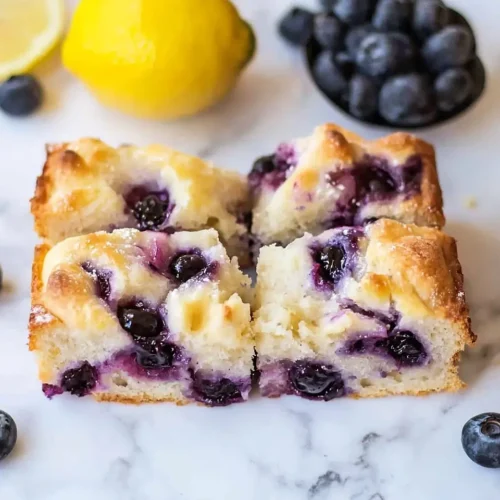
This Sourdough Lemon Blueberry Focaccia Bread is absolutely stunning served warm or at room temperature. I love cutting it into squares and serving it at brunch alongside scrambled eggs and fresh fruit, or honestly, just eating it with really good butter and a cup of coffee.
If you actually have leftovers (which honestly, I doubt you will), store them in an airtight container at room temperature. The focaccia is definitely best the day you bake it, but it’ll stay pretty good for a day or two.
To reheat, warm slices in a 300°F oven for about 5 minutes, or toast them lightly. The microwave will make it gummy, so definitely avoid that. You can also turn day-old focaccia into the most amazing bread pudding if you’re feeling creative.
No-Waste Kitchen Magic
Got leftover pieces that are getting a bit stale? Cut them into cubes and toast them in the oven to make croutons for spring couscous salad. The lemon-blueberry flavor adds such an interesting twist to salads.
You can also blend stale pieces in a food processor to make breadcrumbs, which freeze beautifully for up to three months. Use them to top casseroles or mix them into meatballs for a hint of sweetness.
If you’ve got extra active starter after feeding (since you only need 100g for this recipe), use it to make pancakes, crackers, or banana bread. Never waste that liquid gold!
Sourdough Lemon Blueberry Focaccia Bread FAQs
Can I use sourdough discard instead of active starter for this recipe?
Unfortunately, no. This recipe really needs an active, bubbly starter at its peak to get the rise and airy texture. Discard won’t have enough oomph to lift this dough properly, and you’ll end up with a dense brick instead of that beautiful light crumb.
How do I know when my dough has bulk fermented enough?
Look for three signs: the dough should roughly double in size, you should see plenty of air bubbles throughout (even on the sides), and when you poke it gently, the indentation should slowly spring back but leave a slight impression.
What’s the best way to store leftover focaccia?
Keep it in an airtight container at room temperature for up to 2 days. Don’t refrigerate it — that actually makes bread go stale faster. If you need to keep it longer, slice it and freeze individual pieces in a freezer bag for up to 3 months, then toast from frozen.
Cozy Closing
I really hope you fall in love with this Sourdough Lemon Blueberry Focaccia Bread as much as I have. It’s one of those recipes that looks incredibly impressive but is actually pretty forgiving once you understand the rhythm of working with sourdough.
I’d love to see your spin on this Sourdough Lemon Blueberry Focaccia Bread! Drop a comment below with your focaccia photos — I’d love to see how you made it your own. This Sourdough Lemon Blueberry Focaccia Bread is so versatile; I bet you’ve got amazing variations already in mind!
I’m Claire Whitmore — a dessert daydreamer from Asheville, NC. For me, baking isn’t about perfect pastries — it’s about the joy of sharing something sweet (and maybe sneaking an extra bite while no one’s looking).
When I’m not elbow-deep in flour, you’ll find me experimenting with seasonal ingredients and figuring out how to make fancy recipes actually work for real life.
Sourdough Lemon Blueberry Focaccia Bread
Equipment
- Large mixing bowl
- Danish dough whisk or sturdy wooden spoon
- Bowl scraper
- 9×13 inch baking pan
- Parchment paper
- Kitchen towel or plastic wrap
- Wire cooling rack
- Small bowls for glaze
- Instant-read thermometer
Ingredients
Dough Ingredients
- 100 g active sourdough starter at peak, ⅓ cup
- 400 g warm water 1⅔ cups
- 50 g granulated sugar ¼ cup
- 10 g salt 2 tsp
- 500 g bread flour 4 cups
- 3 tbsp lemon juice 1 large lemon
- 3 tsp lemon zest 1 large lemon
- 30 g olive oil 2 tbsp, for the pan
Topping
- 1 cup fresh blueberries
- 62 g unsalted butter melted, ¼ cup
Lemon Glaze
- 2-3 tbsp lemon juice
- 130 g powdered sugar 1 cup
Instructions
- About 4-6 hours before you’re ready to mix, feed your sourdough starter using a 1:1:1 ratio (equal parts flour, water, and existing starter). Let it sit at room temperature until it’s bubbly, doubled in size, and at its peak.
- Add 100 g (½ cup) active sourdough starter, 500 g (4 cups) bread flour, 400 g (1⅔ cups) warm water, 10 g (2 tsp) salt, 3 tbsp fresh lemon juice, 3 tsp lemon zest, and 50 g (¼ cup) sugar to a large bowl. Use a Danish dough whisk to combine everything until no dry flour remains. Cover the bowl and let rest for 30 minutes.
- Wet your hands slightly, then grab one side of the dough from the edge of the bowl, lift it straight up, and fold it over onto itself in the middle. Rotate the bowl a quarter turn and repeat 12-15 times around the entire bowl. Cover and rest for 30 minutes.
- Repeat the stretch-and-fold process two more times (30 minutes rest between each set) for a total of three sets. The dough will transform from sticky to smooth and elastic.
- After the final stretch and fold, cover the bowl and place in a warm spot to bulk ferment for 3-6 hours. The dough should roughly double in size and look puffy with visible air bubbles.
- Once bulk fermentation is done, cover the bowl tightly and refrigerate overnight.
- The next morning, line a 9×13 inch baking pan with parchment paper and drizzle 30 g (2 tbsp) olive oil evenly over it. Use a bowl scraper to turn the cold dough out into the pan. Rub olive oil on your fingers and stretch the dough to fit the pan.
- Cover the pan with a tea towel or plastic wrap and place in a warm spot for 4-5 hours until the dough is visibly puffy with air bubbles beneath the surface.
- Preheat oven to 400°F. Scatter the fresh blueberries evenly over the dough. Drizzle the 62 g (¼ cup) melted butter over the top. Press your fingertips firmly into the dough, creating dimples across the entire surface.
- Bake for 30-40 minutes until the top is light golden brown and the internal temperature reads 200°F.
- While the bread bakes, whisk together 2-3 tablespoons lemon juice and 130 g (1 cup) powdered sugar until smooth to create the glaze.
- Remove the focaccia from the oven and lift it out of the pan using the parchment paper. Transfer to a wire rack and peel off the parchment. Let cool completely to room temperature, then drizzle the lemon glaze over the top.