Tanghulu (Chinese Candied Fruit)
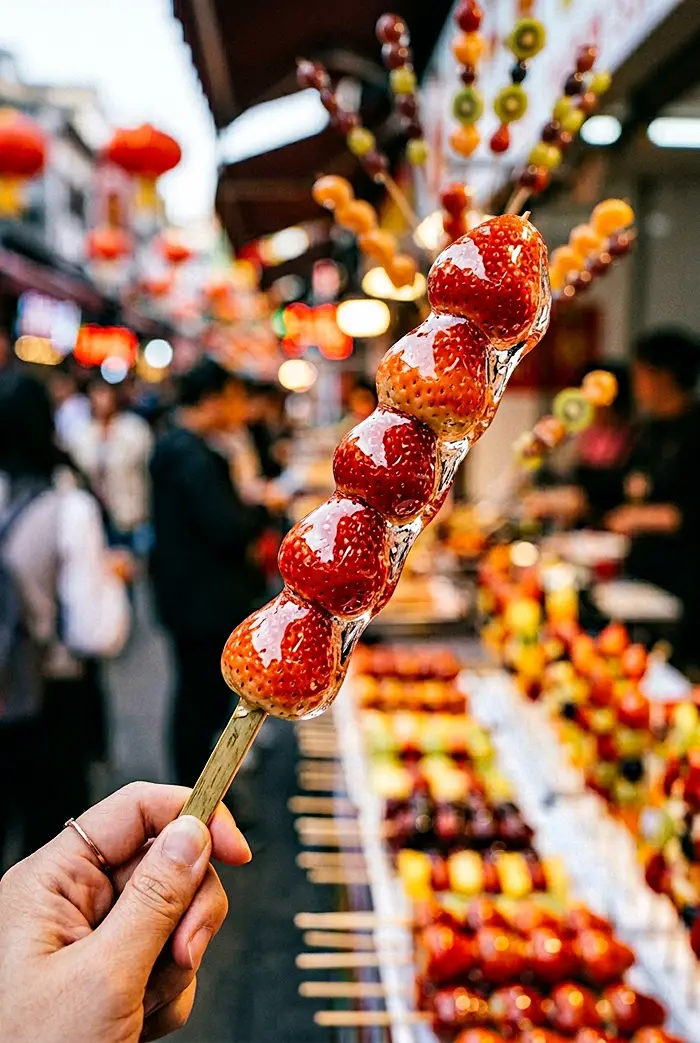
Tanghulu (Chinese Candied Fruit) is a sparkling, glass-like candy shell wrapped around fresh fruit on a skewer — and honestly, it’s one of the most satisfying things you’ll ever bite into.
Hey there, I’m Claire Whitmore — a pastry whisperer in Asheville, NC, where butter totally counts as self-care. This easy tanghulu recipe uses just three ingredients, takes about 20 minutes from start to finish, and delivers that iconic crackly crunch with juicy fruit bursting underneath.
Think of tanghulu as the street food love child of a lollipop and a fresh fruit platter. It’s naturally gluten-free, dairy-free, and vegan. Strawberries, grapes, and blueberries are the most popular fruit choices, and the hard-crack sugar coating gives each skewer that gorgeous, jewel-like shine you’ve probably seen all over social media. It’s beginner-friendly, crowd-pleasing, and ridiculously fun to make.
Table of Contents
Little Snapshot: What This Recipe Delivers
This Tanghulu (Chinese Candied Fruit) recipe turns fresh strawberries, grapes, or your favorite fruit into glossy, candy-coated skewers in about 20 minutes using just sugar, water, and fruit. It’s an easy, three-ingredient treat that’s naturally vegan and gluten-free — perfect for parties, after-school snacks, or impressing literally everyone at your next gathering.
Why You’ll Love This Recipe
- This Tanghulu (Chinese Candied Fruit) looks like something from a fancy dessert shop but takes less time than unloading the dishwasher — seriously, three ingredients and twenty minutes.
- It’s one of those recipes where kids and adults are equally obsessed, so it pulls double duty as a fun kitchen activity and a gorgeous snack platter centerpiece.
- You can use whatever fruit you’ve got on hand — strawberries, grapes, blueberries, mandarin segments — so it never gets boring and nothing goes to waste.
- According to Serious Eats’ detailed tanghulu guide, heating sugar syrup to the hard-crack stage creates that signature glass-like crunch — and this recipe walks you through hitting that sweet spot every single time.
Quick Facts
Here’s the quick scoop on this Tanghulu (Chinese Candied Fruit).
- CourseDessert / Snack
- Prep Time10 minutes
- Cook Time10-20 minutes
- Total Time20-30 minutes
- Servings10 skewers
- DifficultyEasy
Nutritional Peek
Here’s a rough idea of what you’re looking at per skewer of this Tanghulu (Chinese Candied Fruit). Keep in mind these numbers can shift depending on which fruit you choose and how thick your sugar coating ends up. Strawberry tanghulu will be slightly lower in calories than grape, for example.
| Nutrient | Amount Per Skewer (approx.) |
|---|---|
| Calories | ~100 kcal |
| Protein | ~0.3 g |
| Carbohydrates | ~26 g |
| Fat | ~0.1 g |
| Fiber | ~0.5 g |
| Sugar | ~24 g |
Ingredients for This Easy Tanghulu Recipe
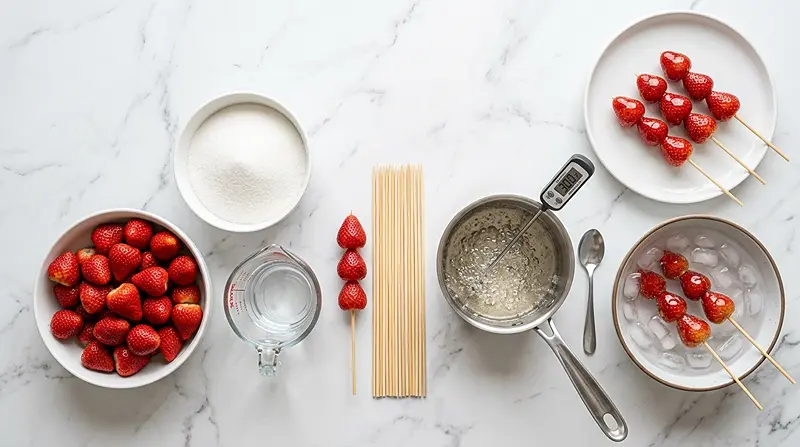
This easy tanghulu recipe keeps things beautifully simple with just three ingredients. For the fruit, you’ll want about a pound of firm, fresh strawberries, grapes, or whatever fruit speaks to you — just make sure it’s completely dry, because even a tiny bit of moisture will stop the sugar from sticking.
For the candy coating, it’s plain white sugar and water, heated together until they hit that magical hard-crack stage.
| Amount | Ingredient |
|---|---|
| 1 lb (~30 pieces) | Strawberries, grapes, or other firm fruit of choice — washed and completely dried |
| 2 cups | White granulated sugar (don’t sub brown sugar here — it won’t set the same way) |
| 1 cup | Water |
Tools You’ll Actually Use
- Wooden or bamboo skewers — you’ll need about 10 of them
- Small heavy-bottomed saucepan — even heating is key for sugar work
- Candy thermometer or instant-read thermometer — highly recommended for nailing the hard-crack stage
- Large bowl of ice water — for testing the syrup and cooling your coated skewers
- Parchment-lined plate or baking sheet — for setting the finished skewers
- Paper towels — for drying the fruit thoroughly
Step-by-Step Instructions for Tanghulu (Chinese Candied Fruit)
Making Tanghulu (Chinese Candied Fruit) is all about patience with the sugar and speed with the dipping. Once you get the rhythm down, you’ll feel like a candy-making pro. Let’s walk through it together.
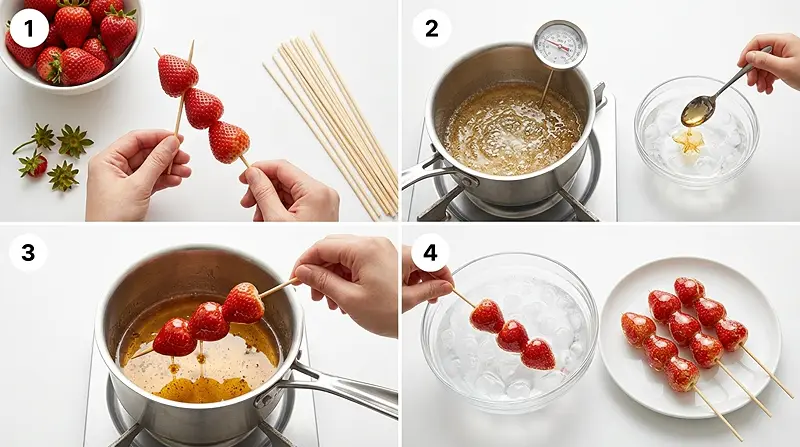
Step 1: Prep Your Fruit
Wash your strawberries, grapes, or chosen fruit thoroughly and pat them bone-dry with paper towels. Remove any leaves, stems, or inedible parts. This step matters more than you’d think — even a small drop of water on the fruit’s surface can cause the hot sugar coating to slide right off or turn cloudy instead of crystal-clear.
Step 2: Skewer the Fruit
Thread your dried fruit onto wooden or bamboo skewers, keeping it to three pieces or fewer per skewer. Smaller batches per stick make them way easier to dip and coat evenly. If you’re using strawberries, push the skewer through the bottom so the pointed tip of the berry faces up — it looks prettier and dips more smoothly.
Step 3: Make the Sugar Syrup
In a small heavy-bottomed saucepan over low to medium heat, combine 2 cups of white granulated sugar and 1 cup of water. Here’s the golden rule: do not stir. Seriously, hands off that spoon. Stirring can cause the sugar to crystallize and turn grainy instead of glassy.
Bring the mixture to a boil and let it simmer until it thickens into a syrup with a light amber color, reaching approximately 300 degrees Fahrenheit (the hard-crack stage). This typically takes about 10 to 20 minutes depending on your stove. If you have a candy thermometer, now’s the time to clip it on.
Step 4: Test the Syrup
Before you start dipping fruit, test your sugar syrup by drizzling a small spoonful into a bowl of ice water. If the syrup hardens within seconds and snaps cleanly when you try to bend it, congratulations — you’ve hit the hard-crack stage and you’re ready to go. If it’s still bendy or chewy, give it another minute or two on the heat.
Step 5: Dip and Coat
Working quickly, dip each fruit skewer into the hot sugar syrup and swirl it to coat the fruit in a thin, even layer. Immediately plunge the coated skewer into your ice water bath — this is what makes the sugar shell harden into that iconic glassy crunch within seconds. The contrast between the hot syrup and cold water is where the magic happens.
Step 6: Set and Enjoy
Place each finished skewer on a parchment-lined plate or baking sheet and repeat with the remaining skewers. Move fast here — the sugar syrup will continue to darken and can burn if left on the heat too long. Once all your skewers are coated and cooled, they’re ready to eat immediately. That first crack when you bite through the shell is pure joy.
There’s a whole world of classic comfort foods waiting for you over at the Classic Comfort Foods collection. Each one is made with the same love and attention, and they’re all absolutely worth trying. Happy cooking!
Claire’s Pro Tips and Gentle Guidance
A few little details can take your homemade strawberry tanghulu from “pretty good” to absolutely stunning. I’ve made enough batches (and enough mistakes) to know what actually matters, so let me save you some trial and error.
Dry your fruit like your life depends on it. I cannot stress this enough. If there’s moisture on the surface of your fruit, the sugar coating won’t adhere properly. I once skipped this step because I was in a rush, and the entire batch slid right off the berries. Pat everything dry with paper towels and let them air-dry for a few minutes too.
Invest in a candy thermometer. You can use the ice water test, and it does work. But a thermometer takes the guesswork out entirely. You’re aiming for 300 degrees Fahrenheit — even a few degrees lower and you’ll end up with a chewy, sticky coating instead of a crisp one.
Keep your skewers small. Three pieces of fruit per skewer maximum. I know it’s tempting to load them up, but heavier skewers are harder to dip evenly and the fruit at the bottom gets a thick, gloppy coating while the top barely gets covered.
Quick Fixes for Tanghulu (Chinese Candied Fruit)
The sugar coating is cloudy or white instead of clear. This usually means the syrup crystallized, often because it got stirred during cooking. Next time, resist the urge to touch it. You can also try adding a tiny squeeze of lemon juice to the sugar and water before heating — the acid helps prevent crystallization.
The coating is sticky and chewy, not crunchy. Your syrup didn’t reach the hard-crack stage. It needed a few more minutes on the heat. Use a candy thermometer and make sure you’re hitting at least 300 degrees Fahrenheit before dipping. The ice water test is your backup — the syrup should snap, not bend.
The sugar shell is sliding off the fruit. Moisture is almost certainly the culprit. Make sure your fruit is thoroughly dried before skewering. Even condensation from cold fruit pulled straight from the fridge can cause this. Let your fruit come to room temperature and pat it dry.
The syrup burned and turned dark brown. You left it on the heat a bit too long. Sugar goes from amber to burnt quickly, so keep a close eye once it starts changing color. Next batch, pull it off the heat as soon as it’s light gold — it’ll continue to darken slightly from residual heat.
Variations and Fun Twists
One of the best things about this easy tanghulu recipe is how endlessly customizable it is. Once you’ve got the basic sugar-dipping technique down, the fruit world is your oyster.
Go tropical. Try pineapple chunks, mango slices, or kiwi rounds for a summery twist. Firmer tropical fruits hold up beautifully under the candy coating. Just make sure they’re cut into bite-sized pieces and dried thoroughly.
Make it a dessert platter. Arrange a mix of strawberry, grape, and blueberry tanghulu on a big wooden board for a stunning party centerpiece. It looks incredibly impressive and takes barely more effort than a single batch.
Add a sprinkle before it sets. Right after dipping — before the sugar hardens — sprinkle on a tiny pinch of flaky sea salt, freeze-dried fruit powder, or even matcha powder for color. The coating will lock in whatever you add, creating gorgeous, flavor-boosted skewers.
Try a sour version. If you love that sweet-and-sour contrast, use green grapes or slightly underripe strawberries. The tartness of the fruit against the sweet candy shell is seriously addictive — it’s basically how to make sour strawberry gummies energy, but on a stick.
Serving, Storage, and Reheating
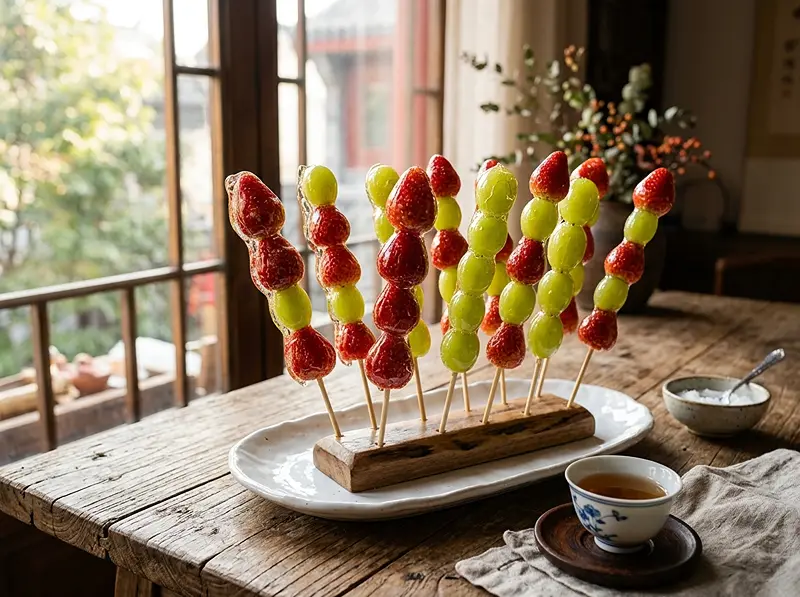
This homemade strawberry tanghulu is best enjoyed the moment it’s made — honestly, within the first hour or two is ideal. Serve the skewers standing up in a tall glass or jar for a beautiful display, or lay them on a parchment-lined tray alongside your favorite light and refreshing appetizer recipes for a fun contrast of sweet and savory.
Storage is where tanghulu gets a little tricky. The sugar coating is sensitive to humidity and moisture, so the longer it sits, the stickier and softer the shell becomes — especially with high-moisture fruits like strawberries. If you must store them, place the skewers in an airtight container in the fridge for up to a few hours. Grape tanghulu holds up slightly longer than strawberry.
Reheating isn’t really an option here since you’d melt the candy coating. The good news? Tanghulu is so quick to make that whipping up a fresh batch takes less time than reheating most leftovers. Just make what you’ll eat and enjoy it right away.
No-Waste Kitchen Magic
Got leftover sugar syrup still in the pot? Don’t toss it. While it’s still warm and pourable, drizzle it onto a parchment-lined sheet in thin ribbons to make candy shards. Once they cool, you can crush them up and use them as a topping for ice cream, yogurt, or even cocktails.
If you have fruit that didn’t make it onto skewers — maybe some berries that were a little too soft for dipping — toss them into a smoothie or muddle them into lemonade. They’re still perfectly delicious, just not firm enough for the candy coating.
Extra skewers of tanghulu that have gone a bit sticky? Chop the fruit off the sticks and fold it into vanilla ice cream for a candied fruit sundae. The softened sugar creates a caramel-like swirl that’s honestly kind of amazing. Pair it with a cozy dinner like this comforting weeknight casserole for a full meal that ends on a sweet note.
FAQs
Can I freeze Tanghulu (Chinese Candied Fruit)?
Freezing isn’t recommended. The sugar coating will absorb moisture as it thaws, turning sticky and losing that signature crunch. Tanghulu is best enjoyed fresh within a couple of hours of making it. The great news is it’s so fast to make that you can whip up a batch whenever the craving hits.
What’s the best way to store Tanghulu?
If you need to hold them for a little while, place your finished skewers in an airtight container and pop them in the fridge. They’ll stay crunchy for a few hours this way. Grape tanghulu holds up a bit longer than strawberry since grapes have less moisture. Just know that the longer they sit, the softer the shell gets.
How do I know when the sugar syrup is ready for Tanghulu?
The syrup is ready when it reaches the hard-crack stage — about 300 degrees Fahrenheit. It’ll be light amber in color and slightly thickened. The ice water test is your best friend: drizzle a spoonful into ice water, and if it hardens instantly and snaps when bent, you’re good to go.
Why should I use fresh, firm fruit in Tanghulu?
Overripe fruit is softer and contains more moisture, which means the hot sugar syrup can partially cook it, causing it to weep and making the candy shell slide off or turn cloudy. Firm, just-ripe fruit — especially strawberries and grapes — holds its shape beautifully and gives you that perfect contrast of crunchy shell and juicy bite.
Cozy Closing
I’d love to see your spin on this Tanghulu (Chinese Candied Fruit)! Whether you went classic with strawberries, got fancy with tropical fruit, or sprinkled matcha on top — I want to see it all. Drop a comment below with your tanghulu photos and tell me which fruit was your favorite to coat.
This Tanghulu (Chinese Candied Fruit) recipe is so versatile, and I bet you’ve already got amazing variations in mind. Maybe a sour grape version for movie night? A strawberry platter for your next brunch? The possibilities are endless, and every batch gets easier than the last. Share this recipe with a friend who’d love it, and happy candy-making!
I’m Claire Whitmore — a dessert daydreamer from Asheville, NC. For me, making sweets isn’t about perfect technique — it’s about the joy of sharing something sparkly and delicious (and maybe sneaking a few extra strawberries before they make it onto the skewer).
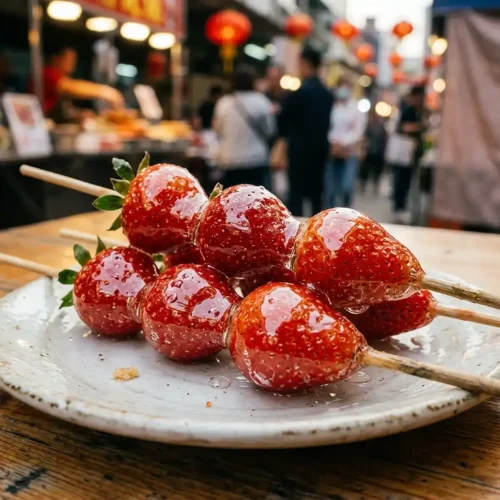
Tanghulu (Chinese Candied Fruit)
Equipment
- Wooden or bamboo skewers (about 10)
- Small heavy-bottomed saucepan
- Candy thermometer or instant-read thermometer
- Large bowl of ice water
- Parchment-lined plate or baking sheet
- Paper towels
Ingredients
Tanghulu Ingredients
- 1 lb Strawberries, grapes, or other firm fruit of choice About 30 pieces, washed and completely dried
- 2 cups White granulated sugar Don’t substitute brown sugar — it won’t set the same way
- 1 cup Water
Instructions
- Wash your strawberries, grapes, or chosen fruit thoroughly and pat them bone-dry with paper towels. Remove any leaves, stems, or inedible parts. Even a small drop of water on the fruit’s surface can cause the hot sugar coating to slide off or turn cloudy instead of crystal-clear.
- Thread your dried fruit onto wooden or bamboo skewers, keeping it to 3 pieces or fewer per skewer. Smaller batches per stick make them easier to dip and coat evenly in the sugar syrup. If using strawberries, push the skewer through the bottom so the pointed tip faces up.
- In a small heavy-bottomed saucepan over low to medium heat, combine 2 cups of white granulated sugar and 1 cup of water. Do not stir — stirring can cause the sugar to crystallize and turn grainy instead of glassy. Bring the mixture to a boil and let it simmer until it thickens into a syrup with a light amber color, reaching approximately 300°F (the hard-crack stage). This typically takes about 10 to 20 minutes depending on your stove.
- Test the temperature of the sugar syrup by drizzling a small spoonful into a bowl of ice water. If the syrup hardens within seconds and snaps cleanly when you try to bend it, you’ve hit the hard-crack stage and the syrup is ready. If it’s still bendy or chewy, return to heat for another minute or two.
- Working quickly, dip each fruit skewer into the hot sugar syrup and swirl it to coat the fruit in a thin, even layer. Immediately plunge the coated skewer into your ice water bath to harden the sugar shell into that iconic glassy crunch within seconds. The contrast between the hot syrup and cold water is what creates the signature crystalline coating.
- Place each finished skewer on a parchment-lined plate or baking sheet and repeat with the remaining skewers. Work fast so the sugar syrup doesn’t burn — it will continue to darken from residual heat. Once all skewers are coated and cooled, enjoy immediately!