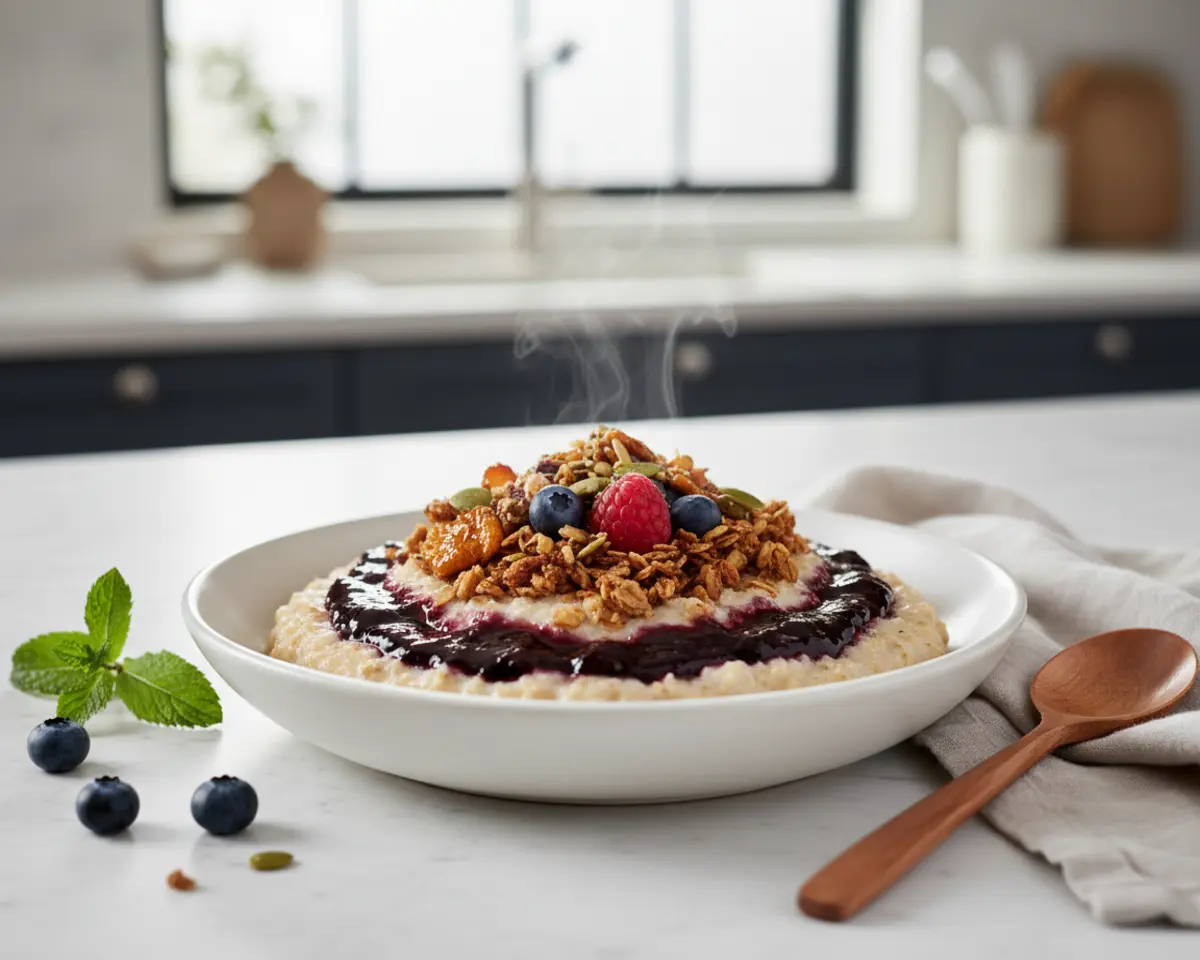
Postbiotic Overnight Fermented Oat Porridge
Postbiotic Overnight Fermented Oat Porridge is a simple, gut-loving breakfast that combines the creamy ease of overnight oats with the gut health benefits of live cultures. This recipe requires no cooking and delivers a nourishing, probiotic-rich bowl that supports digestion and keeps you satisfied all morning.
I’m Linda Sandra, a Charleston home chef who loves recipes that do the work while you sleep. This postbiotic overnight fermented oat porridge has become my morning staple because it transforms plain oats into a creamy, tangy bowl packed with beneficial bacteria.
Table of Contents
Quick Overview
Little Snapshot: What This Recipe Delivers
This postbiotic overnight fermented oat porridge transforms basic rolled oats into a gut-healthy breakfast through simple refrigerator fermentation. Mix oats with live culture yogurt, refrigerate overnight, and wake to a creamy, probiotic-rich bowl that supports digestive health and delivers sustained energy.
Why You’ll Love This Recipe 🌸
- This postbiotic overnight fermented oat porridge takes less than 5 minutes to prep before bed.
- You’ll love how the fermentation process creates a creamy, tangy breakfast that supports gut health without any morning cooking.
- It’s endlessly customizable with your favorite toppings and naturally becomes more digestible overnight.
- According to Harvard Health, fermented foods support beneficial gut bacteria — and this recipe proves exactly why.
Quick Facts ⚡
Here’s the quick scoop on this postbiotic overnight fermented oat porridge.
- CourseBreakfast
- Prep Time5 minutes
- Fermentation Time8-12 hours
- Total Time8 hours 5 minutes
- Servings1 serving
- DifficultyEasy
Nutritional Peek
| Nutrient | Amount per serving |
|---|---|
| Calories | 280-320 kcal |
| Protein | 12g |
| Carbohydrates | 45g |
| Fat | 6g |
| Fiber | 8g |
| Sugar | 8g (varies with toppings) |
What You’ll Need
This gut-healthy breakfast requires minimal equipment that you likely already have in your kitchen. The beauty of fermented oats benefits is how simple the process truly is.
- Mason jar or airtight container (8-12 oz capacity)
- Measuring cups and spoons
- Spoon for stirring
- Refrigerator for overnight fermentation
Ingredients
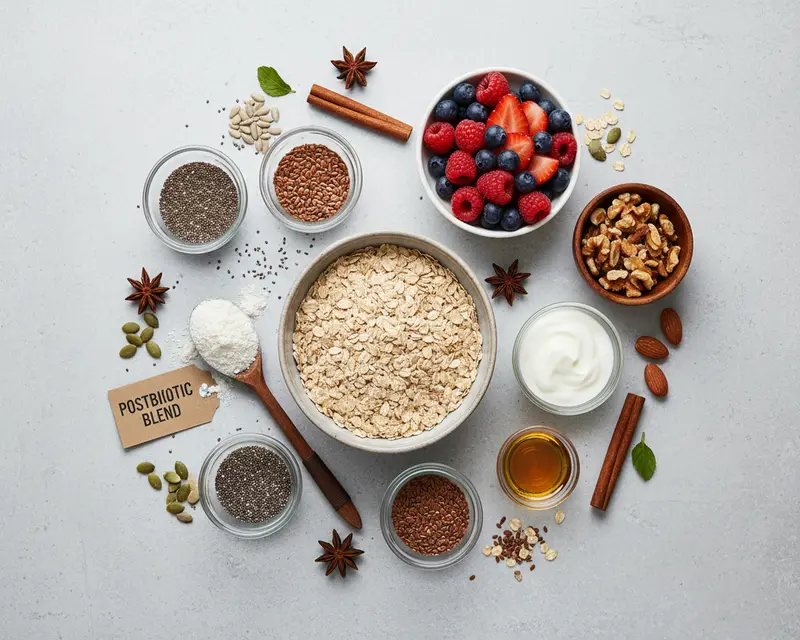
Fermented oats benefits start with quality ingredients that work together during the overnight transformation. You need rolled oats as the base, live cultures to kickstart fermentation, and optional chia seeds for extra creaminess and omega-3 fatty acids. Everything comes together in one jar for a probiotic oatmeal that’s ready when you wake.
| Group | Ingredient | Amount | Notes |
|---|---|---|---|
| Base | Rolled oats | 1/2 cup | Not instant—old-fashioned work best for fermentation |
| Base | Water or unsweetened plant milk | 1 cup | Almond, soy, or oat milk all work beautifully |
| Fermentation | Live active culture yogurt or kefir | 1-2 tablespoons | Dairy or non-dairy—this is your probiotic powerhouse |
| Texture Boost | Chia seeds | 1 tablespoon | Optional but adds lovely thickness and omega-3s |
| Sweetener | Maple syrup, honey, or stevia | To taste | Add in the morning after fermentation |
| Toppings | Fresh berries, nuts, seeds, cinnamon | As desired | Get creative with what you love—I adore blueberries and almonds |
Step-by-Step Instructions
Let’s make this happen. Postbiotic overnight fermented oat porridge comes together with a quick stir and patient waiting while your fridge does all the work.

Step 1: Combine Your Base Ingredients
Add rolled oats, water or plant-based milk, live active culture yogurt or kefir, and chia seeds if using to your mason jar or airtight container. The live cultures in the yogurt or kefir will begin the fermentation process that makes this breakfast so gut-friendly. Make sure you choose yogurt that specifically states “live active cultures” on the label for maximum probiotic benefit.
Step 2: Mix Thoroughly
Stir everything together until all the oats are fully submerged and the yogurt or kefir is evenly distributed throughout the mixture. This ensures even fermentation across every spoonful. You’ll notice the mixture looks a bit watery at this stage—that’s perfectly normal and the oats will absorb the liquid overnight.
Step 3: Cover and Refrigerate Overnight
Seal the container tightly with a lid and place it in your refrigerator for at least 8 hours, though 10-12 hours is ideal for deeper fermentation. The cool temperature slows fermentation to a gentle pace, creating beneficial postbiotics without over-souring. I typically prep mine before bed and it’s ready when my alarm goes off.
Step 4: Morning Stir and Consistency Check
In the morning, give your fermented porridge a good stir to redistribute any liquid that separated overnight. Check the thickness—if it’s too dense for your liking, add a splash more water or milk and stir until you reach your preferred consistency. The texture should be creamy and spoonable, similar to high protein overnight oats but with a slight tang.
Step 5: Sweeten to Taste
Add your preferred sweetener now, stirring it in gently to balance the natural tanginess from fermentation. Start with a teaspoon and add more as needed—the fermentation process creates a pleasant sour note that some people love with minimal sweetener. Maple syrup adds warm caramel notes while honey brings floral sweetness.
Step 6: Add Toppings and Serve
Top your gut-healthy breakfast with fresh berries, nuts, seeds, a sprinkle of cinnamon, or a drizzle of honey. Serve it cold straight from the fridge, or if you prefer warmth, gently heat it on the stove or in the microwave for 30-60 seconds. The live cultures are most beneficial when consumed cold, but gentle warming won’t eliminate all their benefits.
Pro Tips & Gentle Guidance
Fermented oats benefits multiply when you understand a few simple tricks that enhance both flavor and gut health. These tips come from months of morning experimenting and learning what makes the best probiotic oatmeal.
Choose the right oats for optimal fermentation—old-fashioned rolled oats work far better than instant varieties because their structure holds up during the overnight soak. Steel-cut oats are too dense and won’t soften properly in the fridge, while instant oats turn mushy and lose their appealing texture.
Start with just one tablespoon of yogurt or kefir if you’re new to fermented foods and gradually increase to two tablespoons as your digestive system adjusts. Some people experience mild bloating when first introducing probiotics, and a gentler start helps your gut microbiome adapt comfortably.
Use yogurt or kefir that’s close to its production date rather than nearing expiration for the most active, vigorous cultures. Fresh cultures ferment more effectively and create a better-tasting final product with more pronounced probiotic benefits.
Experiment with different liquid bases to find your favorite—unsweetened almond milk creates a lighter, subtly nutty porridge while oat milk makes it extra creamy. According to research published in Food Chemistry, different fermentation substrates can influence the types and amounts of beneficial compounds produced.
Don’t skip the chia seeds if you enjoy thicker porridge—they absorb liquid and create a pudding-like consistency while adding plant-based omega-3 fatty acids. Ground flaxseed works similarly and contributes a mild nutty flavor.
Taste your porridge before adding sweetener because fermentation tang varies based on culture strength and fermentation time. Some mornings you might want just a hint of maple syrup, while other batches might need a more generous drizzle to balance the sour notes.
Variations & Adaptations
This gut-healthy breakfast adapts beautifully to dietary needs and flavor preferences while maintaining its probiotic power. Each variation keeps the core fermentation process intact while adding new dimensions.
Chocolate Fermented Oats
Stir one tablespoon of unsweetened cocoa powder into your oat mixture before refrigerating for a rich, chocolatey breakfast. Add a teaspoon of vanilla extract and top with cacao nibs and sliced banana in the morning. The cocoa adds antioxidants without interfering with fermentation.
Tropical Probiotic Bowl
Use coconut milk as your liquid base and add a tablespoon of shredded unsweetened coconut to the overnight mixture. Top with fresh mango, pineapple, macadamia nuts, and a sprinkle of toasted coconut flakes. The tropical flavors pair beautifully with the slight tang from fermentation.
Apple Cinnamon Comfort
Add half a grated apple and half a teaspoon of cinnamon to your oats before refrigerating. In the morning, top with more apple slices, chopped walnuts, and a drizzle of almond butter. The apple provides natural sweetness and extra fiber.
Protein-Packed Power Bowl
Increase the yogurt to 1/4 cup and add a scoop of unflavored collagen peptides or plant-based protein powder to the mixture. This creates a breakfast similar to blended overnight oats but with enhanced protein content. Top with nut butter and hemp seeds for sustained energy.
Berry Bliss Fermented Oats
Mash a handful of fresh or frozen berries and stir them into your oat mixture before refrigerating—the berries will release their juices overnight and tint the porridge a gorgeous pink or purple. Top with more fresh berries, sliced almonds, and a drizzle of honey.
Savory Fermented Oat Bowl
Skip the sweetener entirely and instead top your fermented oats with a soft-boiled egg, sliced avocado, everything bagel seasoning, and a handful of spinach. The tangy oats work surprisingly well in savory applications, creating a unique breakfast grain bowl.
Quick Fixes for Postbiotic Overnight Fermented Oat Porridge
Problem: Oats Are Too Thick and Dense
Your porridge absorbed more liquid than expected overnight, leaving you with a stiff, paste-like consistency. Simply stir in water or milk one tablespoon at a time until you reach your desired spoonable texture—it’s easier to add liquid than remove it. The oats will quickly absorb the extra moisture and loosen up.
Problem: Porridge Tastes Too Sour
You fermented the oats for too long or used too much yogurt, resulting in an overly tangy breakfast. Balance the sourness by stirring in an extra splash of fresh milk and a bit more sweetener—honey and maple syrup both work beautifully to mellow sharp fermentation flavors. Next time, reduce fermentation to 8 hours or use just one tablespoon of yogurt.
Problem: Oats Didn’t Ferment Properly
Your porridge tastes bland with no tangy notes, indicating the fermentation didn’t activate. This usually happens when the yogurt or kefir was too old or didn’t contain active cultures—check the label for “live active cultures” next time. You can still eat the porridge safely; it’s essentially regular overnight oats without the probiotic benefits.
Problem: Strange Smell or Appearance
If your fermented oats develop an off-putting odor, visible mold, or separation that looks wrong, discard the batch immediately. Proper fermentation should smell pleasantly tangy like yogurt, not rotten or alcoholic. Make sure your container was clean and your ingredients were fresh before your next attempt.
Problem: Oats Are Too Watery
You added too much liquid or didn’t include enough oats or chia seeds to absorb the moisture. Pour off excess liquid or stir in an extra tablespoon of oats and let the mixture sit for 10-15 minutes so they can absorb the extra moisture. Next time, measure your ratios more carefully for better consistency.
Storage & Reheating

Fermented oats benefits extend beyond the first morning because this gut-healthy breakfast keeps beautifully in the refrigerator. You can enjoy your probiotic oatmeal cold straight from the fridge, gently warmed on the stove, or customized with fresh toppings each morning. The live cultures remain active when stored properly, continuing to develop beneficial compounds.
Store prepared postbiotic overnight fermented oat porridge in an airtight container in the refrigerator for up to three days. The fermentation process slows significantly in cold storage but doesn’t stop completely, so the tang may deepen slightly over time. Always use a clean spoon when serving to prevent introducing contaminants that could spoil the batch.
To reheat, transfer your desired portion to a microwave-safe bowl and heat in 30-second intervals, stirring between each, until warmed through. Alternatively, warm gently on the stovetop over low heat, adding a splash of milk if needed to restore creaminess.
Keep in mind that heating reduces the number of live probiotics, though many beneficial postbiotic compounds remain intact even after gentle warming.
| Storage Method | Duration | Best For |
|---|---|---|
| Refrigerator (airtight container) | 3 days | Made-ahead breakfasts, meal prep |
| Freezer (not recommended) | Not ideal | Texture becomes grainy; cultures die |
| Room temperature | Not safe | Never store fermented oats at room temp after initial fermentation |
No-Waste Kitchen Magic
Every element of this probiotic oatmeal can be used thoughtfully to reduce waste and maximize your grocery budget. Sustainability meets gut health in the most delicious way.
Repurpose Leftover Fermented Oats
If you made too much or aren’t loving the flavor straight, blend leftover fermented oats into smoothies for a probiotic boost and creamy texture. They also work beautifully stirred into pancake or muffin batter, adding moisture and a subtle tang that enhances baked goods.
Use the Yogurt Container Wisely
When you’re down to the last spoonful of yogurt in the container, add your oats and milk directly to the yogurt container and shake it up for a no-bowl-to-wash version. This ensures you get every bit of those beneficial cultures and creates one less dish to clean.
Save Overripe Fruit for Toppings
Bananas with brown spots, berries that are slightly soft, or apples that lost their crunch make perfect toppings for fermented oats. Mash or chop them and stir them in—the natural sweetness intensifies as fruit ripens, reducing your need for added sweeteners.
Freeze Extra Chia Seeds
If you don’t use chia seeds often, store them in the freezer to extend their shelf life and prevent the healthy fats from going rancid. They’ll stay fresh for up to two years frozen and can be added directly to your oats without thawing.
Compost Your Oat Container Scraps
Any bits of oats stuck to your jar or container can go directly into your compost bin along with fruit peels and cores from your toppings. Oats break down quickly and add valuable nutrients to your compost pile.
Frequently Asked Questions
Here are answers to the most common questions about making postbiotic overnight fermented oat porridge at home.
What are postbiotics and how do they benefit my gut health?
Postbiotics are beneficial compounds produced during the fermentation process, including enzymes, peptides, and organic acids. In our overnight fermented oat porridge, these postbiotics help support digestive health, enhance nutrient absorption, and promote a balanced gut microbiome without requiring live bacteria to survive digestion.
How long does the overnight fermentation process take?
The fermentation process for our postbiotic oat porridge typically takes 8 to 12 hours overnight. This allows sufficient time for beneficial bacteria to break down the oats, create postbiotic compounds, and improve the digestibility and nutritional profile of the porridge.
Can I eat the fermented oat porridge cold or does it need to be heated?
You can enjoy the postbiotic overnight fermented oat porridge both cold and heated, depending on your preference. Eating it cold preserves all the postbiotic compounds, while gently heating it will not significantly diminish the benefits and can provide a warm, comforting meal.
How long can I store the fermented oat porridge in the refrigerator?
Once prepared, the postbiotic overnight fermented oat porridge can be stored in an airtight container in the refrigerator for up to 5 days. This makes it convenient for meal prep, allowing you to prepare multiple servings at once for quick breakfasts throughout the week.
Is postbiotic fermented oat porridge suitable for people with lactose intolerance?
It depends on the fermentation starter used. If the porridge is fermented using water-based or plant-based cultures rather than dairy-based yogurt or kefir, it will be lactose-free and suitable for those with lactose intolerance. Always check the ingredient list to confirm no dairy products were used in the fermentation process.
Final Dish
This postbiotic overnight fermented oat porridge has become my favorite way to start the day because it delivers serious gut health benefits without any morning fuss. The creamy, tangy bowl feels indulgent while supporting your digestive system with every spoonful, and the prep takes less time than brewing coffee.
I love how this recipe transforms simple pantry staples into something that nourishes you from the inside out. Whether you top yours with fresh berries and honey or go savory with avocado and eggs, you’re getting a breakfast that truly works for your body. Try pairing it with my creamy almond latte with a citrus white chocolate for a complete morning routine that feels like a cozy hug.
Make a batch tonight and let me know how you customize yours—I’d love to see your probiotic oatmeal creations! Share your photos and favorite topping combinations in the comments below, and tag me so I can cheer you on.
I’m Linda Sandra — a Charleston home chef and comfort-food daydreamer. Around here, cooking’s not about perfection — it’s about cozy vibes, creative twists, and food that feels like love.
Postbiotic Overnight Fermented Oat Porridge
Ingredients
- ½ cup rolled oats not instant
- 1 cup water or unsweetened plant-based milk almond, soy, or oat work well
- 1-2 tablespoons live active culture yogurt or kefir dairy or non-dairy
- 1 tablespoon chia seeds optional, for extra thickening and omega-3s
- Sweetener to taste maple syrup, honey, or stevia
- Optional toppings: fresh berries nuts, seeds, cinnamon, a drizzle of honey
Instructions
- Combine oats, water/milk, yogurt/kefir, and chia seeds (if using) in a jar or airtight container.
- Stir well to ensure all ingredients are thoroughly mixed and oats are submerged.
- Cover the container and refrigerate for at least 8 hours, or preferably overnight. This allows the fermentation process to occur.
- In the morning, stir the porridge. If it’s too thick, add a splash more water or milk to reach your desired consistency.
- Sweeten to taste with your preferred sweetener.
- Add your desired toppings and serve cold.