Pineapple Core Tepache
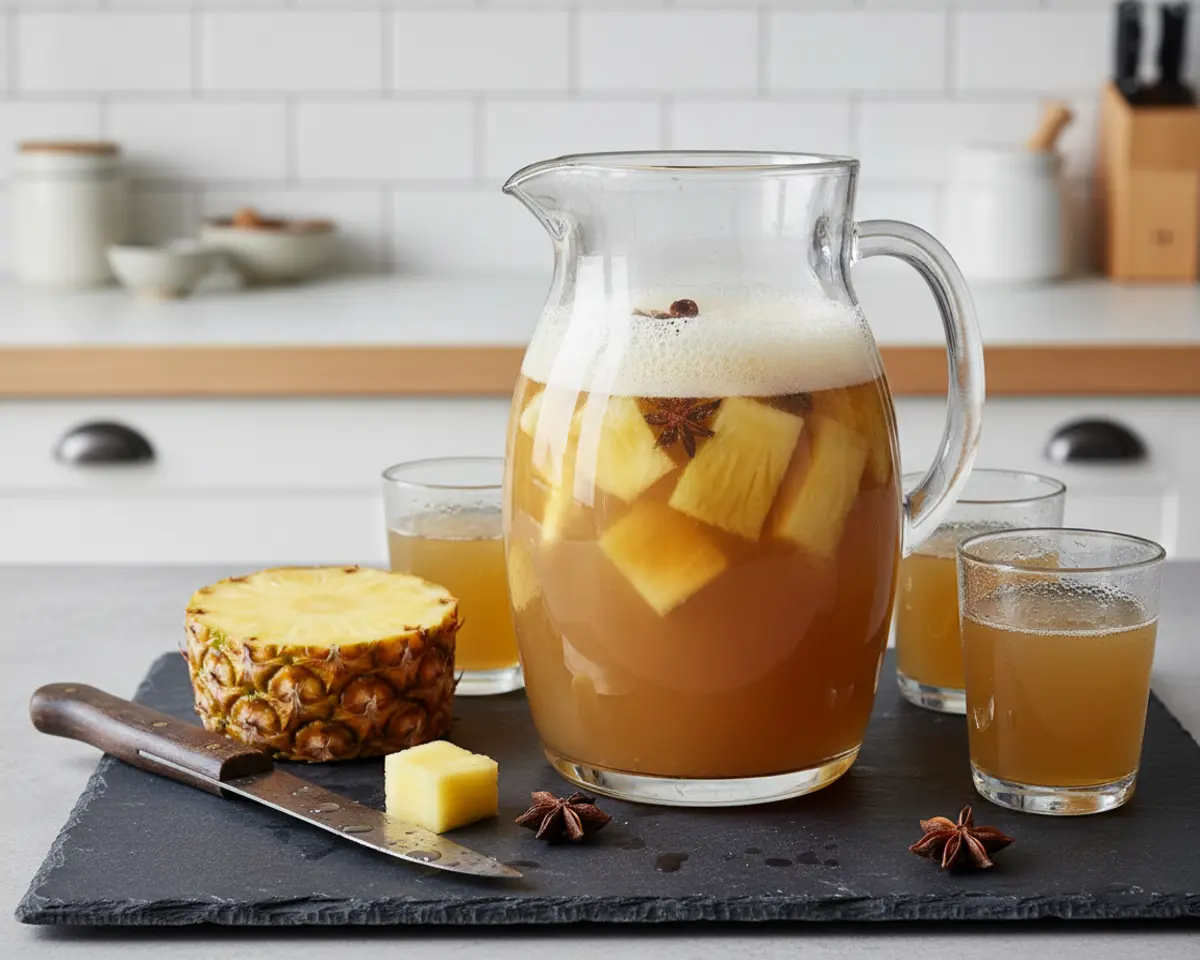
Pineapple Core Tepache: Summer Probiotic Drink is a naturally fermented beverage made from pineapple scraps, spices, and a little sugar. It’s fizzy, tangy, and filled with probiotics—no waste, all flavor, and ready in just two to three days on your kitchen counter.
I’m Linda Sandra, and if you’ve been tossing your pineapple peels and cores, this recipe is about to change everything. This Pineapple Core Tepache is the kind of drink that makes you feel resourceful and a little bit magical. You’re turning scraps into something bubbly, beautiful, and good for your gut.
The first time I made tepache, I almost threw the peels away. Then a friend told me about this old-school Mexican drink her abuela used to make every summer. I gave it a try with a jar, some leftover pineapple scraps, and a cinnamon stick. Two days later, I had the most refreshing probiotic drink I’d ever tasted—and I’ve been hooked ever since.
Table of Contents
Quick Overview
This is just one of the many gems in our Classic Comfort Foods series. Every recipe there has been tested and loved in real kitchens, and I promise there’s something for every craving. Go see for yourself.
Little Snapshot: What This Recipe Delivers
This Pineapple Core Tepache: Summer Probiotic Drink transforms pineapple scraps into a fizzy, tangy, probiotic-rich beverage in just two to three days. It’s naturally fermented, zero-waste, and requires no special equipment—just a jar, sugar, spices, and time.
Why You’ll Love This Recipe 🌸
- This Pineapple Core Tepache takes less time than a trip to the grocery store and uses scraps you’d normally toss.
- It’s naturally bubbly, probiotic-packed, and so much gentler on your budget than store-bought kombucha.
- You control the sweetness, spice level, and fermentation time—no weird ingredients or artificial flavors.
- According to Healthline, fermented foods support gut health and digestion—and this recipe proves exactly why.
Quick Facts ⚡
Here’s the quick scoop on this Pineapple Core Tepache: Summer Probiotic Drink.
- CourseBeverage
- Prep Time10 minutes
- Fermentation Time2 to 3 days
- Total Time2 to 3 days
- Servings4 cups (about 1 quart)
- DifficultyEasy
Nutritional Peek
| Nutrient | Amount per Serving (1 cup) |
|---|---|
| Calories | 50 kcal |
| Protein | 0 g |
| Carbohydrates | 13 g |
| Fat | 0 g |
| Fiber | 0 g |
| Sugar | 12 g |
What You’ll Need
You don’t need any fancy fermentation gear for this tepache—just basic kitchen tools you probably already own. A wide-mouth jar makes the whole process easier, and a breathable cover lets the wild yeast do its thing without inviting fruit flies to the party.
- One 1/2 gallon (64 oz) wide-mouth mason jar
- Clean cloth or cheesecloth and rubber band (or silicone pickle pipe)
- Fine mesh strainer
- Large bowl
- Glass bottles with lids for storing
- Cutting board and sharp knife
Ingredients
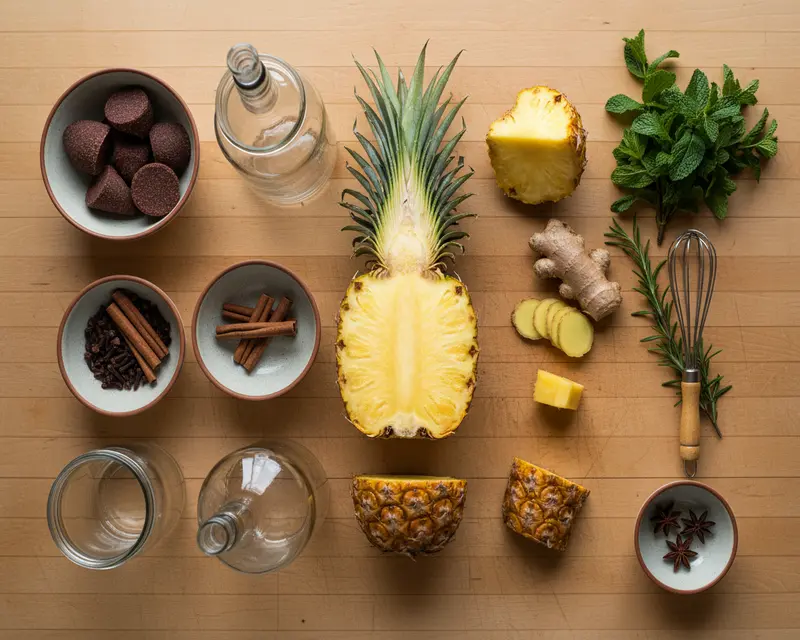
Tepache is all about simplicity and resourcefulness—you’re using the parts of the pineapple most people throw away. The wild yeast on the peel does the heavy lifting, and a little sugar feeds the fermentation. Warm spices like cinnamon, cloves, and allspice add depth and a cozy, almost holiday-like aroma that makes this drink feel special.
| Group | Ingredient | Amount | Notes |
|---|---|---|---|
| Base | Medium pineapple (peel and core only) | 1 whole | Cut into 1- to 2-inch pieces; eat the flesh! |
| Base | Sugar (piloncillo, dark brown, or white) | 1/2 cup | Piloncillo gives deeper flavor |
| Base | Filtered or non-chlorinated water | 4 to 5 cups | Chlorine can kill wild yeast |
| Spices (optional) | Cinnamon stick | 1 medium | Adds warmth and sweetness |
| Spices (optional) | Whole cloves | 4 | A little goes a long way |
| Spices (optional) | Whole allspice berries | 4 | Earthy, slightly peppery |
Step-by-Step Instructions
Let’s make this happen. Pineapple Core Tepache: Summer Probiotic Drink starts with a gentle rinse—no scrubbing—because the wild yeast on the peel is what makes this fermentation magic possible.
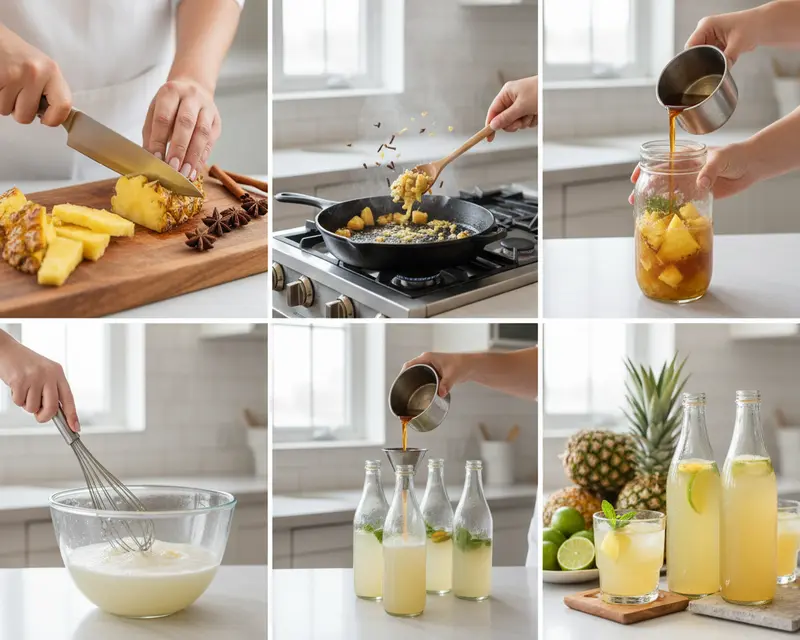
Rinse the pineapple gently under cool water and pat it dry with a clean towel. Don’t scrub the skin or use soap—those natural yeasts are your fermentation friends, and you want them alive and active.
Slice off the leafy crown and toss it in your compost or trash. Stand the pineapple upright on your cutting board and carefully slice away the skin in long vertical strips, keeping a thin layer of yellow flesh attached to each piece. This adds flavor and natural sugars to your tepache.
Cut out the tough inner core and set it aside with the peels. Save the juicy inner flesh for snacking, smoothies, or this delicious pineapple teriyaki chicken wings recipe.
Add the pineapple skin and core pieces to your 1/2 gallon wide-mouth mason jar. Toss in the sugar, cinnamon stick, cloves, and allspice berries if you’re using them. The spices are optional, but they add a warm, complex flavor that makes tepache feel like a treat.
Pour cool filtered or non-chlorinated water over everything until the jar is mostly full, leaving about 2 inches of headspace at the top. This gives the fermentation room to bubble and breathe without overflowing.
Cover the jar loosely with a clean cloth secured with a rubber band, or use a silicone pickle pipe if you have one. Never seal the jar tightly—carbon dioxide builds up during fermentation and needs a way to escape.
Set the jar somewhere out of direct sunlight at room temperature, ideally between 68 and 75 degrees Fahrenheit. In warm weather, your tepache will be ready in about 2 days. In cooler weather, give it 3 days. You’ll know it’s ready when you see steady bubbling and a light foam on top.
Strain the fermented tepache through a fine mesh strainer into a clean bowl. For a clearer, smoother drink, strain it a second time through cheesecloth.
Pour the strained tepache into clean glass bottles, leaving about an inch of headspace at the top. Cap the bottles and refrigerate immediately to stop the fermentation and lock in the carbonation. Cold storage keeps it fizzy and fresh.
Serve your Pineapple Core Tepache over ice and enjoy it cold. It yields about 1 quart and tastes best within 1 to 2 weeks. Pair it with a light summer meal like this summer picnic for two.
Pro Tips & Gentle Guidance
Tepache is forgiving, but a few small tweaks can take your batch from good to absolutely glowing. The key is respecting the wild yeast, keeping things clean (but not sterile), and trusting the process.
Use filtered or non-chlorinated water. Chlorine kills the wild yeast on the pineapple peel, and without that yeast, your tepache won’t ferment. If you only have tap water, let it sit out uncovered for a few hours so the chlorine evaporates.
Don’t skip the headspace. Fermentation produces carbon dioxide, and if your jar is too full, it can overflow or even burst. Leave at least 2 inches at the top, and always cover loosely—never seal tightly.
Taste as you go. Start tasting your tepache after 24 hours. If it’s too sweet, let it ferment longer. If it’s too tangy or boozy, you’ve gone too far—but it’s still drinkable! Just refrigerate it right away to stop the process.
Choose your sugar wisely. Piloncillo (unrefined Mexican cane sugar) gives tepache a deeper, molasses-like flavor that pairs beautifully with the pineapple and spices. Dark brown sugar is a great substitute, and white sugar works too—it just tastes a bit lighter.
Watch for mold. A thin white film or bubbles on top is normal and safe—that’s yeast. But if you see fuzzy green, black, or pink spots, toss the batch and start over. Clean jars and fresh ingredients help prevent this.
Chill it to stop fermentation. Once your tepache tastes just right, refrigerate it immediately. Cold temperatures slow down the yeast activity and keep your drink fizzy and fresh. If you leave it out too long, it can turn into pineapple vinegar or even low-alcohol pineapple beer.
Variations & Adaptations
Once you’ve nailed the classic version, tepache becomes a playground for flavor. You can swap spices, add fruit, or adjust the sweetness to match your mood or the season.
Spicy Tepache: Add a halved jalapeño or a few slices of fresh ginger to the jar before fermenting. The heat plays beautifully with the sweet pineapple and warm spices, and it’s incredibly refreshing on a hot day.
Citrus Twist: Toss in the peel of one orange or lime along with the pineapple scraps. The citrus oils add brightness and complexity, and the fermentation mellows out any bitterness.
Herbal Tepache: Add a sprig of fresh mint, basil, or rosemary during fermentation. Strain it out before bottling. Herbal notes make this drink feel almost spa-like.
Honey Sweetened: Replace the sugar with 1/3 cup raw honey. It ferments a bit slower, but the flavor is floral and delicate. Stir the honey into warm water first so it dissolves easily.
Tropical Blend: Add chunks of mango, papaya, or guava along with the pineapple. This creates a more complex fruit flavor and a slightly thicker body.
Low-Sugar Version: Cut the sugar down to 1/4 cup for a less sweet, more tangy drink. It ferments faster and tastes closer to kombucha.
Tepache Cocktail Base: Use chilled tepache as a mixer for cocktails. It’s incredible with rum, tequila, or mezcal. Try it in a variation of this lava flow drink for a tropical twist.
Quick Fixes for Pineapple Core Tepache: Summer Probiotic Drink
Problem: Your tepache isn’t bubbling after two days.
Solution: It might be too cold. Move the jar to a warmer spot (around 70 to 75 degrees) and give it another day. If you used chlorinated water or scrubbed the pineapple too hard, the yeast may be weak—try again with filtered water and a gentler rinse.
Problem: Your tepache tastes too sweet.
Solution: Let it ferment longer. The yeast eats the sugar over time, so another 12 to 24 hours will make it tangier and less sugary. Taste every few hours until it’s just right.
Problem: Your tepache is flat and not fizzy.
Solution: Fizz builds up during the second fermentation in sealed bottles. After straining, pour the tepache into airtight glass bottles, leave an inch of headspace, and let them sit at room temperature for 6 to 12 hours before refrigerating. This traps the carbon dioxide and creates natural carbonation.
Problem: Your tepache tastes too boozy or vinegary.
Solution: You fermented it too long. Next time, start tasting after 24 hours and refrigerate as soon as it tastes balanced. Over-fermented tepache can still be used as a tangy base for salad dressings or marinades.
Problem: You see a white film on top.
Solution: That’s usually harmless yeast or kahm yeast. Skim it off gently with a spoon and proceed as normal. If it smells funky or looks fuzzy and colored, toss the batch.
Storage & Reheating

Tepache is best served ice-cold, straight from the fridge. Pour it over ice, garnish with a cinnamon stick or a wedge of fresh pineapple, and sip it slowly. It’s refreshing on its own, but it also makes a fantastic mixer for rum cocktails or a tangy base for fruit punches.
Store your finished tepache in clean glass bottles with tight-fitting lids in the refrigerator. It stays fresh and fizzy for 1 to 2 weeks. The flavor continues to develop over time, becoming slightly tangier and less sweet as the days pass.
Tepache is a cold drink, so reheating doesn’t apply here. If you want to enjoy it warm (which is unusual but possible), gently heat a small amount on the stove over low heat—just enough to take the chill off. Don’t boil it, or you’ll kill the probiotics and lose the fizz.
| Storage Method | Duration | Best For |
|---|---|---|
| Refrigerator (sealed bottles) | 1 to 2 weeks | Daily sipping, cocktails, sharing |
| Room temperature (sealed, short secondary ferment) | 6 to 12 hours | Building extra carbonation |
| Freezer (not recommended) | N/A | Carbonation and probiotics don’t survive freezing |
No-Waste Kitchen Magic
Tepache is already a zero-waste hero—you’re using pineapple scraps most people toss. But the magic doesn’t stop there. Once you’ve strained your tepache, you can still squeeze more life out of those spent peels and spices.
Compost the spent pineapple peels and spices. They’re full of beneficial microbes and break down quickly, enriching your garden soil. If you don’t compost, ask a neighbor or friend who does—they’ll be thrilled.
Reuse the pineapple core for a second, lighter batch of tepache. Add fresh water, a tablespoon of sugar, and ferment for another day or two. It won’t be as strong, but it’s still tasty and refreshing.
Use leftover tepache as a marinade base. The acidity and enzymes in tepache tenderize meat beautifully. Mix it with soy sauce, garlic, and ginger for a tropical-inspired marinade perfect for chicken or pork.
Freeze tepache in ice cube trays. Pop a few cubes into smoothies, cocktails, or sparkling water for a burst of tangy, probiotic flavor. They’re especially fun in summer drinks.
Make pineapple vinegar. If your tepache ferments too long and tastes too tangy to drink, don’t throw it out. Let it sit for another week or two, and it will turn into a mild, fruity vinegar perfect for salad dressings or pickling vegetables.
Frequently Asked Questions
Here are the most common questions home cooks ask me about making Pineapple Core Tepache: Summer Probiotic Drink.
What is Pineapple Core Tepache?
Pineapple Core Tepache is a traditional Mexican fermented beverage made from pineapple cores, rinds, water, and piloncillo or brown sugar. It is naturally carbonated and contains beneficial probiotics produced during fermentation, making it a refreshing and healthful summer drink.
What are the health benefits of drinking tepache?
Tepache is rich in probiotics that support digestive health and gut flora balance. It also contains enzymes like bromelain from pineapple, which aids digestion and has anti-inflammatory properties. Additionally, it provides vitamins, minerals, and antioxidants while being lower in sugar than many commercial beverages after fermentation.
How long does it take to ferment tepache?
Tepache typically ferments for 2 to 4 days at room temperature. The fermentation time depends on ambient temperature and desired flavor intensity. Warmer temperatures speed up fermentation, while cooler temperatures slow it down. You can taste it daily to determine when it reaches your preferred level of sweetness and tanginess.
How should I store tepache and how long does it last?
Once fermented to your liking, strain the tepache and store it in sealed bottles or jars in the refrigerator. Refrigeration slows down fermentation significantly. Properly stored tepache will last 5 to 7 days in the refrigerator. Be cautious when opening bottles as natural carbonation can create pressure buildup.
Can I reuse pineapple cores to make multiple batches of tepache?
It is not recommended to reuse pineapple cores for multiple batches of tepache. After one fermentation cycle, the cores have released most of their sugars, flavors, and beneficial enzymes. Using fresh pineapple cores ensures optimal flavor, adequate sugar content for fermentation, and the best probiotic benefits in each batch.
Final Dish
This Pineapple Core Tepache: Summer Probiotic Drink is proof that the best things in life come from the simplest ingredients. You’re turning scraps into something bubbly, beautiful, and good for your gut—and it tastes like summer in a glass. Whether you sip it solo on a hot afternoon or mix it into cocktails for friends, this drink is a little act of kitchen magic that feels just right.
If you try this recipe, I’d love to see your photos! Tag me on social media or drop a comment below and tell me how your batch turned out. Did you add ginger? Go heavy on the cloves? I want to hear all about it.
I’m Linda Sandra—a Charleston home chef and comfort-food daydreamer. Around here, cooking’s not about perfection—it’s about cozy vibes, creative twists, and food that feels like love.
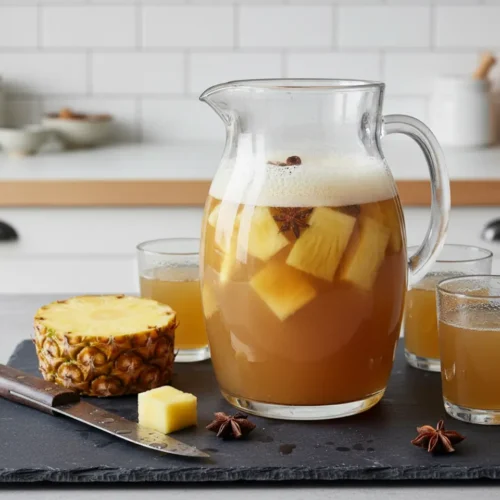
Pineapple Core Tepache: Summer Probiotic Drink
Ingredients
- 1 Medium Pineapple Just the Peel and Core, cut into 1- to 2-inch pieces
- ½ cup sugar ideally piloncillo or dark brown sugar, but white sugar will work
- 1 Medium cinnamon stick optional
- 4 whole cloves optional
- 4 whole allspice berries optional
- 4 to 5 cups filtered or non-chlorinated water enough to fill a 1/2 gallon jar with 2 inches of headspace
Instructions
- Rinse the pineapple gently under cool water and pat dry. Do not scrub it; the wild yeast that ferments tepache lives on the skin.
- Slice off the leafy crown and discard. Stand the pineapple upright and cut the skin away in long vertical strips, keeping a thin layer of yellow flesh attached. Cut out the inner core. Reserve the inner flesh for another use.
- Add the pineapple skin and core to a 1/2 gallon (64 oz) wide mouth mason jar. Add the sugar, cinnamon stick, and any optional spices.
- Pour cool water over everything until the jar is mostly full, leaving 2 inches of headspace at the top (about 4 to 5 cups of water).
- Cover the jar loosely with a clean cloth and rubber band, or with a silicone pickle pipe. Do not seal tightly; carbon dioxide builds up during fermentation.
- Set the jar somewhere out of direct sunlight at room temperature (68 to 75°F). Ferment for 2 days in warm weather or 3 days in cooler weather, until you see steady bubbling and a light foam on top.
- Strain the tepache through a fine mesh strainer into a clean bowl. For a clearer drink, strain a second time through cheesecloth.
- Pour into clean glass bottles, leaving an inch of headspace. Refrigerate immediately to stop the fermentation and lock in the carbonation.
- Serve cold over ice. Yields about 1 quart. Best within 1 to 2 weeks.