Matcha Crinkle Cookies
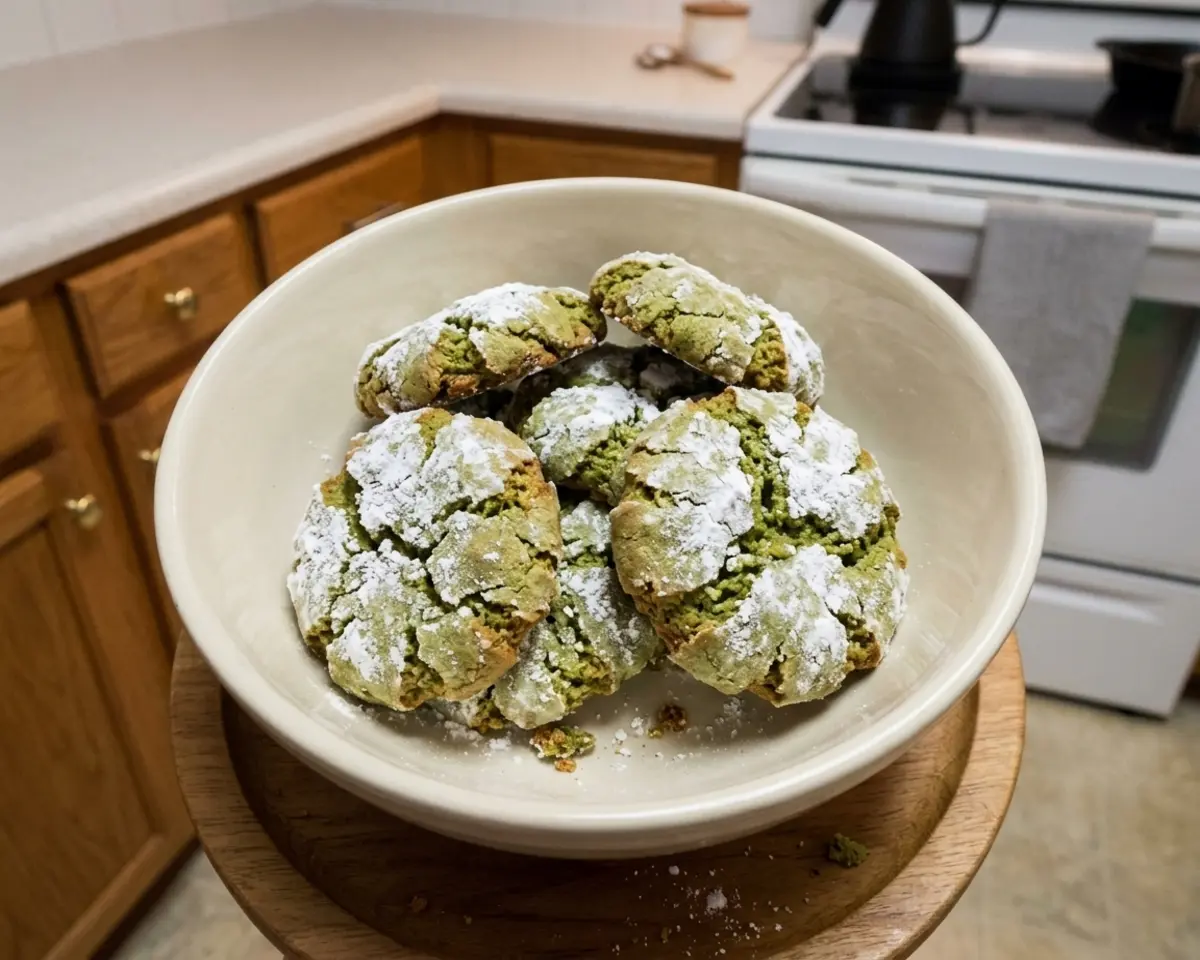
Matcha Crinkle Cookies deliver that signature crisp-chewy texture and dramatic white-crackled surface in just over an hour, using one bowl and zero chilling overnight. The cultured butter and precise matcha ratio give you vibrant green tea flavor that’s earthy but never bitter, while the double sugar roll creates those picture-perfect crackles every single time.
You don’t need a stand mixer, specialty molds, or advanced skills — just a whisk, a sieve, and about fifteen minutes of active work before the oven does the rest.
I built this recipe around cultured butter because the slight tang plays beautifully against matcha’s grassy notes, and sifting the matcha with the flour prevents those stubborn green clumps that show up in photos like polka dots. The dough chills for just an hour — not overnight — so you can have warm cookies on the counter before dinner if you start mid-afternoon.
I first made these for a friend who swore she didn’t like matcha, and she ate three before I’d finished plating the rest. The crackle happened on the first try, no troubleshooting required, and I’ve been hooked ever since — they’re my go-to whenever I want something that looks fancy but feels like a hug.
Table of Contents
The Short Version
This Matcha Crinkle Cookies recipe combines 140 grams all-purpose flour, 15 grams matcha powder, cultured butter, and a two-stage sugar roll to create tender, crackled cookies with deep green tea flavor in about 75 minutes total. The dough chills for just one hour, bakes at a gentle 320°F, and delivers beginner-friendly results with that iconic white-dusted, fissured top.
Perfect for anyone who wants a stunning dessert without the stress.
Reasons This One’s a Keeper 💛
- These matcha green tea cookies are done — start to finish — in about 75 minutes, so you can bake them the same afternoon you’re craving something special.
- One bowl, one whisk, and a sieve are all you need — no stand mixer, no fancy piping, and definitely no overnight wait.
- The vibrant matcha flavor is earthy and balanced, never bitter, thanks to cultured butter’s subtle tang and a double sugar coating that locks in moisture.
- As the team at Serious Eats explains in their guide to chewy cookie texture, mixing just until combined and baking at a lower temperature keeps cookies tender in the center — which is exactly why this crinkle cookies recipe works so well.
At a Glance 🕒
Here’s everything you need to know about this Matcha Crinkle Cookies recipe before you preheat.
- CourseDessert
- Servings12 cookies
- Prep Time15 minutes
- Cook Time11 minutes
- Total Time1 hour 26 minutes (includes chilling)
- Skill LevelBeginner-Friendly
What’s Inside (Nutrition Snapshot)
For my fellow label-readers, here’s the breakdown per cookie:
| Per Serving | Amount |
|---|---|
| Calories | 145 kcal |
| Protein | 2 g |
| Carbohydrates | 25 g |
| Total Fat | 4 g |
| Fiber | 0.5 g |
| Sugar | 17 g |
These values are estimates and will vary slightly depending on your exact ingredients and portion sizes.
Your Kitchen Toolkit
Must-Haves:
- Fine mesh sieve (for clump-free matcha magic)
- Mixing bowl and whisk or electric mixer
- Baking sheet and parchment paper
- Two small bowls for the sugar rolls
- Cookie scoop or large spoon
Nice-to-Haves:
- Digital kitchen scale — grams are your friend here, especially for matcha powder
- Cooling rack — keeps the bottoms from getting soggy while they rest
Gather Your Ingredients
This matcha powdered sugar cookies recipe relies on a few pantry staples and one show-stopping ingredient that does all the heavy lifting.
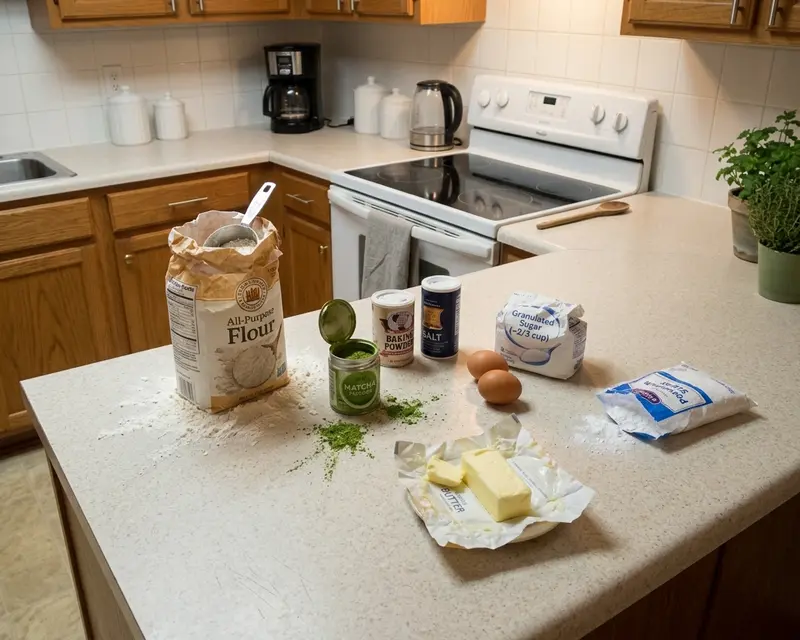
The base starts with all-purpose flour, matcha powder, baking powder, and a pinch of salt — sifted together so every bite is smooth and evenly green. The wet team includes eggs and granulated sugar beaten until light and fluffy, plus melted cultured butter for that subtle tang that makes matcha sing.
Finally, you’ll roll each dough ball first in granulated sugar for structure, then in powdered sugar for that iconic white crackle that shows up as the cookies bake.
| Ingredient | Amount |
|---|---|
| All-purpose flour | 140 grams (~1 cup) |
| Matcha powder (culinary grade is fine) | 15 grams (~3 tablespoons) |
| Baking powder | 1 teaspoon |
| Salt | 1/8 teaspoon |
| Large eggs (room temp is ideal, but not required) | 2 (60 grams each) |
| Granulated sugar (for the dough) | 134 grams (~2/3 cup) |
| Cultured unsalted butter, melted | 57 grams (4 tablespoons) |
| Granulated sugar (for rolling) | 70 grams (~1/3 cup) |
| Powdered sugar (for rolling — do not skip this step) | 40 grams (~1/3 cup) |
Let’s Bake: Step-by-Step Instructions
These Matcha Crinkle Cookies come together in one bowl, chill for an hour, and bake low and slow so the crackles have time to show off.
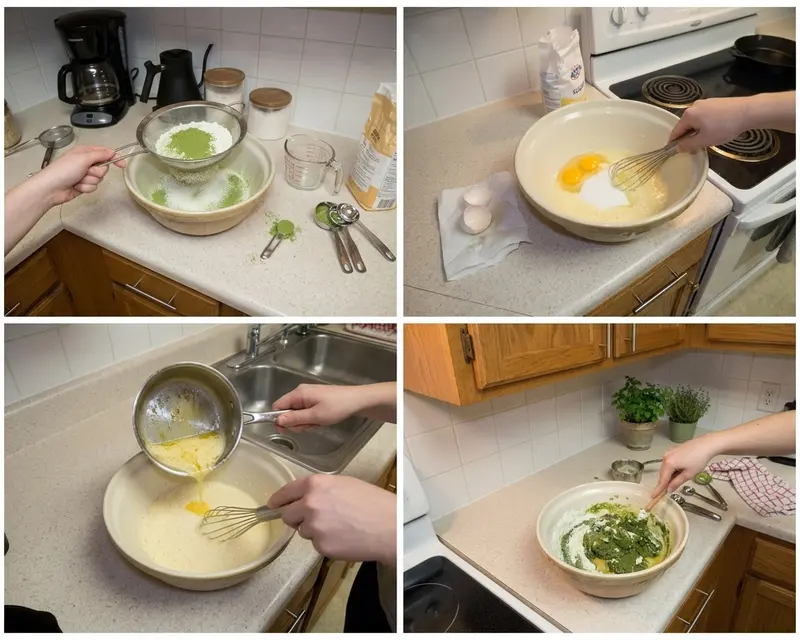
- Sift the dry ingredients. Pass 140 grams all-purpose flour, 15 grams matcha powder, 1 teaspoon baking powder, and 1/8 teaspoon salt through a fine mesh sieve into a medium bowl. This step is non-negotiable — matcha clumps love to hide, and sifting breaks them up before they can ruin your pretty green dough. Look for: A fluffy, evenly green pile with no dark green specks.
- Whip the eggs and sugar. Add 2 large eggs and 134 grams granulated sugar to a mixing bowl and beat them together with a whisk or an electric mixer on medium speed until the mixture turns pale yellow and thickens slightly, about 2 to 3 minutes by hand or 1 to 2 minutes with a mixer. Look for: The color should lighten noticeably, and the mixture should leave faint ribbons on the surface when you lift the whisk.
- Stream in the melted butter. Pour 57 grams of melted cultured unsalted butter into the egg mixture in a slow, steady stream while whisking continuously, so the butter emulsifies rather than pooling at the bottom. Look for: A smooth, glossy mixture with no puddles of butter floating on top.
- Fold in the dry ingredients. Dump the sifted flour-matcha mixture into the wet ingredients and stir gently with a spatula or wooden spoon just until no dry pockets remain and the dough has the texture of soft, pipeable frosting. Don’t overmix — you want tender cookies, not tough ones. Look for: A thick, glossy batter that holds its shape when you scoop it but still jiggles slightly.
- Chill the dough. Cover the bowl with plastic wrap or a plate and refrigerate for at least 1 hour, or until the dough is firm enough to scoop without sticking to your hands. If you’re in a rush, 45 minutes in the freezer works, but check it every 10 minutes so it doesn’t freeze solid. Look for: Dough that feels cool to the touch and holds a scoop shape without immediately slumping.
- Prep your station. Line a baking sheet with parchment paper, place your oven rack in the center position, and preheat to 320°F (160°C). Set out two small bowls — one with 70 grams granulated sugar, the other with 40 grams powdered sugar. Look for: An oven thermometer reading at or very close to 320°F, because a few degrees can mean the difference between crackles and smooth tops.
- Scoop the dough. Use a large spoon or a small ice cream scoop to portion out a golf-ball-sized mound of chilled dough and drop it directly into the bowl of granulated sugar. Look for: A scoop that’s roughly 2 tablespoons in volume, about the size of a walnut in its shell.
- Roll in granulated sugar. Gently roll the dough ball around in the granulated sugar until it’s completely coated, then use your palms to roll it into a smooth sphere. The granulated sugar creates a base layer that helps the powdered sugar stick and crackle. Look for: A ball that’s tacky but not sticky, with an even coating of sparkly white crystals.
- Coat in powdered sugar. Transfer the granulated-sugar-coated ball into the bowl of powdered sugar and roll it around until every inch is covered in a thick, snowy layer. Don’t be shy — the more powdered sugar, the more dramatic the crackle. Look for: A ball that looks completely white, like a little snowball, with no green peeking through.
- Arrange on the baking sheet. Place the sugar-dusted ball onto your prepared parchment-lined baking sheet, leaving about 2 inches between each cookie because they’ll spread. Repeat steps 7 through 9 with the remaining dough until you’ve used it all. Look for: Evenly spaced dough balls that still hold their round shape and haven’t started to flatten yet.
- Bake until crackled. Slide the baking sheet into your preheated 320°F oven and bake until the cookies have flattened out slightly, the tops have cracked into a spiderweb pattern, and the edges look set but the centers still feel soft when you gently press them with a fingertip. In a convection oven this took me 11 minutes, but conventional ovens may need 12 to 14 minutes — watch them closely after the 10-minute mark. Look for: Deep green fissures cutting through the white powdered sugar, and edges that no longer jiggle when you nudge the pan.
- Cool on the pan. Remove the baking sheet from the oven and let the cookies rest on the pan for 3 to 4 minutes so they firm up enough to move without breaking. Look for: Cookies that hold their shape when you slide a spatula underneath but still feel slightly soft on top.
- Transfer to a cooling rack. Use a thin spatula to lift each cookie off the parchment and onto a wire cooling rack, where they’ll finish setting and develop that perfect tender-chewy texture as they cool completely. Look for: Cookies that release cleanly from the parchment without tearing and maintain their crackled surface as they cool.
Little Lessons from Claire’s Kitchen (Tips)
These japanese matcha cookies are forgiving, but a few small tweaks will take them from good to “please give me the recipe” levels of great.
Sift the matcha, seriously. I skipped this step exactly once because I was in a hurry, and ended up with cookies that looked like they had little green freckles. Matcha clumps are stubborn, and stirring won’t break them up — only a sieve will. It adds 60 seconds to your prep time and saves you from apologizing to your taste testers.
Melt the butter but let it cool. If you pour hot butter into the egg mixture, you’ll scramble the eggs and end up with sweet matcha scrambled eggs, which is not a dessert I recommend. Melt the butter, then let it sit on the counter for a minute or two until it’s warm but not steaming. Learned that one the hard way during a holiday bake-a-thon.
Don’t skip the double sugar roll. The granulated sugar gives the cookies structure and a subtle crunch, while the powdered sugar creates the crackle as it bakes and dries out. If you only use powdered sugar, the cookies will look pale and sad. If you only use granulated, you won’t get those dramatic fissures. Both layers matter.
Bake low and slow. As King Arthur Baking’s guide to cookie baking temperatures points out, lower oven temps give cookies more time to spread before the edges set, which is key for crinkles. I bake these at 320°F instead of the usual 350°F, and the extra few minutes in the oven let the tops crack wide open without burning the bottoms.
Use a scale for the matcha. Matcha powder is fluffy and light, so measuring by volume can give you anywhere from 10 to 20 grams depending on how you scoop. Too little and your cookies taste like sugar with a hint of green; too much and they’re bitter. A digital scale takes the guesswork out, and 15 grams is the sweet spot for bold flavor without any bite.
Oops! Fixing Common Matcha Crinkle Cookies Hiccups
The powdered sugar disappeared and my cookies look plain.
This usually means the dough was too warm when you rolled it, so the powdered sugar melted into the surface instead of sitting on top to crack. Chill the dough for the full hour (or longer), and make sure your hands are cool when you’re shaping the balls. If your kitchen is hot, pop the shaped cookies into the fridge for 10 minutes before baking.
My cookies spread into flat pancakes.
Either the dough wasn’t chilled long enough, or your oven was too hot and the butter melted before the structure set. Check that your oven actually reads 320°F with an oven thermometer (mine runs 15 degrees high), and refrigerate the dough until it’s scoopable but firm. If the dough feels like soft frosting instead of thick cookie dough, give it another 20 minutes in the fridge.
The cookies taste bitter.
You probably used too much matcha powder, or a ceremonial-grade matcha that’s too delicate for baking. Culinary-grade matcha is designed to stand up to heat and sugar, while ceremonial matcha can turn astringent in the oven. Stick to 15 grams (measured on a scale) of culinary matcha, and taste your matcha powder before you bake — if it’s bitter on its own, it’ll be bitter in the cookies.
The centers stayed gooey and didn’t set.
These cookies should be soft in the middle when they come out of the oven, but they’ll firm up as they cool. If they’re still truly gooey after 20 minutes on the cooling rack, you pulled them out a minute or two early. Add 1 to 2 minutes to your bake time next round, and remember that they’ll look underdone when you first take them out — that’s normal.
The crackles are tiny or barely visible.
You need a thicker coat of powdered sugar. Don’t be shy — roll those dough balls around until they’re completely white and you can’t see any green peeking through. The thicker the coating, the more dramatic the crackle. Also make sure you’re baking at 320°F, not higher — a hotter oven sets the surface too fast and limits the spread that creates those big fissures.
Make It Yours: Twists & Swaps
This green tea crinkle cookies recipe is a great base for experimenting once you’ve nailed the original version.
Seasonal Spin: Fold in 1/4 teaspoon of orange zest or a tiny pinch of ground cardamom into the dough for a subtle citrus or spice note that plays beautifully with matcha’s earthiness. I’ve also tucked a single white chocolate chip into the center of each dough ball before rolling for a melty surprise.
Gluten-Free: Swap the all-purpose flour 1:1 with a gluten-free baking blend that includes xanthan gum (I like Bob’s Red Mill or King Arthur Measure for Measure). The texture will be slightly more tender, but the crackle still happens.
Dairy-Free: Replace the cultured butter with the same amount of melted refined coconut oil (the kind that doesn’t taste like coconut). You’ll lose a tiny bit of tang, but the cookies will still be soft and crackled. Make sure the coconut oil is just barely melted and not hot when you add it to the eggs.
Dress It Up: Drizzle cooled cookies with melted white chocolate and a sprinkle of flaky sea salt, or sandwich two cookies together with a thin layer of buttercream or jam for an over-the-top treat.
Keep It Rustic: Skip the powdered sugar roll entirely and just roll the dough balls in granulated sugar for a simpler, less crackled version that still tastes incredible. You won’t get the dramatic white spiderweb look, but you’ll have chewy matcha sugar cookies that are just as delicious.
Serve It, Stash It, Warm It Up (Storage)
These matcha powdered sugar cookies are stunning on a plate, tucked into a gift box, or eaten straight off the cooling rack while they’re still warm and the centers are soft.
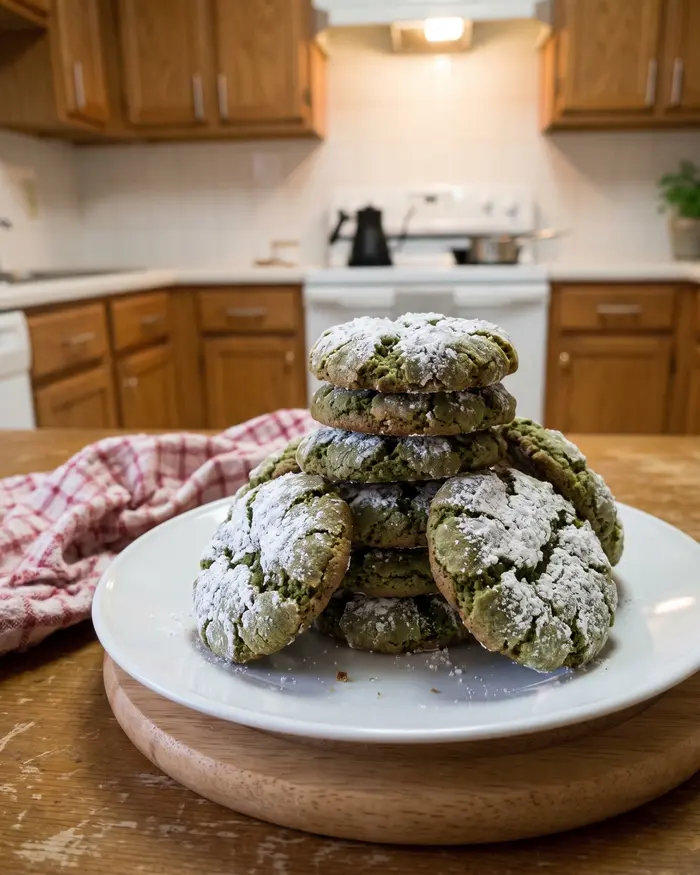
Serving ideas: Pile them on a platter with a pot of hot tea or a glass of cold milk, or tuck one into a mug of vanilla ice cream for an instant dessert that feels fancy. They’re beautiful next to other crinkled or powdered-sugar-coated treats, and they hold up well in a cookie box for gifting — just layer them with parchment so the powdered sugar doesn’t rub off.
Storage: Store cooled cookies in an airtight container at room temperature for up to 5 days, or in the fridge for up to a week if your kitchen is warm and humid. For longer storage, freeze them in a single layer on a baking sheet until solid, then transfer to a freezer-safe bag or container for up to 3 months.
The powdered sugar coating may dull slightly after a day or two, but the flavor and texture stay perfect.
Reheating: These are best enjoyed at room temperature or just slightly warm — pop one in the microwave for 8 to 10 seconds to soften the center, or let frozen cookies thaw on the counter for 20 minutes. Don’t re-bake them or the crackles will disappear and the edges will dry out.
Love Your Leftovers (No-Waste Ideas)
If you somehow have leftover Matcha Crinkle Cookies (and honestly, good for you), here are a few ways to make them even better the second time around.
Matcha cookie crumble: Crumble a cookie or two over vanilla yogurt or ice cream for an instant topping that adds crunch and a hit of green tea flavor.
Matcha parfait layers: Break up day-old cookies and layer them in a glass with whipped cream or mascarpone and fresh berries for a no-bake dessert that looks like you tried way harder than you did.
Cookie butter spread: Blend leftover cookies in a food processor with a tablespoon of melted butter and a pinch of salt until they form a thick, spreadable paste. Slather it on toast, stir it into oatmeal, or eat it with a spoon — no judgment here.
Freezer snack stash: Freeze individual cookies in a zip-top bag and pull one out whenever you need a quick sweet bite. They thaw in about 15 minutes on the counter, or you can eat them straight from the freezer for a firmer, almost shortbread-like texture.
Your Questions, Answered (FAQs)
Here are the questions I get asked most often about this recipe, along with the answers that actually help.
What are Matcha Crinkle Cookies?
Matcha Crinkle Cookies are soft, chewy cookies made with matcha green tea powder that are rolled in powdered sugar before baking. As they bake, the cookies spread and crack, creating a distinctive crinkled appearance with contrasting green and white colors.
Can I use any type of matcha powder for these cookies?
While you can use any matcha powder, culinary-grade matcha is recommended for baking these cookies. It provides a good balance of flavor and color at a reasonable price. Ceremonial-grade matcha can be used but is more expensive and its subtle flavors may be less noticeable in baked goods.
How do I store Matcha Crinkle Cookies?
Store Matcha Crinkle Cookies in an airtight container at room temperature for up to 5 days. You can also freeze the baked cookies for up to 3 months or freeze the shaped dough balls before baking for up to 2 months. If freezing dough, bake directly from frozen, adding a minute or two to the baking time.
Why did my cookies not crinkle properly?
Cookies may not crinkle if the dough is too warm, if there is not enough powdered sugar coating, or if the oven temperature is too low. Make sure to chill the dough adequately, coat the cookies generously with powdered sugar, and bake at the correct temperature. The contrast between the cold dough and hot oven helps create the crinkle effect.
Can I make Matcha Crinkle Cookies without eggs?
Yes, you can make egg-free Matcha Crinkle Cookies by using egg substitutes such as flax eggs, chia eggs, or commercial egg replacers. Keep in mind that the texture may be slightly different from the traditional recipe, potentially being a bit more dense or less chewy depending on the substitute used.
Until Next Time
If you give these Matcha Crinkle Cookies a try, I’d love to hear how they turned out — come back and leave a star rating or drop a comment below with your favorite twist. I read every single one, usually while I’m sampling the “test batch” that somehow never makes it to the cookie jar.
These cookies have become my go-to whenever I want something that looks impressive but doesn’t require a culinary degree or an all-day baking session. The crackle, the chewy centers, the way the matcha flavor deepens as they cool — it all just works, and I hope they become one of your favorites too.
For more cookie recipes that make any afternoon feel special, check out my buttery spritz cookies or these simple eggless cookies that come together in one bowl. And if you’re hunting for another crinkled beauty, my ghost cookies use the same technique with a completely different flavor.
I’m Claire Whitmore — a dessert daydreamer from Asheville, NC. For me, baking isn’t about perfect pastries — it’s about the joy of sharing something sweet (and maybe sneaking an extra scoop of icing).
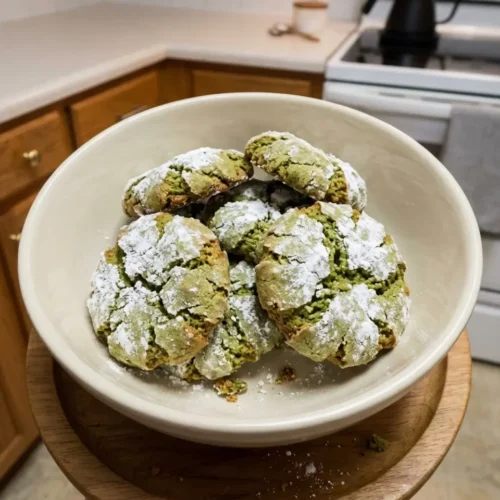
Matcha Crinkle Cookies
Ingredients
- 140 grams all purpose flour ~1 cup
- 15 grams matcha powder ~3 tablespoons
- 1 teaspoon baking powder
- ⅛ teaspoon salt
- 2 large eggs 60 grams each
- 134 grams granulated sugar ~2/3 cup
- 57 grams cultured unsalted butter 4 tablespoons, melted
- 70 grams granulated sugar ~1/3 cup, for rolling
- 40 grams powdered sugar ~1/3 cup, for rolling
Instructions
- Pass 140 grams all purpose flour, 15 grams matcha powder, 1 teaspoon baking powder and 1/8 teaspoon salt through a fine mesh sieve to sift them.
- Add 2 large eggs and 134 grams granulated sugar to a mixer bowl and beat together until light in color. You can also do this with a whisk by hand.
- Slowly beat 57 grams cultured unsalted butter into the egg mixture until it’s fully incorporated.
- Dump the dry ingredients into the wet ingredients and mix together until there are no dry areas and the dough has the texture of soft frosting.
- Refrigerate the dough for at least an hour or until it is firm enough to scoop.
- Line a baking sheet with parchment paper. Prepare a bowl with 70 grams granulated sugar and another bowl with 40 grams powdered sugar. Put the oven rack in the center position and preheat to 320°F (160°C).
- When the dough is ready, use a large spoon or a small ice cream scoop to scoop out a golf-ball-sized ball of dough and drop it into the granulated sugar.
- Roll it around in the sugar to coat evenly, and then use your hands to roll it into a sphere.
- Transfer the ball of matcha cookie dough into the powdered sugar and roll it around until the ball is totally white.
- Place the sugar-dusted ball on your prepared cookie sheet and repeat with the remaining dough.
- Bake the cookies until they’ve flattened out slightly and the tops have cracked, but the cookie is still soft in the center. This took 11 minutes in a convection oven, but baking times will vary by oven, so keep an eye on them.
- When the cookies are done, remove them from the oven and let them cool for a few minutes before transferring them to a cooling rack to cool completely.