Easy Dango Recipe
This Easy Dango Recipe is proof that dessert doesn’t have to be complicated to feel special.
I’ll be honest — the first time I saw those adorable little dango skewers with their perfect pastel colors, I thought they’d be way too fussy for a Tuesday afternoon. But then I tried making them, and guess what? They’re basically the most forgiving, fun dessert you’ll ever play with.
It’s like edible play-dough that actually tastes amazing. Plus, they’re naturally gluten-free and look so cute that even your pickiest eater will want to try them.
What This Dango Recipe Delivers
This Easy Dango Recipe creates soft, chewy Japanese rice dumplings in three beautiful colors — matcha green, snowy white, and cherry blossom pink. With just a handful of ingredients and about 30 minutes, you’ll have gorgeous skewers that taste delightful plain or topped with sweet soy glaze or red bean paste.
Why You’ll Love This Recipe 🌸
- This Dango Dessert looks fancy but takes less time than arguing with your kids about vegetables.
- It’s naturally gluten-free and uses just a few simple ingredients you can grab from any Asian grocery store.
- The dough is super forgiving — if you can make play-dough, you can make dango.
- According to The Spruce Eats, Japanese sweets focus on simplicity and natural flavors — and this recipe proves exactly why.
Quick Facts ⚡
Here’s the quick scoop on this Easy Dango Recipe.
- CourseDessert
- Prep Time15 minutes
- Cook Time15 minutes
- Total Time30 minutes
- Servings12 skewers (36 dango balls)
- DifficultyEasy
Table of Contents
Nutritional Peek
Here’s a gentle look at what you’re getting in each serving (3 dango balls per skewer):
| Nutrient | Amount per Serving |
|---|---|
| Calories | 110 kcal |
| Protein | 2g |
| Carbohydrates | 25g |
| Fat | 0.5g |
| Fiber | 0.5g |
| Sugar | 6g |
Note: These are naturally low in fat and a fun way to enjoy a sweet treat without overdoing it.
Ingredients
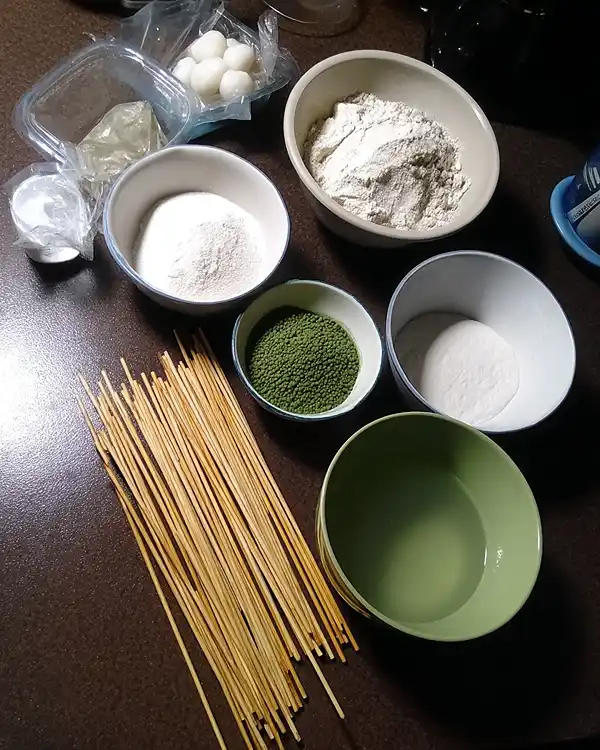
Let me tell you about this Dango Dessert ingredient list — it’s refreshingly short. You’ll need two types of rice flour (trust me, both are essential for that perfect chewy texture), and the rest is just water, sugar, and your color additions.
| Amount | Ingredient |
|---|---|
| 1 1/3 cup (150g) | Joshinko (non-glutinous rice flour) |
| 1 1/2 cup (200g) | Shiratamako (glutinous sweet rice flour) |
| 3/4 cup (75g) | Powdered sugar (optional, for sweeter dango) |
| 1 1/3 cup | Hot water |
| 1 teaspoon | Matcha powder + 1 tsp water |
| 1 drop | Pink food coloring |
| 12 | Small bamboo skewers |
Little note: The shiratamako gives you that signature chewy texture, while the joshinko keeps things from getting too sticky. You really need both — I learned this the hard way when I tried to substitute regular rice flour once. Let’s just say it didn’t end well.
Tools You’ll Actually Use
Equipment Needed:
- Large mixing bowl
- 3 small bowls (for dividing the dough)
- Kitchen scale (super helpful for consistent sizes)
- Large pot for boiling
- Slotted spoon
- Bowl of ice water
- Bamboo skewers (soaked in water)
- Measuring cups and spoons
Step-by-Step Instructions
Alright, let’s make some Easy Dango Recipe magic happen. Start by soaking those bamboo skewers in water — this keeps them from splintering when you thread the dango balls on later.
Step 1: Mix the Dough Grab your big bowl and dump in the 150 grams of joshinko and 200 grams of shiratamako. If you’re feeling like a sweet treat today (and honestly, when aren’t we?), toss in that powdered sugar too.
Pour in the hot water and start stirring with a spoon. Once it gets too thick to stir, dive in with your hands and knead it all together.
You’re looking for a texture that’s like play-dough but slightly softer — smooth, pliable, and not sticky. If it’s too dry, add a tiny splash more water. Too wet? Sprinkle in a bit more flour.
Step 2: Color Your World Divide your dough into three equal pieces and pop each into its own bowl. For the pink dango, add just one drop of pink food coloring and knead it in until the color’s all distributed.
For the matcha version, mix that teaspoon of matcha powder with a teaspoon of water to make a paste (this helps it blend better), then work it into the second piece of dough. Leave the third piece white as fresh snow.
Step 3: Roll, Baby, Roll Now comes the fun part — rolling out 36 little dango balls. Each one should be about 20 grams if you’re using a scale (which I highly recommend for uniform cuties).
If you’re eyeballing it, think marble-sized. Roll them between your palms until they’re nice and smooth.
Step 4: Boil Time Bring a big pot of water to a rolling boil. Start with the white dango balls first — this keeps your water clean and your colors pure. Drop them in and wait for them to float to the surface, then keep cooking for another 2 minutes.
Use your slotted spoon to fish them out and immediately plunge them into that ice water bath. This stops the cooking and gives them that perfect chewy texture.
Repeat with the pink dango, then finish with the green matcha ones. Cooking in this order is key — you don’t want pink-tinted white dango or weird color combos happening.
Step 5: Skewer Like a Pro Pat your dango dry and thread them onto those soaked bamboo skewers. Always go green first (summer grass), white in the middle (winter snow), and pink last (cherry blossoms). It’s tradition, and honestly, it just looks gorgeous this way.
Serve them just as they are, or get fancy with a drizzle of sweet soy glaze, a dollop of red bean paste, or even more matcha paste if you’re feeling extra.
Claire’s Pro Tips & Gentle Guidance
This Cheap Japanese Food option is seriously budget-friendly once you’ve got those rice flours in your pantry. Here are my little secrets:
- Consistency is everything: The dough should feel like soft clay. Too sticky? More flour. Too crumbly? More water, just a tablespoon at a time.
- Ice bath matters: Don’t skip the ice water plunge — it’s what gives dango that signature bouncy texture.
- Work quickly: Once they’re cooked, work fast to get them into that ice bath. If they sit too long, they’ll stick together.
- Storage trick: If you’re making these ahead, keep them in an airtight container with a damp paper towel. They’ll stay soft for up to 2 days.
According to Serious Eats, the secret to perfect chewy Japanese rice desserts is all about the ice bath technique — and I couldn’t agree more. It’s that quick temperature change that creates magic.
Quick Fixes for Easy Dango Recipe
Dango feels too hard or dense: Your dough might’ve been too dry. Next time, add water more gradually and aim for that soft play-dough texture before cooking.
They’re falling apart in the water: You probably used too much water in the dough. The mixture should hold together well before boiling. Add a bit more flour to firm it up.
Colors look muddy or uneven: Make sure you’re fully incorporating your colorings. For matcha, that paste method really helps. And always cook white first to keep your water clean.
They’re sticking together after cooking: Get them into that ice bath faster, and make sure they’re not too crowded in the pot while cooking.
Variations & Fun Twists
Let’s talk about making this Korean Treats Recipes-inspired dessert your own (yes, dango is Japanese, but the concept of chewy rice treats is loved across Asia!):
Flavor Swaps:
- Add a drop of vanilla or almond extract to the white dough
- Try purple sweet potato powder instead of matcha for a gorgeous lavender color
- Use strawberry powder for natural pink instead of food coloring
Topping Ideas:
- Classic sweet soy glaze (mitarashi sauce)
- Red bean paste (anko)
- Kinako (roasted soybean powder) mixed with sugar
- Coconut flakes
- White chocolate drizzle (check out my White Chocolate Dipped Maple Cookies for inspo)
Seasonal Spins:
- Fall: Add pumpkin spice and make them orange
- Winter: Keep them all white and dust with powdered sugar like snowballs
- Summer: Go tropical with butterfly pea flower for blue dango
Serving, Storage & Reheating
These Dango Dessert treats are best enjoyed fresh, but I get it — sometimes you need to plan ahead.
Serving: Serve at room temperature on those cute bamboo skewers. They’re perfect for bento boxes, afternoon tea, or just because it’s Thursday and you deserve something sweet.
Storage: Keep them in an airtight container with a slightly damp paper towel (not soaking, just barely moist) for up to 2 days in the fridge. They’ll firm up a bit when cold, so let them come to room temperature before serving.
Reheating: If they’ve gotten too firm, microwave them for just 10-15 seconds. You can also steam them gently for a minute or two. They should bounce back to that soft, chewy texture.
Freezing: Yep, you can freeze them! Lay them on a baking sheet to freeze individually first, then transfer to a freezer bag. They’ll keep for up to a month. Thaw in the fridge overnight and bring to room temperature before enjoying.
No-Waste Kitchen Magic
Leftover rice flour? These flours are incredibly versatile! Use joshinko in my Easy German Butter Cookies for extra crispness, or try making other Japanese sweets like mochi or rice crackers.
Extra matcha paste? Stir it into your morning latte, mix it into frosting, or use it as a glaze for my Easy Classic Moist Banana Bread.
Day-old dango: Cut them up and add to sweet soup desserts, pan-fry them with a little butter for a crispy exterior, or chop and fold into ice cream.
Bamboo skewers: After using, wash them well and save for fruit kabobs, testing cake doneness, or your next batch of dango.
Easy Dango FAQs
What are the ingredients in dango?
Traditional dango uses just two types of rice flour (joshinko and shiratamako), hot water, and optionally sugar. The beauty is in the simplicity — that’s what makes this such an authentic Easy Dango Recipe. You add colorings like matcha or pink food dye for those gorgeous pastel shades, but the base is super straightforward.
Is dango hard to make?
Not at all! I promise, if you can make cookies, you can make dango. The trickiest part is getting the dough consistency right, but once you feel that play-dough texture, you’ll know exactly what you’re looking for. It’s actually one of the most forgiving desserts I make — way easier than, say, my Toll House Chocolate Chip Pie.
What is this 🍡 called?
That adorable emoji is dango! It’s a traditional Japanese dumpling made from rice flour, typically served on skewers. The three-color version (pink, white, and green) is called “hanami dango” and it’s traditionally eaten during cherry blossom viewing season. So yes, that emoji is literally what we’re making today!
What food is the 🍡 emoji?
The 🍡 emoji represents dango — those sweet, chewy Japanese rice dumplings served on bamboo skewers. Each color has meaning: pink for spring cherry blossoms, white for winter snow, and green for summer grass. They’re a beloved street food in Japan and have become popular worldwide thanks to their Instagram-worthy appearance and delightful chewy texture.
Cozy Closing

There you have it — your very own Easy Dango Recipe that’s as fun to make as it is to eat. These little cuties are perfect for sharing (or not, I won’t judge), and they’re guaranteed to impress anyone who sees them. The best part? You can totally customize them with different colors and toppings to match your mood or the season.
I’d love to see your spin on this Easy Dango Recipe! Did you try different colors? Add a creative topping? Leave a note below or tag me on Instagram so we can share a sweet moment together. And if you loved making these, you might also enjoy my Easy Banana Bread Recipe — because we’re all about simple, delicious treats around here.
I’m Claire Whitmore — a dessert daydreamer from Asheville, NC. For me, baking isn’t about perfect pastries — it’s about the joy of sharing something sweet (and maybe sneaking an extra scoop of icing).

Easy Dango Recipe
Equipment
- Large mixing bowl
- 3 small bowls
- Kitchen scale
- Large pot
- Slotted spoon
- Bowl of ice water
- Bamboo skewers
- Measuring cups and spoons
Ingredients
Dough
- 150 g Joshinko (non-glutinous rice flour)
- 200 g Shiratamako (glutinous sweet rice flour)
- 75 g Powdered sugar optional
- 1 ⅓ cup Hot water
- 1 tsp Matcha powder + 1 tsp water
- 1 drop Pink food coloring
- 12 Small bamboo skewers
Instructions
- Soak the bamboo skewers in water to prevent splintering when threading the dango balls later.
- Mix the dough by combining joshinko, shiratamako, powdered sugar (if using), and hot water. Stir, then knead until soft and pliable.
- Divide the dough into three portions. Color one with pink food coloring, one with matcha paste, and leave one white.
- Roll the dough into 36 small balls (about 20g each).
- Boil water and cook the balls in batches. When they float, cook 2 minutes more, then transfer to an ice water bath.
- Thread the cooled balls onto skewers in the order green-white-pink.
- Serve plain or with toppings like sweet soy glaze, red bean paste, or kinako sugar.