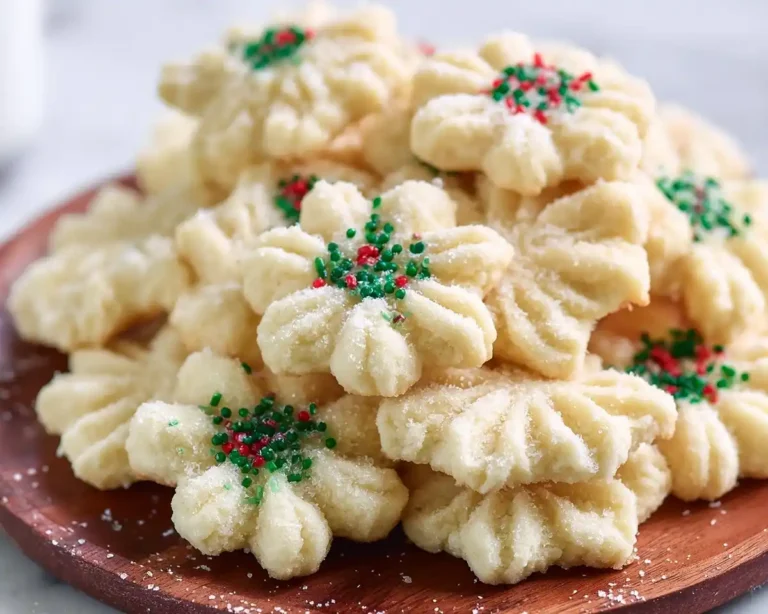
Traditional German Butter Cookies
Traditional German Butter Cookies (Spritz cookies) are buttery, melt-in-your-mouth holiday treats made with simple pantry ingredients. This easy recipe uses a cookie press to create beautiful festive shapes in just 30 minutes!
Hey there, I’m Claire Whitmore — a pastry whisperer in Asheville, NC, where butter totally counts as self-care. These Traditional German Butter Cookies are the kind of recipe that’ll make your kitchen smell like a cozy European bakery without requiring a plane ticket.
They’re buttery, delicate, and way easier than they look — plus, you can make them in fun shapes that’ll have everyone thinking you went to pastry school.
These cookies (also called Spritz cookies) are made with basic ingredients like butter, sugar, eggs, and flour, then pressed through a cookie press to create stunning festive designs.
They’re perfect for holiday cookie swaps, gift boxes, or just keeping all to yourself with a good cup of coffee. The dough comes together quickly, chills briefly, and bakes in under 15 minutes.
Table of Contents
Little Snapshot: What This Recipe Delivers
Traditional German Butter Cookies are classic pressed cookies with a tender, buttery crumb that practically melts on your tongue. Made with a combination of butter and margarine for the perfect texture, these cookies take about 30 minutes from start to finish and yield 38 festive cookies that’ll steal the show at any holiday gathering.
Why You’ll Love This Recipe 🌸
- These Traditional German Butter Cookies look fancy but take less time than wrapping presents.
- You only need one bowl and a cookie press — minimal cleanup means more time for actual cookie eating.
- They’re endlessly customizable with food coloring, sprinkles, or different press shapes to match any holiday or celebration.
- According to King Arthur Baking’s guide to perfecting spritz cookies, the secret to tender cookies is proper dough consistency — and this recipe nails it every single time.
Quick Facts ⚡
Here’s the quick scoop on this Traditional German Butter Cookies recipe.
- CourseDessert
- Prep Time15 minutes
- Cook Time10-15 minutes
- Total Time30 minutes (plus chilling)
- Servings38 cookies
- DifficultyEasy

Traditional German Butter Cookies
Equipment
- Electric mixer (stand or hand mixer)
- Large mixing bowl
- Medium bowl
- Cookie press with decorative discs
- Baking sheets
- Measuring cups and spoons
- Rubber spatula
- Wire cooling rack
Ingredients
- 1 stick Unsalted butter softened (1/2 cup)
- 1 stick Margarine softened (1/2 cup)
- ¾ cup Granulated sugar
- 2 large Eggs room temperature
- 1 tsp Vanilla extract
- 1 pinch Salt
- 3 ½ cups All-purpose flour
- 1 heaping tsp Baking powder
- Gel food coloring optional, for festive colors
- Sprinkles or sanding sugar optional, for decoration
Instructions
- Place the softened unsalted butter and margarine in your electric mixer bowl and beat on medium speed until the mixture is light, fluffy, and pale in color (about 2-3 minutes). This step incorporates air into your cookies for that melt-in-your-mouth texture.
- Add the granulated sugar 1/2 cup at a time, beating well after each addition and alternating with the eggs. Beat in the vanilla extract until everything is smooth and well combined. This gradual method prevents the mixture from becoming grainy.
- In a separate medium bowl, whisk together the all-purpose flour, salt, and baking powder until evenly distributed. This ensures your leavening agent is spread throughout the dough for consistent texture.
- By hand (not with the mixer), fold the flour mixture into the butter mixture a little at a time using a rubber spatula. Mix just until the flour disappears and you have a smooth dough. Don’t overwork it or your cookies will become tough instead of tender.
- Cover the dough and chill it in the refrigerator for about 15 minutes. At the same time, pop your baking sheets in the fridge too — chilled pans help the pressed dough stick better when you’re forming shapes.
- While everything chills, preheat your oven to 350°F. Load your cookie press according to the manufacturer’s instructions with the disc shape of your choice. If the dough feels too soft to press, chill it a bit longer; if it’s too stiff and won’t press smoothly, let it sit at room temperature for a few minutes.
- Remove your chilled baking sheet from the fridge and press the cookies directly onto the ungreased pan, spacing them about 1 inch apart. The cookies won’t spread much, so you can fit quite a few per sheet. Add any sprinkles, colored sugar, or decorative touches now, before baking.
- Bake at 350°F for 10 to 15 minutes, until the edges just start to turn golden and your kitchen smells like a German Christmas market. The cookies should look set but not deeply browned.
- Let the cookies cool on the baking sheet for 2-3 minutes (they’re delicate when hot), then transfer them to a wire rack to cool completely.
Notes
Nutritional Peek
Here’s what you’re working with per cookie — because knowledge is power, and butter is happiness.
| Nutrient | Amount per Serving |
|---|---|
| Calories | 95 kcal |
| Protein | 1.5g |
| Carbohydrates | 11g |
| Fat | 5g |
| Fiber | 0.3g |
| Sugar | 4g |
Traditional German Butter Cookies Ingredients
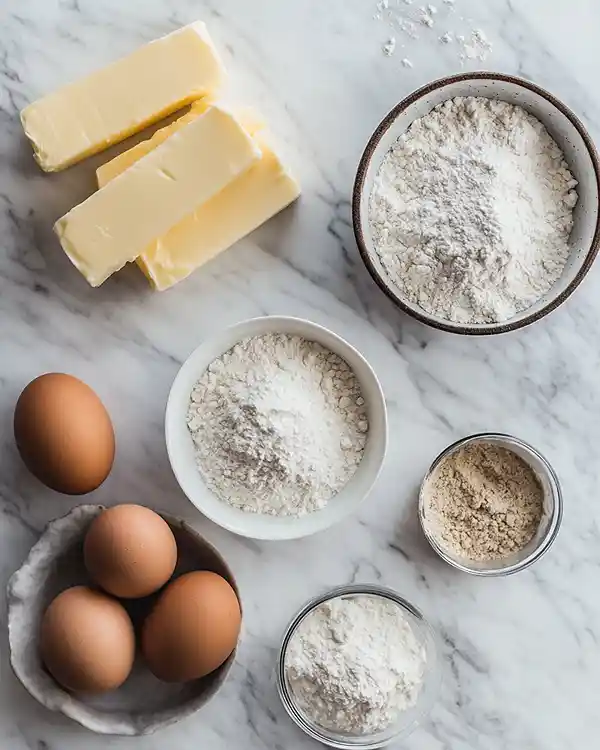
This Recipe For Spritz Cookies uses simple pantry staples that you probably already have on hand — no fancy imports required.
For the fat base — unsalted butter and margarine — you’ll want both softened to room temperature so they cream together smoothly without lumps. The combination gives you buttery flavor with a tender texture that holds its shape.
For the dry ingredients — all-purpose flour, baking powder, and salt — measure carefully and mix them separately to ensure even distribution throughout the dough.
| Amount | Ingredient |
|---|---|
| 1 stick (1/2 cup) | Unsalted butter, softened (yes, real butter — margarine alone won’t give you that rich flavor) |
| 1 stick (1/2 cup) | Margarine, softened |
| 3/4 cup | Granulated sugar |
| 2 large | Eggs, room temperature |
| 1 tsp | Vanilla extract (the good stuff makes a difference) |
| Pinch | Salt |
| 3 1/2 cups | All-purpose flour |
| 1 heaping tsp | Baking powder |
| Optional | Gel food coloring (for festive fun) |
| Optional | Sprinkles or sanding sugar |
Tools You’ll Actually Use
- Electric mixer (stand or hand mixer both work great)
- Large mixing bowl
- Medium bowl (for dry ingredients)
- Cookie press with decorative discs
- Ungreased baking sheets
- Measuring cups and spoons
- Rubber spatula
Step-by-Step Instructions
Making Traditional German Butter Cookies is all about getting that dough consistency just right — follow these steps and you’ll be pressing out perfect cookies in no time.
Step 1: Cream the fats Place the softened unsalted butter and margarine in your electric mixer bowl and beat on medium speed until the mixture is light, fluffy, and pale in color (about 2-3 minutes). This step incorporates air into your cookies for that melt-in-your-mouth texture.
Step 2: Add sugar and eggs gradually Add the granulated sugar 1/2 cup at a time, beating well after each addition and alternating with the eggs. Beat in the vanilla extract until everything is smooth and well combined. This gradual method prevents the mixture from becoming grainy.
Step 3: Prepare the dry ingredients In a separate medium bowl, whisk together the all-purpose flour, salt, and baking powder until evenly distributed. This ensures your leavening agent is spread throughout the dough for consistent texture.
Step 4: Combine wet and dry By hand (not with the mixer — this is important!), fold the flour mixture into the butter mixture a little at a time using a rubber spatula. Mix just until the flour disappears and you have a smooth dough. Don’t overwork it or your Danish Spritz Cookies will become tough instead of tender.
Step 5: Chill everything Cover the dough and chill it in the refrigerator for about 15 minutes. At the same time, pop your baking sheets in the fridge too — chilled pans help the pressed dough stick better when you’re forming shapes.
Step 6: Load your press While everything chills, preheat your oven to 350°F. Load your cookie press according to the manufacturer’s instructions with the disc shape of your choice. If the dough feels too soft to press, chill it a bit longer; if it’s too stiff and won’t press smoothly, let it sit at room temperature for a few minutes.
Step 7: Press and decorate Remove your chilled baking sheet from the fridge and press the Christmas Spritz Cookies directly onto the ungreased pan, spacing them about 1 inch apart.
The cookies won’t spread much, so you can fit quite a few per sheet. Add any sprinkles, colored sugar, or decorative touches now, before baking — they’ll stick better to the raw dough.
Step 8: Bake to golden perfection Bake at 350°F for 10 to 15 minutes, until the edges just start to turn golden and your kitchen smells like a German Christmas market. The cookies should look set but not deeply browned — they’ll firm up as they cool.
Step 9: Cool completely Let the cookies cool on the baking sheet for 2-3 minutes (they’re delicate when hot), then transfer them to a wire rack to cool completely. Try not to eat them all before they reach room temperature. I said try.

Claire’s Pro Tips & Gentle Guidance
These Danish Spritz Cookies are pretty forgiving, but here are a few tricks I’ve learned through plenty of trial and (delicious) error.
The butter-margarine magic: I know using both butter and margarine seems fussy, but trust me on this one. Butter alone makes cookies that are too crumbly, while margarine alone lacks flavor. The combo gives you structure with that irresistible buttery taste.
Room temperature is non-negotiable: Your butter, margarine, and eggs need to be truly room temperature for smooth mixing. Cold ingredients won’t cream properly and you’ll end up with lumpy dough that won’t press well. I usually set mine out about an hour before baking.
Don’t skip the pan chilling: I learned this the hard way when my first batch just smooshed instead of sticking to the pan. Chilled pans help the dough grip so your pretty shapes actually form instead of becoming sad blobs.
Test your dough consistency: Before loading up your entire press, do a test cookie. If it’s too soft and won’t hold its shape, chill for 5 more minutes. If it’s too stiff to press smoothly, let it warm up slightly. According to The Kitchn‘s detailed baking guide , dough temperature is everything with pressed cookies.
Color me festive: If you’re adding gel food coloring, divide your dough into portions before coloring so you can make multiple colors. Gel works better than liquid because it won’t change the dough’s consistency.
Quick Fixes for Traditional German Butter Cookies
Problem: Cookies won’t stick to the pan Your pan isn’t cold enough or your dough is too warm. Pop the pan back in the fridge for another 10 minutes and let the dough chill a bit more before trying again.
Problem: Dough won’t press through the cookie press The dough is too cold and stiff. Let it sit at room temperature for 5-10 minutes to soften slightly — you want it pliable but not warm.
Problem: Cookies spread too much during baking Your dough was too warm when you pressed it, or your butter and margarine weren’t properly softened before mixing. Next time, make sure your fats are room temp (not melted) and chill the shaped cookies for 10 minutes before baking.
Problem: Cookies are tough instead of tender You overmixed the dough after adding the flour. Remember, fold the dry ingredients in gently by hand just until combined — overworking develops gluten which makes cookies chewy instead of delicate.
Variations & Fun Twists
These Christmas Spritz Cookies Recipes are like a blank canvas for your creativity.
Holiday edition: Add almond extract instead of vanilla for a more traditional German flavor. Mix in finely grated lemon zest for a bright twist, or use peppermint extract for a festive spin.
Chocolate lovers: Replace 1/2 cup of the flour with unsweetened cocoa powder for chocolate spritz cookies. You can also dip the cooled cookies halfway in melted chocolate and let them set on parchment paper.
Gluten-free option: Use a 1:1 gluten-free baking flour blend. The texture will be slightly different but still delicious. You might need to chill the dough a bit longer.
Fancy finish: After baking and cooling, drizzle with melted white or dark chocolate, dust with powdered sugar, or sandwich two cookies together with jam or buttercream filling.
Serving, Storage & Reheating
These Traditional German Butter Cookies are best enjoyed with a cup of coffee or hot cocoa, stacked on a pretty plate at your holiday gathering, or packaged in a gift tin with parchment paper between the layers. They pair beautifully with other holiday treats like New Year’s Eve Cake Ball Drops for a stunning dessert spread.
Store completely cooled cookies in an airtight container at room temperature for up to 2 weeks — they actually get better after a day or two as the flavors meld. Layer them with parchment or wax paper to prevent sticking if you’ve added sprinkles.
You can also freeze unbaked dough for up to 3 months (wrap tightly in plastic wrap, then place in a freezer bag). Thaw in the refrigerator overnight before pressing and baking. Baked cookies freeze beautifully too — just layer them with parchment and store in a freezer-safe container for up to 3 months.
Can’t get enough of these flavors? You’re going to love what’s waiting in the Cookies & Brownies lineup. Every single recipe is made to impress without the stress. Happy cooking, friend!
No-Waste Kitchen Magic
Got leftover cookies that are a few days old? Crumble them over ice cream for an instant fancy sundae, or pulse them in a food processor to make a buttery cookie crust for cheesecake. You could even use the crumbs as a base for No-Bake Gingerbread Cheesecake Cups for a creative twist.
If you’re making multiple batches, keep one portion of dough in the fridge while you work with another — this prevents the dough from getting too warm. Any dough scraps can be re-chilled and pressed again.
Extra egg yolks from another recipe? These cookies are the perfect place to use them — just adjust the liquid slightly if needed.
Traditional German Butter Cookies FAQs
Can I freeze Traditional German Butter Cookies?
Absolutely! These cookies freeze beautifully for up to 3 months. Let them cool completely, then layer them with parchment paper in an airtight container. Thaw at room temperature for about 30 minutes before serving.
How do I know when Danish Spritz Cookies are done baking?
Look for edges that are just starting to turn golden — the centers should look set but still pale. They’ll seem soft when you first remove them from the oven but will firm up as they cool on the pan.
Will Traditional German Butter Cookies work with salted butter?
You can use salted butter if that’s what you have, but skip the pinch of salt in the recipe. I prefer unsalted because it gives you better control over the final flavor.
What if I don’t have margarine for this Recipe For Spritz Cookies?
In a pinch, you can use all butter (1 cup total), but add 2 tablespoons of vegetable shortening to help with texture. The cookies will be slightly more crumbly but still delicious.
How far in advance can I make Danish Spritz Cookies?
These are perfect make-ahead cookies! Bake them up to 2 weeks before you need them and store in an airtight container. They actually taste better after a day or two as the flavors develop.
Let’s Make Some Cookie Magic
I’d love to see your spin on these Traditional German Butter Cookies! Drop a comment below with your cookie photos — I’d love to see which shapes you chose and how you decorated them. These Traditional German Butter Cookies are so versatile; I bet you’ve got amazing color and flavor variations already in mind!
Whether you’re baking for a holiday party, filling up gift tins, or just treating yourself to something sweet (no judgment here), these cookies are sure to become a tradition in your kitchen. Happy baking!
I’m Claire Whitmore — a dessert daydreamer from Asheville, NC. For me, baking isn’t about perfect pastries — it’s about the joy of sharing something sweet (and maybe sneaking an extra cookie when no one’s looking).