Easy Sourdough Pizza Dough Recipe
Making sourdough pizza dough from scratch transforms your home kitchen into a cozy pizzeria. This homemade sourdough pizza recipe uses active starter, bread flour, and time to build complex flavor and an airy, crispy crust that rivals any artisan pizza dough you’d find downtown.
I’m Linda Sandra, and I’ve been making pizza dough with starter for years in my Charleston kitchen. There’s something magical about watching that bubbly starter turn into golden, blistered crust that crackles when you bite into it.
I still remember the first time I stretched my own dough and slid it onto a screaming-hot pizza stone. The kitchen filled with that yeasty, toasted aroma, and my family gathered around like moths to a flame. Now it’s our Friday night ritual, and everyone gets to build their own masterpiece.
Table of Contents
Quick Overview
One recipe down, and so many more to explore! Head over to our complete Bagels, Rolls & Pizzas lineup for more delicious ideas that’ll keep your kitchen buzzing. Bookmark this one — you’ll thank yourself later.
Little Snapshot: What This Recipe Delivers
This sourdough pizza dough recipe delivers artisan-quality crust with tangy flavor, airy texture, and crispy edges using just five ingredients and your active sourdough starter. Perfect for homemade pizza night with minimal hands-on work.
Why You’ll Love This Recipe 🌸
- This sourdough pizza dough takes less active time than scrolling through takeout menus.
- The long fermentation means easier digestion and deeper flavor that makes your kitchen smell like an Italian bakery.
- You can make the dough ahead and keep it in the fridge for up to three days, so pizza night is always within reach.
- According to King Arthur Baking, sourdough fermentation creates complex flavors and improves digestibility — and this recipe proves exactly why.
Quick Facts ⚡
Here’s the quick scoop on this sourdough pizza dough.
- CourseMain Dish
- Prep Time20 minutes
- Cook Time12 minutes
- Total Time18-30 hours (includes fermentation)
- Servings2 medium pizzas
- DifficultyMedium
Nutritional Peek
| Nutrient | Amount per serving |
|---|---|
| Calories | 220 kcal |
| Protein | 8g |
| Carbohydrates | 42g |
| Fat | 3g |
| Fiber | 2g |
| Sugar | 0g |
What You’ll Need
You don’t need a fancy setup to make amazing homemade sourdough pizza. Just a few trusty kitchen tools and you’re ready to create magic.
- Large mixing bowl
- Digital kitchen scale (for accuracy)
- Plastic wrap or kitchen towel
- Pizza stone or baking steel
- Pizza peel
- Bench scraper (optional but helpful)
- Small containers or bowls for cold fermentation
- Rolling pin (optional)
Ingredients
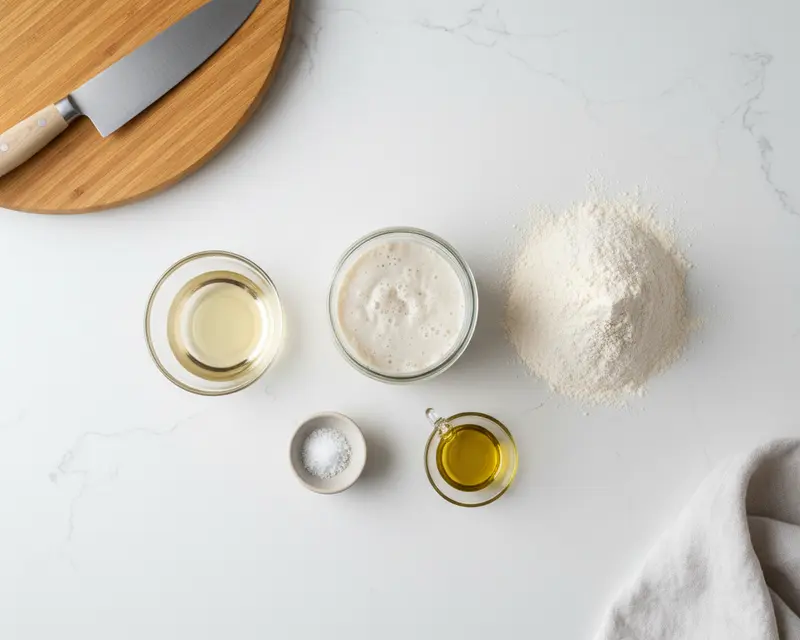
This pizza dough with starter comes together with five simple ingredients you probably already have. The active sourdough starter brings tang and lift, while bread flour creates that chewy, structured crumb that holds your toppings beautifully.
| Group | Ingredient | Amount | Notes |
|---|---|---|---|
| Base | Active sourdough starter | 100g | Fed and bubbly, passed the float test |
| Base | Warm water | 150g | Around 85-90°F, just warm to the touch |
| Dry | Bread flour | 250g | High protein for structure and chew |
| Dry | Salt | 5g | Fine sea salt or kosher, about 1 teaspoon |
| Fat | Olive oil | 10g | Extra virgin adds flavor and tenderness |
Step-by-Step Instructions
Let’s make this happen.

Sourdough pizza dough starts with dissolving your bubbly starter in warm water. In a large bowl, combine the 100g active sourdough starter and 150g warm water, stirring with a spoon or your fingers until the starter breaks apart and swirls into cloudy ribbons.
Add the 250g bread flour and 5g salt directly to the bowl. Use a wooden spoon or your hands to mix everything together until you see a shaggy, rough dough forming with no dry flour pockets visible in the bottom of the bowl.
Cover the bowl snugly with plastic wrap or a damp kitchen towel. Let the dough rest undisturbed for 30 minutes at room temperature—this autolyse period allows the flour to hydrate fully and gluten strands to begin forming naturally.
After the rest, drizzle the 10g olive oil over the top of the dough. Fold and knead the dough right in the bowl for 2-3 minutes, squeezing and pressing until the oil disappears completely into the dough and everything feels smooth and unified.
Now begin your stretch and fold sequence. Wet your hands lightly, grab the edge of the dough, stretch it upward gently without tearing, then fold it over toward the center like you’re wrapping a package.
Rotate the bowl a quarter turn and repeat the stretch and fold motion 3-4 more times until you’ve worked your way around the entire bowl. Cover the bowl and let it rest for 30 minutes, then repeat this entire stretch and fold process three more times over the next 2 hours.
After your final stretch and fold, cover the bowl and let the dough bulk ferment at room temperature between 70-75°F for 4-6 hours. You’ll know it’s ready when the dough has grown noticeably, feels airy and soft, and shows bubbles across the surface and through the sides of the bowl.
Lightly flour your work surface and gently turn out the puffy dough. Use a bench scraper to divide the dough into 1-2 equal portions depending on whether you want larger or smaller pizzas.
Shape each portion into a tight ball by cupping your hand around the dough on the counter. Rotate your hand in small circles, creating surface tension as the dough ball tightens and smooths into a taut sphere.
Place each dough ball into a lightly oiled container or bowl. Cover the containers and slide them into the refrigerator for at least 12-24 hours—this slow cold fermentation is where the magic happens, building layers of tangy flavor and making the dough easier to stretch.
On pizza making day, remove your dough from the fridge 1-2 hours before you plan to bake. Let the dough balls sit at room temperature covered with a towel so they relax and become pliable and easier to shape.
Preheat your oven to its highest setting, usually 500-550°F, with your pizza stone or baking steel positioned on the middle or upper rack. Let it heat for a full 45-60 minutes so the stone becomes blazing hot and ready to create that crispy bottom crust.
Lightly flour your work surface and place one dough ball in the center. Gently press the dough from the center outward with your fingertips, leaving a slightly thicker rim around the edge for your crust border.
Continue stretching the dough by draping it over your knuckles and rotating gently, or use a rolling pin if you prefer a thinner, cracker-style crust. Aim for your desired shape and thickness, being careful not to press out all those beautiful air bubbles you worked so hard to develop.
Transfer your stretched dough to a pizza peel that’s been dusted generously with semolina flour or cornmeal. Give the peel a little shake to make sure the dough slides freely—this prevents sticking disasters when you transfer to the oven.
Add your desired toppings quickly and with a light hand. Too many toppings will weigh down the dough and make it soggy, so think of less as more when building your pizza.
Open your oven and carefully slide the topped pizza onto the preheated pizza stone or steel with a quick forward-and-back jerking motion. Close the oven door immediately to trap the heat.
Bake for 8-15 minutes, rotating the pizza halfway through, until the crust turns golden brown with dark blistered spots and the cheese melts into bubbly, caramelized pools. Baking time varies based on your oven and topping choices.
Remove the pizza from the oven using the peel. Let it cool on a cutting board for 2-3 minutes so the cheese sets slightly, then slice into wedges and serve immediately while everything is hot and crackling.
Pro Tips & Gentle Guidance
Making artisan pizza dough at home gets easier every time you do it. Here are the little tricks I’ve learned from years of Friday night pizza parties in my Charleston kitchen.
Use a kitchen scale instead of measuring cups for the most consistent results. Flour settles and compacts differently every time you scoop, but grams never lie—weighing ensures your hydration ratio stays perfect batch after batch.
Make sure your sourdough starter is truly active and bubbly before you begin. It should have doubled in size within 4-6 hours of feeding and pass the float test when you drop a small spoonful into water—if it floats, you’re good to go.
Don’t skip the cold fermentation step in the fridge. Those 12-24 hours transform bland dough into complex, tangy, restaurant-quality crust while also making the dough much more extensible and easier to stretch without tearing.
Room temperature matters more than you think during bulk fermentation. If your kitchen is cooler than 70°F, the dough will take longer to rise—try placing the bowl in a slightly warm oven with just the light on to create a cozy environment.
When stretching your dough, work gently and let gravity do most of the work. According to Serious Eats, aggressive rolling deflates the air pockets that create that light, airy crumb we all crave in artisan pizza.
Preheat your pizza stone for the full hour even if it seems excessive. A properly heated stone mimics a wood-fired oven and gives you that crispy, charred bottom and puffy, leopard-spotted crust that makes homemade pizza taste professional.
If you don’t have a pizza peel, flip a large baking sheet upside down and use the flat bottom as a makeshift peel. Just make sure to dust it well with semolina or cornmeal so your pizza slides off smoothly.
Variations & Adaptations
This sourdough pizza dough is your blank canvas for endless creativity. Once you master the base recipe, you can spin it in a dozen delicious directions.
For a whole wheat version, replace up to 50g of the bread flour with whole wheat flour. This adds nutty flavor and extra fiber, though you may need to add a tablespoon or two more water since whole wheat absorbs more liquid.
Try a garlic herb crust by kneading in 1 teaspoon of dried Italian herbs and 1 teaspoon of garlic powder during the final stretch and fold. Brush the finished crust with garlic butter right out of the oven for extra richness.
Make mini personal pizzas by dividing the dough into 4 smaller portions instead of 2. These are perfect for kids who want to customize their own toppings and bake faster at around 6-8 minutes.
Create a thicker Sicilian-style crust by pressing the dough into a well-oiled rectangular baking pan after the cold fermentation. Let it proof for another hour at room temperature, then top and bake in a 475°F oven for 15-20 minutes.
For a gluten-free adaptation, this recipe won’t work as written since sourdough relies on gluten development. However, you can use a gluten-free sourdough starter with a commercial gluten-free pizza dough blend following the manufacturer’s instructions.
Try a sweet dessert pizza by baking the plain crust, then topping it with Nutella, fresh berries, and a dusting of powdered sugar. It’s an unexpected treat that uses the same tangy base in a totally different way.
Quick Fixes for Sourdough Pizza Dough
Problem: Your dough isn’t rising during bulk fermentation.
Solution: Your starter might not have been active enough, or your kitchen is too cold. Move the bowl to a warmer spot like an oven with just the light on, and give it more time—sometimes it takes 8-10 hours in cooler environments.
Problem: The dough tears when you try to stretch it.
Solution: The dough is probably too cold or hasn’t rested long enough after coming out of the fridge. Let it sit at room temperature for another 30 minutes to relax the gluten, and stretch more gently using gravity rather than force.
Problem: Your pizza sticks to the peel and won’t slide onto the stone.
Solution: You didn’t use enough semolina or cornmeal on the peel, or you let the topped pizza sit too long before transferring. Work quickly after topping, give the peel a test shake before opening the oven, and add more cornmeal if needed.
Problem: The crust is pale and doesn’t develop color or char.
Solution: Your oven or stone wasn’t hot enough. Make sure you preheat for the full hour at maximum temperature, and consider moving your stone to the top rack where heat concentrates more intensely.
Problem: The bottom of the pizza is soggy even though the top looks done.
Solution: You added too many wet toppings or didn’t preheat the stone long enough. Use less sauce, pat down watery vegetables with paper towels first, and ensure your stone is blazing hot before the pizza goes on.
Storage & Reheating
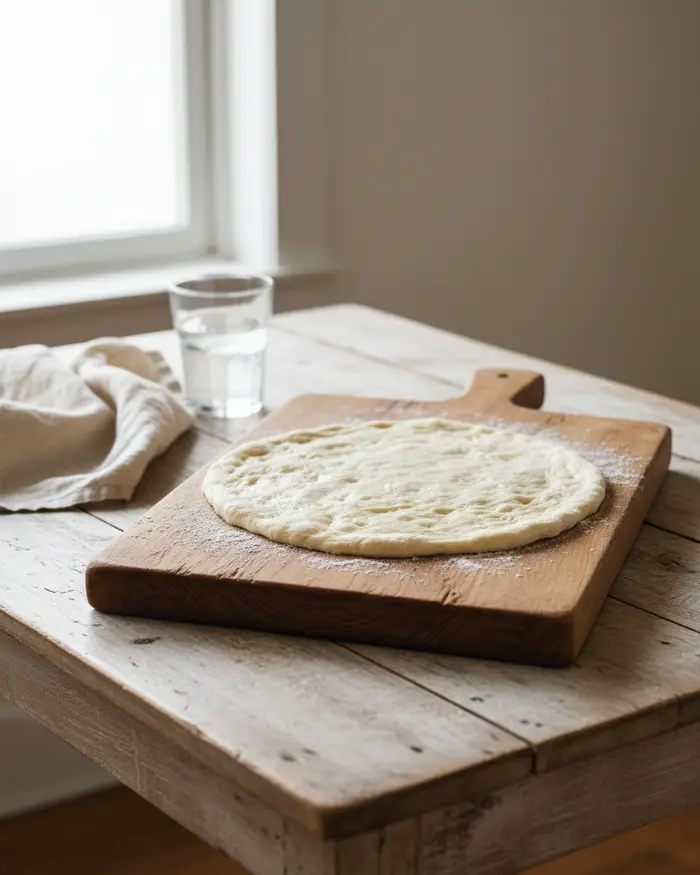
Homemade sourdough pizza tastes best fresh from the oven, but this versatile dough stores beautifully for future pizza nights. The cold fermentation actually improves flavor, making it the ultimate meal-prep base.
Store unbaked dough balls in airtight containers brushed with olive oil in the refrigerator for up to 3 days. For longer storage, freeze the shaped dough balls wrapped tightly in plastic wrap and placed in freezer bags for up to 3 months—thaw overnight in the fridge before using.
Leftover baked pizza should be cooled completely, then stored in an airtight container or wrapped in foil in the refrigerator for up to 3 days. Reheat slices in a hot skillet over medium heat with a lid on top for 3-4 minutes to crisp the bottom and melt the cheese, or use a 375°F oven for 10 minutes.
| Storage Method | Duration | Best For |
|---|---|---|
| Refrigerator (unbaked dough) | 3 days | Slow fermentation and flavor development |
| Freezer (unbaked dough) | 3 months | Make-ahead pizza night convenience |
| Refrigerator (baked pizza) | 3 days | Quick leftover meals |
| Freezer (baked pizza) | 2 months | Portion control and grab-and-go lunches |
No-Waste Kitchen Magic
Every bit of this sourdough crust recipe can be stretched into something new and delicious. I hate seeing good food go to waste, so here are my favorite ways to use every last crumb.
If you have extra unbaked dough, roll it out thin, brush with olive oil and garlic, then bake until crispy to make sourdough crackers perfect for dipping in hummus or soup.
Leftover baked crust edges make excellent croutons. Cut them into cubes, toss with olive oil and Italian seasoning, then bake at 350°F for 10 minutes until golden and crunchy for salads or soups.
Shape small pieces of dough into breadsticks before the cold fermentation stage. After the fridge rest, brush with garlic butter, sprinkle with parmesan, and bake at 425°F for 12-15 minutes for cheesy breadsticks.
Turn leftover pizza into a breakfast scramble by chopping it up and folding it into beaten eggs with a handful of fresh spinach. It’s like a deconstructed frittata that uses every last bite.
Save your pizza crusts in the freezer until you have enough to make pizza crust breadcrumbs. Pulse them in a food processor with dried herbs for a flavorful coating on chicken or vegetables.
Frequently Asked Questions
Here are answers to the most common questions about making sourdough pizza dough at home.
What is sourdough pizza dough?
Sourdough pizza dough is a type of pizza dough made using a sourdough starter instead of commercial yeast. The starter contains wild yeast and beneficial bacteria that ferment the dough, creating a unique tangy flavor, improved digestibility, and a crispy yet chewy texture.
How long does sourdough pizza dough need to ferment?
Sourdough pizza dough typically requires 24 to 48 hours of fermentation in the refrigerator for best results. A longer, slower fermentation develops more complex flavors and makes the dough easier to digest. At room temperature, bulk fermentation usually takes 4 to 6 hours before shaping and cold fermentation.
Can I freeze sourdough pizza dough?
Yes, sourdough pizza dough freezes well. After the dough has completed its fermentation, divide it into individual pizza portions, shape into balls, and wrap tightly in plastic wrap or place in airtight containers. Frozen dough can be stored for up to 3 months. Thaw in the refrigerator overnight before using.
Why is my sourdough pizza dough too sticky?
Sourdough pizza dough can be sticky due to high hydration levels, warm temperatures causing over-fermentation, or an overly active starter. To manage sticky dough, use wet hands or oil when handling, ensure proper fermentation time, adjust flour amounts slightly, or refrigerate the dough to make it easier to work with.
What temperature should I bake sourdough pizza at?
Sourdough pizza bakes best at high temperatures between 450 to 500 degrees Fahrenheit in a home oven, or 700 to 900 degrees Fahrenheit in a pizza oven. Preheat your oven with a pizza stone or steel for at least 45 minutes. Higher temperatures create a crispy crust with proper char while keeping the interior soft and chewy.
Final Dish
There’s something deeply satisfying about making sourdough pizza dough from scratch in your own kitchen. The process connects you to centuries of bread-making tradition while creating a meal that brings everyone to the table with smiles and full hearts.
This recipe isn’t about perfection—it’s about the joy of watching simple ingredients transform into something extraordinary. Whether your crust is perfectly round or charmingly rustic, whether your toppings are classic or wildly creative, the love you put into stretching that dough and feeding your people is what really matters.
I hope this sourdough pizza dough becomes a staple in your home like it has in mine. Try it with your favorite toppings, experiment with the variations, and don’t be afraid to make it your own. Share your pizza photos and your favorite topping combinations in the comments—I love seeing how you make this recipe uniquely yours.
I’m Linda Sandra — a Charleston home chef and comfort-food daydreamer. Around here, cooking’s not about perfection — it’s about cozy vibes, creative twists, and food that feels like love.

Sourdough Pizza Dough
Ingredients
- 100 g active sourdough starter
- 150 g warm water
- 250 g bread flour
- 5 g salt
- 10 g olive oil
Instructions
- In a large bowl, combine the active sourdough starter and warm water. Mix until the starter is mostly dissolved.
- Add the bread flour and salt to the bowl. Mix with a spoon or your hands until a shaggy dough forms. It will be stiff.
- Cover the bowl with plastic wrap and let it rest for 30 minutes (autolyse).
- After the rest, add the olive oil to the dough. Incorporate the oil by folding and kneading the dough in the bowl for 2-3 minutes until the oil is absorbed.
- Perform a series of stretch and folds every 30 minutes for 2 hours. To do this, lightly wet your hands, grab a portion of the dough from the edge of the bowl, stretch it upwards, and fold it over to the center. Rotate the bowl and repeat this action 3-4 more times until you’ve completed a full rotation.
- After the stretch and folds, cover the bowl and let the dough bulk ferment at room temperature (around 70-75°F / 21-24°C) for 4-6 hours, or until it has noticeably increased in volume and is bubbly.
- Lightly flour your work surface and gently turn out the dough. Divide the dough into 1-2 equal portions, depending on your desired pizza size.
- Gently shape each portion into a tight ball. You can do this by cupping your hand around the dough on the work surface and rotating it to create surface tension.
- Place the dough balls into lightly oiled containers or bowls, cover them, and refrigerate for at least 12-24 hours. This slow cold fermentation develops flavor and makes the dough easier to handle.
- On pizza making day, remove the dough from the refrigerator 1-2 hours before baking to allow it to come to room temperature.
- Preheat your oven to its highest setting (usually 500-550°F / 260-290°C) with a pizza stone or steel inside for at least 45-60 minutes.
- Lightly flour your work surface and gently stretch or roll out one dough ball into your desired pizza shape and thickness. Be careful not to deflate the dough too much.
- Transfer the stretched dough to a pizza peel dusted with semolina flour or cornmeal.
- Add your desired toppings.
- Carefully slide the pizza onto the preheated pizza stone/steel in the oven.
- Bake for 8-15 minutes, rotating halfway through, until the crust is golden brown and the cheese is melted and bubbly.
- Remove the pizza from the oven, let it cool for a few minutes, slice, and serve.