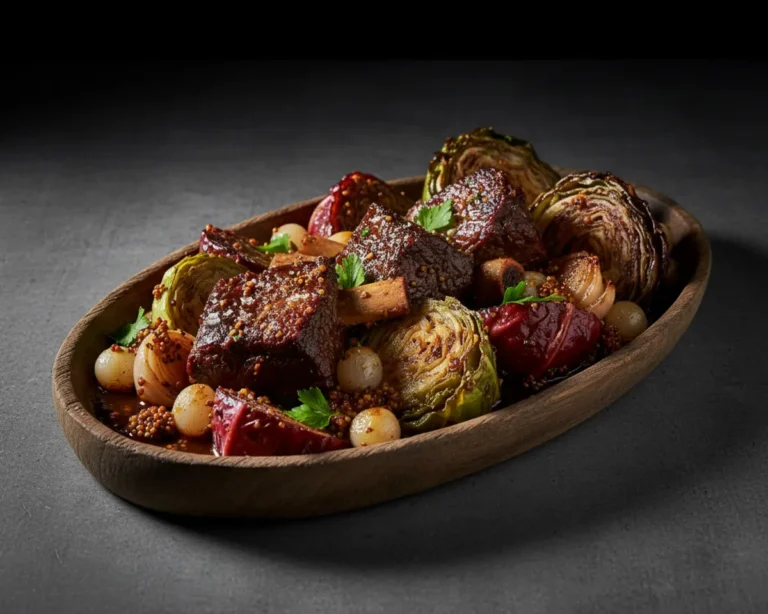
How to Cook Sauerkraut
I’m Linda Sandra — a Charleston home chef who believes comfort food should feel effortless, and this how to cook sauerkraut recipe is exactly that kind of magic. If you’ve only ever had sauerkraut straight from the jar, you’re in for a treat.
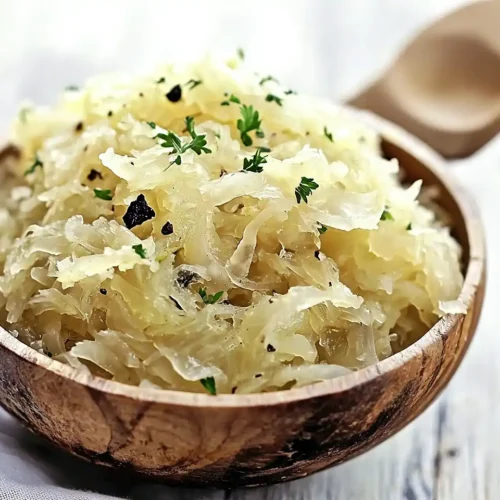
This isn’t just warmed-up cabbage. We’re talking caramelized onions, sweet apple slices, and warm spices that transform tangy sauerkraut into something actually crave-worthy. It’s the kind of side dish that makes people ask for seconds.
I started making this after a trip to a German Christmas market, where I tasted sauerkraut that didn’t make me pucker. Turns out, the secret is in how you cook it — and it’s way easier than you’d think.
Table of Contents
Little Snapshot: What This Recipe Delivers
This sauerkraut recipe transforms store-bought sauerkraut into a sweet-and-savory side dish in just 40 minutes. With caramelized onions, apple, and warming spices like juniper and cloves, it’s the perfect complement to pork, sausages, or even a simple roasted chicken — no fancy skills required.
Why You’ll Love This Recipe 🌸
- This sauerkraut recipe takes a polarizing ingredient and makes it actually delicious — even picky eaters come back for more.
- It’s mostly hands-off simmering, so you can prep other dishes while this bubbles away happily on the stove.
- The apple and caramelized sugar balance out the tang perfectly, creating that sweet-savory combo that just works.
- According to King Arthur Baking’s guide to cooking with fermented foods, adding sweetness and aromatics transforms sauerkraut into something restaurant-worthy — and this recipe proves exactly why.
Quick Facts ⚡
Here’s the quick scoop on this how to cook sauerkraut recipe.
- CourseSide Dish
- Prep Time10 minutes
- Cook Time35 minutes
- Total Time45 minutes
- Servings4 servings
- DifficultyEasy
Nutritional Peek
Here’s what you’re getting in each cozy serving of this cook sauerkraut recipe:
| Nutrient | Amount per Serving |
|---|---|
| Calories | 110 kcal |
| Protein | 2g |
| Carbohydrates | 20g |
| Fat | 3.5g |
| Fiber | 4g |
| Sugar | 10g |
I have a feeling you’ll love what’s next. The Classic Comfort Foods favorites are packed with recipes that disappear fast at every gathering. Go check them out before someone else snags them!
Ingredients
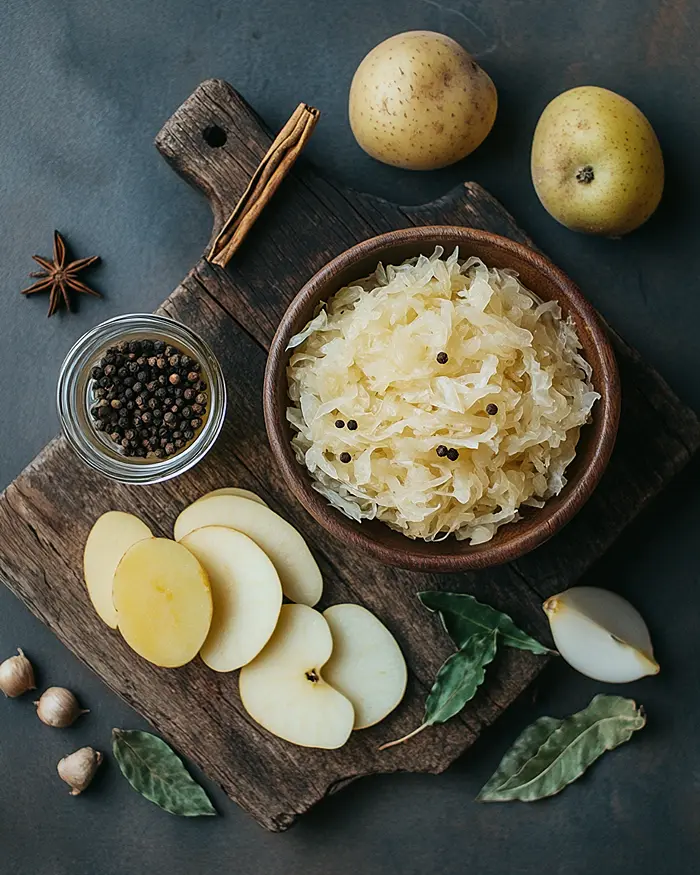
When you’re learning how to cook cabbage in its fermented form, the ingredient list is refreshingly short. For the aromatic base — onion, apple, and sunflower oil — you’ll want everything at room temperature so it cooks evenly.
For the spice blend — peppercorns, cloves, juniper berries, and bay leaves — whole spices work best because they infuse slowly without overpowering the dish.
| Amount | Ingredient |
|---|---|
| 1 lb | sauerkraut (drained) |
| 1 medium | onion (finely sliced) |
| 1 large | apple (finely sliced) |
| 1 tablespoon | sunflower oil |
| 1 tablespoon | granulated sugar |
| 1 teaspoon | black peppercorns |
| 6 | cloves |
| 1 teaspoon | juniper berries |
| 3 | bay leaves |
| 1 large | potato (about 7-9 oz, finely grated) |
| 1 cup | chicken stock (or vegetable stock) |
Note 1: Drain the sauerkraut well, but don’t rinse it — you want some of that tangy brine to stay.
Note 2: Chicken stock adds richness, but vegetable stock works beautifully if you’re keeping it vegetarian.
Tools You’ll Actually Use
- Large saucepan with lid
- Sharp knife and cutting board
- Box grater (for the potato)
- Wooden spoon
- Measuring spoons and cups
Step-by-Step Instructions
Here’s how to cook sauerkraut so it tastes like something you’d actually order at a cozy bistro.
Step 1: Drain the 1 lb sauerkraut in a colander and give it a gentle squeeze to remove excess liquid, but don’t rinse it. Finely slice the 1 medium onion and 1 large apple into thin half-moons. Set them aside together.
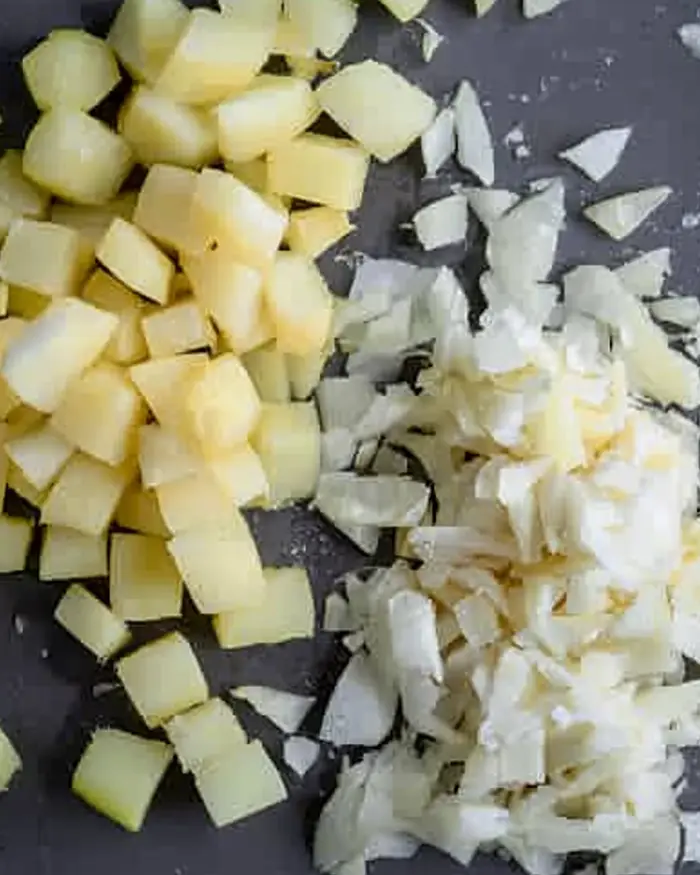
Step 2: Heat 1 tablespoon sunflower oil in your large saucepan over medium heat. Add the sliced apple and onion, and cook for 3-4 minutes, stirring occasionally, until the onions turn translucent and soft. Your kitchen will start smelling really good right about now.
Step 3: While the onions and apples soften, grab your 1 large potato and finely grate it using a box grater. Set the grated potato aside — it’s going to help thicken everything beautifully.
Step 4: Sprinkle 1 tablespoon granulated sugar evenly over the cooked onion and apple slices. Stir gently and let it caramelize for about 2 minutes. Watch it carefully — you want it lightly golden, not burned. This is where the magic sweet-savory balance starts.
Step 5: Add 1 teaspoon black peppercorns, 6 cloves, 1 teaspoon juniper berries, 3 bay leaves, the drained sauerkraut, grated potato, and 1 cup chicken stock to the saucepan. Stir everything together until the potato is distributed throughout and the spices are nestled in.
Step 6: Bring the mixture to a boil, then turn the heat down to medium-low. Cover the pot and let it simmer for 30 minutes, stirring occasionally. The potato will break down and create this lovely, slightly creamy texture that coats everything.
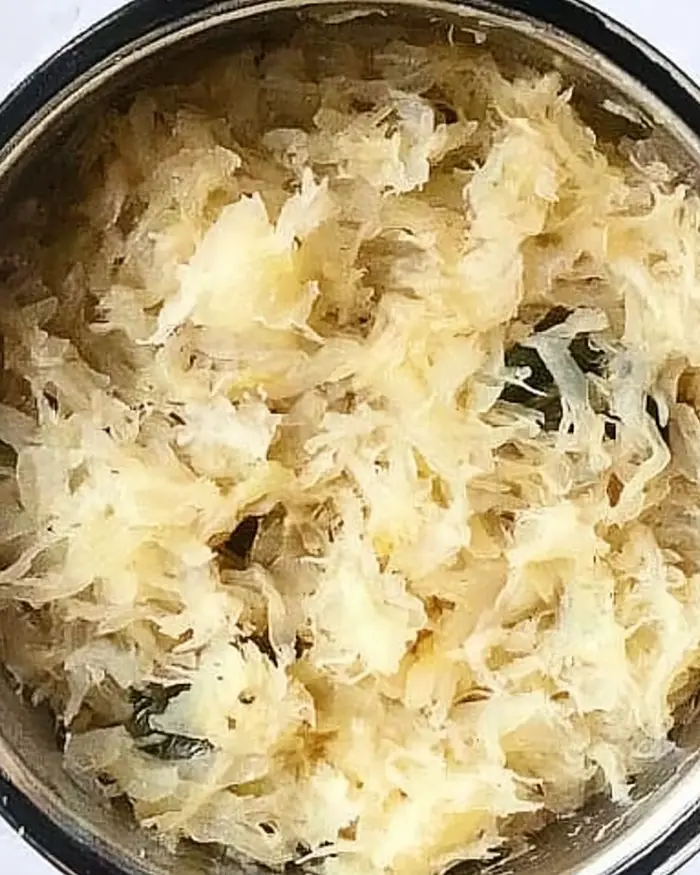
Step 7: After 30 minutes, give it a taste. The sauerkraut should be tender, the flavors melded together, and the tanginess balanced by the sweet apple and caramelized sugar. Fish out the bay leaves before serving if you can find them.
Pro Tips & Gentle Guidance
Want to really nail this cook sauerkraut recipe? Here are the little tricks that make a big difference.
Don’t skip draining the sauerkraut — too much liquid makes the dish watery and dilutes all those beautiful flavors you’re building. But also don’t rinse it completely, because some of that brine adds character.
The grated potato is your secret weapon. It breaks down during cooking and acts as a natural thickener, giving the dish body without adding flour or cream. Just make sure to grate it finely so it melts into the sauce.
Caramelize that sugar slowly. If you rush it or turn the heat too high, it’ll burn and taste bitter instead of adding that lovely depth. Two minutes of patience here pays off big time.
If you want to explore more ways to work with fermented vegetables, Serious Eats‘ comprehensive fermentation cooking guide has tons of ideas I keep coming back to.
Quick Fixes for How to Cook Sauerkraut
Problem: Your sauerkraut tastes too sour even after cooking.
Solution: Add another teaspoon of sugar and a splash more stock, then simmer for 5 more minutes. The extra sweetness and dilution will mellow things out beautifully.
Problem: The mixture seems too watery and won’t thicken.
Solution: Remove the lid and let it simmer uncovered for an extra 10 minutes. The liquid will reduce and concentrate, and if you added the potato, it should naturally thicken as it cooks down.
Problem: The sugar burned and turned bitter.
Solution: Unfortunately, there’s no fix for burned sugar — it’ll permeate everything. Start fresh with the apple-onion-sugar step, watching it carefully this time, then add your sauerkraut mixture to that.
Problem: The spices are too strong and overpowering.
Solution: Add another half pound of sauerkraut and an extra half cup of stock to dilute the spice concentration. Simmer for 10 more minutes to let everything blend.
Variations & Adaptations
This sauerkraut recipe is super flexible. Here’s how to make it your own.
For a vegetarian version: Swap the chicken stock for vegetable stock or even apple juice for extra sweetness. It’s just as delicious.
Add protein: Toss in sliced kielbasa, bratwurst, or smoked sausage during the last 15 minutes of cooking. It turns this side dish into a full meal.
Make it sweeter: Add a handful of dried cranberries or raisins along with the sauerkraut. They plump up and add little bursts of sweetness.
German-style variation: Skip the potato and add a splash of white wine and a tablespoon of caraway seeds instead. It’s more traditional and equally amazing.
Gluten-free note: This recipe is naturally gluten-free as long as your stock is gluten-free (most are, but check the label).
Serving, Storage & Reheating

This cook sauerkraut side dish is incredibly versatile. Serve it alongside roasted pork chops, grilled bratwurst, or even a simple rotisserie chicken. It also pairs beautifully with mashed potatoes or crusty bread for soaking up the juices.
Store leftovers in an airtight container in the fridge for up to 5 days. The flavors actually get better after a day or two as everything melds together.
Reheat gently on the stovetop over medium-low heat with a splash of stock or water to loosen it up. Microwave works too — just cover it and heat in 1-minute intervals, stirring between, until warmed through.
No-Waste Kitchen Magic
Got leftover sauerkraut? Here are some creative ways to use every last bit.
Mix it into scrambled eggs or an omelet for a tangy breakfast twist. The flavors are surprisingly perfect together, especially with a little cheese.
Use it as a topping for hot dogs, burgers, or even grilled cheese sandwiches. That sweet-savory combo elevates everything.
Stir leftovers into soup — it adds depth and tang to potato soup, bean soup, or even a simple chicken broth. Just add it during the last few minutes of cooking.
Blend cooled sauerkraut into mashed potatoes for a German-inspired side dish that’s absolutely addictive. Trust me on this one.
Sauerkraut Recipe FAQs
Can I freeze this sauerkraut recipe?
Yep, it freezes beautifully for up to 3 months in an airtight container. Thaw in the fridge overnight, then reheat gently on the stovetop with a splash of stock.
What’s the best way to store cooked sauerkraut?
Keep it in an airtight container in the fridge for up to 5 days. The flavors actually improve after the first day as everything melds together.
How do I know when sauerkraut is done cooking?
It’s done when it’s tender, the liquid has reduced slightly, and the flavors have melded — usually after 30 minutes of simmering. Taste it and adjust seasoning if needed.
Why should I use a potato in this sauerkraut recipe?
The grated potato acts as a natural thickener, breaking down during cooking to create a slightly creamy texture that coats the sauerkraut without adding flour or dairy.
What can I serve with cooked sauerkraut?
It’s perfect with pork chops, bratwurst, roasted chicken, or even alongside Southern Chicken Spaghetti Casserole for a fun fusion dinner. Try it with Low Carb Chicken Casserole too, or serve it as part of a spread with Texas Caviar.
Closing
So there you go — how to cook sauerkraut that actually makes people excited instead of skeptical. This recipe takes something humble and transforms it into a side dish that steals the show.
I’d love to see your spin on this sauerkraut recipe! Drop a comment below with your photos or tell me what you served it with — I bet you’ve got amazing variations already in mind. Did you add sausage? Try the cranberry twist? I’m all ears.
Thanks for cooking with me today. This how to cook sauerkraut method has become one of my go-to sides, especially when I want something that feels special without the fuss.
I’m Linda Sandra — a Charleston home chef and comfort-food daydreamer. Around here, cooking’s not about perfection — it’s about cozy vibes, creative twists, and food that feels like love.
How to Cook Sauerkraut
Equipment
- Large saucepan with lid
- Sharp knife and cutting board
- Box grater
- Wooden spoon
- Measuring spoons and cups
Ingredients
- 1 lb sauerkraut drained
- 1 medium onion finely sliced
- 1 large apple finely sliced
- 1 tablespoon sunflower oil
- 1 tablespoon granulated sugar
- 1 teaspoon black peppercorns
- 6 cloves
- 1 teaspoon juniper berries
- 3 bay leaves
- 1 large potato about 7-9 oz, finely grated
- 1 cup chicken stock or vegetable stock
Instructions
- Drain the 1 lb sauerkraut in a colander and give it a gentle squeeze to remove excess liquid, but don’t rinse it. Finely slice the 1 medium onion and 1 large apple into thin half-moons. Set them aside together.
- Heat 1 tablespoon sunflower oil in your large saucepan over medium heat. Add the sliced apple and onion, and cook for 3-4 minutes, stirring occasionally, until the onions turn translucent and soft.
- While the onions and apples soften, grab your 1 large potato and finely grate it using a box grater. Set the grated potato aside.
- Sprinkle 1 tablespoon granulated sugar evenly over the cooked onion and apple slices. Stir gently and let it caramelize for about 2 minutes. Watch it carefully — you want it lightly golden, not burned.
- Add 1 teaspoon black peppercorns, 6 cloves, 1 teaspoon juniper berries, 3 bay leaves, the drained sauerkraut, grated potato, and 1 cup chicken stock to the saucepan. Stir everything together until the potato is distributed throughout and the spices are nestled in.
- Bring the mixture to a boil, then turn the heat down to medium-low. Cover the pot and let it simmer for 30 minutes, stirring occasionally. The potato will break down and create a slightly creamy texture that coats everything.
- After 30 minutes, give it a taste. The sauerkraut should be tender, the flavors melded together, and the tanginess balanced by the sweet apple and caramelized sugar. Fish out the bay leaves before serving if you can find them.