Sourdough Discard English Muffins
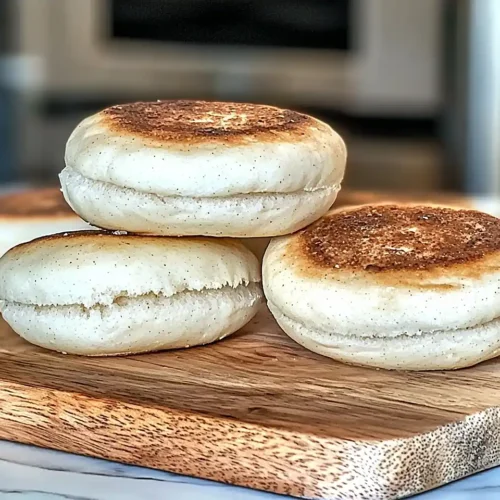
Sourdough Discard English Muffins are the ultimate zero-waste breakfast hack — fluffy, golden, and bursting with that signature tang you crave. This recipe for sourdough English muffins transforms your leftover sourdough starter into nooks-and-crannies perfection in under two hours, using simple pantry staples and a trusty skillet.
You’ll get tender, homemade English muffins with crispy exteriors and soft, airy interiors — no special equipment needed, just love for your sourdough discard and a little patience.
Hey there, I’m Claire Whitmore — a pastry whisperer in Asheville, NC, where butter totally counts as self-care. This Sourdough Discard English Muffins recipe is my favorite way to give that jar of discard a second chance at greatness. If you’ve been tossing your excess starter in the trash, this recipe’s about to change your whole morning routine.
Table of Contents
Little Snapshot: What This Recipe Delivers
These Sourdough Discard English Muffins deliver bakery-quality texture with minimal effort — expect golden, crispy exteriors and soft, pillowy insides studded with those iconic nooks and crannies.
You’ll use 100g of sourdough discard, basic pantry ingredients, and about 90 minutes from start to finish (most of that is hands-off rise time). Perfect for busy mornings when you want homemade goodness without the fuss.
Why You’ll Love This Recipe 🌸
- This Sourdough Discard English Muffins recipe takes less time than a Target run and uses up that starter you’d otherwise toss.
- No fancy equipment needed — just a bowl, a skillet, and your two hands (Kitchen Aid optional but helpful!).
- These muffins freeze beautifully, so you can batch-cook breakfast for the whole month and feel like a meal-prep goddess.
- According to King Arthur Baking’s comprehensive English muffin guide, the secret to perfect texture is cooking low and slow on the stovetop — and this recipe proves exactly why.
Quick Facts ⚡
Here’s the quick scoop on this Sourdough Discard English Muffins recipe.
- CourseBreakfast/Brunch
- Prep Time20 minutes
- Cook Time10-14 minutes
- Total Time2 hours 30 minutes (includes rise time)
- Servings10-12 English muffins
- DifficultyEasy
Nutritional Peek
Here’s a quick nutritional snapshot per English muffin (based on 12 servings) — because knowing what fuels your morning matters, mama.
| Nutrient | Amount per Serving |
|---|---|
| Calories | 145 kcal |
| Protein | 4g |
| Carbohydrates | 28g |
| Fat | 1g |
| Fiber | 1g |
| Sugar | 1g |
Ingredients
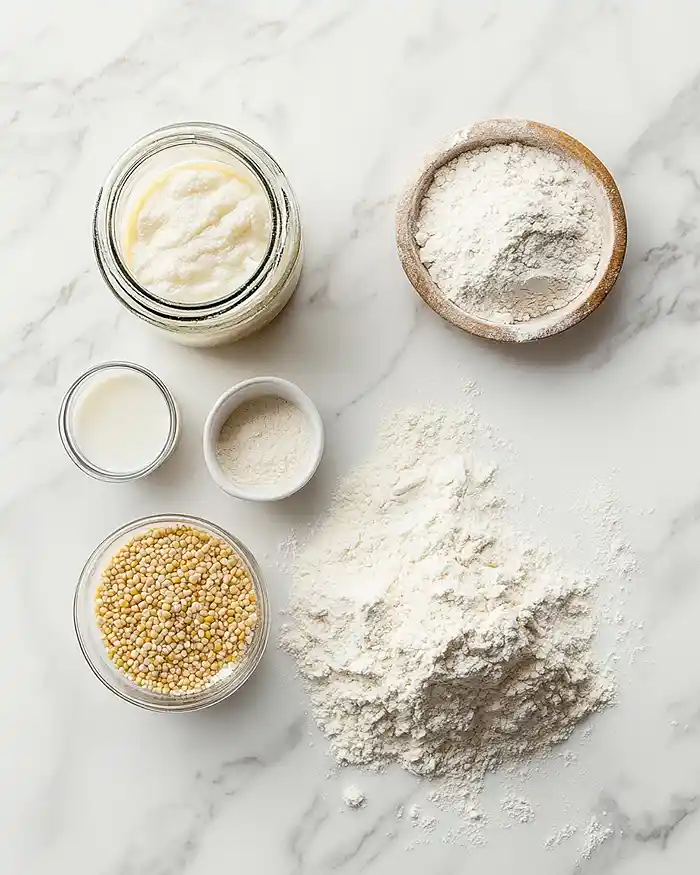
Let me walk you through what you’ll need for this recipe for sourdough English muffins — and trust me, you probably have most of this already.
For the wet ingredients — warm water, milk, and sourdough discard — you’ll want everything at room temperature so the yeast activates beautifully. The sourdough discard adds that signature tang and helps create those gorgeous nooks and crannies.
For the dry mix — all-purpose flour, sugar, salt, and active dry yeast — measure carefully but don’t stress about perfection; this dough is pretty forgiving.
| Amount | Ingredient |
|---|---|
| 100g | Sourdough discard (unfed is totally fine) |
| 360g | All-purpose flour (Yes, you can sub in bread flour if you want extra chew!) |
| 4oz | Milk (whole milk gives the best flavor, but 2% works too) |
| 4oz | Water, warm (around 100-110°F — think baby bottle temp) |
| 1 tablespoon | Sugar (just enough to wake up the yeast) |
| 1 teaspoon | Salt (Don’t skip this — it balances everything) |
| 2 teaspoons | Active dry yeast |
| As needed | Cornmeal (for dusting — this is non-negotiable for that authentic texture) |
Tools You’ll Actually Use
Here’s what you’ll need to make these how to make sourdough English muffins come to life:
- Large mixing bowl or stand mixer with dough hook
- Measuring cups and spoons
- Baking sheet
- Parchment paper or silicone baking mat
- Rolling pin (or just use your hands to flatten)
- Non-stick skillet or griddle
- Wire cooling rack
- Fork (for splitting the muffins — never a knife!)
- Kitchen timer
- Clean kitchen towel (for covering the dough)
Step-by-Step Instructions
Ready to transform that sourdough discard English muffins magic? Let’s do this.
Step 1: Activate the yeast In a large mixing bowl or your Kitchen Aid bowl, combine the 4oz warm water (100-110°F), 1 tablespoon sugar, and 2 teaspoons active dry yeast.
Give it a gentle stir and let it sit for about 5 minutes until it becomes foamy and smells like fresh-baked bread. If it doesn’t foam, your yeast might be expired or your water was too hot — start over with fresh yeast and slightly cooler water.
Step 2: Build the dough To the foamy yeast mixture, add the 4oz milk, 100g sourdough discard, 360g all-purpose flour, and 1 teaspoon salt. If using a stand mixer, attach the dough hook and start on low speed.
If mixing by hand, use a wooden spoon to combine everything until you can’t stir anymore, then get your hands in there. Once a shaggy ball forms, knead for 8-10 minutes in the mixer or 12-15 minutes by hand until the dough is smooth, elastic, and slightly tacky but not sticky.
Step 3: First rise Form the dough into a smooth ball, place it back in the bowl, and cover with a damp kitchen towel or plastic wrap. Let it sit in a warm, draft-free spot for 1-2 hours or until it doubles in size. I like to stick mine in the oven with just the light on — it creates the perfect cozy environment.
Step 4: Prep your baking sheet While the dough rises, line a large baking sheet with parchment paper or a silicone mat. Generously sprinkle the surface with cornmeal — don’t be shy here; this is what gives your English muffins that iconic gritty texture. Set it aside and feel accomplished for being so prepared.
Step 5: Shape the muffins Once your dough has doubled, punch it down gently to release the air (so satisfying!). Turn it out onto a clean, lightly floured countertop and divide it into 10-12 equal pieces using a bench scraper or knife.
Roll each piece into a ball, then flatten it into a disc about ¾-inch thick — thicker than you think, because they’ll puff up during the second rise. Place each disc on your prepared baking sheet, leaving about 2 inches between them.
Step 6: Second rise Sprinkle the tops of each English muffin generously with more cornmeal. Cover them loosely with a clean kitchen towel and let them rest for 30 minutes until they’re puffy and slightly springy to the touch. They won’t double in size this time, just get nice and pillowy.

Step 7: Cook on the stovetop Heat a non-stick skillet or griddle over medium heat — you want it hot but not screaming hot, around 325-350°F if you have a temperature gauge. Gently transfer 3-4 risen dough rounds onto the heated surface, being careful not to deflate them.
Cook for about 5-7 minutes on each side until they’re deep golden brown with gorgeous toasty spots. If they’re browning too fast, lower the heat; if they’re pale and doughy inside, turn it up slightly. You’ll know they’re done when they spring back when gently pressed and sound hollow when tapped.
Step 8: Cool and admire Transfer the cooked English muffins to a wire rack to cool completely. Resist the urge to split them hot — let them cool for at least 15 minutes so the interior sets up properly and you get those dreamy nooks and crannies when you fork them open.
Step 9: Serve like a pro To serve, split each English muffin with a fork (never a knife — you want to tear the interior for maximum texture). Toast them until golden and crispy, then slather with butter, jam, or use them for breakfast sandwiches. Your kitchen will smell absolutely heavenly.
Claire’s Pro Tips & Gentle Guidance
Here’s where I share my hard-won wisdom on how to make sourdough English muffins absolutely foolproof.
The yeast foaming test is your friend. If your yeast mixture doesn’t foam after 5 minutes, it’s toast (pun intended). Either your yeast is dead or your water was too hot and killed it. Start fresh — it’s worth the extra few minutes to guarantee a fluffy rise.
Knead until the dough passes the windowpane test. Tear off a small piece of dough and gently stretch it between your fingers. If it stretches thin enough to see light through without breaking, you’ve kneaded enough. If it tears immediately, keep going for another 2-3 minutes.
Don’t skip the cornmeal. I know it seems like a small detail, but cornmeal is what gives English muffins their signature texture and prevents sticking. I learned this the hard way when my first batch stuck to the pan like glue.
Medium heat is your sweet spot. Too high and you’ll get burnt exteriors with raw, doughy centers. Too low and they’ll steam instead of getting those gorgeous golden crusts. According to The Perfect Loaf‘s detailed sourdough English muffin tutorial, patience with temperature control is the secret to bakery-quality results at home.
Split them with a fork, not a knife. This isn’t just tradition — it actually creates more surface area for butter to seep into all those beautiful nooks and crannies. Use the tines of a fork to poke around the edges, then gently pull the halves apart.
Quick Fixes for Sourdough Discard English Muffins
Let me troubleshoot the most common hiccups I see with this recipe.
Problem: Dense, heavy muffins Your dough probably didn’t rise enough, or your yeast was old. Make sure you’re giving the dough a full 1-2 hours for the first rise until it truly doubles. Also check the expiration date on your yeast — expired yeast won’t give you the lift you need.
Problem: Pale muffins that won’t brown Your heat is too low. Bump it up to medium or medium-high and be patient — they need that direct heat contact to develop color and flavor. Don’t rush by cranking the heat super high, though, or you’ll burn them.
Problem: No nooks and crannies This usually means you used a knife to split them instead of a fork, or you didn’t let them cool completely before splitting. The interior needs time to set up properly. Always use a fork and let them cool for at least 15 minutes.
Problem: Dough too sticky to handle Add flour one tablespoon at a time during kneading until the dough is tacky but not sticking to your hands. Different flours absorb liquid differently, so you might need 30-60g more flour depending on humidity and your sourdough discard’s consistency.
Variations & Fun Twists
This sourdough discard English muffins recipe is super versatile — here are my favorite ways to mix things up.
Whole Wheat English Muffins: Swap up to half the all-purpose flour for whole wheat flour for a nuttier, heartier version. You might need to add an extra tablespoon or two of water since whole wheat absorbs more liquid.
Cinnamon Raisin: Add 1 tablespoon cinnamon and ¾ cup raisins to the dough during kneading. These are incredible toasted with cream cheese.
Everything Bagel Topping: Skip the cornmeal on top and instead sprinkle with everything bagel seasoning before the second rise. Game changer for savory breakfast sandwiches.
Gluten-Free Option: Use a 1:1 gluten-free flour blend and add 1 teaspoon xanthan gum if your blend doesn’t already include it. The texture won’t be quite as chewy, but they’re still delicious.
Sourdough Starter Boost: If you have active, fed sourdough starter instead of discard, you can use it — just reduce the yeast to 1 teaspoon and extend the first rise to 2-3 hours for more complex flavor.
Serving, Storage & Reheating
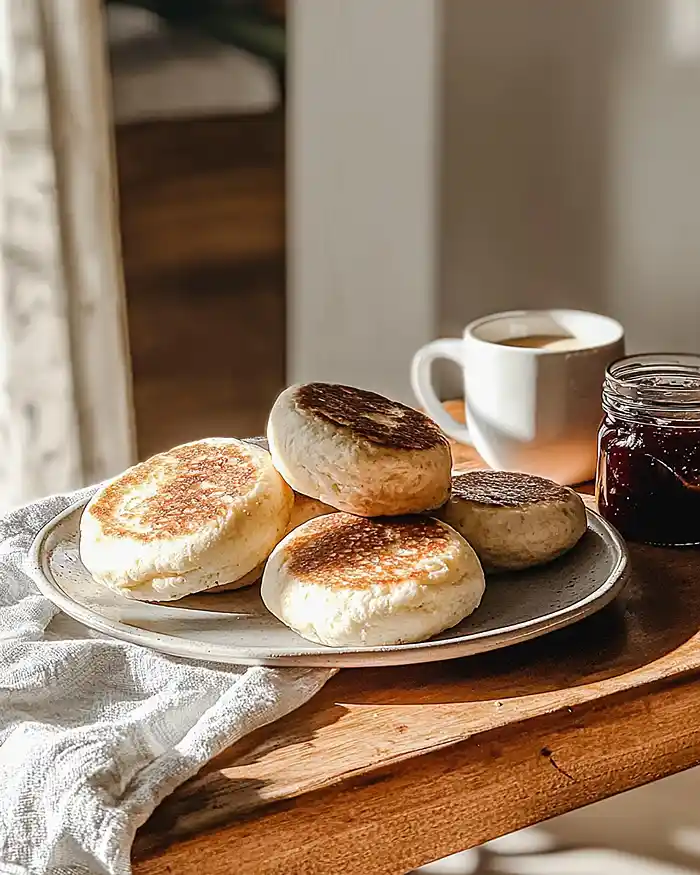
Here’s how to keep your recipe for sourdough English muffins fresh and delicious.
Serving suggestions: Split them with a fork and toast until golden, then top with butter and jam for a classic breakfast. They’re also perfect for eggs Benedict, breakfast sandwiches with bacon and cheese, or as burger buns for a fun twist. I love mine with almond butter and sliced strawberries.
Storage: Once completely cooled, store English muffins in an airtight container or zip-top bag at room temperature for up to 3 days. For longer storage, freeze them for up to 3 months — just split them before freezing so you can pop them straight into the toaster from frozen.
Reheating: Toast them straight from the freezer or fridge — no need to thaw. The toaster brings back that crispy exterior and warm, fluffy interior perfectly every single time. If you don’t have a toaster, you can reheat them in a 350°F oven for 5-7 minutes or in a dry skillet over medium heat for 2-3 minutes per side.
There’s a whole world of sourdough recipes waiting for you over at the Sourdough Recipes collection. Each one is made with the same love and attention, and they’re all absolutely worth trying. Happy cooking!
No-Waste Kitchen Magic
Let’s talk about giving these sourdough English muffins a second (or third) life.
Day-old English muffins make incredible breadcrumbs. Just tear them into chunks, pulse in a food processor, and toast the crumbs in a dry skillet until golden. Use them for coating chicken, topping casseroles, or adding crunch to salads.
Turn stale muffins into breakfast strata. Cube them, toss with eggs, milk, cheese, and your favorite veggies, then bake for an easy make-ahead breakfast casserole that feeds a crowd.
Make English muffin croutons. Cube them, toss with olive oil and herbs, and bake at 375°F until crispy. They’re amazing on soups and salads.
Repurpose leftover sourdough discard. If you’ve got discard left after making these, try my sourdough discard cheddar biscuit recipe or whip up a batch of sourdough discard chocolate chip cookies for a sweet treat.
Sourdough Discard English Muffins FAQs
Can I freeze sourdough discard English muffins?
Absolutely! Split them with a fork before freezing so they’re ready to toast straight from the freezer. Wrap individually in plastic wrap or parchment, then store in a freezer bag for up to 3 months. Toast directly from frozen — no thawing needed.
What’s the best way to store sourdough English muffins?
Keep them in an airtight container or zip-top bag at room temperature for 2-3 days. If you’re not eating them within that window, freeze them for longer storage. Don’t refrigerate them — that actually makes them go stale faster.
How do I know when my English muffins are fully cooked?
They should be deep golden brown on both sides and spring back when gently pressed in the center. If you’re unsure, insert an instant-read thermometer into the side — they’re done at 190-200°F internally.
Why should I use sourdough discard in English muffins?
Sourdough discard adds incredible tangy flavor and helps create that signature nooks-and-crannies texture you want in homemade English muffins. Plus, it’s a brilliant way to use up excess starter instead of tossing it, making this a truly zero-waste recipe that tastes way better than store-bought.
Cozy Closing
I’d love to see your spin on these Sourdough Discard English Muffins! Drop a comment below with how yours turned out — did you try any fun variations? These muffins are so versatile, and I bet you’ve already got amazing ideas brewing. Whether you keep them classic or get creative with toppings, I hope they bring a little homemade magic to your mornings.
I’m Claire Whitmore — a dessert daydreamer from Asheville, NC. For me, baking isn’t about perfect pastries — it’s about the joy of sharing something sweet (and maybe sneaking an extra bite while they’re still warm).
Sourdough Discard English Muffins
Equipment
- Large mixing bowl or stand mixer with dough hook
- Measuring cups and spoons
- Baking sheet
- Parchment paper or silicone baking mat
- Rolling Pin
- Non-stick skillet or griddle
- Wire cooling rack
- Fork
- Kitchen timer
- Clean kitchen towel
Ingredients
- 100 g Sourdough discard unfed is totally fine
- 360 g All-purpose flour can substitute bread flour for extra chew
- 4 oz Milk whole milk gives the best flavor, but 2% works too
- 4 oz Water warm, around 100-110°F
- 1 tablespoon Sugar
- 1 teaspoon Salt
- 2 teaspoons Active dry yeast
- Cornmeal for dusting
Instructions
- In a large mixing bowl or your Kitchen Aid bowl, combine the 4oz warm water (100-110°F), 1 tablespoon sugar, and 2 teaspoons active dry yeast. Give it a gentle stir and let it sit for about 5 minutes until it becomes foamy and smells like fresh-baked bread. If it doesn’t foam, your yeast might be expired or your water was too hot — start over with fresh yeast and slightly cooler water.
- To the foamy yeast mixture, add the 4oz milk, 100g sourdough discard, 360g all-purpose flour, and 1 teaspoon salt. If using a stand mixer, attach the dough hook and start on low speed. If mixing by hand, use a wooden spoon to combine everything until you can’t stir anymore, then get your hands in there. Once a shaggy ball forms, knead for 8-10 minutes in the mixer or 12-15 minutes by hand until the dough is smooth, elastic, and slightly tacky but not sticky.
- Form the dough into a smooth ball, place it back in the bowl, and cover with a damp kitchen towel or plastic wrap. Let it sit in a warm, draft-free spot for 1-2 hours or until it doubles in size.
- While the dough rises, line a large baking sheet with parchment paper or a silicone mat. Generously sprinkle the surface with cornmeal — don’t be shy here; this is what gives your English muffins that iconic gritty texture. Set it aside.
- Once your dough has doubled, punch it down gently to release the air. Turn it out onto a clean, lightly floured countertop and divide it into 10-12 equal pieces using a bench scraper or knife. Roll each piece into a ball, then flatten it into a disc about ¾-inch thick. Place each disc on your prepared baking sheet, leaving about 2 inches between them.
- Sprinkle the tops of each English muffin generously with more cornmeal. Cover them loosely with a clean kitchen towel and let them rest for 30 minutes until they’re puffy and slightly springy to the touch.
- Heat a non-stick skillet or griddle over medium heat — you want it hot but not screaming hot, around 325-350°F if you have a temperature gauge. Gently transfer 3-4 risen dough rounds onto the heated surface, being careful not to deflate them. Cook for about 5-7 minutes on each side until they’re deep golden brown with gorgeous toasty spots. If they’re browning too fast, lower the heat; if they’re pale and doughy inside, turn it up slightly.
- Transfer the cooked English muffins to a wire rack to cool completely. Resist the urge to split them hot — let them cool for at least 15 minutes so the interior sets up properly and you get those dreamy nooks and crannies when you fork them open.
- To serve, split each English muffin with a fork (never a knife — you want to tear the interior for maximum texture). Toast them until golden and crispy, then slather with butter, jam, or use them for breakfast sandwiches.