Minestrone Soup Recipe
This classic minestrone soup recipe is loaded with vegetables, beans, and pasta in a rich tomato broth. It’s cozy, nourishing, and ready in about 40 minutes.
Minestrone soup recipe lovers, this one’s for you — a hearty, veggie-loaded Italian soup that’s as warming as it is nourishing, and it comes together in about 40 minutes flat. I’m Linda Sandra — a Charleston home cook who believes every meal should feel like a hug, and this minestrone soup recipe is basically a hug in bowl form.
We’re talking tender carrots, celery, and onions simmered with diced tomatoes, white beans (or kidney beans), green beans, and small pasta in a fragrant vegetable broth seasoned with oregano, thyme, and bay leaves.
It’s the kind of soup that fills your kitchen with that incredible slow-simmered aroma, even though it’s secretly a weeknight-friendly recipe.
Table of Contents
Little Snapshot: What This Recipe Delivers
This minestrone soup recipe is a 40-minute Italian vegetable soup made with carrots, celery, onion, diced tomatoes, white or kidney beans, green beans, and small pasta simmered in a seasoned vegetable broth with oregano, thyme, and bay leaves.
It serves 4, is completely beginner-friendly, and delivers a hearty, nourishing, one-pot meal that tastes even better the next day.
Why You’ll Love This Recipe 🌸
- This classic minestrone soup is the ultimate one-pot comfort meal — just chop, simmer, and let the stove do the work while you relax.
- It’s naturally packed with vegetables, beans, and fiber, so you can feel genuinely great about what you’re feeding yourself and your family.
- The leftovers taste even better the next day, which means one batch gives you dinner tonight and an easy lunch tomorrow.
- According to Serious Eats in their guide to making the best minestrone, the beauty of this soup is that it’s endlessly adaptable to whatever vegetables you have on hand — and this recipe makes that flexibility effortless.
Quick Facts ⚡
Here’s the quick scoop on this minestrone soup recipe.
- CourseSoup / Main Dish
- Prep Time10 minutes
- Cook Time38 minutes
- Total Time48 minutes
- Servings4 servings
- DifficultyEasy
Nutritional Peek
Here’s a rough nutritional breakdown per serving — because even comfort food deserves a little transparency.
| Nutrient | Amount Per Serving |
|---|---|
| Calories | ~280 kcal |
| Protein | 12g |
| Carbohydrates | 42g |
| Total Fat | 8g |
| Saturated Fat | 1g |
| Fiber | 9g |
| Sugar | 8g |
| Sodium | ~850mg |
Values are estimates based on standard ingredients. Your numbers may vary depending on the broth, beans, and pasta you use.
Ingredients
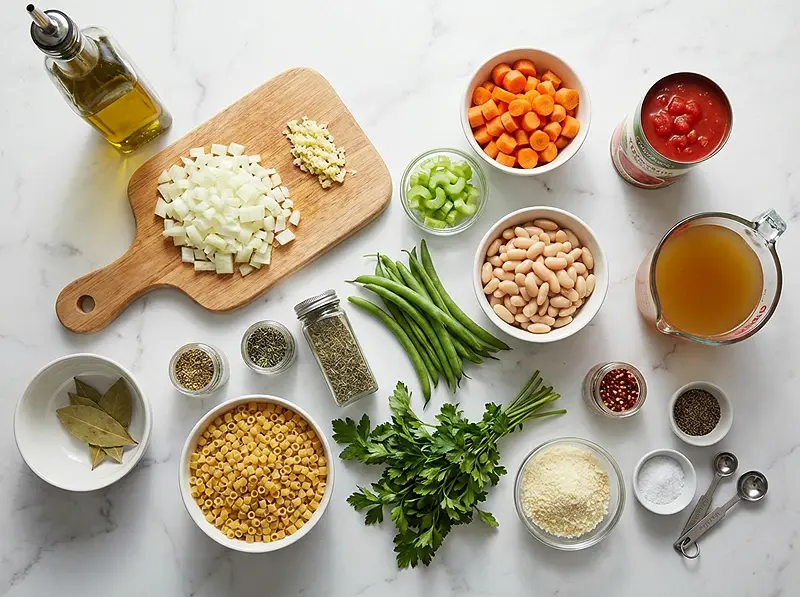
Every great batch of easy minestrone soup starts with understanding how the ingredients work together. For the aromatic base — onion, carrots, celery, and garlic — these are your flavor foundation (the Italians call it “soffritto” and it’s pure magic).
For the body of the soup — diced tomatoes, white or kidney beans, green beans, vegetable broth, and small pasta — these build the hearty, nourishing depth that makes this soup a complete meal in a bowl.
| Amount | Ingredient |
|---|---|
| 2 Tbsp | Extra-virgin olive oil — the good stuff, because it’s the first thing hitting the pot |
| 1 medium | Yellow onion, diced |
| 2 medium | Carrots, chopped — the sweeter they are, the better the soup |
| 2 ribs | Celery, thinly sliced |
| 1 tsp | Sea salt, plus more to taste |
| To taste | Freshly ground black pepper |
| 3 cloves | Garlic, grated — fresh garlic is non-negotiable here |
| 1 (28 oz) can | Diced tomatoes — with their juices, don’t drain them |
| 1½ cups | Cooked white beans or kidney beans, drained and rinsed |
| 1 cup | Green beans, chopped into bite-sized pieces |
| 4 cups | Vegetable broth — low sodium if you prefer to control the salt |
| 2 | Bay leaves |
| 1 tsp | Dried oregano |
| 1 tsp | Dried thyme |
| ¾ cup | Small pasta — elbows, shells, or orecchiette all work beautifully |
| ½ cup | Fresh parsley, chopped — for that gorgeous, bright finish |
| To taste | Red pepper flakes — for a gentle warming kick |
| Optional | Grated Parmesan cheese for serving — highly recommended |
Tools You’ll Actually Use
- Large pot or Dutch oven — you need room for all those beautiful vegetables
- Sharp knife and cutting board for prepping veggies
- Wooden spoon for stirring
- Measuring cups and spoons
- Ladle for serving
- Grater for the garlic (and the optional Parmesan)
Optional: An immersion blender if you want to blend a small portion of the soup for a thicker, creamier broth — totally not necessary, but a nice trick.
Step-by-Step Instructions
Making this minestrone soup recipe is one of those beautifully straightforward cooking experiences — just chop, sauté, simmer, and let the stove do the heavy lifting. The whole kitchen fills up with the most incredible aroma, and by the time it’s ready, everyone’s already hovering near the pot with their bowls.
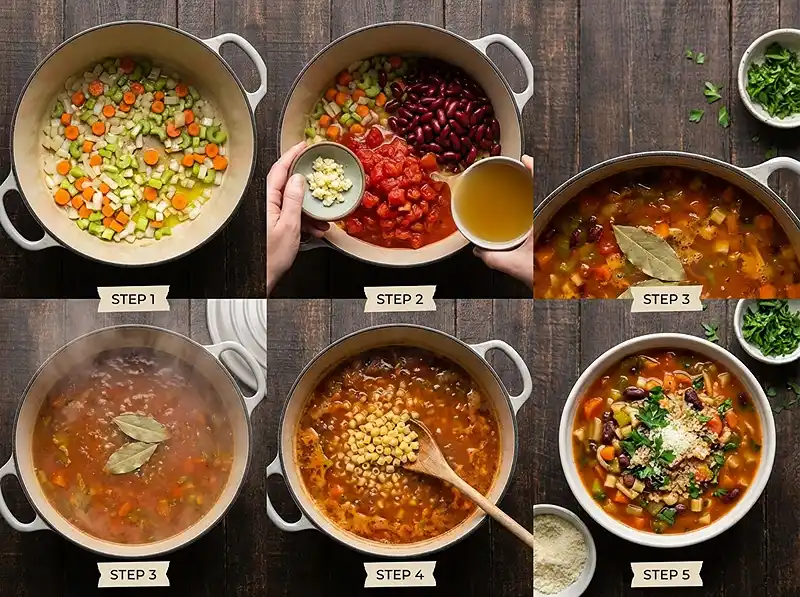
Step 1: Build the aromatic base. Heat 2 tablespoons of extra-virgin olive oil in a large pot or Dutch oven over medium heat. Add the diced yellow onion, chopped carrots, thinly sliced celery, 1 teaspoon of sea salt, and several generous grinds of black pepper.
Cook, stirring occasionally, for about 8 minutes until the vegetables begin to soften and the onion turns translucent — your kitchen should start smelling absolutely wonderful at this point.
Step 2: Add the garlic and the soup body. Stir in 3 cloves of freshly grated garlic and cook for about 30 seconds until fragrant.
Then add the entire 28-ounce can of diced tomatoes (with juices), 1½ cups of drained and rinsed white beans (or kidney beans), 1 cup of chopped green beans, 4 cups of vegetable broth, 2 bay leaves, 1 teaspoon of dried oregano, and 1 teaspoon of dried thyme.
Give everything a good stir, cover the pot, and bring to a simmer. Let it cook covered for 20 minutes so all those flavors meld together into a rich, hearty broth.
Step 3: Cook the pasta right in the soup. After 20 minutes of simmering, stir in ¾ cup of small pasta — elbows, shells, or orecchiette are all perfect here.
Cook uncovered for about 10 more minutes, stirring occasionally, until the pasta is tender and cooked through. The pasta will absorb some of the broth as it cooks, which naturally thickens the soup into that gorgeous, stewier consistency.
Step 4: Season, garnish, and serve. Remove the bay leaves, then taste your minestrone and adjust the salt and pepper as needed.
Ladle the soup into bowls and finish with a generous sprinkle of chopped fresh parsley, a pinch of red pepper flakes, and a shower of freshly grated Parmesan cheese if you’re feeling it (and you absolutely should). Serve hot with some crusty bread alongside for dipping into that incredible broth.
Pro Tips & Gentle Guidance
These italian minestrone soup recipe tips are the little details that take a good soup and turn it into the kind people ask you to make over and over again. They’re all simple — just small adjustments that make a genuine difference.
Don’t rush the soffritto. Those first 8 minutes of sautéing the onion, carrots, and celery are building the entire flavor foundation of your soup. Let them soften slowly over medium heat — if you crank the heat too high, they’ll brown before they release all that sweet, aromatic goodness.
Add the pasta at the end, not the beginning. Pasta keeps absorbing liquid even after the soup is done, so cooking it directly in the broth for just the last 10 minutes keeps it perfectly al dente. If you add it too early, you’ll end up with mushy pasta and a soup that’s more like a thick stew — not in the good way.
Use canned beans for weeknight ease. Dried beans give you a slightly more complex flavor, but canned beans are perfectly delicious and cut your prep time significantly. Just make sure to drain and rinse them well to remove excess sodium and that starchy canning liquid.
A Parmesan rind is a secret weapon. If you have a Parmesan rind hanging around, drop it into the soup while it simmers. It melts slowly into the broth and adds an incredible umami depth that makes everyone ask what your secret ingredient is. Fish it out before serving.
If you’re looking to deepen your Italian soup-making skills, Food Network has a wonderful collection of classic minestrone variations from some of their best chefs — it’s a great resource for seeing how different cooks approach this endlessly adaptable recipe.
There’s a whole world of noodle & pasta soups waiting for you over at the Noodle & Pasta Soups collection. Each one is made with the same love and attention, and they’re all absolutely worth trying. Happy cooking!
Quick Fixes for Minestrone Soup Recipe
My soup is too thin and brothy. This usually means there’s too much liquid relative to the vegetables and pasta. Let it simmer uncovered for an extra 5–10 minutes to reduce the broth. You can also mash a few of the beans against the side of the pot — they’ll dissolve into the broth and naturally thicken it up.
The pasta absorbed all the liquid and now it’s too thick. This happens when the soup sits too long after cooking or was refrigerated overnight. Just stir in a splash of vegetable broth or water when reheating until you reach your preferred consistency. This is totally normal and easy to fix.
It tastes bland. Minestrone needs confident seasoning. Add more salt a pinch at a time, taste, and repeat — you’ll be surprised how much a little extra salt opens up all the other flavors. A squeeze of fresh lemon juice at the end also does wonders for brightening the whole bowl.
The vegetables are too mushy. This means they cooked a bit too long or the heat was too high during the initial simmering stage. Next time, keep the simmer gentle (tiny bubbles, not a rolling boil) and check your timing. The carrots and celery should be tender but still have a slight bite.
The green beans lost their color. Green vegetables can dull after prolonged cooking. If vibrant color matters to you, add the green beans during the last 10 minutes of simmering (when you add the pasta) instead of at the beginning.
Variations & Adaptations
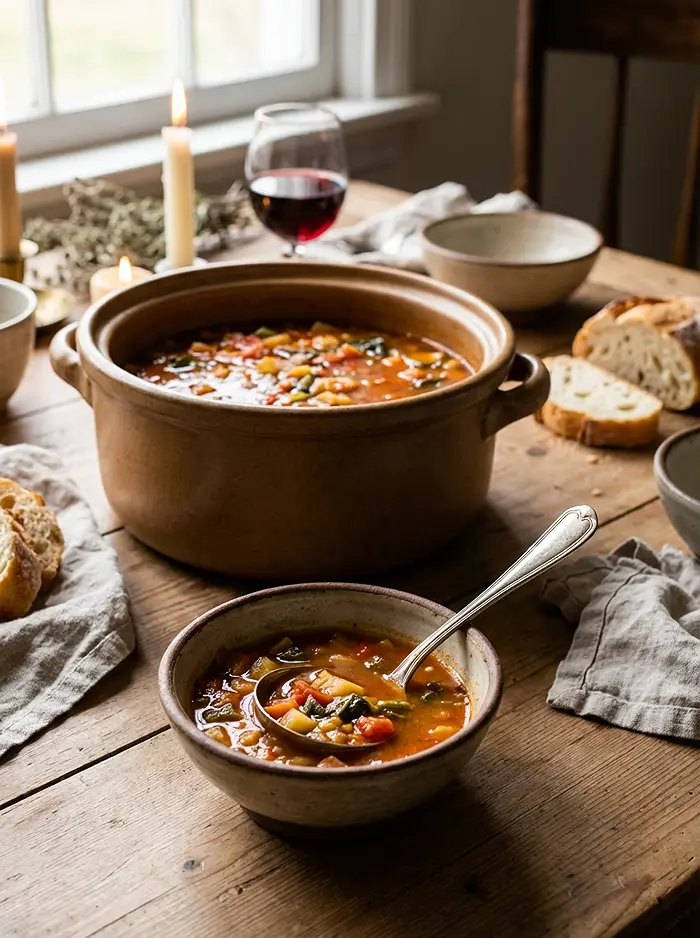
This minestrone soup recipe is one of the most flexible recipes in all of Italian cooking — here are some of my favorite ways to mix it up.
Winter version: Add cubed butternut squash or sweet potato along with the carrots for a heartier, sweeter bowl that’s perfect for cold weather. Swap the green beans for chopped kale or Swiss chard stirred in during the last few minutes.
Summer version: Toss in diced zucchini, fresh corn, and a handful of fresh basil right at the end. Summer minestrone is lighter, brighter, and absolutely gorgeous.
Protein boost: Stir in shredded rotisserie chicken, crumbled Italian sausage, or diced pancetta for a meatier bowl. Brown the sausage or pancetta first, then build the soup right in those rendered drippings for extra flavor.
Gluten-free swap: Use gluten-free small pasta (like rice elbows or chickpea pasta) or skip the pasta entirely and add an extra cup of beans or diced potatoes. Equally hearty, totally gluten-free.
Vegan version: Skip the Parmesan at serving (or use a vegan Parmesan alternative) and make sure your vegetable broth is truly plant-based. Everything else in this recipe is already naturally vegan.
Serving, Storage & Reheating
Serving suggestions: This classic minestrone soup is a meal all by itself, but it’s also wonderful paired with a thick slice of crusty bread, garlic toast, or a simple side salad.
For a more substantial spread, serve it alongside one pot creamy garlic pasta for a cozy Italian-themed dinner night. A drizzle of good olive oil and a generous sprinkle of Parmesan on top right before serving makes it feel extra special.
Storage: If you somehow manage not to eat the entire pot in one sitting, store leftovers in an airtight container in the refrigerator for up to 4–5 days. Minestrone actually tastes even better the next day as the flavors continue to develop and deepen. Just know the pasta will absorb some broth overnight — that’s normal and easily fixed when reheating.
Reheating: Reheat gently in a pot over medium-low heat, adding a splash of vegetable broth or water to loosen the consistency since the pasta will have soaked up some liquid. Stir occasionally and heat until it’s warmed through — about 5 minutes. The microwave works too, but stovetop reheating gives you better control over the final texture.
No-Waste Kitchen Magic
Vegetable scraps become broth. Save your onion skins, carrot peels, celery ends, and herb stems in a zip-top bag in the freezer. Once the bag is full, simmer them in water for an hour and you’ve got homemade vegetable broth — perfect for your next batch of minestrone at zero extra cost.
Day-old soup becomes a new dish. Thick leftover minestrone makes an incredible pasta sauce — just toss it with cooked penne or rigatoni for a completely different meal.
You can also spread it on toasted bread and top with Parmesan for a rustic Italian bruschetta that’s basically ribollita-adjacent. Try pairing it with garlic steak tortellini for an amazing soup-and-pasta combo night.
Extra fresh parsley? Don’t let it wilt away. Chop the rest and freeze it in ice cube trays with a little olive oil — you’ll have ready-to-go herb cubes for soups, pasta, and sauces all month long. It’s also gorgeous sprinkled over a batch of loaded leprechaun popcorn if you’re in the mood for something fun and unexpected.
Minestrone Soup Recipe FAQs
Can I freeze this minestrone soup recipe?
You absolutely can — minestrone freezes beautifully for up to 3 months in airtight freezer-safe containers. The one tip I’d give is to freeze it without the pasta, since pasta gets mushy after thawing. Just cook fresh pasta and stir it in when you reheat the defrosted soup.
What’s the best way to store minestrone soup?
The best way is in a sealed airtight container in the refrigerator for up to 4–5 days. The flavors actually improve overnight as everything melds together, so tomorrow’s lunch will taste even better than tonight’s dinner. The pasta will absorb some liquid — just add a splash of broth when reheating.
How do I know when minestrone soup is done?
Your minestrone is done when the vegetables are tender (but not mushy), the pasta is cooked through and al dente, and the broth has reduced slightly into a rich, flavorful liquid. The whole thing should smell deeply savory and herby. Taste for seasoning — if it needs anything, it’s usually a pinch more salt.
Is minestrone soup healthy?
It’s one of the healthiest comfort foods you can make. This minestrone soup recipe is loaded with fiber-rich vegetables and beans, uses minimal oil, and delivers a satisfying meal for around 280 calories per serving. It’s naturally high in fiber, vitamins, and plant-based protein, making it a nourishing choice for the whole family.
Could I make minestrone soup in a slow cooker?
Absolutely — and it’s actually a fantastic method for hands-off cooking. Add everything except the pasta to the slow cooker and cook on low for 6–8 hours or high for 3–4 hours. Stir in the pasta during the last 20–30 minutes on high so it cooks through without getting mushy.
Closing
So there you go — a minestrone soup recipe that feels like it’s been simmering all day but secretly comes together in under an hour. Hearty, veggie-packed, endlessly customizable, and the kind of recipe you’ll come back to again and again.
I’d love to see your spin on this minestrone soup recipe! Drop a comment below with your photos or tell me about any fun twists you tried — winter squash? Italian sausage? Extra Parmesan? I want to hear it all. This minestrone soup recipe is so versatile; I bet you’ve already got amazing variations in mind.
If this recipe made your kitchen feel a little cozier or your weeknight a little easier, share it with a friend who could use a warm bowl of comfort. And if you try it, come back and let me know how it turned out — your feedback genuinely makes my day.
I’m Linda Sandra — a Charleston home chef and comfort-food daydreamer. Around here, cooking’s not about perfection — it’s about cozy vibes, creative twists, and food that feels like love.

Minestrone Soup Recipe
Equipment
- Large pot or Dutch oven
- Sharp knife
- Cutting board
- Wooden spoon
- Measuring cups and spoons
- Ladle
- Grater
Ingredients
Aromatic Base
- 2 tablespoons Extra-virgin olive oil
- 1 medium Yellow onion diced
- 2 medium Carrots chopped
- 2 ribs Celery thinly sliced
- 1 teaspoon Sea salt plus more to taste
- Freshly ground black pepper to taste
- 3 cloves Garlic grated
Soup Body
- 1 28-ounce can Diced tomatoes with juices
- 1 ½ cups Cooked white beans or kidney beans drained and rinsed
- 1 cup Green beans chopped into bite-sized pieces
- 4 cups Vegetable broth
- 2 Bay leaves
- 1 teaspoon Dried oregano
- 1 teaspoon Dried thyme
- ¾ cup Small pasta elbows, shells, or orecchiette
For Serving
- ½ cup Fresh parsley chopped
- Red pepper flakes to taste
- Grated Parmesan cheese optional, for serving
Instructions
- Heat 2 tablespoons of extra-virgin olive oil in a large pot or Dutch oven over medium heat. Add the diced yellow onion, chopped carrots, thinly sliced celery, 1 teaspoon of sea salt, and several generous grinds of black pepper. Cook, stirring occasionally, for about 8 minutes until the vegetables begin to soften and the onion turns translucent.
- Stir in 3 cloves of freshly grated garlic and cook for about 30 seconds until fragrant. Add the entire 28-ounce can of diced tomatoes (with juices), 1 1/2 cups of drained and rinsed white beans or kidney beans, 1 cup of chopped green beans, 4 cups of vegetable broth, 2 bay leaves, 1 teaspoon of dried oregano, and 1 teaspoon of dried thyme. Cover and simmer for 20 minutes so all the flavors meld together.
- Stir in 3/4 cup of small pasta (elbows, shells, or orecchiette) and cook uncovered for about 10 more minutes, stirring occasionally, until the pasta is tender and cooked through. The pasta will absorb some of the broth as it cooks, naturally thickening the soup.
- Remove the bay leaves, then taste and adjust the salt and pepper as needed. Ladle the soup into bowls and serve with a generous sprinkle of chopped fresh parsley, a pinch of red pepper flakes, and freshly grated Parmesan cheese if desired.