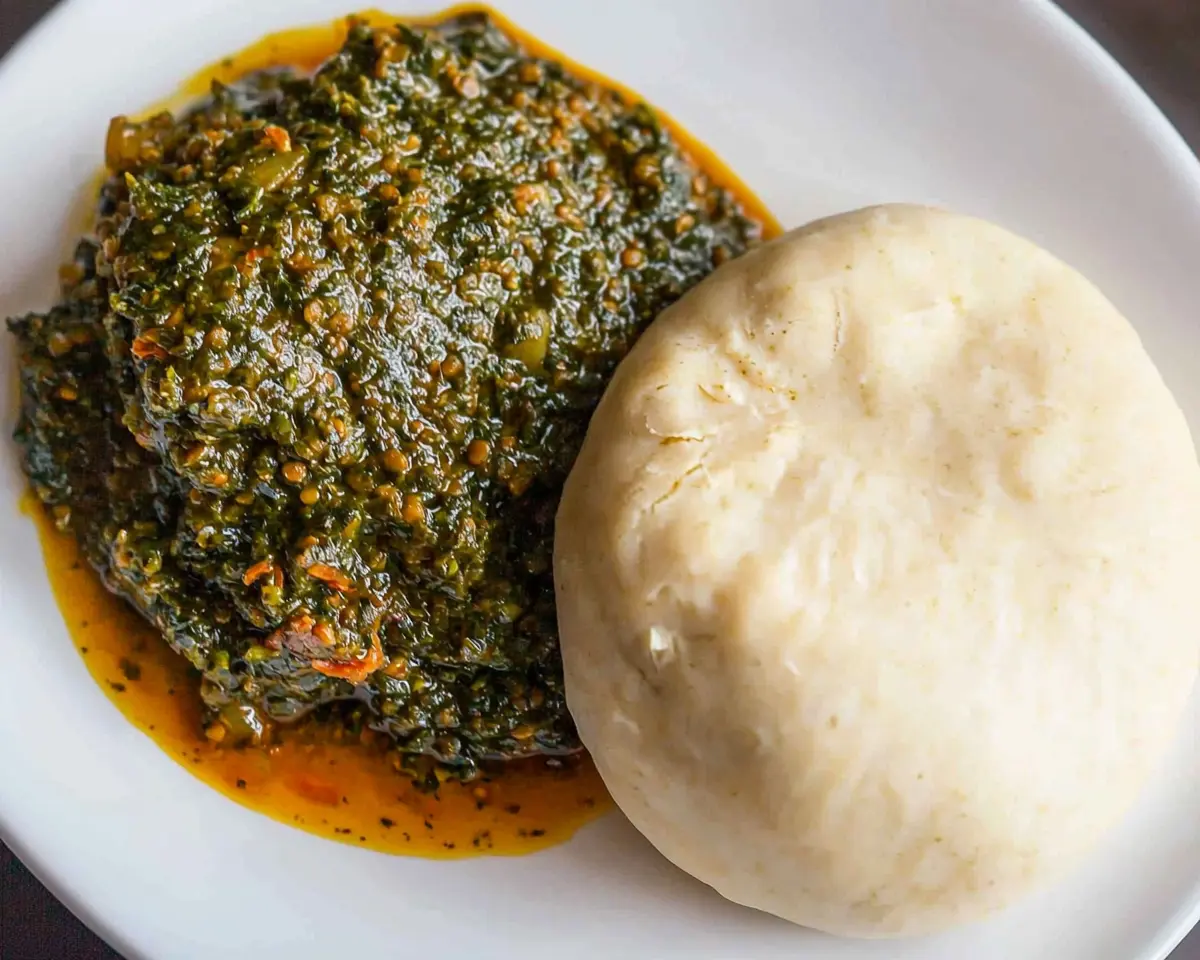
West African Egusi Soup with Fufu
West African Egusi Soup with Fufu is one of those dishes that wraps you up in a warm hug the moment you smell it simmering on the stove.
I’m Linda Sandra — a Charleston home cook who believes every meal should feel like love on a plate, and this recipe is my introduction to one of West Africa’s most beloved comfort foods.
If you’ve never tried egusi soup before, get ready — it’s nutty, rich, deeply savory, and absolutely soul-satisfying.
Little Snapshot: What This Recipe Delivers
This West African Egusi Soup with Fufu recipe combines ground melon seeds with red palm oil, aromatics, dried fish, and leafy greens to create a thick, flavorful stew that’s traditionally served alongside soft, stretchy fufu.
It’s hearty enough to feed a crowd, packed with protein and nutrients, and brings authentic West African flavors straight to your kitchen with ingredients you can find at African grocery stores or online.
Why You’ll Love This Recipe 🌸
- This West African Egusi Soup with Fufu is incredibly filling and packed with protein — one bowl seriously keeps you satisfied for hours.
- It looks and tastes like you’ve been cooking all day, but most of the time is just letting everything simmer while you catch up on laundry or scroll through your phone.
- The layers of flavor from dried fish, crayfish, and uziza leaves create this umami-rich depth that’s honestly hard to describe until you taste it.
- According to Serious Eats, West African soups like egusi are nutritional powerhouses that combine vegetables, protein, and healthy fats — and this recipe proves exactly why it’s been a staple for generations.
Quick Facts ⚡
Here’s the quick scoop on this West African Egusi Soup with Fufu.
- CourseMain Dish
- Prep Time20 minutes
- Cook Time45 minutes
- Total Time1 hour 5 minutes
- Servings6 servings
- DifficultyMedium
Table of Contents
Nutritional Peek
Here’s what you’re getting in each comforting bowl of this soup for fufu:
| Nutrient | Amount per Serving |
|---|---|
| Calories | 385 kcal |
| Protein | 24g |
| Total Fat | 28g |
| Saturated Fat | 12g |
| Carbohydrates | 12g |
| Fiber | 4g |
| Sugar | 4g |
| Sodium | 580mg |
Note: Nutritional values are approximate and will vary based on specific ingredients and portion sizes. This doesn’t include fufu, rice, or plantains served alongside.
Fufu And Egusi Ingredients
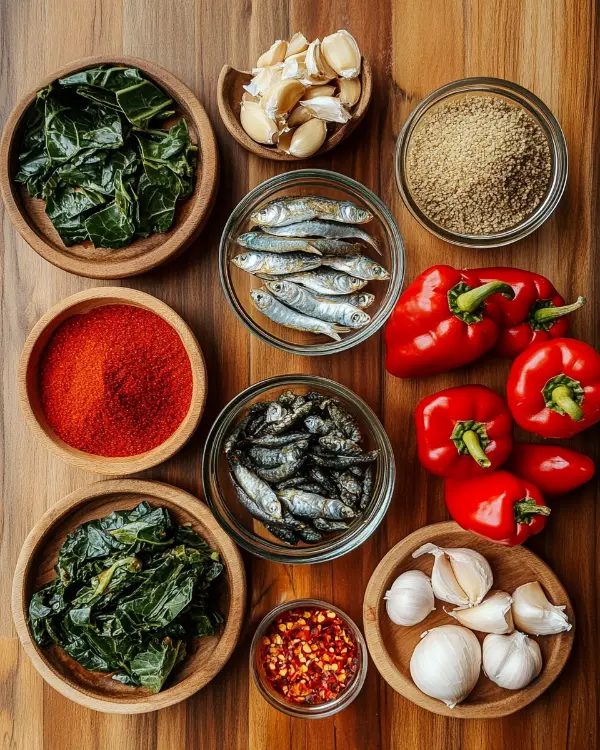
Let me walk you through what you’ll need for this fu fu recipe. Some of these ingredients might be new to you, but don’t let that scare you off — once you track them down at an African grocery store (or order them online), you’ll have everything you need for the most flavorful pot of soup you’ve made in a while.
| Amount | Ingredient |
|---|---|
| 1 cup | Ground egusi (melon seeds) |
| 1/2 cup | Red palm oil (see Cook’s Note below) |
| 4 cloves | Garlic |
| 2 | Plum tomatoes, chopped |
| 2 small | Red bell peppers, chopped |
| 1 small | Onion, chopped |
| 1 | Habanero pepper (optional, but recommended if you like heat) |
| 1/2 cup | Dried herring (also called bonga fish or bony fish) |
| 2 tablespoons | Ground dried crayfish or ground dried shrimp |
| 1 teaspoon | Iru (fermented locust beans, rinsed) |
| 1 teaspoon | Chicken bouillon powder (Knorr’s works great) |
| To taste | Kosher salt |
| 1 cup | Chicken broth or water |
| 1 pound | Cooked meat or fish (stewing hen works beautifully, cut into pieces) |
| 1 cup | Finely chopped collard greens |
| 1/2 cup | Dried uziza leaves, rinsed |
| For serving | Pounded yam, fufu, steamed white rice, and sweet plantains |
Cook’s Notes: Red palm oil is what gives this soup its gorgeous orange color and distinct flavor — you can find it at African or international markets.
For the meat, pre-cooked stewing hen is traditional, but you can also use chicken thighs, goat, or even firm fish.
Uziza leaves add a slightly peppery, aromatic flavor that’s pretty unique — if you can’t find them, you can substitute with a bit of extra greens, though the flavor won’t be quite the same.
Tools You’ll Actually Use
- Large heavy-bottomed pot (like a Dutch oven)
- Blender or food processor
- Small mixing bowl
- Wooden spoon or spatula
- Sharp knife and cutting board
- Tablespoon for scooping
- Tweezers (helpful for removing fish bones)
Step-by-Step Instructions
Making West African Egusi Soup with Fufu is all about building layers of flavor, so let’s take it one cozy step at a time.
Step 1: Blend the aromatics
Toss your garlic, red bell peppers, tomatoes, onion, and habanero (if you’re using it) into a blender or food processor. Pulse for about 30 seconds until you’ve got a smooth, vibrant red purée. The smell alone will have you excited about what’s coming.
Step 2: Prep the dried herring
This step takes a little patience, but it’s worth it. Split your dried herring into quarters, then carefully pick through and remove any tiny bones — tweezers are your friend here.
Break the fish into small, bite-sized pieces and set them aside. This is where so much of that deep, savory flavor comes from.
Step 3: Heat the palm oil
Set a large pot over medium heat and pour in that gorgeous red palm oil. Let it warm until it starts to shimmer — you’ll know it’s ready when the surface looks glossy and moves easily when you tilt the pot.
Step 4: Cook the pepper base
Add your blended pepper mixture to the shimmering oil and give it a good stir. Cover the pot and let everything simmer together for about 3 minutes. Your kitchen is going to start smelling absolutely incredible right about now.
Step 5: Layer in the flavor bombs
Stir in the prepared dried fish, ground crayfish (or shrimp), iru, bouillon powder, and about 1/2 teaspoon of kosher salt. Mix everything together really well, then cover again and let it simmer gently for about 10 minutes, stirring occasionally.
You want the mixture to thicken up a bit and the flavors to really get to know each other.
Step 6: Make the egusi paste
In a small bowl, combine your ground egusi with 1/3 cup of water. Stir it together until you have a thick, dense white paste. This is the star of the show — that nutty, protein-packed goodness that gives the soup its name.
Step 7: Add broth and steam the egusi
Pour the chicken broth into your stew and give it a gentle stir. Now here’s the fun part: using a tablespoon, scoop portions of that egusi paste and gently drop them over the surface of the stew. Don’t stir them in — just let them sit there like little dumplings.
Cover the pot and let the egusi steam undisturbed for about 10 minutes. They’ll firm up into soft, delicate clumps.
Step 8: Incorporate the egusi
Once your egusi clumps have set, gently stir them into the stew. You’ll see the whole thing transform into a thick, lumpy white texture — that’s exactly what you want. That means the egusi is fully cooked and ready to work its magic.
Step 9: Add the protein
Fold in your pre-cooked meat or fish and let everything simmer together for another 5 minutes. The stew will reduce slightly and all those flavors will start melding together beautifully.
Step 10: Finish with the greens
Finally, add your chopped collard greens and rinsed uziza leaves. Give everything a good stir, then cover the pot partially and let it simmer over medium-low heat for about 15 minutes, or until the greens are tender and have soaked up all that delicious flavor.
Step 11: Serve it up
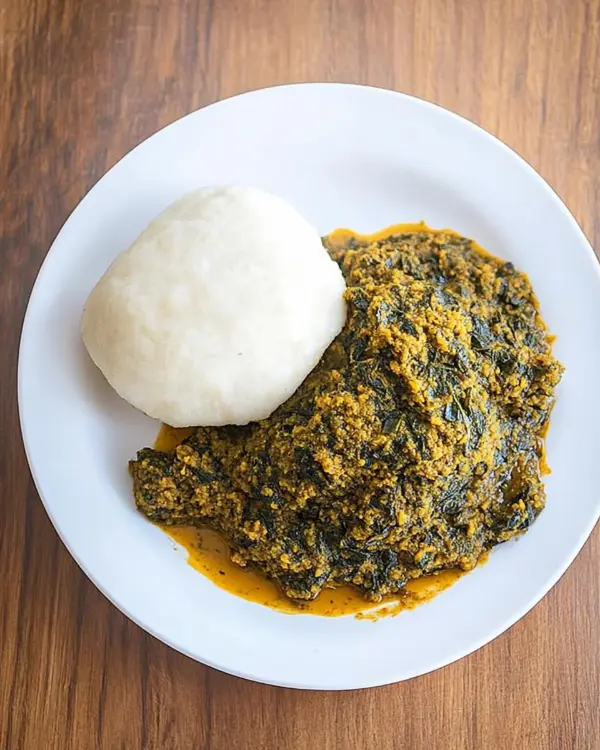
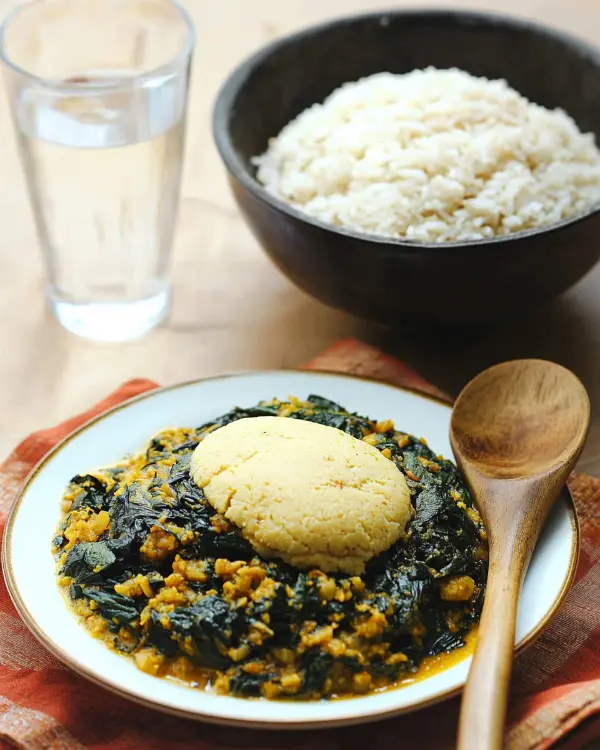
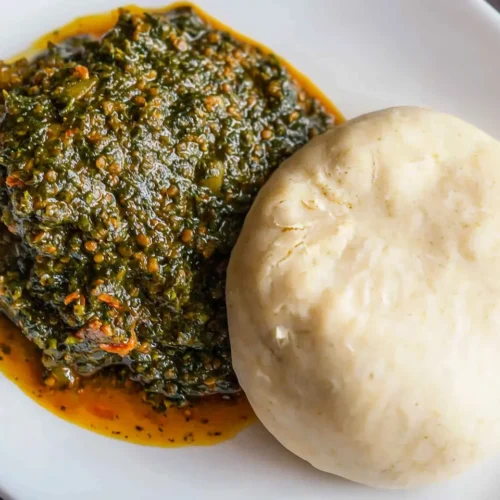
Ladle this glorious fufu and egusi soup into bowls while it’s piping hot. Serve it alongside pounded yam, fufu, steamed white rice, and sweet plantains for a meal that feels like a celebration.
Can’t get enough of these flavors? You’re going to love what’s waiting in the Classic Soups lineup. Every single recipe is made to impress without the stress. Happy cooking, friend!
Pro Tips & Gentle Guidance
This soup for fufu might seem intimidating at first, but I promise it’s more forgiving than you’d think. Here are a few things I’ve learned along the way:
- Don’t skip the dried fish. I know it sounds unusual if you’re not familiar with West African cooking, but that dried herring adds an umami depth that you just can’t replicate with anything else.
- Be gentle when stirring the egusi. Once you add those paste clumps, resist the urge to immediately mix them in. Letting them steam first helps them hold their texture instead of dissolving completely into the soup.
- Adjust the heat to your liking. The habanero is optional for a reason — these peppers pack serious heat. If you’re nervous, start with half of one, or skip it entirely and pass hot sauce at the table.
- Red palm oil isn’t the same as regular palm oil. Red palm oil has a distinctive flavor and that beautiful orange color. If you absolutely can’t find it, you can substitute with a neutral oil mixed with a bit of paprika for color, but the flavor won’t be quite as authentic.
If you’re new to African ingredients, The Spruce Eats has a really helpful guide to West African pantry staples that I used when I was first learning to cook dishes like this.
You might also love checking out other cozy, soul-satisfying dishes like this Homestyle Chicken and Gravy, this Hearty Chili Macaroni Delight, or this Simple Crockpot Chicken Pot Pie.
Quick Fixes for West African Egusi Soup with Fufu
Even the most experienced cooks run into little hiccups, so here’s how to troubleshoot the most common issues:
Soup is too thick: Just add a splash of chicken broth or water, a little at a time, until you reach your desired consistency. Egusi naturally thickens as it sits, so this is totally normal.
Soup is too thin: Let it simmer uncovered for an extra 10-15 minutes to reduce and thicken. You can also mix a tiny bit more ground egusi with water and stir it in.
Egusi paste broke apart: If your egusi clumps dissolved completely, it’s usually because the mixture was stirred too soon or too vigorously. The soup will still taste delicious — it’ll just have a smoother texture instead of those characteristic lumps.
Too salty: Add a peeled, quartered potato to the pot and let it simmer for 10 minutes to absorb excess salt, then remove it. Or balance the saltiness with a squeeze of fresh lemon juice.
Not enough flavor: This soup builds flavor through layers, so if it tastes a bit flat, you might need more bouillon, a pinch more salt, or an extra tablespoon of ground crayfish. Taste as you go.
Variations & Adaptations
Once you’ve mastered the classic West African Egusi Soup with Fufu, here are some fun ways to make it your own:
Protein swaps: Try smoked turkey, oxtail, tilapia, catfish, or even a mix of shrimp and crab. Each brings its own personality to the pot.
Vegetarian version: Skip the meat and fish entirely and load up on extra vegetables like mushrooms, eggplant, and okra. Use vegetable broth and add an extra tablespoon of ground crayfish (or nutritional yeast for a vegan option) to boost the umami.
Greens variety: Collards are traditional, but you can also use spinach, kale, Swiss chard, or a mix. Spinach cooks much faster, so add it in the last 5 minutes.
Make it milder: Leave out the habanero and use sweet bell peppers only. You’ll still get all the rich, nutty flavor without the heat.
Nut-free alternative: While egusi (melon seeds) aren’t technically nuts, if you have seed allergies, some cooks use ground pumpkin seeds (pepitas) as a substitute, though the flavor will be different.
Serving, Storage & Reheating
This fufu and egusi combo is traditionally eaten by pinching off a piece of the fufu, forming it into a small ball, making an indent with your thumb, and using it to scoop up the soup. It’s a hands-on experience that makes the meal even more satisfying.
Storage: Let any leftover soup cool completely, then transfer it to an airtight container. It’ll keep in the fridge for up to 4 days. The soup will thicken as it sits — that’s totally normal.
Reheating: Warm it gently on the stovetop over medium-low heat, adding a splash of broth or water to loosen it up. Stir occasionally and heat until it’s warmed through. You can also microwave individual portions in 1-minute intervals, stirring between each, until hot.
Freezing: This soup freezes beautifully for up to 3 months. Cool it completely, portion it into freezer-safe containers (leaving about an inch of space at the top for expansion), and freeze. Thaw overnight in the fridge before reheating.
No-Waste Kitchen Magic
West African cooking is naturally pretty waste-conscious, but here are a few extra ways to stretch this recipe:
Save that palm oil: If you have leftover red palm oil, it’s incredible for frying plantains, sautéing vegetables, or making jollof rice. Store it in a cool, dark place.
Use leftover greens: Got extra collards or other greens? Chop them up and add them to scrambled eggs, omelets, or grain bowls throughout the week.
Stretch the soup: Add cooked rice, quinoa, or even ramen noodles directly to leftover soup for a quick, filling meal-in-a-bowl.
Repurpose leftover fufu: Day-old fufu can be sliced and pan-fried until crispy on both sides, then served as a side dish or breakfast with eggs.
Freeze the aromatics: If you blended extra peppers, tomatoes, and onions, freeze the purée in ice cube trays. Pop them into soups, stews, or sauces whenever you need a flavor boost.
West African Egusi Soup with Fufu FAQs
Can I make West African Egusi Soup with Fufu ahead of time?
Absolutely! In fact, the flavors get even better after a day in the fridge. Make the soup up to 2 days in advance, store it covered in the fridge, and reheat gently before serving. Fufu is best made fresh, though.
Where do I find egusi and other African ingredients?
Most African or international grocery stores carry ground egusi, red palm oil, dried fish, iru, and uziza leaves. If you don’t have a store nearby, they’re all available online through retailers like Amazon, African Food Network, or specialized African grocery websites.
Can I use fresh fish instead of dried?
You can, but the flavor will be different. Dried fish adds a concentrated, smoky depth that fresh fish doesn’t have. If you do use fresh, consider adding a bit of smoked paprika or fish sauce to bring some of that complexity back.
Is this soup spicy?
It can be, depending on whether you use the habanero. Without it, the soup is rich and savory but not spicy. With it, you’ll get a nice kick of heat that builds as you eat.
What’s the texture supposed to be like?
The soup should be thick and hearty, with visible lumps of cooked egusi suspended throughout. It shouldn’t be smooth like a cream soup — those lumps are the signature of properly cooked egusi.
Can I freeze fufu and egusi soup together?
Freeze the soup, but keep fufu separate. Fufu doesn’t freeze well and becomes gummy when thawed. Make it fresh when you’re ready to serve your reheated soup.
Closing
So there you have it — West African Egusi Soup with Fufu that feels like a culinary adventure but is secretly approachable once you get your hands on the right ingredients.
This is one of those dishes that might stretch you a little if you’re new to African cooking, but I promise the reward is so worth it. That first spoonful of nutty, rich, deeply savory soup? Pure magic.
Give it a try and let me know how it turns out! I’d love to hear what you think, and if you make any fun variations, definitely share them in the comments. And if you post a picture, tag me — I’m always thrilled to see your beautiful cooking.
I’m Linda Sandra — a Charleston home chef and comfort-food daydreamer. Around here, cooking’s not about perfection — it’s about cozy vibes, creative twists, and food that feels like love.
West African Egusi Soup with Fufu
Equipment
- Large heavy-bottomed pot or Dutch oven
- Blender or food processor
- Small mixing bowl
- Wooden spoon or spatula
- Sharp knife
- Cutting board
- Tablespoon
- Tweezers
Ingredients
- 1 cup ground egusi melon seeds
- ½ cup red palm oil
- 4 cloves garlic
- 2 plum tomatoes chopped
- 2 small red bell peppers chopped
- 1 small onion chopped
- 1 habanero pepper optional
- ½ cup dried herring also known as bonga fish or bony fish
- 2 tablespoons ground dried crayfish or ground dried shrimp
- 1 teaspoon iru fermented locust beans, rinsed
- 1 teaspoon chicken bouillon powder such as Knorr’s
- kosher salt to taste
- 1 cup chicken broth or water
- 1 pound cooked meat or fish e.g., stewing hen, cut into pieces
- 1 cup collard greens finely chopped
- ½ cup dried uziza leaves rinsed
For Serving
- pounded yam fufu
- steamed white rice
- sweet plantains
Instructions
- Combine the garlic, red bell peppers, tomatoes, onion, and habanero (if using) in a blender or food processor. Blend for about 30 seconds, until a smooth purée forms.
- Prepare the dried herring by splitting it into quarters. Carefully remove any bones—using tweezers if needed—and break the fish into small, bite-sized pieces. Set aside.
- In a large pot set over medium heat, warm the palm oil until it begins to shimmer. Add the blended pepper mixture and stir well to incorporate. Cover the pot and allow the mixture to simmer for around 3 minutes, until the aroma deepens.
- Add the prepared dried fish, ground crayfish or shrimp, iru, bouillon powder, and 1/2 teaspoon kosher salt to the pot. Stir thoroughly to combine the ingredients. Cover again and let the stew simmer gently, stirring now and then, for about 10 minutes or until the mixture has thickened slightly.
- In a small mixing bowl, combine the ground egusi with 1/3 cup of water. Stir until a dense white paste forms.
- Pour the chicken broth into the stew and give it a gentle stir. Using a tablespoon, scoop portions of the egusi paste and place them gently over the surface of the stew. Do not mix at this point. Cover the pot and let the egusi steam and cook undisturbed for about 10 minutes, allowing it to firm into soft clumps.
- Once the egusi has set, gently stir to incorporate the clumps throughout the stew. The stew will take on a thick, lumpy white texture, signaling that the egusi is fully cooked.
- Add the pre-cooked meat or fish to the pot and stir it into the stew. Let it simmer for an additional 5 minutes, just until the stew reduces slightly and the flavors begin to deepen.
- Finally, fold in the chopped collard greens and rinsed uziza leaves. Cover the pot partially and allow the stew to simmer over medium-low heat for about 15 minutes, or until the greens are tender and well-infused with flavor.
- Serve hot with pounded yam, fufu, steamed white rice, and a side of sweet plantains for a complete and satisfying meal.