Vanilla Meringue Cake Recipe
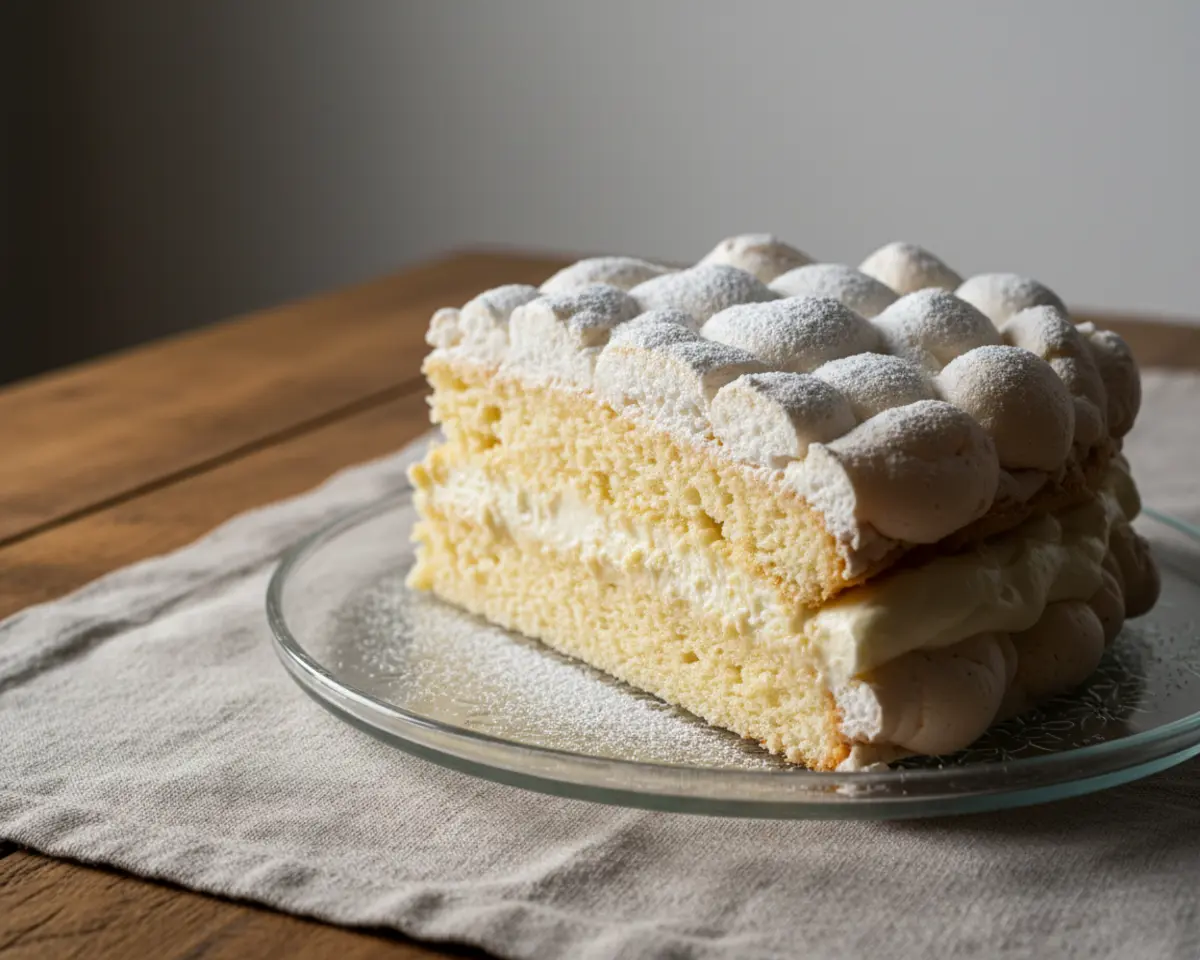
A vanilla meringue cake recipe is like a cloud you’re actually allowed to eat. It’s that magical combination of tender, buttery vanilla cake and silky Swiss meringue buttercream that makes every bite feel like a special occasion. Whether you’re celebrating a birthday, hosting a sweet brunch, or just want to bake something gorgeous on a Tuesday, this homemade meringue cake delivers.
The secret to a truly stunning vanilla cake with meringue is all about the frosting. Swiss meringue buttercream is lighter than American buttercream but way more stable than whipped cream, so you get that dreamy, not-too-sweet finish. Plus, it pipes like a dream if you’re feeling fancy.
This easy vanilla meringue cake comes together with everyday ingredients and a little patience. Trust me, it’s worth every minute of whisking.
Table of Contents
Quick Overview
Little Snapshot: What This Recipe Delivers
This vanilla meringue cake recipe combines a soft, buttery two-layer vanilla cake with smooth Swiss meringue buttercream for an elegant dessert. Perfect for celebrations or weekend baking, this meringue layer cake balances sweetness with a light, silky texture that melts on your tongue.
Why You’ll Love This Recipe 🌸
- This easy vanilla meringue cake takes less active time than binge-watching two episodes of your favorite show.
- The Swiss meringue buttercream is silky, stable, and not cloyingly sweet — perfect for busy moms who want a bakery-level finish without the fuss.
- You only need simple pantry staples and a little whisking magic to create something seriously impressive.
- According to King Arthur Baking, Swiss meringue buttercream is prized for its smooth, stable texture — and this recipe proves exactly why.
Quick Facts ⚡
Here’s the quick scoop on this vanilla meringue cake recipe.
- CourseDessert
- Prep Time25 minutes
- Cook Time30 minutes
- Total Time1 hour 55 minutes
- Servings12 servings
- DifficultyMedium
Nutritional Peek
| Nutrient | Amount per serving |
|---|---|
| Calories | 520 kcal |
| Protein | 5 g |
| Carbohydrates | 62 g |
| Fat | 29 g |
| Fiber | 1 g |
| Sugar | 45 g |
What You’ll Need
You don’t need a fancy kitchen to pull off this meringue layer cake. Just a few trusty tools and a little counter space will do the trick.
- Two 8-inch round cake pans
- Stand mixer or hand mixer
- Large mixing bowls
- Whisk
- Rubber spatula
- Heatproof bowl for double boiler
- Candy thermometer
- Wire cooling rack
- Offset spatula or butter knife for frosting
Ingredients
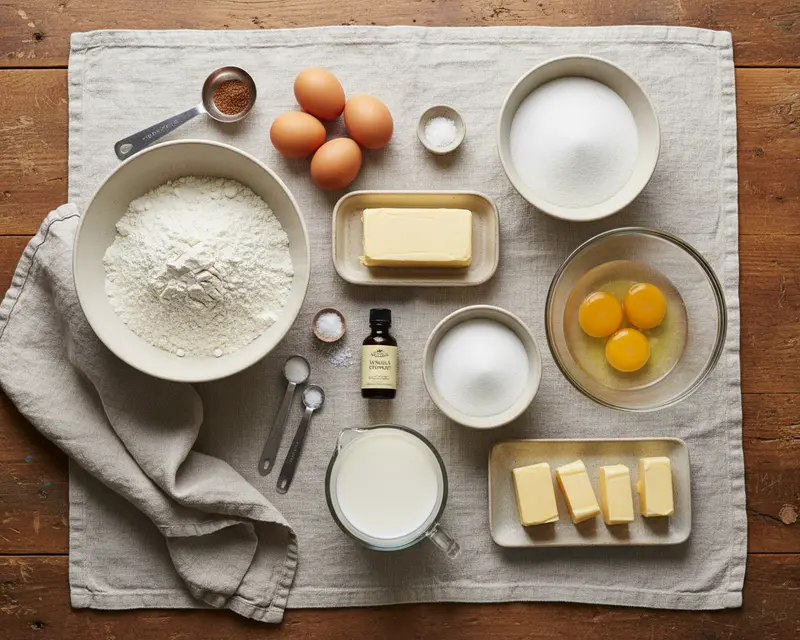
This vanilla cake with meringue starts with classic cake ingredients and finishes with a glossy, buttery meringue frosting. I’ve grouped everything so you can prep in stages and keep your counter organized. The cake batter comes together fast, and the Swiss meringue buttercream is a game-changer once you try it.
| Group | Ingredient | Amount | Notes |
|---|---|---|---|
| Cake Base | Unsalted butter, softened | 1 cup (2 sticks) | Room temp is key for fluffy creaming |
| Cake Base | Granulated sugar | 2 cups | White sugar works best here |
| Cake Base | Large eggs | 4 | Also room temperature |
| Cake Base | Vanilla extract | 1 tablespoon | Pure vanilla makes a difference |
| Cake Base | All-purpose flour | 3 cups | Spoon and level for accuracy |
| Cake Base | Baking powder | 1 tablespoon | Fresh is best for lift |
| Cake Base | Salt | 1/2 teaspoon | Balances the sweetness |
| Cake Base | Milk | 1 cup | Whole milk adds richness |
| Swiss Meringue Buttercream | Egg whites | 5 large | Save those yolks for custard |
| Swiss Meringue Buttercream | Granulated sugar | 1 1/4 cups | Dissolves into the whites |
| Swiss Meringue Buttercream | Unsalted butter, softened | 1 1/2 cups (3 sticks) | Cut into tablespoon-sized pieces |
| Swiss Meringue Buttercream | Vanilla extract | 1 teaspoon | A little goes a long way |
Step-by-Step Instructions
Let’s make this happen. The vanilla meringue cake recipe moves in two big waves: first the cake layers, then the dreamy buttercream. Take your time with the meringue step, and you’ll be rewarded with frosting that tastes like a cloud.
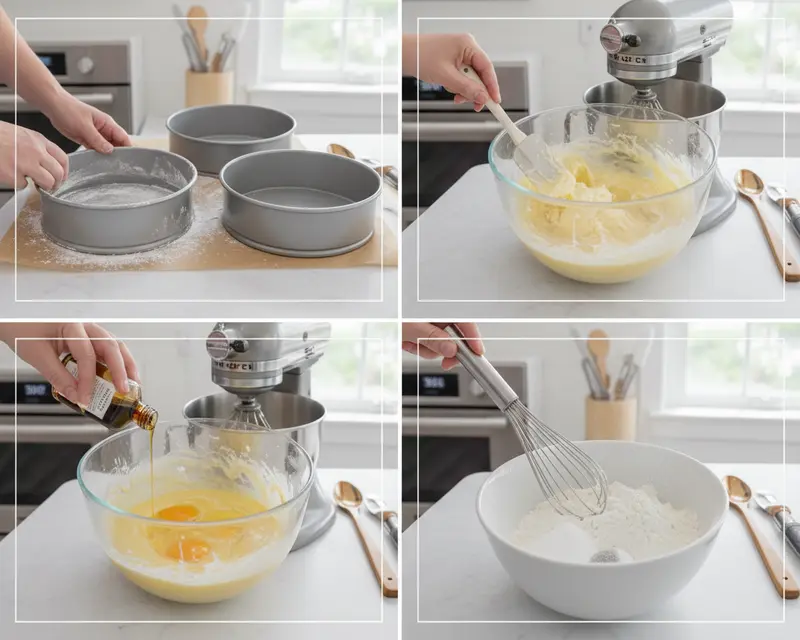
Preheat your oven to 350°F and grease two 8-inch round cake pans. Dust them lightly with flour and tap out the excess so your cakes release cleanly later.
In a large mixing bowl, cream the softened butter and granulated sugar together until the mixture is light, fluffy, and pale yellow. This should take about 3 to 4 minutes with a stand mixer or hand mixer on medium-high speed.
Add the eggs one at a time, beating well after each addition. The batter should look smooth and slightly glossy before you move on. Stir in the vanilla extract and give it a quick mix.
In a separate bowl, whisk together the all-purpose flour, baking powder, and salt. This dry mixture will help your cake rise evenly and stay tender.
Add the dry ingredients to the wet ingredients in three additions, alternating with the milk. Start and end with the dry ingredients. Mix on low speed just until everything is combined—overmixing can make your cake dense.
Divide the batter evenly between your two prepared pans. Use a kitchen scale if you want perfectly even layers. Smooth the tops gently with a spatula.
Bake for 25 to 30 minutes, or until a wooden skewer or toothpick inserted into the center comes out clean. The edges should just start to pull away from the sides of the pan.
Let the cakes cool in the pans for 10 minutes, then carefully invert them onto a wire rack to cool completely. This cooling step is crucial before you frost—warm cake will melt your buttercream.
For the Swiss meringue buttercream, set a heatproof bowl over a saucepan of gently simmering water. Make sure the bottom of the bowl doesn’t touch the water—you want gentle, indirect heat.
Add the egg whites and granulated sugar to the bowl. Whisk constantly until the sugar fully dissolves and the mixture reaches 160°F on a candy thermometer. This usually takes about 5 to 7 minutes.
Remove the bowl from the heat and transfer the warm mixture to the bowl of a stand mixer fitted with the whisk attachment. Beat on high speed until stiff, glossy peaks form and the meringue feels cool to the touch, about 8 to 10 minutes.
Switch to the paddle attachment. With the mixer running on medium-low speed, add the softened butter one piece at a time. The mixture may look curdled or broken at first—don’t panic, just keep beating. It will come together into a smooth, silky buttercream.
Beat in the vanilla extract until fully combined. Your Swiss meringue buttercream should be thick, spreadable, and incredibly smooth.
Once your vanilla cake layers are completely cool, place one layer on a serving plate or cake stand. Spread a generous amount of buttercream on top, then stack the second layer. Frost the top and sides with the remaining buttercream, smoothing with an offset spatula.
Expert Tips
This homemade meringue cake is all about technique and timing. A few small tweaks can take your cake from good to bakery-level gorgeous, so let’s dig into the details that really matter.
Make sure your butter is truly softened for both the cake and the buttercream. It should leave a slight indent when you press it with your finger. Cold butter won’t cream properly, and melted butter will mess with your texture.
When you’re heating the egg whites and sugar for the meringue, use a candy thermometer to hit that 160°F sweet spot. This pasteurizes the eggs and dissolves the sugar completely, giving you a stable, glossy meringue that won’t deflate.
If your Swiss meringue buttercream looks curdled or soupy after adding the butter, don’t throw it out. Just keep beating on medium speed for another 2 to 3 minutes—it almost always comes back together into a silky frosting.
For the fluffiest cake crumb, measure your flour by spooning it into the measuring cup and leveling it off with a knife. Scooping directly from the bag can pack the flour and make your cake dense.
If you want extra-tall layers, you can bake this batter in three 6-inch pans instead of two 8-inch pans. Just reduce the baking time by about 5 minutes and keep an eye on them.
According to Sally’s Baking Addiction, Swiss meringue buttercream can be made a day ahead and stored in the fridge. Just bring it back to room temperature and rewhip it before using.
Variations
Once you’ve nailed the classic vanilla meringue cake recipe, it’s fun to play around with flavors and fillings. Here are a few of my favorite twists.
Add a layer of fresh berries or berry compote between the cake layers for a fruity, summery vibe. Strawberries, raspberries, or blueberries all pair beautifully with vanilla and meringue.
For a citrus spin, fold in the zest of one lemon or orange into your cake batter and add a tablespoon of citrus juice to your buttercream. It brightens the whole dessert without overpowering the vanilla.
Try a chocolate drip by melting dark chocolate with a splash of heavy cream and pouring it over the top of your frosted cake. It adds drama and a hint of bittersweet balance.
If you love coffee, dissolve a tablespoon of instant espresso powder into your milk before adding it to the batter. The subtle coffee flavor makes the vanilla taste even richer.
For a fun twist, check out this Oreo Basque cheesecake if you’re in the mood for something creamy and unique.
Troubleshooting
Problem: My cake turned out dense or heavy.
Solution: You may have overmixed the batter or used too much flour. Mix just until combined, and measure flour by spooning and leveling. Also check that your baking powder is fresh—old leavening agents lose their power.
Problem: The Swiss meringue buttercream looks curdled or soupy.
Solution: Keep beating it on medium speed for another 2 to 3 minutes. If it’s too warm, chill the bowl for 5 minutes and then beat again. If it’s too cold, warm the bowl gently with your hands or a warm towel while mixing.
Problem: My cake layers domed in the middle.
Solution: This is totally normal with butter cakes. You can slice off the dome with a serrated knife for flat, even layers, or use baking strips around the pans next time to promote even rising.
Problem: The frosting is too sweet for my taste.
Solution: Swiss meringue buttercream is already less sweet than American buttercream, but you can add a pinch of salt or a teaspoon of lemon juice to balance the sweetness further.
Storage & Reheating
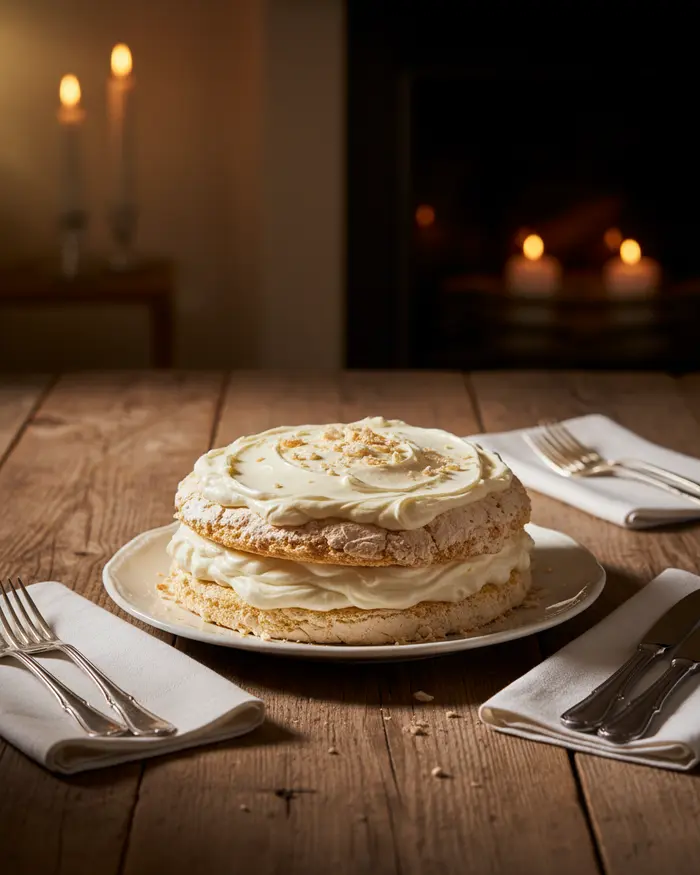
This vanilla cake with meringue keeps beautifully, so you can bake ahead or stretch the leftovers over a few days. Just make sure you store it properly so the frosting stays silky and the cake stays moist.
Store your frosted cake in an airtight container or cover it loosely with plastic wrap and keep it in the fridge for up to 5 days. Bring slices to room temperature for about 20 minutes before serving for the best flavor and texture.
If you want to freeze the cake, wrap unfrosted layers tightly in plastic wrap and then in aluminum foil. They’ll keep for up to 3 months. Thaw in the fridge overnight, then frost and serve. You can also freeze frosted cake, but the texture of the buttercream may change slightly.
| Storage Method | Duration | Notes |
|---|---|---|
| Room Temperature (covered) | 1 day | Only if your kitchen is cool |
| Refrigerator (airtight) | Up to 5 days | Best for frosted cake |
| Freezer (wrapped tightly) | Up to 3 months | Unfrosted layers freeze best |
No-Waste Kitchen Ideas
Baking a homemade meringue cake means you’ll have some extra ingredients hanging around. Here’s how to use every bit without tossing anything.
Save those 5 egg yolks from the buttercream and make a quick custard, lemon curd, or homemade mayo. You can also freeze yolks in an airtight container for up to 3 months—just label the date.
If you have leftover buttercream, pipe it onto vanilla cupcakes or spread it on graham crackers for a quick sweet snack. It also freezes well in a zip-top bag for up to 2 months.
Stale cake scraps can be crumbled and mixed with a bit of frosting to make cake pops or cake truffles. Roll them in sprinkles or melted chocolate for an easy treat.
Use any extra milk in your morning coffee, overnight oats, or a simple pancake batter. Every little bit counts when you’re trying to keep waste low.
Frequently Asked Questions
Here are some common questions I get about making this easy vanilla meringue cake. I’ve gathered the most helpful answers to keep your baking smooth and stress-free.
What is the difference between French, Swiss, and Italian meringue for cake?
French meringue is made by whipping raw egg whites with sugar and is the simplest method. Swiss meringue is made by heating egg whites and sugar over a double boiler before whipping, creating a more stable and silky texture. Italian meringue involves pouring hot sugar syrup into whipping egg whites, making it the most stable and glossy option, ideal for frosting cakes.
How do I prevent my meringue from weeping or becoming soggy on my cake?
To prevent weeping, make sure your meringue is completely cooked through by baking at the proper temperature. Avoid making meringue on humid days, ensure your bowl and beaters are completely grease-free, and add a small amount of cornstarch or cream of tartar to stabilize the meringue. Apply meringue to warm cake layers and seal it completely to the edges to prevent moisture from seeping underneath.
Can I make vanilla meringue cake ahead of time?
While the cake layers can be baked ahead and frozen for up to a month, meringue is best made fresh on the day of serving. Meringue frosting or topping tends to break down and weep when stored for extended periods. If you must prepare ahead, assemble the cake no more than 4 to 6 hours before serving and store it in a cool, dry place rather than the refrigerator to maintain texture.
Why did my meringue deflate or turn grainy?
Meringue deflates when overbeaten or when fat is present in the bowl or on the beaters. It turns grainy when sugar is added too quickly before the egg whites form soft peaks, or when granulated sugar does not fully dissolve. To fix this, add sugar gradually one tablespoon at a time, ensure all equipment is spotlessly clean, and beat only until stiff, glossy peaks form.
What temperature should I bake a vanilla meringue cake?
Bake the cake layers at 350 degrees Fahrenheit for about 25 to 30 minutes until a toothpick comes out clean. If you are baking meringue separately as a layer or decoration, use a lower temperature of 200 to 225 degrees Fahrenheit for 1 to 2 hours to dry it out slowly. If topping the assembled cake with meringue, bake at 350 degrees Fahrenheit for 10 to 15 minutes until the peaks are golden brown.
Final Dish
This vanilla meringue cake recipe is one of those desserts that makes you feel like a baking rockstar, even if you’re just winging it in your pajamas. The layers are tender, the Swiss meringue buttercream is silky and not too sweet, and the whole thing just feels special without being fussy.
Whether you’re celebrating a birthday, bringing dessert to a potluck, or treating yourself on a quiet Sunday, this cake delivers.
If you make this meringue layer cake, I’d love to see your photos! Tag me on social media or drop a comment below with your favorite way to enjoy it. Did you add berries? Go full vanilla? Try a fun drip? I’m all ears.
For more delicious dessert inspiration, check out this Italian chocolate olive oil cake, this indulgent cinnamon roll poke cake, or this dreamy chocolate Nutella cake.
I’m Claire Whitmore — a dessert daydreamer from Asheville, NC. For me, baking isn’t about perfect pastries — it’s about the joy of sharing something sweet (and maybe sneaking an extra scoop of icing).
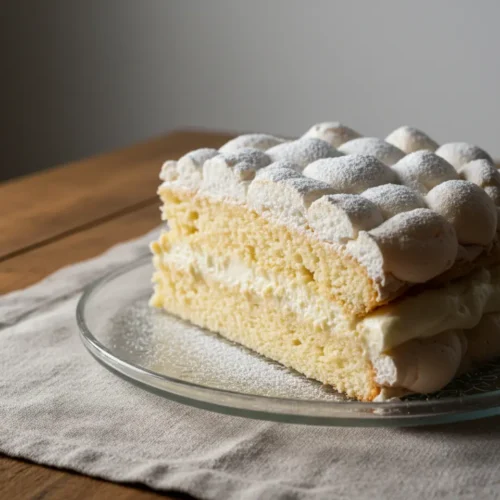
Vanilla Meringue Cake
Ingredients
For the Cake
- 1 cup 2 sticks unsalted butter, softened
- 2 cups granulated sugar
- 4 large eggs
- 1 tablespoon vanilla extract
- 3 cups all-purpose flour
- 1 tablespoon baking powder
- ½ teaspoon salt
- 1 cup milk
For the Swiss Meringue Buttercream
- 5 large egg whites
- 1 ¼ cups granulated sugar
- 1 ½ cups 3 sticks unsalted butter, softened and cut into pieces
- 1 teaspoon vanilla extract
Instructions
- Preheat your oven to 350°F (175°C). Grease and flour two 8-inch round cake pans.
- In a large bowl, cream together the softened butter and granulated sugar until light and fluffy.
- Beat in the eggs one at a time, then stir in the vanilla extract.
- In a separate bowl, whisk together the flour, baking powder, and salt.
- Gradually add the dry ingredients to the wet ingredients, alternating with the milk, beginning and ending with the dry ingredients. Mix until just combined.
- Divide the batter evenly between the prepared cake pans and bake for 25-30 minutes, or until a wooden skewer inserted into the center comes out clean. Let the cakes cool in the pans for 10 minutes before inverting them onto a wire rack to cool completely.
- In a heatproof bowl set over a saucepan of simmering water (make sure the bottom of the bowl doesn’t touch the water), whisk the egg whites and granulated sugar constantly until the sugar has dissolved and the mixture reaches 160°F (71°C) on a candy thermometer.
- Remove the bowl from the heat and transfer the mixture to the bowl of a stand mixer fitted with the whisk attachment. Beat on high speed until stiff, glossy peaks form and the meringue is cool to the touch.
- Switch to the paddle attachment. With the mixer on medium-low speed, gradually add the softened butter, one piece at a time, until fully incorporated. The mixture may look curdled at first, but keep beating, and it will become smooth and creamy.
- Beat in the vanilla extract until combined.
- Once the cakes are completely cool, frost with the Swiss Meringue Buttercream.