Tomato Water Gazpacho
This Tomato Water Gazpacho: Waste Nothing recipe is a celebration of summer vegetables and zero-waste cooking that transforms simple ingredients into a refreshing chilled soup perfect for hot days. Every piece of produce earns its place in this vibrant bowl.
I’m Linda Sandra, a Charleston home chef who believes in using every bit of goodness from your garden or farmers market haul. This tomato water gazpacho is my love letter to smart, sustainable cooking that honors the earth and your taste buds.
I first made this version after a farmers market run left me with more Roma tomatoes and zucchini than I could possibly roast. The beauty of this recipe is that nothing goes to waste — even the juices from dicing become part of the base, and every vegetable scrap adds texture and nutrition.
Table of Contents
Quick Overview
This recipe is just the start of something delicious. Browse the entire Vegetable & Potato Soups collection and discover all the ways you can bring more flavor to your table. Your family will thank you.
Little Snapshot: What This Recipe Delivers
Tomato Water Gazpacho: Waste Nothing is a refreshing chilled vegetable soup that uses every part of summer produce. Ready in 15 minutes of active prep plus chilling time, it serves 6-8 as a light meal or appetizer that celebrates sustainable cooking.
Why You’ll Love This Recipe 🌸
- This Tomato Water Gazpacho takes less active time than scrolling your phone while the soup chills itself.
- Every veggie scrap gets used, so you’ll feel amazing about zero food waste while feeding your family something fresh and nourishing.
- It’s endlessly adaptable to whatever produce is begging to be used up in your crisper drawer.
- According to Natural Resources Defense Council, Americans waste up to 40% of food from farm to fork — and this recipe proves exactly why thoughtful cooking matters.
Quick Facts ⚡
Here’s the quick scoop on this Tomato Water Gazpacho: Waste Nothing.
- CourseAppetizer/Light Main Dish
- Prep Time15 minutes
- Cook Time0 minutes
- Total Time2 hours 15 minutes (includes chilling)
- Servings6-8 servings
- DifficultyEasy
Nutritional Peek
| Nutrient | Amount per Serving |
|---|---|
| Calories | 145 kcal |
| Protein | 3g |
| Carbohydrates | 18g |
| Fat | 8g |
| Fiber | 3g |
| Sugar | 12g |
What You’ll Need
You won’t need fancy equipment for this gazpacho — just the basics that most kitchens already have. A good blender or food processor does the heavy lifting while you supervise.
- Food processor or high-speed blender
- Large mixing bowl (at least 3-quart capacity)
- Small bowl for reserved garnish vegetables
- Sharp chef’s knife
- Cutting board
- Measuring cups and spoons
- Ladle for serving
- Serving bowls (chilled bowls are a nice touch!)
Ingredients
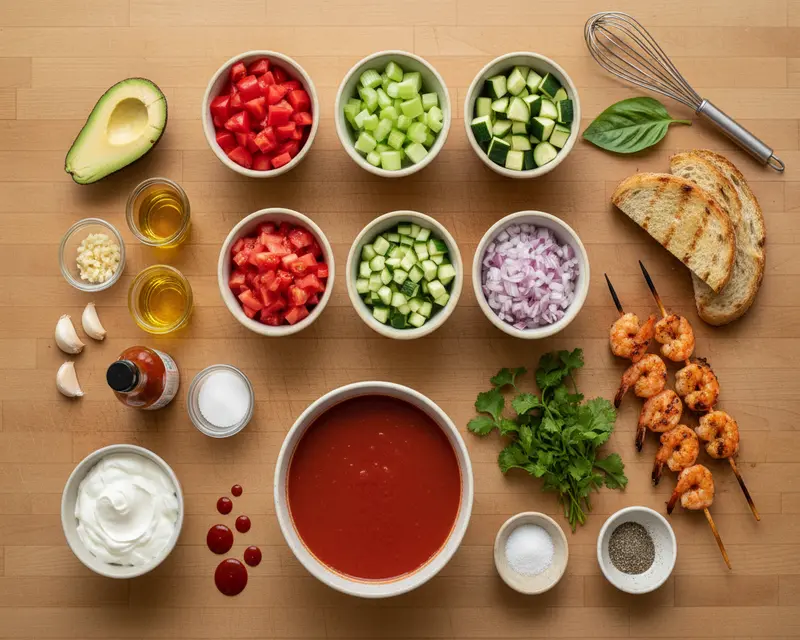
Great gazpacho starts with peak-season vegetables that practically burst with flavor. This recipe celebrates the sweetness of Roma tomatoes, the crisp freshness of cucumber and celery, and the subtle earthiness of zucchini — all bound together with bright vinegar and fruity olive oil.
The genius here is dividing your vegetables into three portions: one for the blended base, one for chunky texture in the soup itself, and one reserved for fresh garnish. Nothing gets wasted, and every bite offers different textures.
| Group | Ingredient | Amount | Notes |
|---|---|---|---|
| Aromatic Base | Garlic cloves | 2, minced | Fresh is best here |
| Aromatic Base | Extra-virgin olive oil | 1/4 cup | Use good quality for flavor |
| Aromatic Base | Red wine vinegar | 2 tablespoons | Adds bright acidity |
| Aromatic Base | Sugar | 2 tablespoons | Balances acidity |
| Aromatic Base | Hot sauce (Tabasco) | 6 dashes | Adjust to your heat preference |
| Main Vegetables | Roma tomatoes | 5, diced | Ripe and juicy is key |
| Main Vegetables | Celery stalks | 2, diced | Adds refreshing crunch |
| Main Vegetables | Cucumber | 1 large, diced | English or garden variety work |
| Main Vegetables | Zucchini | 1, diced | Green or yellow both work beautifully |
| Main Vegetables | Red onion | 1/2, diced | Milder than yellow onion |
| Liquid Base | Tomato juice | 4 cups | Low-sodium gives you control |
| Seasoning | Kosher salt | To taste | Season generously; cold dulls flavor |
| Seasoning | Black pepper | To taste | Freshly ground is best |
| Garnishes | Sliced avocado | For serving | Adds creamy richness |
| Garnishes | Sour cream | For serving | Optional but lovely |
| Garnishes | Fresh cilantro | For serving | Brightens every spoonful |
| Garnishes | Grilled shrimp | For serving | Makes it a complete meal |
| Garnishes | Grilled bread | For serving | Perfect for dipping and soaking |
Step-by-Step Instructions
Let’s make this happen. Tomato Water Gazpacho: Waste Nothing comes together faster than you’d imagine, with most of the magic happening while the soup chills in your fridge.
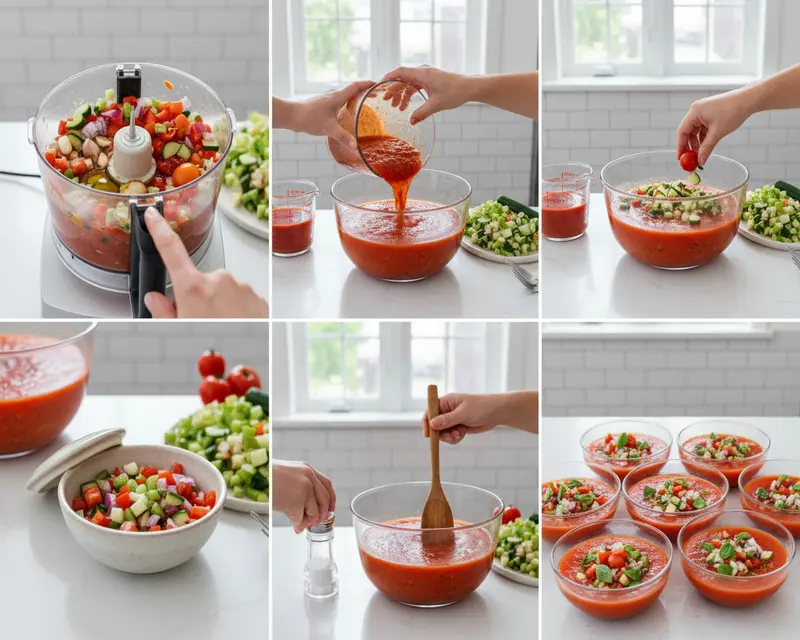
Step 1: Build the Blended Base
Add minced garlic, extra-virgin olive oil, red wine vinegar, sugar, and hot sauce to your food processor or blender. The garlic should be finely minced so it distributes evenly without creating harsh bites. These aromatics create the flavor foundation that makes gazpacho sing.
Now add half of each diced vegetable — half the Roma tomatoes, half the celery, half the cucumber, half the zucchini, and half the red onion. Pour in 2 cups of tomato juice and add a generous pinch of kosher salt. The vegetables should be roughly chopped into similar-sized pieces so they blend evenly.
Pulse the mixture until everything is well blended but still has a slightly chunky, speckled texture. You’re not making a perfectly smooth puree — you want to see flecks of red tomato, green cucumber, and pale celery creating a beautiful mosaic. This takes about 8-10 pulses or 15-20 seconds of blending.
Step 2: Combine and Layer Textures
Pour the blended tomato mixture into a large mixing bowl. The base should be thick and vibrant, smelling of fresh vegetables with a hint of vinegar tang. This is where the magic of layering begins.
Add the remaining 2 cups of tomato juice to the bowl and stir gently. The juice thins the soup to a perfect sippable consistency while adding more tomato flavor. Now it’s time to add texture.
Take half of your remaining diced vegetables — half the remaining tomatoes, half the remaining celery, half the remaining cucumber, half the remaining zucchini, and half the remaining red onion — and stir them into the soup. These chunks give you something to chew on and create visual interest in every bowl.
Transfer the very last portion of diced vegetables into a small bowl, cover with plastic wrap, and refrigerate. These fresh, crisp pieces will be your garnish, offering a textural contrast to the chilled soup when you serve it.
Step 3: Season and Chill
Taste your gazpacho and adjust the seasonings. Cold temperatures dull our perception of salt and acid, so the soup needs to taste slightly overseasoned at room temperature. Add more kosher salt, black pepper, vinegar, or hot sauce as needed.
Cover the bowl tightly with plastic wrap or transfer to an airtight container. Refrigerate for at least 2 hours, though the flavors deepen beautifully if you let it sit overnight. The soup must be very cold — icy cold — to be properly refreshing on a hot day.
Step 4: Final Check and Serve
Before serving, give the gazpacho a good stir as some separation is natural. Taste one more time and adjust seasonings if needed — your palate might want a touch more salt or acid now that it’s chilled.
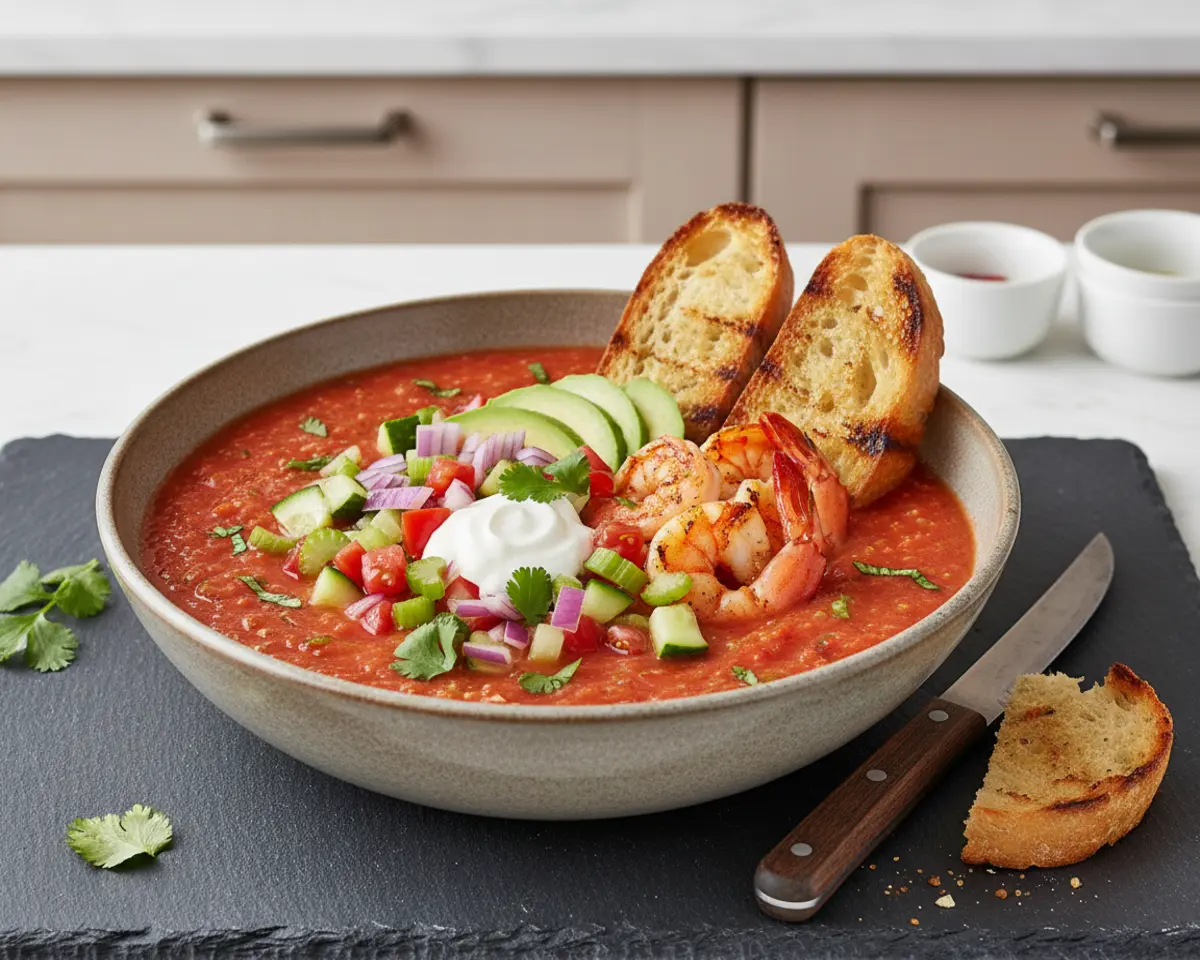
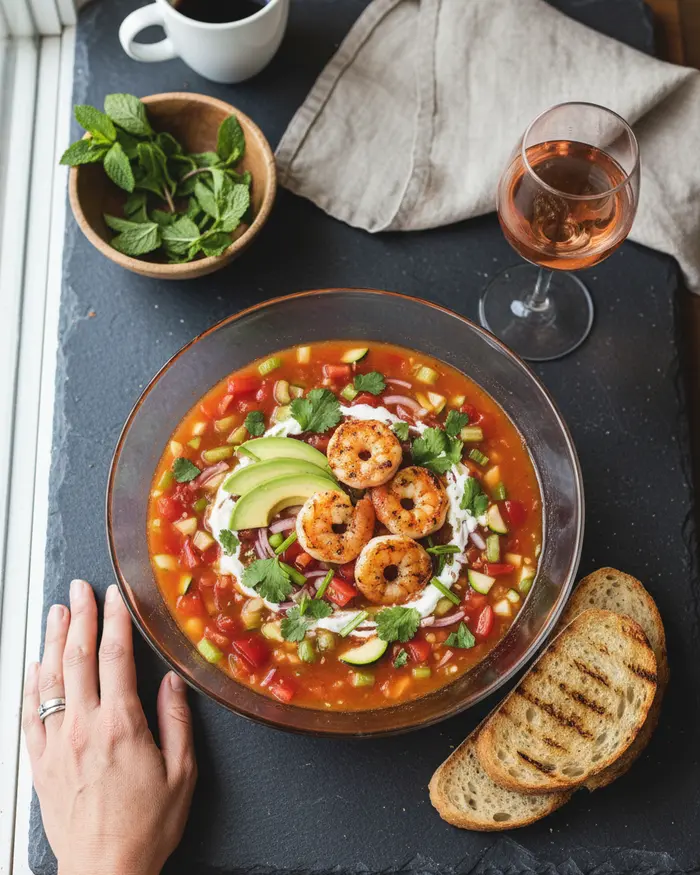
Ladle the cold soup into chilled bowls. Top each serving with reserved diced vegetables, adding color and fresh crunch. Arrange sliced avocado on top for creaminess, add a dollop of sour cream for richness, and sprinkle with fresh cilantro leaves.
If you’re serving this as a main dish, add grilled shrimp to each bowl for protein. Place thick slices of grilled bread on the side for dipping and soaking up every last drop. This is summer in a bowl — bright, refreshing, and absolutely satisfying.
Pro Tips & Gentle Guidance
Making exceptional gazpacho is all about respecting the vegetables and understanding how flavors develop when chilled. These tips will help you create the most vibrant, balanced version of this classic summer soup.
Embrace the Overnight Rest
While you can serve gazpacho after 2 hours of chilling, it truly shines when made a day ahead. The vegetables release more of their juices, the flavors marry and mellow, and the whole soup becomes more cohesive. I always make mine the night before a gathering.
Adjust Thickness to Your Preference
Some folks love a thicker, almost salsa-like gazpacho while others prefer it more soup-like and sippable. Control the consistency by adjusting the amount of tomato juice or even adding a splash of cold water. There’s no wrong answer — just your perfect version.
Don’t Skip the Chill Time
Gazpacho served at room temperature is honestly disappointing. The magic happens when it’s properly cold, shocking your palate awake with bright flavors. If you’re in a rush, you can even add a few ice cubes and stir them in, though this dilutes the flavor slightly.
Balance Sweet and Acid
The sugar in this recipe isn’t about making dessert — it’s about balancing the acidity from tomatoes and vinegar. According to Serious Eats’ gazpacho guide, a touch of sweetness allows the vegetable flavors to shine without being masked by tartness.
Save Your Tomato Scraps
If you’re using garden tomatoes with cores or blemishes you need to cut away, save those scraps in a freezer bag. They’re perfect for making zero-waste sauces or adding to vegetable stock.
Variations & Adaptations
One of the greatest joys of gazpacho is how flexible it is. You can adapt this recipe based on what’s abundant in your garden or what’s on sale at the farmers market.
Watermelon Gazpacho
Replace 2 cups of the tomato juice with pureed seedless watermelon for a sweeter, fruitier version that’s incredible on the hottest days. The watermelon’s natural sugars balance beautifully with the vegetables. This pairs wonderfully with ideas from my watermelon feta cucumber salad.
Roasted Red Pepper Gazpacho
Add 2 roasted red peppers (jarred or homemade) to the blender with the base vegetables. This creates a deeper, slightly smoky flavor and a gorgeous russet-red color that’s stunning in white bowls.
White Gazpacho (Ajo Blanco)
For an entirely different take, make a white version using blanched almonds, garlic, stale bread soaked in water, olive oil, and sherry vinegar. Garnish with green grapes and a drizzle of olive oil for an elegant Andalusian classic.
Spicy Gazpacho
Increase the hot sauce to 12 dashes or add a seeded jalapeño to the blender. You can also garnish with pickled jalapeño slices or a drizzle of hot honey for sweet heat.
Green Gazpacho
Swap the tomatoes for tomatillos and increase the zucchini and cucumber. Add fresh herbs like cilantro, parsley, and mint to the blender for a bright green soup that tastes like a garden.
Chunky Gazpacho Salad
Reduce the tomato juice to just 2 cups total for a thicker, more salad-like consistency. Serve it in shallow bowls with extra grilled bread on the side for a texture-rich experience.
Quick Fixes for Tomato Water Gazpacho: Waste Nothing
Problem: Gazpacho Tastes Bland
Cold temperatures numb our taste buds, so gazpacho needs more seasoning than you’d think. Add more salt, a splash of vinegar, or even a squeeze of fresh lemon juice. Taste, adjust, and taste again until the flavors pop.
Problem: Too Thin and Watery
If your soup is more like tomato water than gazpacho, blend another handful of diced vegetables with a slice of stale bread. The bread acts as a thickener and adds body without changing the flavor profile significantly.
Problem: Too Thick and Chunky
Simply stir in more tomato juice or cold water, a quarter cup at a time, until you reach your preferred consistency. You can also blend a portion of the soup again and stir it back in for a smoother texture.
Problem: Tastes Too Acidic
Add another teaspoon of sugar or a drizzle of honey to balance the vinegar’s sharpness. You can also stir in a bit more olive oil, which coats your palate and mellows harsh acids.
Problem: Vegetables Are Browning
If your diced vegetables start oxidizing and turning brown in the fridge, toss them with a tiny bit of lemon juice. The acid slows oxidation and keeps everything looking fresh and appetizing.
Problem: Not Cold Enough
If you need to serve gazpacho quickly and it’s not sufficiently chilled, place your serving bowls in the freezer for 10 minutes before ladling. You can also add a small handful of ice cubes to the soup, stir, and remove them before serving.
Storage & Reheating
Gazpacho is one of those magical dishes that actually improves with time in the refrigerator. The flavors meld and deepen while the vegetables release more of their natural juices into the soup.
Serving Fresh
Serve this Tomato Water Gazpacho: Waste Nothing in chilled bowls with all the garnishes arranged beautifully on top. It makes a stunning first course for dinner parties or a light lunch with crusty bread. Pair it with grilled proteins or a fresh salad for a complete meal.
Refrigerator Storage
Store gazpacho in an airtight container in the refrigerator for up to 4 days. Keep the reserved garnish vegetables in a separate container so they stay crisp. The soup may separate slightly — just give it a good stir before serving and check the seasonings.
Freezing (Not Recommended)
I don’t recommend freezing gazpacho because the high water content in the vegetables breaks down during thawing, creating an unpleasant watery texture. The fresh, crisp quality that makes gazpacho special is lost in the freezer.
| Storage Method | Duration | Best Practices |
|---|---|---|
| Refrigerator | Up to 4 days | Store in airtight container; keep garnishes separate |
| Counter | Not recommended | Raw vegetables spoil quickly at room temperature |
| Freezer | Not recommended | Texture becomes watery and unpleasant when thawed |
No-Waste Kitchen Magic
This recipe is designed around zero-waste principles, but you can take it even further with these creative ideas for using every scrap.
Save Tomato Cores and Seeds
Don’t toss tomato cores, seeds, or any juices that accumulate on your cutting board. Freeze them in a container and add to your next batch of vegetable stock. The seeds add body and umami depth to broths.
Use Cucumber Peels for Infused Water
If you peel your cucumber (though I don’t for this recipe), save those peels to make refreshing spa water. Combine them with mint leaves and cold water for a hydrating drink while you cook.
Celery Leaves Become Garnish
Those leafy celery tops have intense flavor and shouldn’t go to waste. Chop them finely and use as part of your cilantro garnish, or stir them into the soup itself for extra herbaceous notes.
Zucchini Ends for Stock
The stem and blossom ends of zucchini are perfect for vegetable stock. Keep a freezer bag going and add these trimmings along with onion skins, carrot peels, and herb stems. You can explore more ideas in my weekly zero-waste meal planning system.
Stale Bread Croutons
Instead of buying fresh bread for serving, use up stale bread by cubing it, tossing with olive oil and salt, and toasting until golden. These homemade croutons add crunch and use up what would otherwise be wasted.
Leftover Gazpacho Becomes Sauce
If you have gazpacho that’s been in the fridge for 3-4 days and you’re tired of eating it as soup, use it as a pasta sauce. Toss it with hot pasta, fresh mozzarella, and basil for a no-cook summer dinner.
Frequently Asked Questions
Here are answers to the most common questions about making and enjoying Tomato Water Gazpacho: Waste Nothing.
What is tomato water and how do I extract it?
Tomato water is the clear, flavorful liquid that separates from tomatoes. To extract it, blend ripe tomatoes and strain the mixture through cheesecloth or a fine-mesh strainer for several hours. The clear liquid that drains through is tomato water, while the solids left behind can be used for sauce or paste.
Can I use the leftover tomato solids from making tomato water?
Yes, the leftover tomato solids are perfect for making tomato paste, sauce, or adding to soups and stews. You can also mix them into rice dishes, spread them on pizza dough, or incorporate them into braised meat dishes. This ensures nothing goes to waste.
How long does tomato water gazpacho last in the refrigerator?
Tomato water gazpacho will stay fresh in the refrigerator for up to 3 days when stored in an airtight container. The flavors often intensify after the first day. Make sure to give it a good stir before serving as some separation may occur.
Do I need to peel or seed the tomatoes before making tomato water?
No, you do not need to peel or seed the tomatoes. The entire tomato can be used, which is part of the waste-nothing philosophy. The straining process will naturally separate the clear liquid from all the solids, including skins and seeds.
What is the best type of tomato to use for tomato water gazpacho?
The best tomatoes are ripe, juicy, and flavorful varieties such as heirloom tomatoes or beefsteak tomatoes. Very ripe tomatoes at peak season will yield the most flavorful tomato water. Avoid underripe or mealy tomatoes as they will produce less liquid and flavor.
Final Dish
Tomato Water Gazpacho: Waste Nothing is more than just a summer soup — it’s a philosophy of cooking that honors every vegetable and celebrates seasonal abundance. When you make this recipe, you’re participating in a tradition of resourceful cooking that goes back generations.
The beauty of this dish is how it transforms simple ingredients into something refreshing and nourishing without any cooking at all. Your blender does the work while you enjoy the process of chopping vegetables and watching them become something greater than the sum of their parts.
I hope you make this Tomato Water Gazpacho: Waste Nothing on the hottest day of summer and serve it to people you love. Take a photo of your beautiful bowl with all those colorful garnishes and share it in the comments — I’d love to see your creation and hear how you made it your own.
I’m Linda Sandra — a Charleston home chef and comfort-food daydreamer. Around here, cooking’s not about perfection — it’s about cozy vibes, creative twists, and food that feels like love.
Tomato Water Gazpacho: Waste Nothing
Ingredients
- 2 garlic cloves minced
- ¼ c. extra-virgin olive oil
- 2 tbsp. red wine vinegar
- 2 tbsp. sugar
- 6 dashes hot sauce such as Tabasco
- 5 Roma tomatoes diced
- 2 stalks celery diced
- 1 large cucumber diced
- 1 zucchini diced
- ½ red onion diced
- 4 c. tomato juice
- Kosher salt and black pepper to taste
- Sliced avocado to serve
- Sour cream to serve
- Cilantro to serve
- Grilled shrimp to serve
- Grilled bread to serve
Instructions
- In a food processor or blender, combine the garlic, oil, vinegar, sugar, hot sauce, half the tomatoes, half the celery, half the cucumber, half the zucchini, half the red onion, 2 cups of the tomato juice, and salt to taste. Pulse until all the ingredients are blended well; the mixture will have a nice speckled, colorful texture.
- Pour the tomato mixture into a large bowl and add the remaining 2 cups tomato juice and half of the remaining tomatoes, half of the remaining celery, half of the remaining cucumber, half of the remaining zucchini, and half of the remaining red onion. Reserve and refrigerate the rest of the diced vegetables in a small bowl for garnish.
- Stir the tomato mixture together and check the seasonings, adding salt and pepper if needed. Chill the soup for at least 2 hours and up to 2 days; the soup needs to be very cold!
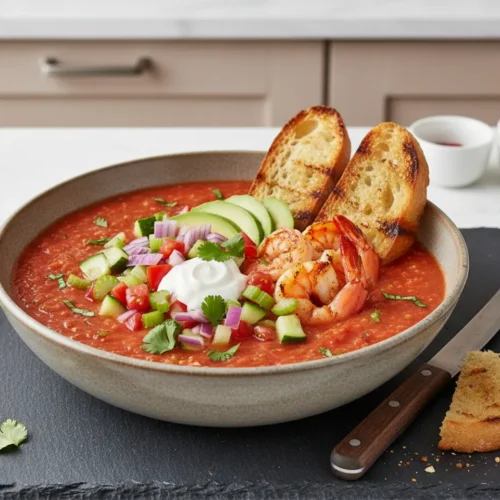
- Before serving, stir the gazpacho and check the seasonings one last time. Ladle it into bowls and garnish with the remaining diced vegetables. Top each with some avocado, sour cream, cilantro, and grilled shrimp, and serve with slices of grilled bread. This is a to-die-for summer dinner.