Rosewater Macarons
These rosewater macarons are as stunning as they are delicious — floral, creamy, and totally achievable at home. Filled with silky rose ganache and finished with dried petals, this rosewater macaron recipe is pure romance on a plate.
Hey there, I’m Claire Whitmore — a pastry whisperer in Asheville, NC, where butter totally counts as self-care.
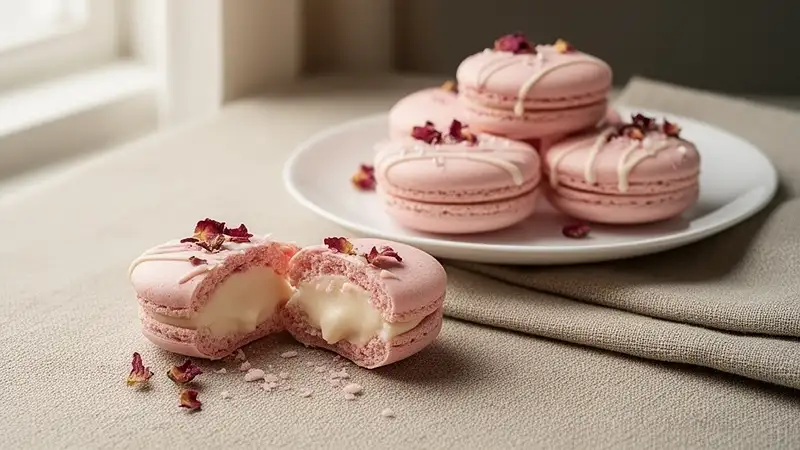
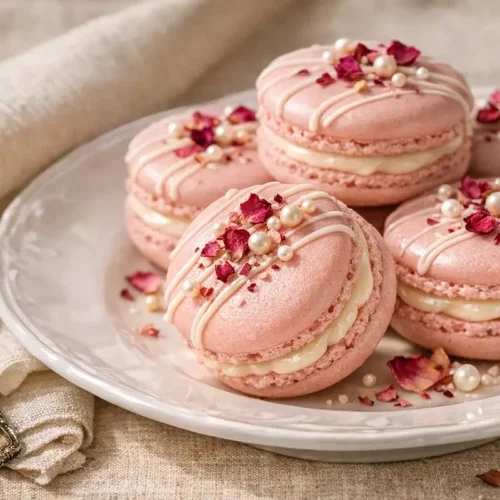
These rosewater macarons are everything: delicate Swiss meringue shells tinted the prettiest blush pink, filled with a silky rose ganache made from white chocolate and rose water, and finished with dried rose petals and a drizzle of melted chocolate.
They’re gluten-free by nature, elegant enough for a bridal shower, and honestly just a beautiful excuse to feel fancy on a Tuesday.
This rose macarons with rosewater recipe comes together with a handful of quality ingredients and a little patience. The ganache is the magic here — lush, floral, and not overpowering — just the right whisper of rose.
Table of Contents
Little Snapshot: What This Recipe Delivers
These rosewater macarons are elegant French-style sandwich cookies with Swiss meringue shells, tinted with Sugar Rose powder food coloring, and filled with a creamy white chocolate rose ganache.
Each batch makes 22 macarons, takes about 2–3 hours total (plus overnight maturation), and sits at a medium difficulty — totally doable if you’ve made macarons before or are ready for a gorgeous challenge. The payoff is a floral, melt-in-your-mouth treat that looks like it came straight from a Parisian pâtisserie.
Why You’ll Love This Recipe 🌸
- This rosewater macaron recipe looks like it took you three days, but really it’s just a few focused hours and a good ganache situation.
- The rose ganache is rich and floral without being perfume-y — it’s the kind of filling that makes people ask “wait, what IS that?” in the best possible way.
- These macarons are naturally gluten-free, endlessly giftable, and totally customizable with different colors and decorations depending on the occasion.
- According to Serious Eats in their deep dive into cooking with floral ingredients, rose water works best when used as a background note rather than the main event — and that’s exactly the balance this recipe nails.
Quick Facts ⚡
Here’s the quick scoop on this rosewater macaron recipe.
- CourseDessert / Confection
- Prep Time45 minutes
- Cook Time15–18 minutes
- Total Time3 hours (plus overnight maturation)
- Servings22 macarons
- DifficultyMedium
Nutritional Peek
Approximate values per macaron (1 sandwich cookie):
| Nutrient | Amount Per Serving |
|---|---|
| Calories | ~145 kcal |
| Protein | 2g |
| Carbohydrates | 17g |
| Sugar | 15g |
| Total Fat | 7g |
| Saturated Fat | 4g |
| Fiber | 0.3g |
Note: These are estimates based on standard ingredient amounts. Values will vary slightly depending on the size of your macarons and exact brands used.
Ingredients
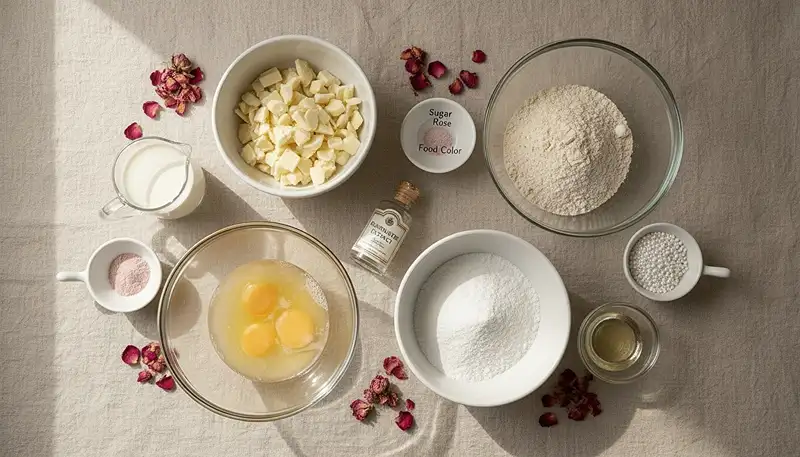
A solid rose macarons with rosewater recipe starts with two things: perfect macaron shells and a ganache that tastes like a garden in the best way. Here’s what you’ll need for both.
For the shells, you’ll follow the Swiss Meringue Macaron base recipe — the meringue, almond flour, and powdered sugar do all the heavy lifting, with the Sugar Rose powder adding that gorgeous blush color at the very end.
For the rose ganache, you’re working with heavy cream, white chocolate, and rose water — ingredients that come together into something silky and truly dreamy. The optional invert sugar helps stabilize the ganache, but don’t stress if you skip it.
Macaron Shells
| Amount | Ingredient |
|---|---|
| 1 full recipe | Swiss Meringue Macarons (see linked post) |
| 1/16 tsp | Sugar Rose powder food coloring by The Sugar Art |
Rose Ganache
| Amount | Ingredient |
|---|---|
| ½ cup (120 ml) | Heavy cream |
| 5 grams | Invert sugar (see notes — optional but recommended) |
| 255 grams | White chocolate, finely chopped |
| ½ tsp | Rose water or rose extract (yes, quality matters here!) |
To Decorate
| Amount | Ingredient |
|---|---|
| ¼ cup | White chocolate, melted |
| To taste | Dried rose petals |
| To taste | Sprinkles |
Tools You’ll Actually Use
- Stand mixer or hand mixer
- Mixing bowls (various sizes)
- Small saucepan
- Immersion blender (highly recommended for ganache)
- Tall measuring cup or deep bowl (for blending ganache safely)
- Rubber spatula
- Piping bags + round piping tip
- Baking sheets
- Silicone macaron mats or parchment paper
- Kitchen scale (please — this is macarons, we measure in grams)
- Plastic wrap
- Refrigerator space (you’ll need overnight for maturation)
This is the kind of recipe that makes you want to cook everything in sight. Lucky for you, the Delicious Desserts collection is full of exactly that. Go explore and find your new go-to dish.
Step-by-Step Instructions
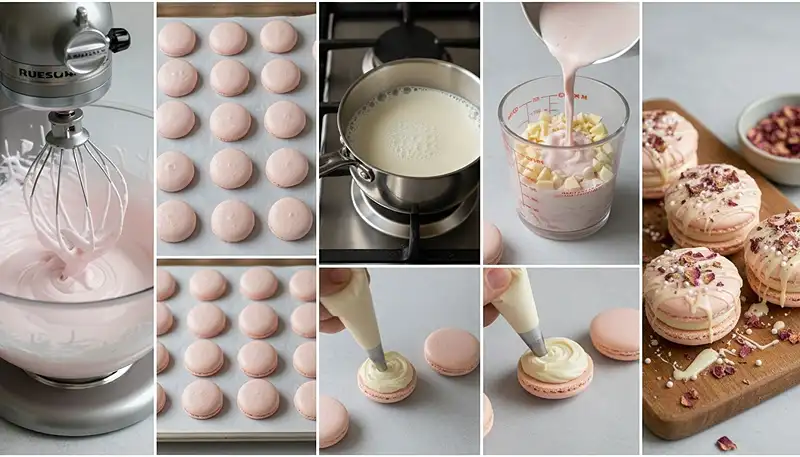
Let’s walk through these rosewater macarons from start to finish — take it one step at a time and you’ve got this.
Making the Macaron Shells
Step 1: At the very end of the meringue whipping stage — just before you fold in the dry ingredients — add 1/16 tsp of Sugar Rose powder food coloring by The Sugar Art. Whip briefly to incorporate until you get a consistent, soft blush-pink color throughout the meringue.
Step 2: Pipe, rest, and bake the shells according to the Swiss macaron directions. Let them cool completely on the pan before attempting to remove them.
Making the Rose Ganache
Step 3: Add the heavy cream and invert sugar to a small saucepan. Heat over medium, watching carefully — you want it to almost boil. The moment you see bubbles starting to rise at the edges, turn the heat off. Don’t let it fully boil.
Step 4: Place the 255 grams of finely chopped white chocolate in a tall measuring cup or deep bowl. Pour the hot cream directly over the chocolate, then add the ½ tsp of rose water or rose extract. Let the mixture sit untouched for 1 full minute — this gives the heat time to start melting the chocolate.
Step 5: Use an immersion blender to emulsify the ganache, blending until the chocolate is completely melted and the mixture is smooth and glossy. Keep the blender submerged and move it slowly — you want zero air bubbles in this ganache. A tall container is key here so the blades stay covered.
Step 6 (Shortcut Option): Skipping the invert sugar and immersion blender? No shame. Just heat the cream, pour it over the chocolate and rose water, let it sit a minute, then whisk vigorously until smooth and fully melted. It works — it just sets up slightly differently.
Step 7: Pour the finished ganache into a bowl and press plastic wrap directly onto the surface (this prevents a skin from forming). Refrigerate for at least 1 hour, though 2–3 hours is better for a firmer, pipeable consistency.
Decorating the Shells
Step 8: Once your macaron shells are fully cooled, melt the ¼ cup of white chocolate in a small bowl (microwave in 20-second bursts, stirring between each). Using a spoon or piping bag, drizzle the melted chocolate over the tops of the shells in whatever pattern makes you happy.
Step 9: While the chocolate is still wet, immediately scatter dried rose petals and sprinkles over the decorated shells. Let everything set completely before filling.
Filling & Assembling
Step 11: Remove the chilled ganache from the fridge and give it a good stir with a spatula to loosen it slightly. Transfer it to a piping bag fitted with your round tip (or whatever tip you like — no rules here).
Step 12: Pipe a generous swirl of rose ganache onto the flat side of each bottom macaron shell. Press a matching top shell gently on top to sandwich them together.
Step 13 (The Hardest Part): Place the assembled macarons in an airtight container in the fridge and let them mature overnight — or ideally 48 hours. I know. I KNOW. But this step is what transforms them from good to absolutely transcendent. The shells soften just slightly, the ganache settles in, and the flavors meld together beautifully.
Claire’s Pro Tips & Gentle Guidance
When it comes to pistachio rosewater macarons or any floral variation, the biggest thing I’ve learned is to trust the process — especially with the ganache. Rose water is powerful stuff, and a little truly goes a long way. Start with ½ tsp and taste before adding more; you want floral, not soapy.
I’ve also learned (the hard way, in front of guests) that trying to rush the maturation step is a mistake. Let these babies rest. You’ll be so glad you did.
On the invert sugar: Invert sugar isn’t always easy to find, but it genuinely helps keep the ganache smooth and glossy longer.
According to King Arthur Baking‘s professional guide to sugars and syrups, invert sugar prevents crystallization and keeps confections softer — which is exactly why it’s worth tracking down for ganache. Corn syrup works as a substitute in a pinch.
On your immersion blender: Keep it fully submerged the entire time you’re blending the ganache. If the blades break the surface, you’ll whip air into the ganache and end up with bubbles. A tall measuring cup is your best friend here.
On the shells: Make sure your macaron shells are 100% cool before you drizzle chocolate or pipe the ganache. Even slightly warm shells will melt the ganache and make assembly a mess.
On color: The Sugar Rose powder by The Sugar Art is lovely, but you can swap for any oil-based or powder food coloring. Just avoid gel coloring unless you know it’s meringue-safe — water-based gels can destabilize the Swiss meringue.
Quick Fixes for Rosewater Macarons
Problem: My ganache is too runny to pipe. Pop it back in the fridge for another 30–60 minutes. If it’s still loose after that, it might have gotten too warm during blending — next time, let the cream cool for 30 seconds before pouring over the chocolate.
Problem: My ganache seized up and is grainy. This usually means the chocolate got too hot too fast. Try gently warming the ganache over a double boiler, stirring constantly, until it comes back together. An immersion blender can also help rescue a broken ganache.
Problem: My macaron shells are hollow. Hollow shells are often caused by underbeaten meringue or underbaking. Make sure your meringue reaches stiff, glossy peaks before folding, and bake a minute or two longer next time.
Problem: The shells cracked. Cracking usually means the macarons didn’t dry long enough before baking, or your oven temperature is too high. Let them rest until they’re matte and dry to the touch — at least 30 minutes, longer in humid weather.
Problem: The rose flavor is too strong / not strong enough. Rose water brands vary wildly in intensity. Taste your ganache before chilling and adjust accordingly — add a tiny bit more if you want more floral flavor, or balance with an extra pinch of vanilla if it’s too perfume-y.
Variations & Fun Twists
The base rose macarons with rosewater recipe is gorgeous on its own, but here are some ways to make it your own:
Pistachio Rosewater Macarons: Add 2 tablespoons of finely ground pistachios to your macaron batter and use a pale green food coloring instead of pink. The pistachio-rose combo is honestly iconic.
For something totally different in the snack department, check out these easy baked churro bites — a completely different vibe but equally crowd-pleasing.
Lychee Rose Variation: Swap half the rose water for lychee extract in the ganache. It adds a sweet tropical note that pairs beautifully with the floral base.
Raspberry Rose: Add 1 tablespoon of seedless raspberry jam to the ganache before chilling. The tartness cuts through the sweetness of the white chocolate perfectly.
Vegan Option: Use coconut cream in place of heavy cream for the ganache and ensure your white chocolate is dairy-free. The shells themselves are naturally egg-based, so a full vegan version would require an aquafaba macaron recipe instead.
Seasonal Styling: For Valentine’s Day, add red heart sprinkles. For a bridal shower, keep it all white and ivory with edible silver luster dust. For spring gatherings, pile on the dried rose petals generously.
Serving, Storage & Reheating
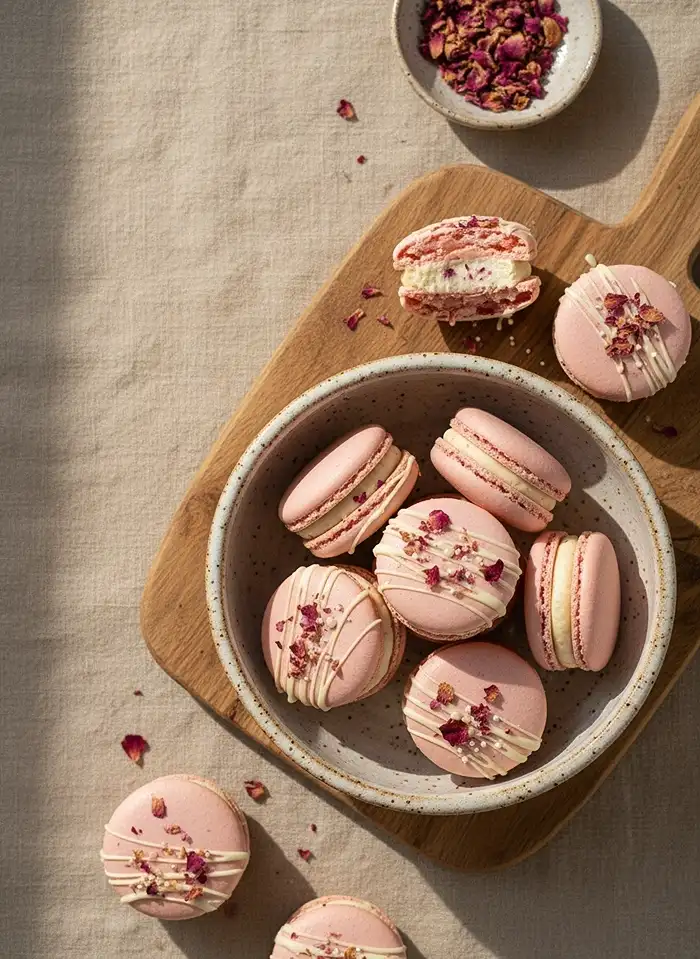
Serve these rosewater macarons at room temperature for the best texture — pull them from the fridge about 20–30 minutes before serving so the ganache softens slightly and the shells have that perfect chew. They look stunning on a tiered dessert stand or arranged on a marble board with a few extra rose petals scattered around.
For storage, keep the assembled macarons in an airtight container in the refrigerator for up to 5 days. They actually get better on days 2 and 3 as the ganache continues to meld with the shells — so making them ahead is a total win.
These macarons don’t reheat, but you can freeze unassembled shells (without ganache) for up to 1 month. Store them flat in layers with parchment between each layer. Thaw at room temperature before filling.
If you love light, pretty treats that are as fun to look at as they are to eat, you’ll also adore these blueberry swirl yogurt bites — a totally different texture but the same feminine, delicate energy.
No-Waste Kitchen Magic
Leftover ganache? It makes an incredible truffle filling. Just roll it into small balls, chill until firm, and roll in cocoa powder or crushed freeze-dried raspberries. Done — you just made bonus truffles.
Extra macaron shells that broke during assembly? Crumble them over yogurt, ice cream, or a fancy overnight oats situation. They’re too delicious to toss.
Leftover dried rose petals? Stir them into loose leaf tea, sprinkle over a fruit salad, or use them to decorate your next dessert board. They’re edible gold.
Leftover melted white chocolate? Drizzle it over a parchment sheet, sprinkle with flaky sea salt, and let it set. Snap into bark pieces and snack happily.
Rosewater Macarons FAQs
Can I make rosewater macarons ahead of time?
Yes — and honestly, you should. These macarons need at least overnight in the fridge to mature properly, so they’re a perfect make-ahead dessert. You can assemble them up to 3 days before serving and they’ll be at peak deliciousness by day 2.
What’s the best way to store rosewater macarons?
Keep them in an airtight container in the refrigerator for up to 5 days. Make sure the container is truly airtight — macarons absorb fridge odors easily, and nobody wants their rose ganache tasting like last night’s leftovers.
How do I know when the rose ganache is ready to pipe?
It should be thick enough to hold its shape when you scoop a spoonful, similar to a soft peanut butter consistency. If it slides off the spatula quickly, it needs more fridge time. Give it another 30 minutes and check again.
Why should I use invert sugar in rosewater macaron ganache?
Invert sugar keeps the ganache smoother and prevents it from crystallizing or becoming grainy over time. It also gives the filling a softer, creamier mouthfeel that regular sugar can’t match. That said, if you can’t find it, the ganache still works beautifully without it.
Can I freeze rosewater macarons?
You can freeze the unfilled shells for up to 1 month — just layer them between sheets of parchment in an airtight container. Assembled macarons with ganache don’t freeze as well because the ganache can weep when thawed. Best to freeze the components separately.
A Cozy Closing Note
I really hope you fall head over heels for these rosewater macarons the same way I did. They’re the kind of recipe that makes you feel like an artist — and tastes like one, too.
I’d love to see your spin on this rosewater macaron recipe! Drop a comment below with your photos — did you try the pistachio twist? Add lychee? Go full maximalist with the rose petal decorations? Tell me everything. These rose macarons with rosewater are so versatile, I bet you’ve already got amazing ideas brewing.
And if you’re in the mood for more fun kitchen adventures, these Louisiana voodoo fries are a totally different energy but just as satisfying to make and share. Because life needs both rose macarons AND voodoo fries. That’s just balance.
I’m Claire Whitmore — a dessert daydreamer from Asheville, NC. For me, baking isn’t about perfect pastries — it’s about the joy of sharing something beautiful, floral, and just a little bit extra. (And maybe sneaking a broken macaron shell straight from the pan before anyone notices.)
Rosewater Macarons
Equipment
- Stand mixer or hand mixer
- Mixing bowls
- Small saucepan
- Immersion blender
- Tall measuring cup or deep bowl
- Rubber spatula
- Piping bags
- Round piping tip
- Baking sheets
- Silicone macaron mats or parchment paper
- Kitchen scale
- Plastic wrap
Ingredients
Macaron Shells
- 1 recipe Swiss Meringue Macarons Follow directions on the Swiss Meringue Macarons post
- 1/16 tsp Sugar Rose powder food coloring By The Sugar Art; added at end of meringue whipping stage
Rose Ganache
- ½ cup Heavy cream 120 ml
- 5 g Invert sugar Optional but recommended; see notes for substitute
- 255 g White chocolate Finely chopped; bar chocolate recommended over chips
- ½ tsp Rose water or rose extract Use quality rose water; if using extract, start with 1/4 tsp
To Decorate
- ¼ cup White chocolate Melted, for drizzling
- Dried rose petals To taste
- Sprinkles To taste
Instructions
- Follow the full directions in the Swiss Meringue Macarons post for your macaron shells. This includes preparing the meringue, folding in the almond flour and powdered sugar mixture, and macaronaging the batter to the correct ribbon consistency.
- At the very end of the meringue whipping stage — just before folding in the dry ingredients — add 1/16 tsp of Sugar Rose powder food coloring by The Sugar Art. Whip briefly to incorporate until you have a consistent, soft blush-pink color throughout the meringue.
- Pipe, rest, and bake the shells according to the Swiss macaron directions. Let them cool completely on the pan before removing.
- Add the heavy cream and invert sugar to a small saucepan. Heat over medium, watching carefully. The moment you see bubbles starting to rise at the edges, turn the heat off. Do not let it fully boil.
- Place the 255g of finely chopped white chocolate in a tall measuring cup or deep bowl. Pour the hot cream directly over the chocolate, then add the 1/2 tsp of rose water or rose extract. Let the mixture sit untouched for 1 full minute to allow the heat to start melting the chocolate.
- Use an immersion blender to emulsify the ganache, blending until the chocolate is completely melted and the mixture is smooth and glossy. Keep the blender fully submerged the entire time to avoid incorporating air bubbles. A tall container is essential so the blades stay covered throughout.
- Shortcut option: If skipping the invert sugar and immersion blender, simply heat the cream, pour it over the chocolate and rose water, let it sit for one minute, then whisk vigorously until completely smooth and the chocolate has fully melted.
- Pour the finished ganache into a bowl and press plastic wrap directly onto the surface to prevent a skin from forming. Refrigerate for at least 1 hour, though 2–3 hours is better for a firmer, pipeable consistency.
- Once the macaron shells are fully cooled, melt the 1/4 cup of white chocolate in a small bowl using the microwave in 20-second bursts, stirring between each. Using a spoon or piping bag, drizzle the melted chocolate over the tops of the shells.
- While the chocolate drizzle is still wet, immediately scatter dried rose petals and sprinkles over the decorated shells. Let everything set completely before filling.
- Remove the chilled ganache from the fridge and stir with a spatula to loosen it slightly. Transfer to a piping bag fitted with a round tip.
- Pipe a generous swirl of rose ganache onto the flat side of each bottom macaron shell. Press a matching top shell gently on top to sandwich them together.
- Place the assembled macarons in an airtight container in the fridge and let them mature overnight — or ideally 48 hours before serving. This step allows the shells to soften slightly and the flavors to fully meld together.