Fresh Spring Rolls with Peanut Sauce
Fresh Spring Rolls with Peanut Sauce are everything you want in a light, feel-good meal — crisp veggies, silky rice paper, and a creamy peanut dipping sauce that honestly makes you want to lick the bowl.
These rice paper rolls come together with zero cooking (well, almost — just a quick noodle soak), making them ideal for hot days, busy weeknights, or any time you want something beautiful on the table without a lot of fuss.
Hey there, I’m Claire Whitmore — a pastry whisperer (and occasional veggie roll enthusiast) from Asheville, NC, where farmers’ markets are basically my love language. These fresh spring rolls with peanut sauce have become a staple in my kitchen, especially when I want something that feels light, fresh, and just a little bit impressive without spending hours cooking.
Table of Contents
What This Recipe Delivers
These fresh spring rolls are a no-cook, vegan, and gluten-free appetizer or light meal made with rice paper wrappers, rice vermicelli noodles, julienned carrots and cucumber, and fresh cilantro.
They come together in about 30 minutes and are served with a bold, creamy peanut dipping sauce made from peanut butter, tamari, lime juice, maple syrup, and chili garlic sauce. Light, colorful, and totally crowd-pleasing.
Why You’ll Love This Recipe
- These fresh spring rolls with peanut sauce take less time than deciding what to order for takeout — seriously, they’re ready in 30 minutes flat.
- No stove, no oven, no heat — just fresh ingredients and a little rolling magic, making this perfect for summer or any busy night.
- They’re naturally vegan and gluten-free (just use tamari!), so they work for almost any guest around your table.
- According to Cookie and Kate’s guide to veggie-packed spring rolls, the filling ingredients are wonderfully flexible — and this recipe proves exactly why customizing your rolls is half the fun.
Quick Facts
Here’s the quick scoop on this fresh spring rolls with peanut sauce recipe.
- CourseAppetizer / Light Main
- Prep Time25 minutes
- Cook Time5 minutes (noodle soak only)
- Total Time30 minutes
- Servings12 rolls
- DifficultyEasy
Nutritional Peek
Here’s an approximate nutritional breakdown per spring roll (including a small serving of peanut sauce). Exact values may vary depending on how generously you fill each roll!
| Nutrient | Amount per Roll (approx.) |
|---|---|
| Calories | ~140 kcal |
| Protein | 4g |
| Carbohydrates | 18g |
| Fat | 6g |
| Fiber | 1.5g |
| Sugar | 3g |
Ingredients
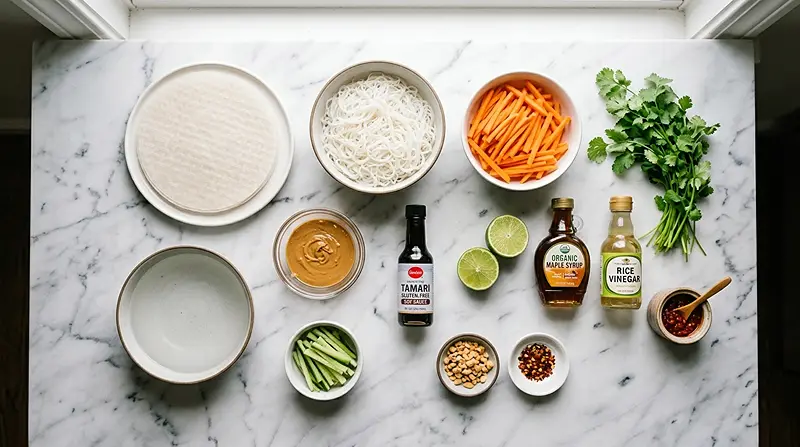
These rice paper rolls are made up of two simple parts: the fresh roll filling and the peanut dipping sauce.
For the rolls, you’ll work with a handful of pantry and produce staples — rice paper wrappers, vermicelli noodles, and crisp vegetables. For the peanut sauce, it’s all about the balance of creamy, tangy, sweet, and spicy from ingredients like peanut butter, tamari, lime, maple syrup, and chili garlic sauce.
Spring Rolls
| Amount | Ingredient |
|---|---|
| 12 | Rice paper wrappers |
| 4 oz | Instant rice vermicelli noodles |
| 2 medium | Carrots, julienned |
| 1 | English cucumber, julienned |
| 1 bunch | Fresh cilantro |
Peanut Dipping Sauce
| Amount | Ingredient |
|---|---|
| 1/2 cup | Peanut butter (creamy) |
| 2 tbsp | Tamari or soy sauce (use 1 tbsp for lower sodium) |
| 2 tbsp | Fresh lime juice |
| 2 tbsp | Maple syrup |
| 1/2 tbsp | Rice vinegar |
| 1 tsp | Chili garlic sauce |
| 1/8 – 1/4 cup | Warm water (to thin) |
| 1/8 cup (optional) | Chopped peanuts, for garnish |
| 1/4 tsp (optional) | Chili flakes, for garnish |
Tools You’ll Actually Use
- Large shallow bowl, dish, or pot (wide enough to submerge rice paper wrappers)
- Small mixing bowl and whisk (for peanut sauce)
- Large flat cutting board or clean work surface
- Chef’s knife or mandoline (for julienning vegetables)
- Medium saucepan or bowl (for soaking noodles)
- Colander or strainer (for draining noodles)
- Serving platter (single layer — trust me on this one)
Step-by-Step Instructions for Fresh Spring Rolls with Peanut Sauce
Step 1: Make the Peanut Dipping Sauce
Combine the peanut butter, tamari, fresh lime juice, maple syrup, rice vinegar, and chili garlic sauce in a small bowl. Whisk everything together until smooth and creamy.
Add warm water one tablespoon at a time, whisking as you go, until you reach a pourable but still thick consistency. Taste and adjust — more lime for tang, more maple syrup for sweetness, more chili for heat. Pop it in the fridge until you’re ready to roll (literally).
Step 2: Soak the Noodles
Prepare the rice vermicelli noodles according to the package directions — most instant varieties just need to stand in boiling water for 2–3 minutes. Drain and rinse with cold water immediately to stop the cooking and keep the noodles from clumping. Set aside.
Step 3: Prep Your Vegetables
Julienne the carrots and cucumber into thin, matchstick-sized strips. Pull the cilantro leaves from the stems. Arrange everything — the noodles, carrots, cucumber, cilantro, and peanut sauce — within easy reach of your workspace so you’re not running around mid-roll.
Step 4: Set Up Your Rolling Station
Fill a large shallow dish or wide pot with 3–4 inches of hot water (as hot as your hands can comfortably handle — not boiling). Place it at the center of your flat workspace, with your fillings and a dry, flat surface nearby for laying out the wrappers.
Step 5: Soften the Rice Paper Wrappers
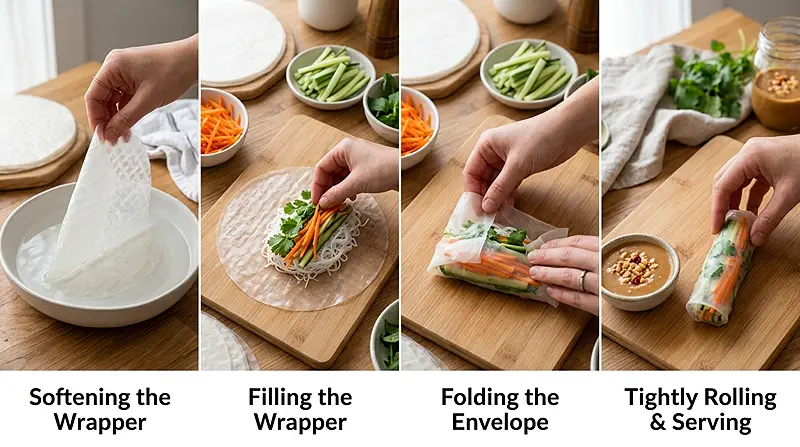
Carefully submerge one rice paper wrapper in the hot water for 8–10 seconds. You’ll feel it go from stiff to soft and pliable — that’s your cue. It will continue to soften after you remove it, so don’t overdo it.
Lift the wrapper out, let the excess water drip off for a moment, then lay it flat on your work surface. Work quickly — the wrapper is ready to fill right now.
Step 6: Fill and Roll
Place a small handful of cooked vermicelli noodles in the center of the wrapper. Top with a few strips of carrot and cucumber, a small cluster of fresh cilantro leaves, and a light drizzle of peanut sauce. Don’t overfill — this is the number one spring roll mistake!
Fold the bottom half of the wrapper up over the fillings. Fold in both sides like a little burrito. Then roll tightly forward in the direction of your first fold, tucking as you go. The wrapper will seal itself. You’ve got this!
Step 7: Plate and Serve
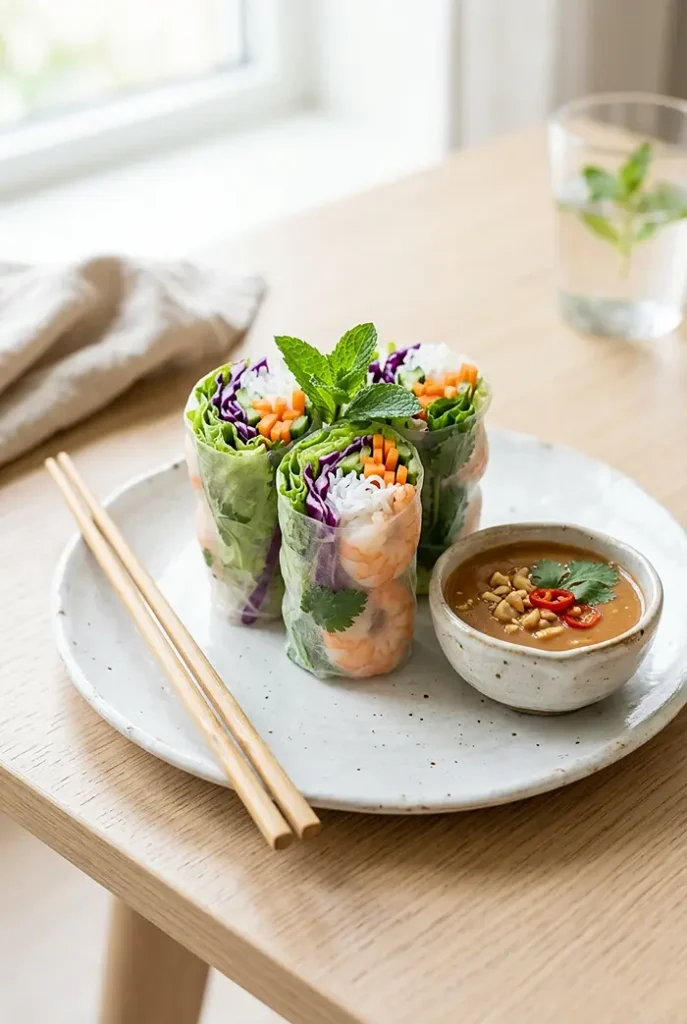
Lay the finished spring rolls in a single layer on a serving platter — they will stick together if stacked. While you roll the remaining wraps, rest finished ones on a lightly damp cloth (not soaking wet) to keep them from drying out.
Serve immediately with the peanut dipping sauce on the side, garnished with chopped peanuts and chili flakes if desired. Watch them disappear.
Claire’s Pro Tips for Perfect Rice Paper Rolls
Making peanut sauce and fresh spring rolls for the first time can feel a little intimidating — but once you get the hang of the rice paper, you’ll be rolling like a pro. Here are a few things I’ve learned (sometimes the hard way).
Don’t skip the mise en place. Have every single ingredient prepped and within arm’s reach before you soak your first wrapper. Once that rice paper is soft, you have maybe 60 seconds before it gets too sticky to work with.
Your water temperature matters more than you think. Too cold and the wrapper won’t soften properly. Too hot and it’ll tear. Aim for the warmest water your hands can comfortably handle — kind of like a hot bath, not a boiling pot.
Less filling is genuinely more. It’s tempting to pile everything in, but overfilling is the top reason spring rolls tear or burst at the seam. Start small, get comfortable with the technique, then gradually add more filling as you go.
Don’t stack your finished rolls. I cannot stress this enough — they will glue themselves together in the most frustrating way. Single layer only, always.
Quick Fixes for Fresh Spring Rolls
My rice paper is tearing when I try to roll it.
This usually means the wrapper was in the water too long and got too fragile. Try reducing your soak time to just 6–8 seconds and working more quickly once it’s on the surface. If your water has cooled down, reheat it.
My spring rolls are sticking to everything.
If they’re sticking to your work surface, try using a slightly damp cutting board instead of a dry one. If they’re sticking to each other on the plate, place a small square of parchment paper between each roll.
The noodles clumped together and won’t separate.
This happens when noodles sit too long after draining. Rinse them thoroughly with cold water right after draining, and toss them gently with a tiny drizzle of sesame oil to keep them loose and separated.
My peanut sauce is too thick to drizzle.
Add warm water one tablespoon at a time, whisking well after each addition. The sauce thickens as it cools, so you may need to loosen it up again right before serving.
The rolls taste bland inside.
Don’t skip the drizzle of peanut sauce inside the roll before you seal it! That little inside drizzle makes a huge difference and ensures every bite has that bold, savory flavor.
Variations and Fun Twists
One of the best things about these fresh spring rolls is how endlessly customizable they are. Think of the recipe as a template, not a rulebook.
Add protein: Cooked shrimp, sliced baked tofu, or even leftover rotisserie chicken all work beautifully tucked inside these rolls.
Go seasonal with the veggies: Swap the carrots and cucumber for shredded purple cabbage, sliced avocado, mango strips, or thinly sliced bell peppers. In autumn, roasted sweet potato works surprisingly well.
Herb it up: Fresh mint and Thai basil are traditional additions that add an incredible aromatic lift. If you’ve never tried mint in a spring roll, it’s a game-changer.
Nut-free option: Replace the peanut butter in the sauce with sunflower seed butter or tahini for an allergy-friendly version that’s still rich and delicious.
Make it a bowl: Not in the mood to roll? Layer everything in a bowl instead — noodles on the bottom, veggies on top, peanut sauce drizzled over. Same flavors, zero technique required. You could also try these fun mini taco cups made with wonton wrappers for another easy finger-food idea that uses similar wrapper magic!
Serving, Storage and Reheating
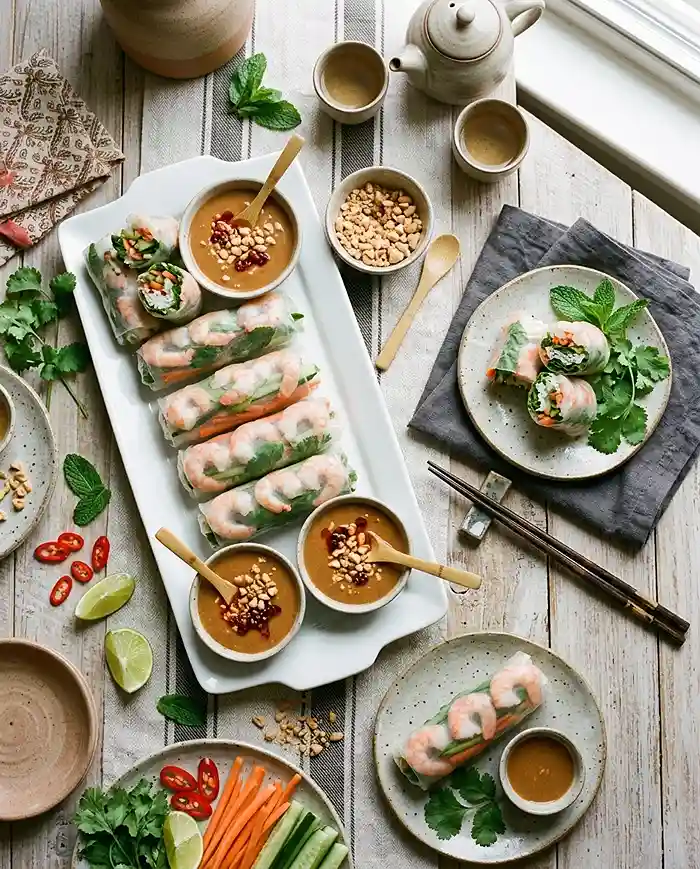
These rice paper rolls are absolutely best served the moment you make them — fresh, soft, and filled with crisp veggies. Arrange them in a single layer on a platter alongside the peanut dipping sauce for dipping, and set out the chopped peanuts and chili flakes so everyone can garnish to taste.
If you need to make them a little ahead, cover them with a damp paper towel or a lightly damp cloth and keep at room temperature for up to 1–2 hours. This keeps the wrappers soft without letting them dry out.
For leftover storage, place rolls in an airtight container covered with a damp paper towel, and refrigerate for up to 1 day. Fair warning — the rice paper will become a little firmer and chewier after refrigeration, so they won’t be quite as delicate as fresh. The peanut sauce stores separately in the fridge for up to 5–7 days.
These rolls are not meant to be reheated — they’re a cold dish! If the wrappers have hardened overnight, letting them sit at room temperature for 10–15 minutes helps soften them slightly before eating.
No-Waste Kitchen Magic
Got leftover veggies from your spring roll station? Don’t let them go to waste — here are some easy ways to use them up.
Noodle salad: Toss leftover vermicelli noodles with sesame oil, soy sauce, rice vinegar, and any remaining julienned veggies for a quick cold noodle salad. It’s ready in five minutes and is genuinely delicious.
Peanut sauce pasta: Extra peanut sauce works beautifully tossed with cold noodles, shredded cabbage, and a handful of herbs. Think of it as a lazy day spring roll bowl.
Veggie stir-fry: Any leftover carrots and cucumber can go into a quick stir-fry or be packed into a lunchbox salad the next day. Cucumber especially is great sliced and served with a dab of the peanut sauce as a snack.
Herb oil: Leftover cilantro stems (not just the leaves!) can be blended with olive oil and a pinch of salt to make a fresh herb drizzle for grain bowls or soups.
I have a feeling you’ll love what’s next. The Valentine’s & Spring favorites are packed with recipes that disappear fast at every gathering. Go check them out before someone else snags them!
FAQs
Can I make fresh spring rolls ahead of time?
You can, but they’re best eaten as close to assembly time as possible. If you need to prep ahead, assemble the rolls up to 1–2 hours before serving and keep them covered with a lightly damp cloth at room temperature.
Can I freeze fresh spring rolls with peanut sauce?
Unfortunately, no — these rice paper rolls don’t freeze well. The wrappers turn gummy and fall apart once thawed. It’s best to make only what you plan to eat within a day or two. The peanut sauce, however, can be frozen in a small container for up to 1 month and thawed in the fridge overnight.
What’s the best way to store fresh spring rolls?
Store them in a single layer in an airtight container, with a slightly damp paper towel placed over the top (not touching them directly). Keep refrigerated and eat within 24 hours. Never stack them — they’ll stick together and tear when you try to separate them.
How do I know when the rice paper wrapper is ready to use?
The wrapper is ready when it feels soft and pliable in the water — usually after 8–10 seconds in hot water. It will still feel slightly firm when you take it out, but it continues to soften on your work surface. Don’t wait until it’s totally floppy in the water, or it’ll be too fragile to roll.
Why should I use tamari instead of soy sauce in the peanut sauce?
Tamari is brewed without wheat, making it a naturally gluten-free alternative to regular soy sauce. It also tends to have a slightly richer, less sharp flavor than standard soy sauce, which works beautifully in this peanut sauce. If gluten isn’t a concern for you, regular soy sauce works just as well here.
Closing Thoughts
I hope these fresh spring rolls with peanut sauce become as much of a staple in your kitchen as they’ve become in mine. Whether you’re making them for a casual lunch, a dinner party starter, or just because you deserve something colorful and delicious today — they deliver every single time.
And if you’re craving another fun finger-food idea for your next gathering, you’ll love these funfetti cake batter truffles for a sweet finish to any spread.
I’d love to see your spin on these fresh spring rolls! Drop a comment below with your photos — did you add mango? Swap in mint? Go all out with the chili flakes? I’d love to see how you made them your own. These rice paper rolls with peanut sauce are so versatile, I bet you’ve already got some amazing ideas brewing!
I’m Claire Whitmore — a dessert daydreamer (and occasional spring roll roller) from Asheville, NC. For me, cooking isn’t about perfection — it’s about making something that brings people around the table, even if a wrapper or two tears along the way.
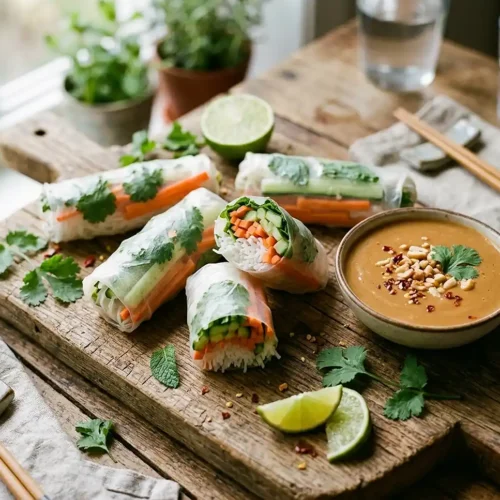
Fresh Spring Rolls with Peanut Sauce
Equipment
- Large shallow bowl or dish
- mixing bowl
- Whisk
- Cutting board
- Knife or mandoline
- Saucepan or bowl
- Colander
- Serving platter
Ingredients
Spring Rolls
- 12 Rice paper wrappers
- 4 oz Rice vermicelli noodles instant
- 2 Carrots julienned
- 1 English cucumber julienned
- 1 bunch Fresh cilantro
Peanut Dipping Sauce
- ½ cup Peanut butter creamy
- 2 tbsp Tamari or soy sauce
- 2 tbsp Lime juice fresh
- 2 tbsp Maple syrup
- ½ tbsp Rice vinegar
- 1 tsp Chili garlic sauce
- 1/8-1/4 cup Warm water to thin
- ⅛ cup Chopped peanuts optional garnish
- ¼ tsp Chili flakes optional garnish
Instructions
- Whisk together peanut butter, tamari, lime juice, maple syrup, rice vinegar, and chili garlic sauce until smooth. Add warm water gradually until desired consistency is reached.
- Soak rice vermicelli noodles in hot water according to package directions, then drain and rinse with cold water.
- Julienne carrots and cucumber and prepare cilantro leaves. Arrange all ingredients for easy assembly.
- Fill a shallow dish with hot water. Dip one rice paper wrapper for 8–10 seconds until pliable, then lay flat on a work surface.
- Add a small portion of noodles, vegetables, cilantro, and a drizzle of peanut sauce to the center of the wrapper.
- Fold the bottom over the filling, tuck in the sides, and roll tightly to seal.
- Place finished rolls in a single layer on a platter. Serve immediately with peanut sauce and optional garnishes.