Easy Vegetable Upma
Vegetable Upma is a savory South Indian breakfast made with roasted semolina, colorful veggies, and aromatic spices—ready in 30 minutes for a nutritious, comforting start to your day.
Hey there, I’m Claire Whitmore—a pastry whisperer in Asheville, NC, where butter totally counts as self-care.
This Vegetable Upma recipe is my love letter to cozy South Indian mornings, packed with roasted semolina, vibrant vegetables like carrots and peas, and a tempered spice base that’ll make your kitchen smell like a Mumbai street cart (in the best way).
It’s quick, nutritious, and endlessly customizable—perfect for busy mornings when you want something warm and satisfying without spending an hour in the kitchen.
Table of Contents
Little Snapshot: What This Recipe Delivers
This Vegetable Upma is a savory South Indian breakfast made with roasted semolina (rava), sautéed vegetables, and tempered spices like mustard seeds and curry leaves.
It takes about 30 minutes from start to finish, serves four, and is naturally vegetarian, customizable, and packed with flavor—ideal for meal prep or a quick weekday breakfast that feels special.
Why You’ll Love This Recipe 🌸
- This Vegetable Upma comes together faster than your morning coffee brews—seriously, 30 minutes and you’re done.
- It’s endlessly adaptable—toss in whatever veggies are hanging out in your fridge, and it still tastes incredible.
- The roasted semolina gives you that nutty, comforting flavor without any fuss or fancy techniques.
- According to Fine Cooking’s guide to toasting spices and grains, roasting ingredients unlocks deeper, more complex flavors—and this upma recipe proves exactly why.
Quick Facts ⚡
Here’s the quick scoop on this Vegetable Upma.
- CourseBreakfast/Main Dish
- Prep Time10 minutes
- Cook Time20 minutes
- Total Time30 minutes
- Servings4 servings
- DifficultyEasy
Nutritional Peek
| Nutrient | Amount per Serving |
|---|---|
| Calories | 245 kcal |
| Protein | 6g |
| Carbohydrates | 38g |
| Fat | 8g |
| Fiber | 4g |
| Sugar | 4g |
Vegetable Upma Ingredients
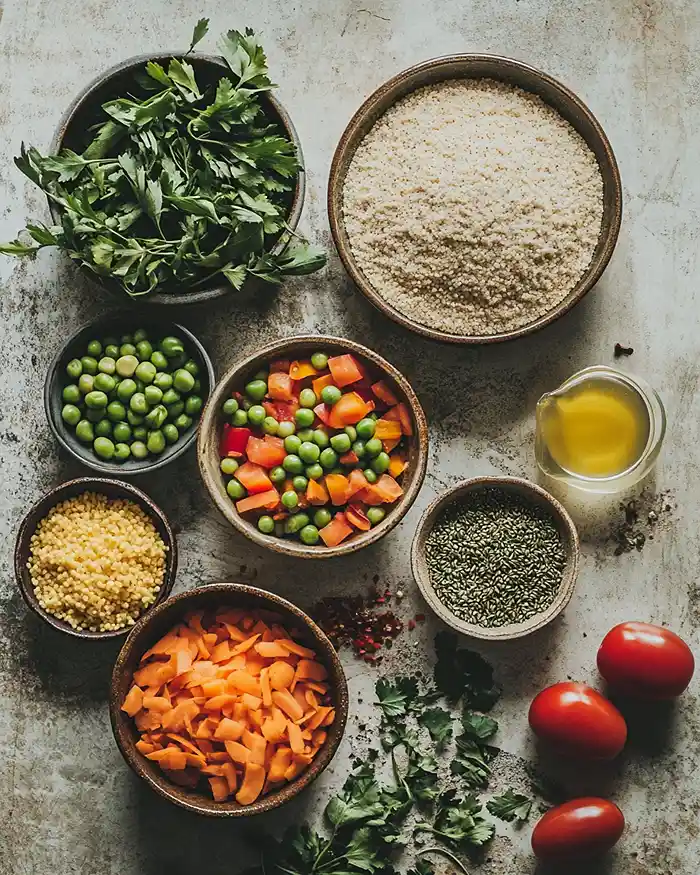
This upama recipe is all about layers of flavor—starting with the tempered spices and building up to those tender, perfectly cooked veggies. For the tempering base, you’ll use mustard seeds, urad dal, chana dal, curry leaves, and a dry red chilli to create that signature South Indian aroma.
The vegetables—onions, carrots, beans, peas, and tomatoes—add color, texture, and a natural sweetness that balances the savory notes beautifully.
| Amount | Ingredient |
|---|---|
| 1 Cup | Bombay Rava (semolina or sooji) |
| 2 Tablespoons | Oil |
| 1 Teaspoon | Mustard Seeds |
| 1 Teaspoon | Urad Dal |
| 1 Teaspoon | Chana Dal |
| 1 Sprig | Curry Leaves |
| 1 | Dry Red Chilli, broken into two |
| 1 Tablespoon | Ginger, finely chopped or grated |
| 1 ½ | Onion, chopped (approx 1 Cup) |
| 2 | Green Chillies, chopped |
| ⅓ Cup | Carrot, chopped |
| ¼ Cup | Beans, chopped |
| 1 | Tomato, chopped (approx ½ Cup) |
| ⅓ Cup | Green Peas |
| 3 ¼ Cups | Water |
| 1 ¾ Teaspoons | Salt |
| ½ Teaspoon | Sugar |
| 1 Tablespoon | Ghee (yes, the real stuff—it makes all the difference) |
| 2 Tablespoons | Coriander Leaves, chopped |
Tools You’ll Actually Use
- Kadai or large frying pan (for roasting and cooking)
- Wooden spoon or spatula (for constant stirring)
- Plate (for cooling the roasted rava)
- Measuring cups and spoons
- Chopping board and knife
- Lid (for steaming the upma)
Step-by-Step Instructions
Let’s make this Vegetable Upma happen—it’s easier than you think, and your kitchen’s about to smell amazing.
Step 1: Roast the Rava Heat a kadai or frying pan over medium heat. Add the 1 cup of Bombay rava (semolina) and roast it on low flame for 3-4 minutes, stirring constantly so it heats evenly and doesn’t burn.
You’ll know it’s ready when it smells nutty and toasty—but don’t let it brown, or your upma will turn an off color. Switch off the flame, transfer the roasted rava to a plate, and let it cool completely while you prep everything else.
Step 2: Temper the Spices Add 2 tablespoons of oil to the same kadai over medium heat. Once it’s shimmering, toss in the 1 teaspoon of mustard seeds and let them splutter and pop—this is where the magic starts.
Add the 1 teaspoon each of chana dal and urad dal, frying them until they’re lightly golden (not fully browned). Toss in the curry leaves and broken dry red chilli, sautéing for about 30 seconds over low heat until the curry leaves release their gorgeous aroma.
Step 3: Sauté the Aromatics and Veggies Add the 1 tablespoon of ginger, 1 ½ chopped onions, and 2 green chillies to the kadai. Sauté until the onions turn translucent and start to soften—this takes about 3-4 minutes.
Now add the ⅓ cup chopped carrots, ¼ cup chopped beans, ⅓ cup green peas, and the chopped tomato. Stir everything together and sauté for 2 minutes, letting the veggies get a head start on cooking.
Step 4: Boil the Water Pour in 3 ¼ cups of water, along with the 1 ¾ teaspoons of salt and ½ teaspoon of sugar. Crank the heat to high and bring the water to a rolling boil—you want it bubbling vigorously before you add the rava.
Step 5: Add the Rava and Steam Once the water’s boiling, reduce the heat to low. Now here’s the key: slowly pour the roasted rava into the kadai in a steady stream while stirring continuously with your other hand. This prevents lumps from forming—trust me, you don’t want clumpy upma.
Once all the rava is incorporated and the mixture thickens, cover the kadai with a lid and let it steam on low heat for 3-4 minutes. The rava will absorb the water and cook through beautifully.
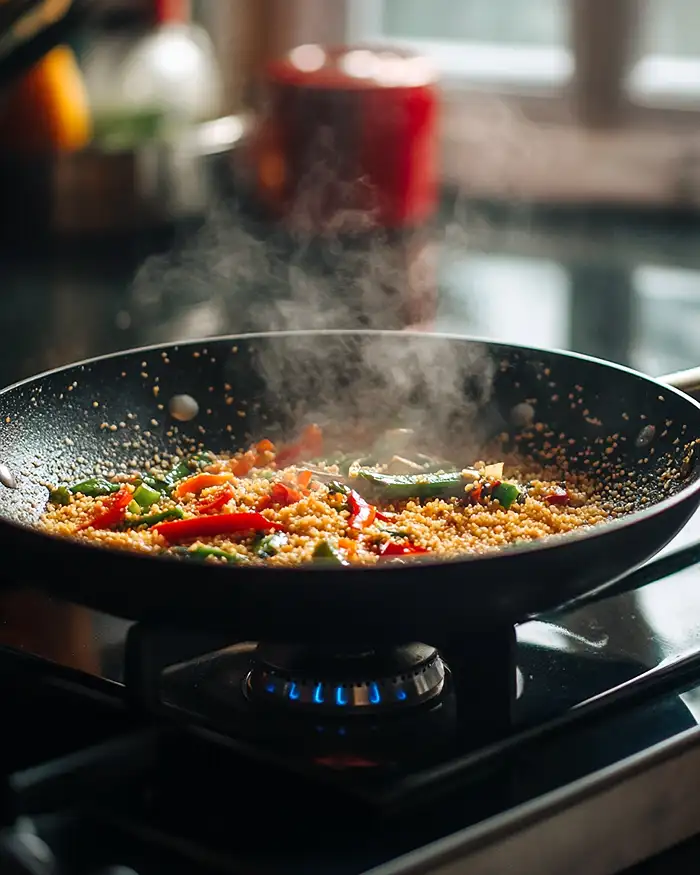
Step 6: Finish and Serve Remove the lid, add the 1 tablespoon of ghee and 2 tablespoons of chopped coriander leaves, and give everything a good mix. Switch off the flame. Your morning easy breakfast is ready—serve it warm with coconut chutney, pickle, or a dollop of yogurt on the side.
Claire’s Pro Tips & Gentle Guidance
This healthy meals Indian staple is pretty forgiving, but a few little tricks will take your upma from good to “Can I have seconds?”
Always roast your rava on low heat and keep stirring. I’ve burned it before (twice, actually), and it gives the whole dish a bitter, burnt taste that no amount of ghee can save. Low and slow is your friend here.
If you’re worried about lumps, here’s my secret: add the rava in a super steady stream while stirring like your life depends on it. I sometimes use a fork in one hand to break up any stubborn clumps while I stir with the other—it sounds ridiculous, but it works.
Feel free to swap the veggies based on what you’ve got. Bell peppers, cauliflower, and even spinach work beautifully. Just keep the chopped sizes uniform so everything cooks evenly.
For extra richness, add a squeeze of lemon juice right at the end—it brightens everything up and adds a lovely tang. According to Serious Eats‘ detailed baking guide on acid in cooking, a touch of acidity balances flavors and makes dishes taste more vibrant, which is exactly what happens here.
Quick Fixes for Vegetable Upma
Problem: Upma is too mushy or wet. You probably added too much water or didn’t roast the rava enough. Next time, measure the water carefully (3 ¼ cups for 1 cup rava), and make sure the rava is completely cooled before adding it to the boiling water. If it’s already too wet, just cook it uncovered on low heat for a few extra minutes to evaporate excess moisture.
Problem: Upma has lumps. This happens when the rava isn’t added slowly or stirred constantly. If you catch it early, you can break up lumps with a fork or whisk while it’s still cooking. For next time, pour the rava in a thin, steady stream and stir vigorously—it takes a little coordination, but you’ll get the hang of it.
Problem: Upma tastes bland. You might need more salt, or your tempering didn’t get enough time to develop flavor. Taste as you go, and don’t rush the tempering step—let those mustard seeds pop and the dals toast properly. A squeeze of lemon juice or extra ghee at the end can also amp up the flavor.
Problem: Vegetables are undercooked. If your veggies are still crunchy, they either needed a longer sauté before adding water, or you used larger chunks. Chop them into small, even pieces (about ¼-inch) so they cook through during the steaming step.
Variations & Fun Twists
This upama recipe is your canvas—here’s how to make it your own.
Protein Boost: Toss in some roasted cashews or peanuts at the end for extra crunch and protein. You can also add a handful of cooked chickpeas or crumbled paneer for a heartier meal.
Veggie Swap: Use whatever vegetables are in season—zucchini, bell peppers, cauliflower, or even shredded cabbage work beautifully. Just keep the total veggie quantity around 1 ½ to 2 cups so the ratios stay balanced.
Gluten-Free & Millet Version: Swap the semolina for foxtail millet or broken wheat (dalia) for a gluten-free twist. The cooking time might vary slightly, so adjust the water as needed.
South Indian Breakfast Plate: Serve your upma alongside coconut chutney, sambar, or a tangy tomato chutney for a full South Indian breakfast spread. It’s also delicious with a simple cucumber raita on the side.
Meal Prep Magic: Make a big batch on Sunday and portion it into containers. Reheat with a splash of water and a drizzle of ghee, and you’ve got breakfast sorted for the week.
There’s a whole world of classic comfort foods waiting for you over at the Classic Comfort Foods collection. Each one is made with the same love and attention, and they’re all absolutely worth trying. Happy cooking!
Serving, Storage & Reheating
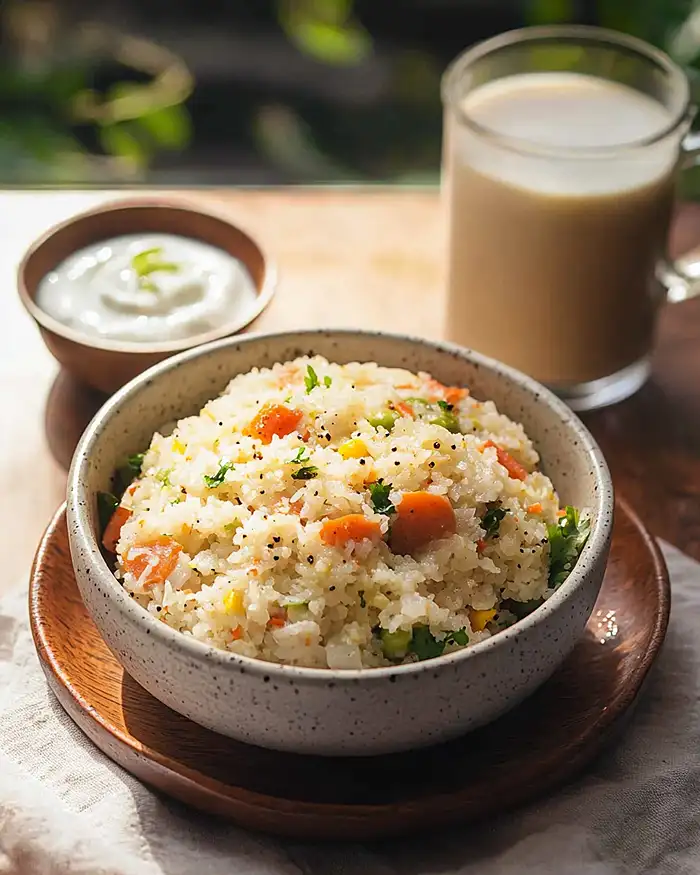
This Vegetable Upma is best enjoyed fresh and warm, straight from the kadai. Serve it with coconut chutney, a spicy pickle, or a side of plain yogurt to balance the heat—honestly, the yogurt is my favorite pairing because it cools everything down and adds a creamy contrast.
Store leftovers in an airtight container in the fridge for up to 3 days. Upma tends to firm up and dry out a bit as it cools, but don’t worry—it’s totally salvageable.
To reheat, add a splash of water (about 2-3 tablespoons) and a small pat of ghee or butter to a pan. Warm it over low heat, stirring gently until it’s heated through and the moisture is reabsorbed. You can also microwave it in 30-second intervals, stirring between each, but the stovetop method gives you better texture.
No-Waste Kitchen Magic
Don’t toss those veggie scraps—carrot peels, bean ends, and even the tomato cores can go straight into a freezer bag for homemade vegetable stock. Just simmer them with water, onion skins, and a few peppercorns for a flavorful base you can use in soups or curries.
If you’ve got leftover upma that’s getting a little dry, press it into patties, pan-fry them in a bit of oil until crispy on both sides, and you’ve got upma cutlets—seriously delicious with ketchup or chutney.
Leftover curry leaves from the sprig? Dry them out completely and crumble them into a jar. Use them as a seasoning for roasted vegetables, scrambled eggs, or even popcorn—they keep for months and add instant flavor.
Got extra ghee? Don’t let it sit in the back of your fridge. Use it to roast nuts, drizzle over popcorn, or brush onto naan or roti for an instant upgrade.
Vegetable Upma FAQs
Can I freeze Vegetable Upma?
Yep, upma freezes pretty well for up to a month. Let it cool completely, then portion it into freezer-safe containers. Thaw overnight in the fridge and reheat with a splash of water and ghee on the stovetop.
What’s the best way to store leftover Vegetable Upma?
Keep it in an airtight container in the fridge for up to 3 days. It’ll firm up as it cools, but reheating with a little water and ghee brings it right back to life.
How do I know when the rava is roasted enough?
Your nose is your best guide here—when the semolina smells nutty and toasty (usually after 3-4 minutes of stirring on low heat), it’s ready. If it starts to brown or darken, you’ve gone too far.
Why should I use ghee in Vegetable Upma?
Ghee adds a rich, nutty flavor that oil just can’t replicate—it’s the finishing touch that makes upma taste authentic and indulgent. Plus, it keeps the texture from getting too sticky as it cools.
Can I make Vegetable Upma without onions?
Absolutely. Just skip the onions and add extra veggies like bell peppers or cauliflower. You can also increase the ginger and green chillies slightly to keep the flavor bold and aromatic.
Cozy Closing
I’d love to see your spin on this Vegetable Upma! Drop a comment below with your upma photos—I’d love to see how you made it your own. This Vegetable Upma is so versatile; I bet you’ve got amazing variations already in mind.
And if you’re looking for more quick, nourishing meals, check out my Greek Chicken Bowls, Steakhouse Potato Salad, or Mexican Street Corn Salad for more weeknight inspiration.
I’m Claire Whitmore—a dessert daydreamer from Asheville, NC. For me, cooking isn’t about perfect plating—it’s about the joy of sharing something delicious (and maybe sneaking an extra spoonful of ghee when no one’s looking).

Vegetable Upma
Equipment
- Kadai or large frying pan
- Wooden spoon or spatula
- Plate
- Measuring cups and spoons
- Chopping board and knife
- Lid
Ingredients
For the Upma
- 1 cup Bombay Rava semolina or sooji
- 2 tablespoons Oil
- 1 teaspoon Mustard Seeds
- 1 teaspoon Urad Dal
- 1 teaspoon Chana Dal
- 1 sprig Curry Leaves
- 1 Dry Red Chilli broken into two
- 1 tablespoon Ginger finely chopped or grated
- 1.5 Onion chopped, approx 1 cup
- 2 Green Chillies chopped
- 0.33 cup Carrot chopped
- 0.25 cup Beans chopped
- 1 Tomato chopped, approx 1/2 cup
- 0.33 cup Green Peas
- 3.25 cups Water
- 1.75 teaspoons Salt
- 0.5 teaspoon Sugar
- 1 tablespoon Ghee
- 2 tablespoons Coriander Leaves chopped
Instructions
- Heat a kadai or frying pan over medium heat. Add the 1 cup of Bombay rava (semolina) and roast it on low flame for 3-4 minutes, stirring constantly so it heats evenly and doesn’t burn. You’ll know it’s ready when it smells nutty and toasty—but don’t let it brown, or your upma will turn an off color. Switch off the flame, transfer the roasted rava to a plate, and let it cool completely while you prep everything else.
- Add 2 tablespoons of oil to the same kadai over medium heat. Once it’s shimmering, toss in the 1 teaspoon of mustard seeds and let them splutter and pop—this is where the magic starts. Add the 1 teaspoon each of chana dal and urad dal, frying them until they’re lightly golden (not fully browned). Toss in the curry leaves and broken dry red chilli, sautéing for about 30 seconds over low heat until the curry leaves release their gorgeous aroma.
- Add the 1 tablespoon of ginger, 1 ½ chopped onions, and 2 green chillies to the kadai. Sauté until the onions turn translucent and start to soften—this takes about 3-4 minutes. Now add the ⅓ cup chopped carrots, ¼ cup chopped beans, ⅓ cup green peas, and the chopped tomato. Stir everything together and sauté for 2 minutes, letting the veggies get a head start on cooking.
- Pour in 3 ¼ cups of water, along with the 1 ¾ teaspoons of salt and ½ teaspoon of sugar. Crank the heat to high and bring the water to a rolling boil—you want it bubbling vigorously before you add the rava.
- Once the water’s boiling, reduce the heat to low. Now here’s the key: slowly pour the roasted rava into the kadai in a steady stream while stirring continuously with your other hand. This prevents lumps from forming—trust me, you don’t want clumpy upma. Once all the rava is incorporated and the mixture thickens, cover the kadai with a lid and let it steam on low heat for 3-4 minutes. The rava will absorb the water and cook through beautifully.
- Remove the lid, add the 1 tablespoon of ghee and 2 tablespoons of chopped coriander leaves, and give everything a good mix. Switch off the flame. Your morning easy breakfast is ready—serve it warm with coconut chutney, pickle, or a dollop of yogurt on the side.