Dominican Flag recipe
I’m Linda Sandra — a Charleston home chef who believes every meal should feel like a warm hug, and this Dominican Flag recipe (aka La Bandera Dominicana) is exactly that kind of comfort. If you’ve never tried this trio of stewed beef, creamy beans, and fluffy white rice all on one plate, you’re in for something special.
This iconic Dominican dish gets its name from the way it looks plated — red beans, white rice, and golden-brown meat mirror the colors of the Dominican flag. It’s hearty, soul-warming, and the kind of meal that makes everyone linger at the table a little longer.
I first learned about La Bandera from a friend in college who’d make it whenever she felt homesick. She taught me that the real magic isn’t just in the flavors — it’s in how everything comes together on one plate, each component supporting the others like a little edible family reunion.
Table of Contents
Little Snapshot: What This Recipe Delivers
This Dominican Flag recipe brings together tender stewed beef (carne guisada), creamy red beans (habichuelas), and fluffy white rice (arroz blanco) in about 90 minutes. It’s a complete, protein-packed meal that feeds four and tastes like you’ve been cooking all day — even though most of it simmers happily on its own.
Why You’ll Love This Recipe 🌸
- This Dominican Flag recipe looks impressive but requires zero fancy techniques — just patience and a good pot.
- Everything cooks at the same time in different pots, so you’re not standing over the stove all day.
- The leftovers somehow taste even better the next day (the beans especially get creamier and more flavorful).
- According to King Arthur Baking in their guide to why simple recipes work best, the most memorable meals often come from straightforward techniques with quality ingredients — and this La Bandera Dominicana proves exactly why.
Quick Facts ⚡
Here’s the quick scoop on this Dominican Flag recipe.
- CourseMain Dish
- Prep Time20 minutes (plus 1 hour marinating)
- Cook Time70 minutes
- Total Time1 hour 30 minutes
- Servings4 servings
- DifficultyMedium
Nutritional Peek
Here’s what you’re getting in each generous serving of this Dominican Rice and Beans plate:
| Nutrient | Amount per Serving |
|---|---|
| Calories | 820 kcal |
| Protein | 62g |
| Carbohydrates | 78g |
| Fat | 26g |
| Fiber | 12g |
| Sugar | 6g |
Dominican Flag recipe Ingredients
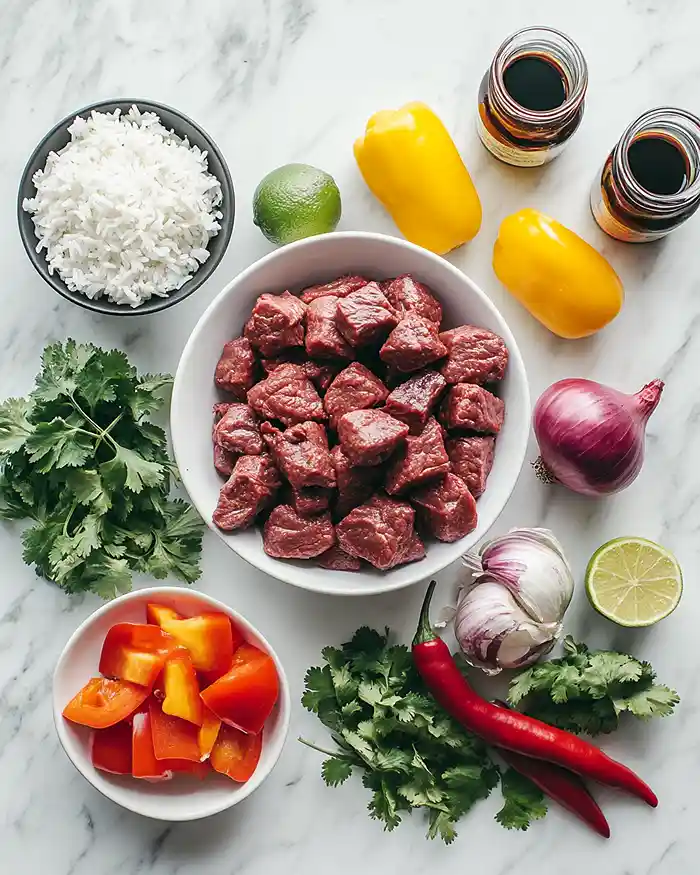
This La Bandera Dominicana comes together with three separate components, each with its own personality. For the carne guisada, you’ll need beef, aromatics, and seasonings that build deep, caramelized flavor.
For the habichuelas, canned beans get dressed up with sofrito vegetables and auyama (or acorn squash) for creaminess. And for the arroz blanco, it’s all about rinsing your rice well and keeping your hands off the lid while it steams.
Carne Guisada (Stewed Meat)
| Amount | Ingredient |
|---|---|
| 3 lbs | beef round, cut into cubes |
| ½ cup | white vinegar (for rinsing) |
| 2 tsp | soy sauce |
| 1 | lime, halved |
| 2 tsp | adobo seasoning |
| 1 tbsp | crushed garlic |
| 1 tsp | dried oregano |
| 1 tbsp | vegetable oil |
| 1 tsp | granulated sugar |
| 2 tbsp | tomato paste |
| 1 | yellow onion, sliced thin |
| 1 | cubanelle pepper, sliced |
| ½ | red bell pepper, sliced |
| 2 tsp | fresh cilantro, chopped |
Habichuelas (Red Beans)
| Amount | Ingredient |
|---|---|
| 2 tsp | olive oil |
| ½ | yellow onion, diced (about ½ cup) |
| ½ | cubanelle or green pepper, diced |
| 1 tbsp | garlic paste |
| 2 (15 oz) cans | red beans (Roman or kidney), with liquid |
| ½ cup | auyama or acorn squash, diced |
| 1 tsp | sazón seasoning |
| 1 tsp | dried oregano |
| 1 | bouillon cube (use ½ if extra-large) |
| 1 | bay leaf |
| 1 tbsp | tomato paste |
| salt and pepper to taste | |
| 2 tsp | fresh cilantro, chopped (plus more for garnish) |
Arroz Blanco (White Rice)
| Amount | Ingredient |
|---|---|
| 2 cups | long-grain white rice (jasmine or canilla) |
| 2 tbsp | vegetable or olive oil |
| 1 tsp | salt (optional) |
| 2 ½ cups | water |
Tools You’ll Actually Use
- Large bowl (for soaking the beef)
- Dutch oven or caldero (cast aluminum pan) for the meat
- 2.3 qt aluminum pan or medium saucepan for the beans
- Heavy-bottomed pan or caldero for the rice
- Mesh strainer (for rinsing rice)
- Paper towels
- Fork (for testing meat tenderness and fluffing rice)
- Separate bowl (for mashing beans)
Step-by-Step Instructions
Here’s how to make your Dominican Flag recipe come together beautifully — we’re cooking all three components, so don’t worry if it feels like a lot at first. Just take it one pot at a time.
Making the Carne Guisada (Stewed Beef)
Step 1: Place the cubed beef in a large bowl and cover it completely with water. Add the white vinegar and let it soak for 15 minutes to clean and tenderize the meat. Drain the beef, rinse it thoroughly under cold water, and pat it dry with paper towels.
Step 2: Season the dried beef cubes with soy sauce, crushed garlic, adobo seasoning, dried oregano, and the juice from the halved lime. Toss everything together until the beef is evenly coated, then cover the bowl and let it marinate in the refrigerator for at least 1 hour (longer is even better if you have time).
Step 3: Heat the vegetable oil and granulated sugar in a Dutch oven or caldero over medium heat. Stir occasionally and watch as the sugar melts and caramelizes until it turns a rich brown color — this is what gives the beef that gorgeous color and depth of flavor.
Step 4: Add the marinated beef to the caramelized sugar, flipping the pieces as needed until they’re browned on all sides. Don’t rush this step — that browning is pure flavor.
Step 5: Add the tomato paste to the pan and toss the beef until every piece is coated in that deep red paste. It’ll smell amazing.
Step 6: Pour in 1 cup of water and bring everything to a simmer. Let the beef cook uncovered for 15-20 minutes, letting the liquid reduce by about half while the meat tenderizes.
Step 7: Once the liquid has reduced, add about ½ cup of water to keep the beef covered. Let it simmer for another 15-20 minutes, then repeat this process — adding just enough water each time to keep the meat covered — until the beef is fork-tender and easily breaks apart. This whole process usually takes 45 minutes to an hour, so be patient.
Step 8: Add the sliced yellow onion, cubanelle pepper, and red bell pepper to the tender beef. Top off with a little more water to create enough sauce and keep everything from drying out. Cover the pot and let it simmer for 5-10 minutes more, until the vegetables are tender but still have a little bite.
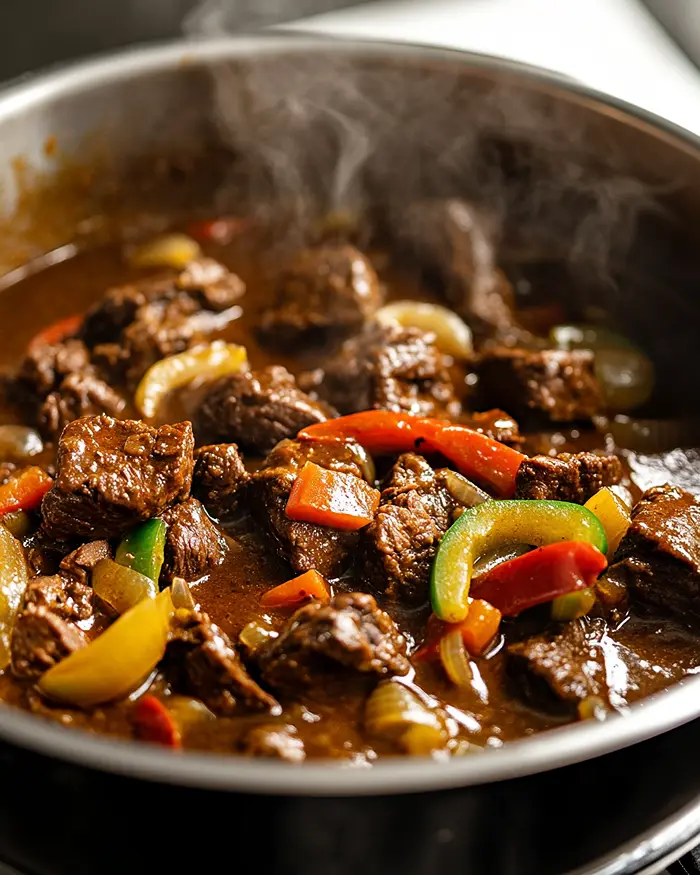
Step 9: Turn off the heat and stir in the chopped fresh cilantro. Cover the pot and let it sit for a few minutes so all those flavors can mingle. Serve alongside the rice and beans.
Making the Habichuelas (Red Beans)
Step 1: Heat the olive oil in your 2.3 qt caldero or medium saucepan over medium heat. Add the diced onions, peppers, and garlic paste, then sauté until the vegetables are softened and fragrant — about 3-4 minutes.
Step 2: Add the canned red beans along with all their liquid to the pan. Then add the diced auyama (or acorn squash), sazón seasoning, dried oregano, bay leaf, and bouillon cube. Stir everything together so the seasonings are evenly distributed.
Step 3: Add the tomato paste and enough water to cover the beans — about 1 can’s worth of water works perfectly. It’s okay if the squash peeks out a little, but make sure the beans themselves are fully covered.
Step 4: Bring the beans to a simmer, then cover the pan and turn the heat down to low. Let them simmer gently for 25 minutes while the squash softens and the flavors develop.
Step 5: Remove about 1 ½ cups of beans and a few pieces of squash along with some of the broth. Transfer to a separate bowl and mash everything together with a fork until it’s mostly smooth.
Step 6: Return the mashed bean mixture to the pan — this is what makes the beans extra creamy and thick. Taste and season with salt and pepper if needed. Stir well, cover the pan, and let the beans cook for another 10-15 minutes.
Step 7: Once the beans have thickened to a creamy consistency, stir in the chopped cilantro and they’re ready to serve.
Making the Arroz Blanco (White Rice)
Step 1: Using a mesh strainer, rinse the rice under cold running water until the water runs completely clear. This removes excess starch and keeps your rice fluffy instead of gummy. Drain the rice really well and set it aside.
Step 2: In your caldero or heavy-bottomed pan, heat the oil over medium-high heat. Once it’s hot, carefully add 2 ½ cups of water and the salt. Bring the water to a rolling boil.
Step 3: Add the drained rice to the boiling water and give it a good stir. Bring it back to a boil, stirring occasionally until most of the water has evaporated and you can see the rice grains poking through.
Step 4: Cover the pot tightly with a lid and turn the heat down to the absolute lowest setting your burner has. Let the rice cook for 20 minutes without lifting the lid even once — I know it’s tempting, but trust the process.
Step 5: Once 20 minutes is up, turn off the heat but keep the lid on. Let the rice sit and steam for another 5-10 minutes. This resting time makes all the difference.
Step 6: Uncover the rice and give it a taste — the grains should be tender and completely separated. Fluff it gently with a fork and serve it alongside the beans and meat.
Pro Tips & Gentle Guidance
These little tricks will help your Dominican Stewed Chicken and beans turn out perfectly every single time.
The vinegar soak for the beef isn’t just traditional — it actually helps tenderize the meat and removes any gamey flavors. Don’t skip it.
When caramelizing the sugar for the meat, watch it closely. You want deep brown, not black and bitter. If it starts smoking, you’ve gone too far.
For the creamiest beans, don’t drain the liquid from the cans. That starchy liquid is what makes them thick and rich.
If you can’t find auyama (calabaza squash), acorn squash or even butternut squash works beautifully. Some cooks use potatoes instead, which is also delicious.
The key to fluffy rice is leaving that lid alone while it cooks. Every time you peek, you let out steam that the rice needs to cook properly.
If you’re new to Dominican cooking, Serious Eats has a detailed guide on achieving perfect rice texture that I reference all the time.
Quick Fixes for Dominican Flag Recipe
Problem: The beef is tough even after an hour of cooking.
Add more water and keep simmering. Some cuts of beef just need more time. You can also try cutting the cubes smaller next time for faster cooking.
Problem: The beans are too watery.
Remove the lid and let them simmer uncovered for 10-15 minutes to reduce the liquid. You can also mash a few more beans to thicken them up.
Problem: The rice is mushy or sticky.
You probably didn’t rinse it enough before cooking. Next time, rinse until the water runs completely clear, and make sure you’re using the right water-to-rice ratio (2 ½ cups water to 2 cups rice).
Problem: The meat sauce is too thick or the meat is drying out.
Just add a splash more water and let it simmer for a few minutes. The sauce should be thick but still glossy and coat the meat nicely.
Variations & Adaptations
This La Bandera Dominicana is pretty flexible once you get the basics down.
Swap the beef for chicken thighs or pork shoulder — both work beautifully with the same marinade and cooking method. Chicken will cook faster, so adjust your timing.
For a vegetarian version, skip the meat and double up on the beans. Add some roasted vegetables or fried plantains to make the plate feel complete.
If you want to make this gluten-free, just check that your adobo seasoning and bouillon cubes don’t contain wheat. Most don’t, but it’s worth reading labels.
Try black beans instead of red kidney beans for a different flavor profile. The cooking method stays exactly the same.
Serving, Storage & Reheating
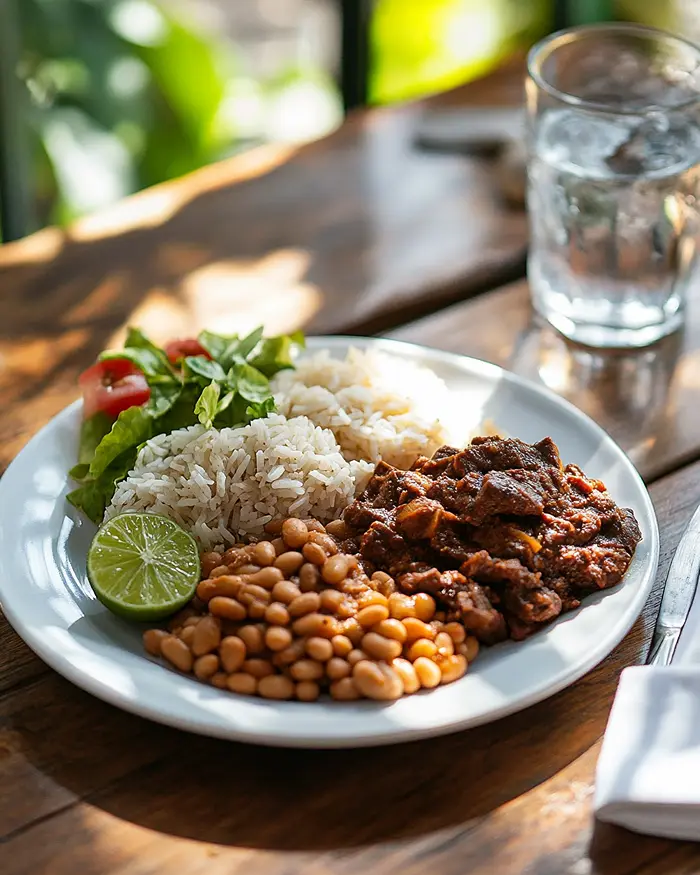
Serve your Dominican Rice and Beans family-style on one big platter, or plate it up individually with the rice, beans, and meat all touching — that’s the traditional way. A simple green salad with lime dressing and some fried plantains on the side make it a complete feast.
Store each component separately in airtight containers in the fridge for up to 4 days. The beans especially get even better as they sit and the flavors develop.
To reheat, add a splash of water to the beans and meat before microwaving or warming on the stovetop — this keeps everything moist and brings back that just-cooked texture. The rice reheats beautifully in the microwave with a damp paper towel over it.
No-Waste Kitchen Magic
Leftover rice makes the best fried rice the next day. Toss it with scrambled eggs, diced peppers, and a little soy sauce for a quick breakfast or lunch.
If you have extra beans, blend them into a creamy soup with some chicken or vegetable broth. Top with a dollop of sour cream and fresh cilantro.
Day-old meat can be shredded and stuffed into empanadas, tacos, or even mixed into scrambled eggs for a protein-packed breakfast.
Save any leftover marinade from the beef (before it touches raw meat) and use it on chicken or pork for your next meal. It’s too flavorful to waste.
This recipe is just the start of something delicious. Browse the entire Classic Comfort Foods collection and discover all the ways you can bring more flavor to your table. Your family will thank you.
Dominican Flag recipe FAQs
Can I freeze this Dominican Flag recipe?
Yep, all three components freeze beautifully. Store them in separate airtight containers for up to 3 months. Thaw overnight in the fridge and reheat gently with a splash of water.
What’s the best way to store leftover La Bandera Dominicana?
Keep the rice, beans, and meat in separate containers in the fridge. This prevents the rice from absorbing too much moisture from the other components and getting mushy.
How do I know when the beef is done?
The meat should be fork-tender and almost fall apart when you poke it. If it’s still chewy or tough, it needs more time to simmer.
Why should I use canned beans instead of dried beans in this recipe?
Canned beans save you hours of soaking and cooking time, and the liquid they come in actually helps create that creamy, thick consistency. If you want to use dried beans, you absolutely can — just cook them separately first.
Dominican Flag recipe Closing
So there you go — a Dominican Flag recipe that looks like you’ve been cooking all day but is secretly way more forgiving than it seems. The meat gets tender on its own, the beans practically cook themselves, and the rice is just about patience.
I’d love to see your spin on this La Bandera Dominicana! Drop a comment below with your Dominican Flag recipe photos — I’d love to see how you made it your own. This Dominican Rice and Beans plate is so versatile; I bet you’ve got amazing variations already in mind.
Whether you’re making this for Sunday dinner or meal-prepping for the week, I hope it becomes one of those recipes you come back to again and again. And if you loved this, you might also enjoy my 5-Ingredient Dump-and-Bake Sausage Tortellini, Homemade Lasagna Recipe, or Mustard Hasselback Kielbasa Bites for more comfort food wins.
I’m Linda Sandra — a Charleston home chef and comfort-food daydreamer. Around here, cooking’s not about perfection — it’s about cozy vibes, creative twists, and food that feels like love.

Dominican Flag Recipe (La Bandera Dominicana)
Equipment
- Large bowl
- Dutch oven or caldero
- 2.3 qt aluminum pan or medium saucepan
- Heavy-bottomed pan or caldero for rice
- Mesh strainer
- Paper towels
- Fork
- Separate bowl for mashing
Ingredients
Carne Guisada (Stewed Meat)
- 3 lbs beef round cut into cubes
- ½ cup white vinegar for rinsing
- 2 tsp soy sauce
- 1 lime halved
- 2 tsp adobo seasoning
- 1 tbsp crushed garlic
- 1 tsp dried oregano
- 1 tbsp vegetable oil
- 1 tsp granulated sugar
- 2 tbsp tomato paste
- 1 yellow onion sliced thin
- 1 cubanelle pepper sliced
- ½ red bell pepper sliced
- 2 tsp fresh cilantro chopped
Habichuelas (Red Beans)
- 2 tsp olive oil
- ½ yellow onion diced, about 1/2 cup
- ½ cubanelle or green pepper diced
- 1 tbsp garlic paste
- 2 15 oz cans red beans Roman or kidney, with liquid
- ½ cup auyama or acorn squash diced
- 1 tsp sazón seasoning
- 1 tsp dried oregano
- 1 bouillon cube use 1/2 if extra-large
- 1 bay leaf
- 1 tbsp tomato paste
- salt and pepper to taste
- 2 tsp fresh cilantro chopped, plus more for garnish
Arroz Blanco (White Rice)
- 2 cups long-grain white rice jasmine or canilla
- 2 tbsp vegetable or olive oil
- 1 tsp salt optional
- 2 ½ cups water
Instructions
- Making the Carne Guisada (Stewed Beef):
- Place the cubed beef in a large bowl and cover it completely with water. Add the white vinegar and let it soak for 15 minutes to clean and tenderize the meat. Drain the beef, rinse it thoroughly under cold water, and pat it dry with paper towels.
- Season the dried beef cubes with soy sauce, crushed garlic, adobo seasoning, dried oregano, and the juice from the halved lime. Toss everything together until the beef is evenly coated, then cover the bowl and let it marinate in the refrigerator for at least 1 hour (longer is even better if you have time).
- Heat the vegetable oil and granulated sugar in a Dutch oven or caldero over medium heat. Stir occasionally and watch as the sugar melts and caramelizes until it turns a rich brown color — this is what gives the beef that gorgeous color and depth of flavor.
- Add the marinated beef to the caramelized sugar, flipping the pieces as needed until they’re browned on all sides. Don’t rush this step — that browning is pure flavor.
- Add the tomato paste to the pan and toss the beef until every piece is coated in that deep red paste. It’ll smell amazing.
- Pour in 1 cup of water and bring everything to a simmer. Let the beef cook uncovered for 15-20 minutes, letting the liquid reduce by about half while the meat tenderizes.
- Once the liquid has reduced, add about 1/2 cup of water to keep the beef covered. Let it simmer for another 15-20 minutes, then repeat this process — adding just enough water each time to keep the meat covered — until the beef is fork-tender and easily breaks apart. This whole process usually takes 45 minutes to an hour, so be patient.
- Add the sliced yellow onion, cubanelle pepper, and red bell pepper to the tender beef. Top off with a little more water to create enough sauce and keep everything from drying out. Cover the pot and let it simmer for 5-10 minutes more, until the vegetables are tender but still have a little bite.
- Turn off the heat and stir in the chopped fresh cilantro. Cover the pot and let it sit for a few minutes so all those flavors can mingle. Serve alongside the rice and beans.
- Making the Habichuelas (Red Beans):
- Heat the olive oil in your 2.3 qt caldero or medium saucepan over medium heat. Add the diced onions, peppers, and garlic paste, then sauté until the vegetables are softened and fragrant — about 3-4 minutes.
- Add the canned red beans along with all their liquid to the pan. Then add the diced auyama (or acorn squash), sazón seasoning, dried oregano, bay leaf, and bouillon cube. Stir everything together so the seasonings are evenly distributed.
- Add the tomato paste and enough water to cover the beans — about 1 can’s worth of water works perfectly. It’s okay if the squash peeks out a little, but make sure the beans themselves are fully covered.
- Bring the beans to a simmer, then cover the pan and turn the heat down to low. Let them simmer gently for 25 minutes while the squash softens and the flavors develop.
- Remove about 1 1/2 cups of beans and a few pieces of squash along with some of the broth. Transfer to a separate bowl and mash everything together with a fork until it’s mostly smooth.
- Return the mashed bean mixture to the pan — this is what makes the beans extra creamy and thick. Taste and season with salt and pepper if needed. Stir well, cover the pan, and let the beans cook for another 10-15 minutes.
- Once the beans have thickened to a creamy consistency, stir in the chopped cilantro and they’re ready to serve.
- Making the Arroz Blanco (White Rice):
- Using a mesh strainer, rinse the rice under cold running water until the water runs completely clear. This removes excess starch and keeps your rice fluffy instead of gummy. Drain the rice really well and set it aside.
- In your caldero or heavy-bottomed pan, heat the oil over medium-high heat. Once it’s hot, carefully add 2 1/2 cups of water and the salt. Bring the water to a rolling boil.
- Add the drained rice to the boiling water and give it a good stir. Bring it back to a boil, stirring occasionally until most of the water has evaporated and you can see the rice grains poking through.
- Cover the pot tightly with a lid and turn the heat down to the absolute lowest setting your burner has. Let the rice cook for 20 minutes without lifting the lid even once — I know it’s tempting, but trust the process.
- Once 20 minutes is up, turn off the heat but keep the lid on. Let the rice sit and steam for another 5-10 minutes. This resting time makes all the difference.
- Uncover the rice and give it a taste — the grains should be tender and completely separated. Fluff it gently with a fork and serve it alongside the beans and meat.