
Water Kefir
Water kefir is one of those magical fermented drinks that feels like a little kitchen science project — bubbly, tangy, and so good for your gut. I fell in love with making probiotic drinks at home because they’re easy, customizable, and way cheaper than store-bought kombucha. Plus, those tiny kefir grains multiply like crazy, so you’ll have plenty to share with friends or brew endless batches.
This recipe walks you through the simple process of making your own fizzy, flavorful water kefir from scratch. Whether you’re new to fermented drinks or a seasoned fermenter, you’ll love how forgiving and flexible this process is. Let’s get those kefir grains bubbling and bring some gut health magic into your kitchen.
Table of Contents
Quick Overview
While your water kefir ferments its way to bubbly perfection, why not whip up something equally delightful for your next gathering? Our collection of classic appetizers offers timeless crowd-pleasers that are sure to impress.
Little Snapshot: What This Recipe Delivers
Water kefir is a naturally fermented probiotic drink made by combining kefir grains with sugar water and optional fruit, then fermenting for 24-48 hours. The result is a tangy, lightly fizzy beverage packed with beneficial bacteria that supports gut health and digestion.
Why You’ll Love This Recipe 🌸
- This water kefir takes less active time than making a pot of coffee — seriously, it’s mostly just waiting.
- You get a probiotic drink that’s way gentler on your wallet than buying fancy fermented drinks from the store.
- Your kefir grains multiply and keep giving, so you’ll have endless batches to enjoy and share.
- According to this research on fermented beverages, water kefir contains diverse beneficial microorganisms that support digestive wellness — and this recipe proves exactly why.
Quick Facts ⚡
Here’s the quick scoop on this water kefir.
- CourseBeverage
- Prep Time10 minutes
- Fermentation Time24-48 hours
- Total Time24-48 hours
- Servings4 cups
- DifficultyEasy
Nutritional Peek
| Nutrient | Amount per serving (1 cup) |
|---|---|
| Calories | 45 |
| Protein | 0g |
| Carbohydrates | 11g |
| Fat | 0g |
| Fiber | 0g |
| Sugar | 8g |
What You’ll Need
Making water kefir doesn’t require fancy equipment — just a few simple kitchen tools and a little counter space. Here’s what you’ll want to gather before you start brewing.
- 1 large glass jar (half-gallon or quart-size)
- Coffee filter or breathable cloth
- Rubber band
- Wooden or plastic spoon (no metal)
- Fine-mesh strainer (plastic or stainless steel)
- Bottles with tight lids for second fermentation (optional)
- Measuring cups and spoons
Ingredients
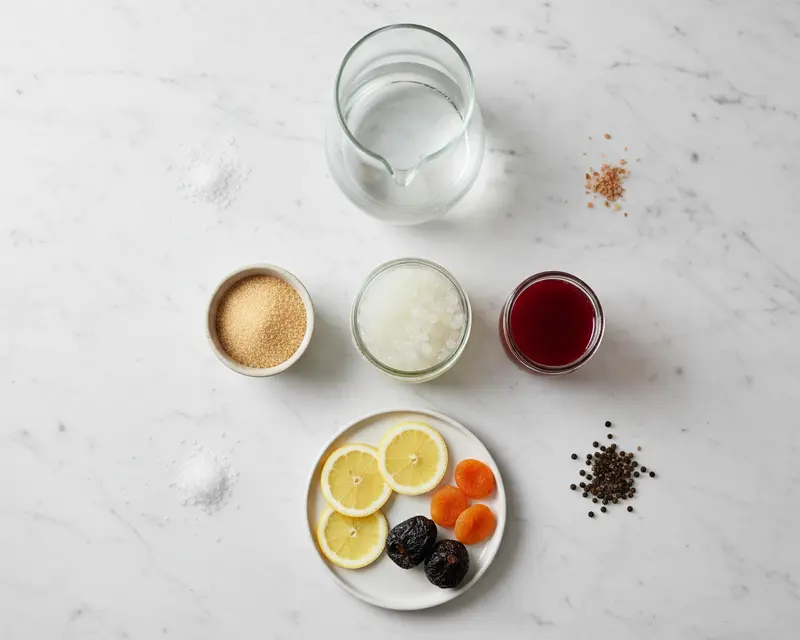
Fermented drinks start with just a few simple ingredients, and water kefir is no exception. The kefir grains do all the heavy lifting, transforming sugar water into a bubbly probiotic drink. Optional add-ins like fruit juice, lemon, and dried fruit add flavor and extra nutrients while feeding your grains.
| Group | Ingredient | Amount | Notes |
|---|---|---|---|
| Base | Water kefir grains | 1/4 cup | Your magic bubbling friends — treat them well! |
| Base | Organic cane sugar | 1/4 cup | Food for the grains; they eat most of it |
| Base | Filtered water | 4 cups | Chlorine-free is key; tap water can harm grains |
| Optional Flavor | Fruit juice | 1/4 cup | Grape, apple, or any 100% juice adds depth |
| Optional Flavor | Lemon | 1/2, sliced | Brightens flavor and adds vitamin C |
| Optional Flavor | Dried figs or apricots | 2-3 pieces | Natural minerals boost fermentation |
Step-by-Step Instructions
Let’s make this happen. Water kefir comes together in just a few simple steps, and then the grains do all the work while you go about your day.
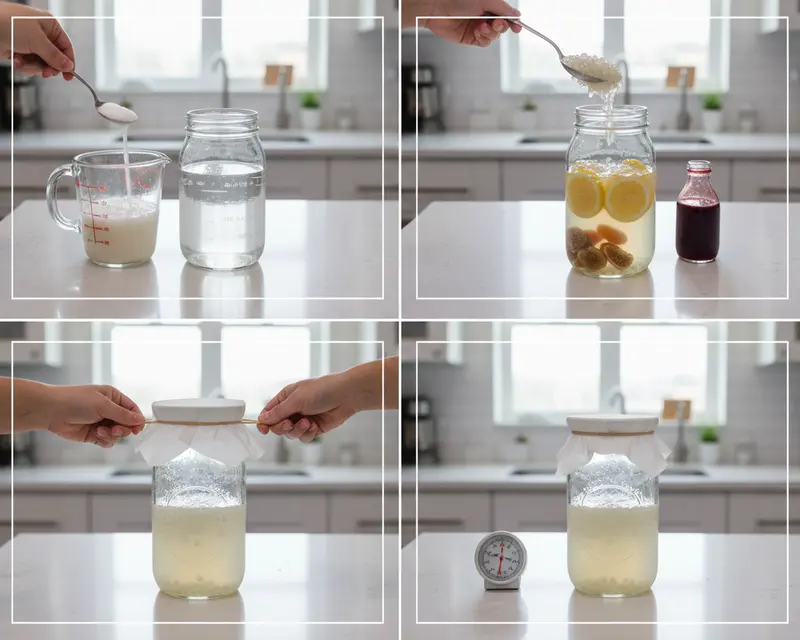
Dissolve the sugar. Pour 1 cup of hot filtered water into your glass jar and stir in the organic cane sugar until it’s completely dissolved. The sugar needs to be fully melted so your kefir grains can feast on it properly.
Cool the mixture. Add 3 cups of cold filtered water to the sugar water, bringing the temperature down to room temperature. Test with your finger — it should feel neutral, not warm. Hot water will damage your precious grains.
Add your kefir grains. Drop those 1/4 cup of water kefir grains right into the cooled sugar water. They’ll sink or float — both are totally fine. If you’re using optional fruit juice, lemon slices, or dried fruit, toss those in now too.
Cover and secure. Place a coffee filter or breathable cloth over the jar opening and secure it with a rubber band. Your grains need to breathe while they ferment, but you also want to keep out dust and fruit flies.
Ferment at room temperature. Set your jar on the counter away from direct sunlight in a spot that stays between 68-78°F. Let it ferment for 24-48 hours — shorter for sweeter, longer for tangier and more probiotic-rich.
Strain the grains. After fermentation, pour the liquid through a fine-mesh strainer into a clean container, catching your kefir grains. Give the jar a gentle swirl first to get everything moving. Your grains are now ready for a new batch.
Drink or do a second fermentation. The strained water kefir is ready to drink right away, or you can bottle it with extra fruit juice or fresh fruit and let it sit sealed for another 12-24 hours. This second fermentation creates more fizz and deeper flavor.
Store or reuse your grains. The strained water kefir grains can go straight into a new batch of sugar water, or you can store them in sugar water in the fridge for up to a week if you need a break from brewing.
Pro Tips & Gentle Guidance
Making probiotic drinks at home is incredibly forgiving, but a few insider tips will help you get the best flavor and keep your kefir grains happy and thriving. These are the little tricks I’ve learned after brewing batch after batch in my Charleston kitchen.
Use filtered or spring water. Chlorine and chloramine in tap water can seriously harm or even kill your kefir grains over time. If you only have tap water, let it sit out uncovered for 24 hours so the chlorine evaporates, or use a simple carbon filter.
Keep metal contact minimal. While a stainless steel strainer is fine for quick straining, avoid letting your kefir grains sit in metal containers or stirring with metal spoons. Plastic, wood, or glass tools are your friends here to prevent any potential chemical reactions.
Feed your grains regularly. Water kefir grains thrive on consistent feeding schedules. If you can’t brew every few days, store them in sugar water in the fridge and they’ll go dormant. Just bring them back to room temperature and do a practice batch before drinking again.
Adjust fermentation time by taste. Start checking your kefir at 24 hours — it should taste lightly sweet and slightly tangy. If you want more tang and less sugar, let it go another 12-24 hours. Warmer kitchens ferment faster than cooler ones.
Embrace the second fermentation. Bottling your strained kefir with fruit juice or fresh fruit and letting it sit sealed creates natural carbonation that rivals any soda. Just burp the bottles daily to release pressure and avoid explosions, as noted in this helpful guide on flavoring water kefir.
Watch your grains multiply. Healthy kefir grains will grow and reproduce with every batch. When you have more than you need, share them with friends, blend them into smoothies, compost them, or even eat them — they’re packed with probiotics.
Variations & Adaptations
Water kefir is wonderfully flexible, so feel free to play around with flavors and ingredients once you’ve mastered the basic technique. Here are some of my favorite twists to keep things interesting.
Tropical vibes. Use pineapple juice in your first fermentation and add fresh mango chunks during the second fermentation. The result tastes like a probiotic piña colada without any of the guilt.
Berry bliss. Toss in a handful of fresh or frozen berries during the second fermentation — strawberries, blueberries, and raspberries all work beautifully. The natural sugars create extra fizz and a gorgeous color.
Ginger zing. Add a few slices of fresh ginger to your first fermentation for a spicy, warming kick. It’s amazing for digestion and adds a sophisticated depth that pairs perfectly with lemon.
Herbal infusion. Steep a bag of herbal tea (like hibiscus, mint, or chamomile) in your cooled sugar water before adding the grains. Remove the tea bag before fermentation begins. This adds subtle flavor without overwhelming the kefir.
Coconut water kefir. Swap out regular filtered water for coconut water every third or fourth batch to give your grains extra minerals and electrolytes. Don’t do this every time or your grains may weaken, but as an occasional treat, it’s fantastic.
Seasonal fruits. Follow what’s fresh and local — peaches in summer, cranberries in fall, citrus in winter. Water kefir is a beautiful way to capture the flavors of each season in a glass.
Quick Fixes for Water Kefir
My kefir isn’t fizzy. If your water kefir lacks carbonation, try a second fermentation in sealed bottles with a bit of fruit juice. The extra sugars and sealed environment create natural CO2. Also make sure your fermentation temperature is warm enough — cooler temps slow everything down.
My grains stopped working. Grains can get stressed from temperature swings, chlorinated water, or lack of minerals. Give them a mineral-rich boost with a piece of dried fruit or a tiny pinch of sea salt. Switch to filtered water and let them recover through a few gentle batches.
It tastes too sweet. Your kefir needs more fermentation time. Let it sit another 12-24 hours until the grains have consumed more of the sugar. Taste it every 12 hours to find your perfect balance.
It tastes too sour or vinegary. You’ve over-fermented. Next time, strain it earlier in the fermentation window. The sour batch isn’t ruined — use it as a vinegar substitute in salad dressings or smoothies.
My grains are shrinking. This usually means they’re not getting enough minerals. Add molasses, dried fruit, or switch to mineral-rich water. Make sure you’re using organic cane sugar, not white refined sugar, as it has more trace minerals.
Mold appeared on top. Mold is rare but serious. If you see fuzzy growth, discard the entire batch including the grains, wash your jar thoroughly, and start fresh with new grains. Prevent mold by keeping your fermentation area clean and your jar covered.
Storage & Reheating

Fermented drinks like water kefir are meant to be enjoyed fresh and cold, but there are smart ways to store both your finished kefir and your grains between batches. Here’s how to keep everything at its bubbly best.
Serving your water kefir. Serve it chilled over ice, mix it with sparkling water for extra fizz, or use it as a base for mocktails and smoothies. It’s refreshing on its own or dressed up with fresh herbs like mint or basil.
Storing finished kefir. Keep your strained water kefir in sealed bottles or jars in the refrigerator for up to 1-2 weeks. The flavor will continue to develop and become slightly more tart over time. Burp bottles every few days if they’re tightly sealed to release built-up carbonation.
Storing kefir grains. If you need a break from brewing, store your kefir grains in a small jar of sugar water (1/4 cup sugar per 2 cups water) in the refrigerator for up to a week. For longer storage, you can freeze or dehydrate them, though fresh is always best.
| Storage Method | Duration | Notes |
|---|---|---|
| Finished kefir, refrigerated | 1-2 weeks | Keep sealed; flavor becomes tangier over time |
| Kefir grains, refrigerated | Up to 1 week | Store in sugar water; refresh before next batch |
| Kefir grains, frozen | Up to 6 months | May take a few batches to fully reactivate |
| Kefir grains, dehydrated | Up to 1 year | Needs rehydration; allow time to revive |
No-Waste Kitchen Magic
Water kefir is already a sustainable choice, but there are clever ways to use every bit of your fermentation process and reduce waste even further. Here’s how to be a zero-waste fermenting champion.
Share your extra grains. When your kefir grains multiply (and they will), pass them along to friends or neighbors who want to start their own fermentation journey. It’s a beautiful way to spread gut health and community connection.
Eat your grains. Yes, really. Excess kefir grains are edible and packed with probiotics. Blend them into smoothies, add them to overnight oats, or even feed them to chickens or pets.
Compost them. If you have more grains than you can use or share, toss them in your compost bin. They’re organic matter that will enrich your soil with beneficial bacteria.
Use over-fermented kefir. If a batch gets too sour to drink, don’t dump it. Use it as a vinegar substitute in salad dressings, marinades, or even as a facial toner — the probiotics are amazing for skin.
Repurpose fruit from second fermentation. The fruit you add during second fermentation gets infused with probiotics and tang. Eat it as a snack, blend it into smoothies, or use it as a topping for yogurt or oatmeal.
Save and reuse bottles. Keep glass bottles from store-bought drinks and repurpose them for your homemade water kefir. It saves money and keeps glass out of the recycling stream. For more sustainable cooking ideas, check out our blog for inspiration.
Frequently Asked Questions
Got questions about making water kefir at home? Here are answers to the most common questions I hear from fellow fermenters and curious beginners.
What is water kefir?
Water kefir is a fermented, probiotic beverage made by combining water kefir grains with sugar water and allowing it to ferment for 24 to 48 hours. The grains are symbiotic cultures of bacteria and yeast that consume the sugar and produce beneficial probiotics, enzymes, and organic acids.
How is water kefir different from milk kefir?
Water kefir is made using water kefir grains in a sugar water solution, while milk kefir uses milk kefir grains in dairy or non-dairy milk. Water kefir grains are translucent and crystal-like, whereas milk kefir grains are white and resemble cauliflower. Water kefir is dairy-free and has a lighter, slightly sweet and fizzy taste compared to the tangy, yogurt-like flavor of milk kefir.
What are the health benefits of drinking water kefir?
Water kefir contains beneficial probiotics that support digestive health and may improve gut flora balance. It can aid in digestion, boost immune function, and provide B vitamins and enzymes. The beverage is also lower in sugar than the initial mixture since the bacteria and yeast consume much of it during fermentation. It offers a dairy-free alternative for those seeking probiotic benefits without consuming yogurt or milk kefir.
How do you make water kefir at home?
To make water kefir, combine 4 cups of non-chlorinated water with 1/4 cup of sugar in a glass jar, stirring until dissolved. Add 1/4 cup of hydrated water kefir grains to the mixture. Cover the jar with a cloth or coffee filter secured with a rubber band and let it ferment at room temperature for 24 to 48 hours. Strain out the grains and transfer the liquid to bottles. The finished water kefir can be consumed immediately or undergo a second fermentation with fruit or juice for added flavor and carbonation.
How should water kefir grains be stored and maintained?
Water kefir grains should be kept in a sugar water solution and fed regularly, typically every 24 to 48 hours, by straining and placing them in fresh sugar water. Store the fermenting jar at room temperature away from direct sunlight. For short-term storage of up to 2 weeks, place grains in sugar water in the refrigerator. For longer storage, grains can be dried or frozen, though this may reduce their vitality and require a reactivation period when resumed.
Final Dish
Making water kefir at home is one of the easiest, most rewarding ways to bring probiotic drinks into your daily routine. Once you get the rhythm down, you’ll have endless fizzy, flavorful batches ready to support your gut health and keep your taste buds happy. The process is forgiving, the ingredients are simple, and the results taste like a bubbly homemade treat.
I’d love to see your water kefir creations — snap a photo of your bubbling jars and colorful flavor experiments, and tag me on social! Share your favorite flavor combinations and any questions in the comments below. For more nourishing recipes and fermentation adventures, explore our recipe index and discover what’s cooking.
I’m Linda Sandra — a Charleston home chef and comfort-food daydreamer. Around here, cooking’s not about perfection — it’s about cozy vibes, creative twists, and food that feels like love. Learn more about my kitchen story here.

Water Kefir
Ingredients
- ¼ cup water kefir grains
- ¼ cup organic cane sugar
- ¼ cup fruit juice optional
- ½ lemon sliced (optional)
- 2-3 dried figs or apricots optional
- 4 cups filtered water
Instructions
- Dissolve sugar in 1 cup of hot filtered water. Add 3 cups of cold filtered water to cool the mixture to room temperature.
- Add water kefir grains to the sugar water. If desired, add fruit juice, lemon slices, and dried fruit.
- Cover the jar with a coffee filter or cloth and secure with a rubber band.
- Ferment at room temperature (68-78°F) for 24-48 hours. The longer it ferments, the less sweet it will be.
- Strain the water kefir grains from the finished water kefir.
- The strained water kefir is ready to drink. For a second fermentation, bottle the water kefir with additional fruit juice or fruit and let it sit for another 12-24 hours.
- The strained water kefir grains can be used to start a new batch immediately or stored in sugar water in the refrigerator for up to 1 week.