New Year’s Day Black Eyed Peas
New Year’s Day black eyed peas are a delicious Southern tradition believed to bring good luck and prosperity for the year ahead. This hearty, comforting recipe is easy to make and perfect for welcoming January 1st with a warm, flavorful meal.
I’m Linda Sandra, a Charleston home cook who believes a little Southern tradition never hurt anybody, especially when it tastes this good and comes together in under thirty minutes.
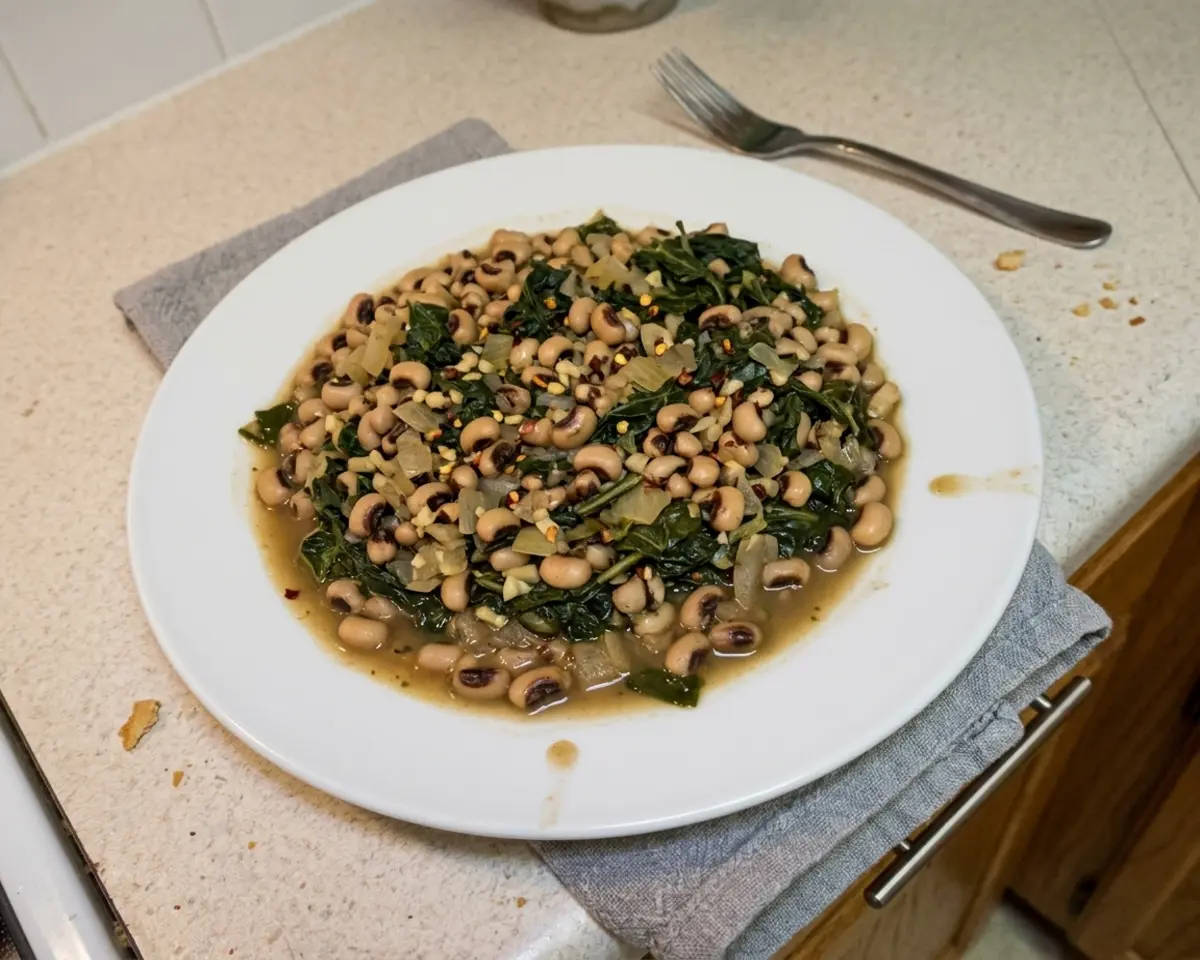
This one-pan wonder layers tender black-eyed peas with wilted greens (I’m talking collards, chard, or kale), a whisper of garlic, a squeeze of bright lemon, and just enough crushed red pepper to keep things interesting. It’s the kind of recipe your grandmother would nod at approvingly — rooted in Southern tradition but flexible enough for a Tuesday night.
I started making this every New Year’s Day after a neighbor brought over a version that had been in her family for decades. She swore it brought prosperity, but I think it just brings people back to the table for seconds.
Table of Contents
The Short Answer
This new year s day black eyed peas recipe combines canned black-eyed peas with your choice of hearty greens, onion, garlic, and a splash of vegetable broth in one skillet — ready in about 25 minutes with minimal prep. It’s a beginner-friendly, plant-forward take on the Southern New Year’s tradition that tastes like good luck and feels like a warm hug.
Reasons This Recipe Wins Hearts 💕
- This southern black eyed peas recipe is ready before your New Year’s playlist hits the third song — no soaking, no fuss.
- It’s a cozy one-pan meal that checks all the boxes: protein-packed, veggie-loaded, and ridiculously comforting.
- You can swap the greens based on what’s in your fridge or what your family loves — collards, chard, kale, they all work beautifully here.
- The team at Bon Appétit’s collard greens cooking guide breaks down exactly why low-and-slow heat unlocks the sweetness in sturdy greens — which is exactly the magic happening in this new year s day black eyed peas skillet.
At a Glance ✨
Everything you need to know about this new year s day black eyed peas recipe, in one quick look.
- CourseDinner
- Prep Time10 minutes
- Cook Time15 minutes
- Total Time25 minutes
- Yield4 servings
- Skill LevelBeginner
What You’ll Need (Ingredients)
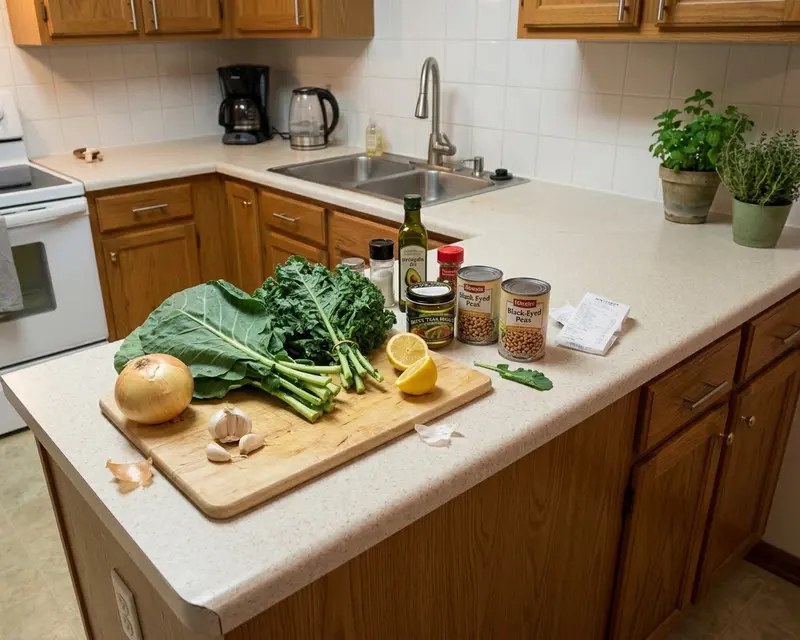
This easy black eyed peas recipe starts with a simple aromatic base — oil, onion, and garlic — that builds a savory foundation. The greens (collards, Swiss chard, or kale all work beautifully) bring earthiness and texture, while vegetable broth helps them wilt down without drying out.
Canned black-eyed peas make this weeknight-friendly, and a squeeze of fresh lemon juice plus a pinch of crushed red pepper brighten everything right up.
| Ingredient | Amount | Quick Note |
|---|---|---|
| Oil (avocado or olive) | 2 tablespoons | Avocado oil has a mild flavor and high smoke point — perfect for sautéing. |
| Yellow onion | 1 medium, finely chopped | White or sweet onion works too if that’s what you’ve got. |
| Garlic cloves | 3, minced | Fresh only, please — the jarred stuff just can’t deliver that punch. |
| Greens (collard, chard, or kale) | 2 bundles (about 5 cups, chopped) | Stems removed and roughly chopped — collards take longest to wilt, chard is quickest. |
| Vegetable broth | ½–1 cup | Better Than Bouillon is my go-to for depth — use more if your greens need extra help wilting. |
| Black-eyed peas | 2 (15-ounce) cans, drained and rinsed | Canned keeps this speedy — no overnight soaking required. |
| Lemon | Juice of ½ lemon | Brightens the whole dish — don’t skip it. |
| Crushed red pepper | ¼ teaspoon | Add more if you like a little heat, or leave it out for a milder version. |
| Salt & pepper | To taste | Season at the end so you can taste as you go. |
Kitchen Gear Checklist
Must-haves:
- Large skillet with a lid (12-inch works great)
- Sharp knife and cutting board
- Wooden spoon or spatula
- Can opener
Nice-to-haves:
- Garlic press (saves a minute of mincing)
- Citrus juicer (makes squeezing that lemon a breeze)
Let’s Make It (Step-by-Step Instructions)
Here’s how this new year s day black eyed peas skillet comes together, one easy step at a time. You’ll build flavor with the aromatics first, wilt down your greens until they’re tender and sweet, then fold in the black-eyed peas and a bright pop of lemon to finish.
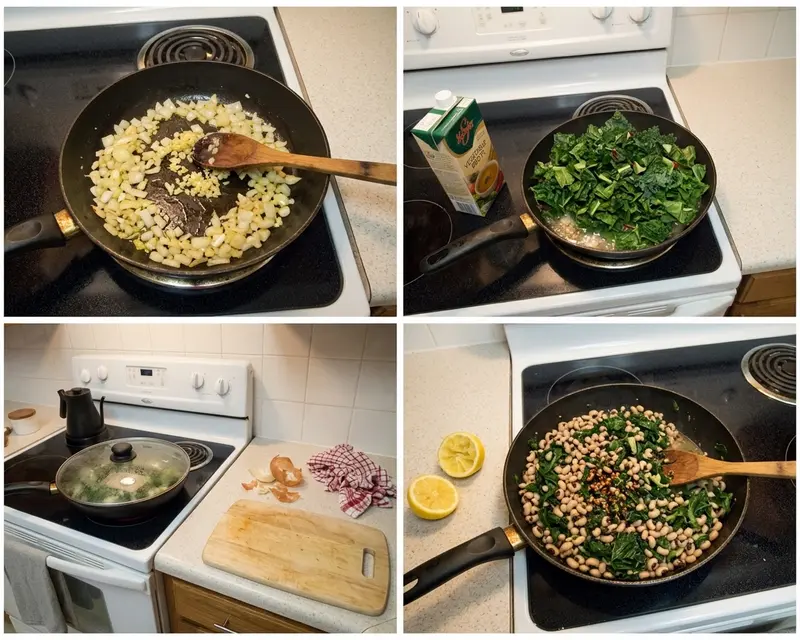
- Sauté the aromatics: In a large skillet, warm the 2 tablespoons of oil over medium heat. Add the finely chopped yellow onion and cook for about 3 minutes, stirring occasionally, until it turns translucent and starts to smell sweet. Toss in the 3 minced garlic cloves and cook for an additional 2 minutes, until the garlic is fragrant and golden at the edges but not browned.
- Wilt the greens: Add your 5 cups of chopped greens to the skillet along with ½ cup of vegetable broth. Cover the skillet with a lid and let the greens steam and wilt — Swiss chard will soften in just a few minutes, kale takes a little longer, and collard greens need the most time. Lift the lid every couple of minutes to stir, and if the pan looks dry or the greens are sticking, add a splash more broth.
- Fold in the black-eyed peas: Once the greens are tender and wilted down to about half their original volume, stir in the 2 cans of drained and rinsed black-eyed peas. Let everything cook together for 3–4 minutes, stirring gently, until the peas are heated through and the flavors start to meld.
- Finish and season: Squeeze in the juice of half a lemon and sprinkle the ¼ teaspoon of crushed red pepper over the top. Stir everything together, then taste and add salt and pepper as needed — I usually add about ½ teaspoon of salt and a few grinds of black pepper. Serve warm, straight from the skillet, and watch it disappear.
Nutrition Snapshot
| Nutrient | Per Serving |
|---|---|
| Calories | 210 |
| Protein | 9 g |
| Carbohydrates | 28 g |
| Total Fat | 7 g |
| Fiber | 8 g |
| Sugar | 3 g |
| Sodium | 320 mg |
These values are estimates based on standard ingredient measurements and can vary depending on the brands and specific ingredients you use.
Little Secrets for Success (Pro Tips)
This healthy black eyed peas with greens recipe is forgiving and flexible, but a few small moves can take it from good to “why didn’t I make a double batch?” Here’s what I’ve learned after making this more New Year’s Days than I can count.
Don’t crowd the skillet: If your greens are piled sky-high, they’ll steam unevenly and take forever to wilt. Use a big skillet (12 inches is ideal) or work in two batches if you’re making extra — you’ll get better caramelization on the aromatics and more even cooking overall.
Taste your broth first: Some vegetable broths are saltier than others, so if you’re using a concentrated base like Better Than Bouillon, go light on the added salt until the very end. You can always add more, but you can’t take it back.
Rinse those peas: Canned black-eyed peas come packed in a starchy liquid that can make your dish gummy if you don’t drain and rinse them well. A quick rinse under cold water keeps the texture light and the flavor clean.
Let the lemon shine: Fresh lemon juice added right at the end cuts through the richness and wakes up every other flavor in the pan. Bottled lemon juice tastes flat by comparison — trust me, the extra 30 seconds of squeezing is worth it.
For a deeper dive into how acidity balances savory dishes, the Serious Eats guide to seasoning with acid is my go-to — it’s clear, science-backed, and totally beginner-friendly, and it explains exactly why that squeeze of lemon makes such a difference.
Oops, Fixed It! (Troubleshooting for New Year s Day Black Eyed Peas)
Why are my greens still tough? Some greens — especially collards — need more time and a little extra broth to fully soften. Keep the lid on, add a splash more broth, and give them another 3–5 minutes of covered cooking. They should be tender enough to chew easily but still have a slight bite.
Why is my dish watery? If you added too much broth or your greens released a lot of liquid, just let everything simmer uncovered for a few minutes at the end so the excess moisture can cook off. You want the dish to be moist and glossy, not soupy.
Why does it taste flat? This usually means it needs more salt, a bigger squeeze of lemon, or both. Taste as you go and adjust — a pinch of salt and a few drops of acid can completely transform the flavor.
Why did my garlic burn? Garlic cooks fast and turns bitter when it gets too dark. If your heat was too high or you left it in the pan too long before adding the greens, it can scorch. Keep the heat at medium, stir often, and add the greens as soon as the garlic smells fragrant.
Make It Your Own (Variations)
One of the best things about this new year s day black eyed peas recipe is how easily it bends to your mood, your pantry, and your crew’s preferences. Here are a few of my favorite twists.
Make it smoky: Stir in a pinch of smoked paprika or a few dashes of liquid smoke when you add the black-eyed peas for a hint of that slow-cooked, Southern porch vibe without any meat.
Go creamy: Swirl in a tablespoon or two of coconut milk or cashew cream at the end for a richer, silkier texture — it plays beautifully with the lemon and crushed red pepper.
Add grains: Serve this over warm brown rice, quinoa, or farro to turn it into a heartier meal. The grains soak up all those savory pan juices and make the dish even more filling. If you love legume-forward bowls, my chickpea scoopable salad is another cozy option.
Swap the greens: Spinach wilts in seconds, mustard greens bring a peppery bite, and beet greens add a subtle sweetness. Use what you have or what’s on sale — they all work.
Make it a soup: Double the broth, add a can of diced tomatoes, and let everything simmer together for 10 minutes. You’ll have a warming, stick-to-your-ribs pot that’s perfect for cold January nights.
Serve, Store & Reheat
This collard greens and black eyed peas skillet is delicious served straight from the pan, still warm and glossy. I love it over a scoop of brown rice or with a wedge of cornbread on the side to soak up every last bit of the savory broth. It also makes a fantastic side dish alongside roasted chicken, grilled fish, or a simple green salad.
Storage
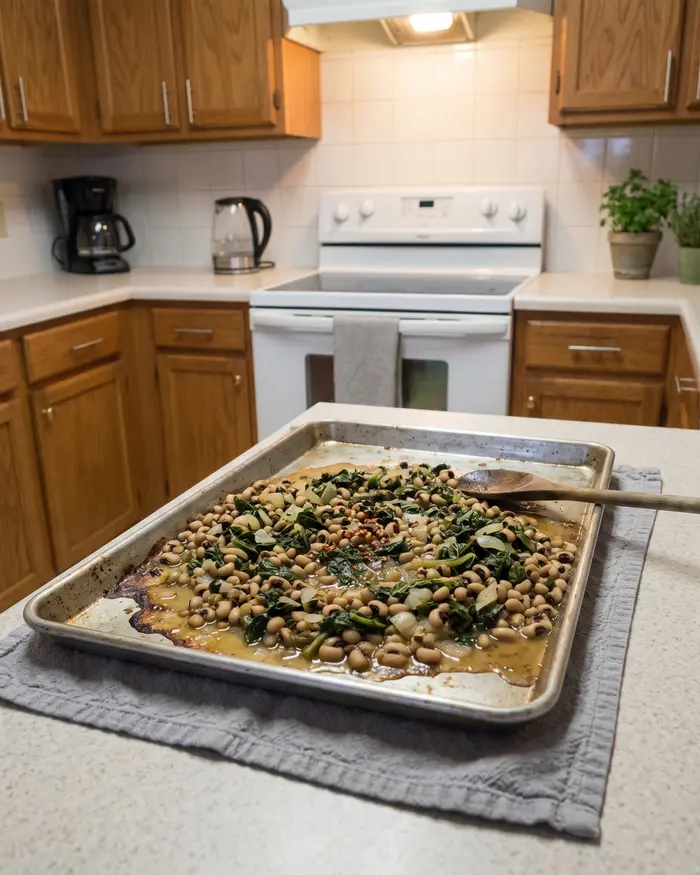
Store leftovers in an airtight container in the fridge for up to 4 days — the flavors actually deepen and meld overnight, so day-two servings are sometimes even better. If you want to freeze it, let it cool completely, then transfer to a freezer-safe container and freeze for up to 3 months.
To reheat, warm it gently in a skillet over medium-low heat with a splash of broth or water to loosen things up. You can also microwave individual portions in 1-minute intervals, stirring in between, until heated through. Just know that the greens will soften a bit more with reheating, but the flavor stays cozy and comforting.
Love Your Leftovers (Waste-Free Ideas)
Breakfast hash: Warm up a portion of leftovers in a skillet, make a little well in the center, and crack an egg right into it. Cover and cook until the egg is set — instant savory breakfast.
Grain bowl remix: Toss cold leftovers with cooked farro, a handful of arugula, a drizzle of tahini, and a squeeze of lemon for a packable lunch that tastes bright and fresh.
Freezer stash: Portion leftovers into small freezer bags, press out the air, and freeze flat. They thaw quickly and make perfect last-minute sides when you need something healthy and homemade in a hurry.
Soup starter: Add your leftover black-eyed peas and greens to a pot of vegetable broth along with diced tomatoes, carrots, and celery for a quick, nourishing soup. If you love bean-based soups, check out my guide on how to use canned black beans for more inspiration.
New Year’s Day Black Eyed Peas FAQs
Here are the questions I hear most often about making new year s day black eyed peas — answered honestly, like we’re cooking side by side.
Why do people eat black-eyed peas on New Year’s Day?
Eating black-eyed peas on New Year’s Day is a Southern tradition believed to bring good luck and prosperity for the coming year. The tradition dates back to the Civil War era and has been passed down through generations as a symbol of fortune and wealth.
How should black-eyed peas be prepared for New Year’s Day?
Black-eyed peas are traditionally cooked with ham hock, bacon, or salt pork for flavor. They are often simmered with onions, garlic, and seasonings until tender. Many people serve them with cornbread and collard greens as part of a complete New Year’s Day meal.
What do black-eyed peas symbolize on New Year’s Day?
Black-eyed peas symbolize coins or wealth, representing financial prosperity in the new year. When served with collard greens, which represent paper money, the combination is thought to ensure both coins and bills for the coming year.
Can you eat black-eyed peas on any day or must it be New Year’s Day?
While black-eyed peas can be eaten any time of year, the tradition specifically calls for eating them on New Year’s Day to bring good luck for the entire year ahead. Some traditions say they should be the first food eaten on January 1st for maximum luck.
Where did the tradition of eating black-eyed peas on New Year’s originate?
The tradition originated in the American South, with roots potentially tracing back to African customs brought by enslaved people, Jewish traditions of eating legumes for luck, or Civil War times when black-eyed peas were one of the few food sources left untouched by Union troops.
Before You Go
If you give this new year s day black eyed peas recipe a try, I’d genuinely love to hear how it went! Leave a comment with your tweaks — maybe you added a splash of hot sauce, or swapped in spinach, or served it over grits — because your kitchen experiments make my whole week. And if you snap a photo, tag me so I can cheer you on.
This is proof that a little tradition, a handful of pantry staples, and one skillet can taste like a whole lot of love. Whether you’re making it for good luck on New Year’s Day or just because it’s Tuesday and you need something cozy, I hope it brings you as much comfort as it’s brought my kitchen.
Save this recipe, share it with a friend who needs an easy weeknight win, or pin it for the next time you’re craving something warm, nourishing, and rooted in a little bit of Southern magic.
I’m Linda Sandra — a Charleston home cook and comfort-food daydreamer. Around here, cooking’s not about perfection — it’s about cozy vibes, creative twists, and food that feels like love.
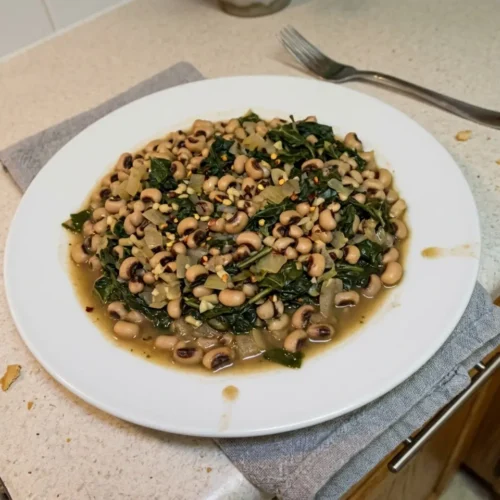
New Year’s Day Black Eyed Peas
Ingredients
- 2 tablespoons oil I like avocado oil
- 1 yellow onion finely chopped
- 3 garlic cloves minced
- 2 bundles of greens about 5 cups, stem removed and chopped (collard greens, swiss chard, kale, etc.)
- ½-1 cup vegetable broth I like Better Than Bouillon
- 2 15- ounce cans black eyed peas drained and rinsed
- juice of 1/2 lemon
- ¼ teaspoon crushed red pepper
- salt & pepper to taste
Instructions
- In a large skillet, warm the oil over medium heat. Add the onion and cook for about 3 minutes, until translucent. Add the garlic and cook for an additional 2 minutes, until fragrant.
- To the skillet, add the greens and 1/2 cup vegetable broth. Cover with a lid and cook until greens start to wilt. The time will vary depending on the variety of greens you choose.
- Chard cooks in just a few minutes while kale takes a little longer and collards take the longest. Keep an eye on them as they cook, stirring intermittently and adding more broth, if needed.
- Once the greens are cooked, add the cooked black eyed peas. Stir and cook until heated through. Squeeze in the fresh lemon juice and sprinkle with crushed red pepper. Serve warm with salt & pepper (to taste) and enjoy!